





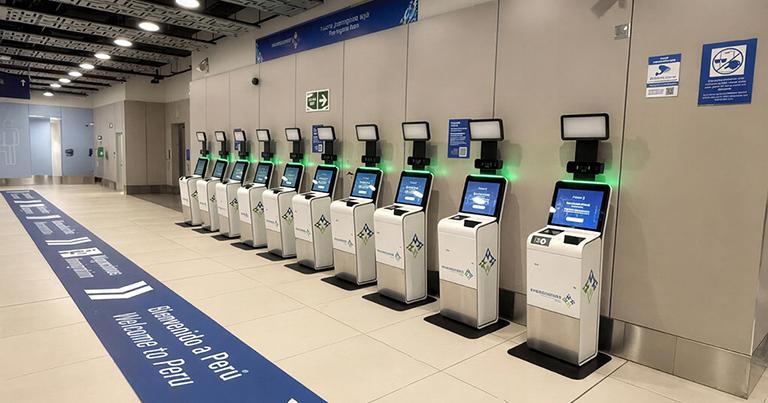
Lima’s Jorge Chávez International Airport has introduced a fully automated immigration system in its new terminal, in partnership with SITA (a Corporate Partner of the FTE Digital, Innovation & Startup Hub), for fast, secure, and seamless border crossings.
SITA was selected as the technology provider following an international tender conducted by the International Civil Aviation Organization (ICAO). By combining advanced technology with smarter workflows and conventional immigration control methods, the new solution aims to strengthen border security, improve operational efficiency, and make the passenger experience faster and smoother.
“The implementation of this modern immigration control infrastructure represents a milestone in the digital transformation of the Peruvian State,” said Armando Benjamín García Chunga, National Superintendent of Migrations of Peru. “Thanks to the partnership with SITA, we can now offer travellers a more agile, secure, and efficient experience, in line with the highest international standards. This advancement allows us to optimise biometric passenger identification at the new airport, while reinforcing our commitment to modern immigration management that puts the citizen at the centre and establishes Peru as a regional leader in border innovation.”
The project includes 19 Automated Border Control (ABC) eGates, 21 self-service kiosks, management consoles, a new mobile app for pre-travel declarations, and a comprehensive supervision and monitoring system. The mobile app will allow travellers to complete declarations ahead of time, aiming to reduce airport wait times by up to 50%.
“Across Latin America and beyond, governments are under growing pressure to handle rising passenger numbers while maintaining strong security and delivering a better experience for travellers,” said Pedro Alves, SVP of Borders at SITA. “This is more than a technology upgrade: it’s a complete rethink of how border control can work. By adopting this automation, Peru is setting a powerful example for how innovation can help solve these challenges. We’re committed to supporting countries such as Peru in creating a smarter, more connected, and future-ready border.”