




Summary:
- Melbourne Airport unveils a $4.5 billion international terminal expansion to accommodate rising passenger demand.
- Plans include five new gates, expanded check-in and baggage reclaim halls, and additional aircraft stands to boost capacity and operational flexibility.
- The phased development will enhance passenger experience, airline growth opportunities and border processing capability.
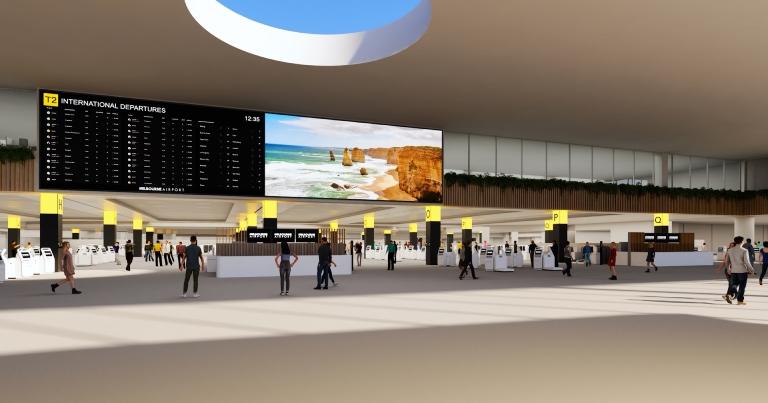
Melbourne Airport has revealed details of a planned $4.5 billion expansion of its international terminal. The plans incorporate several projects, including an expansion of both international check-in and baggage claim halls to better accommodate increasing passenger numbers.
Five new gates will be added to the existing international pier, giving airlines more flexibility to schedule flights to more destinations at the times people want to fly. The expansion programme will be delivered in stages and is enabled by the opening of new pick-up and drop-off zones in the T123 Transport Hub in September 2026, which will pave the way for the international terminal to push out into the existing forecourt.
Because of the challenges of building in a 24-hour live operating environment, the expansion will be delivered over several years. Key projects include:
- Expanded check-in hall with high-tech, common user baggage facilities
- Five new aircraft stands (capable of accommodating five widebody or eight narrowbody aircraft)
- Expanded terminal footprint with improved waiting areas, lounge facilities and retail offerings
- Expanded baggage reclaim with extra baggage carousels and additional space for border agencies
- Expanded waiting area for meeters and greeters
“As Melbourne grows, demand for air travel is growing too and we are investing billions of dollars to deliver the infrastructure we need to accommodate that,” said Melbourne Airport Chief Executive Officer Lorie Argus. “Increased capacity on our airfield and terminals will allow airlines to schedule more flights to more places, which will give consumers and exporters more choice. We’ve spent several months working collaboratively with the airlines to ensure these plans meet their needs, while also delivering an improved experience for our travellers in both arrivals and departures. Our investment in new infrastructure will deliver much needed extra capacity, but it is only part of the puzzle. We’re keen to work with the federal government on upgrades to border processing technology and facilities to help further improve the arrivals experience for international travellers. With just one average daily international flight worth $190 million to the Victorian economy every year, these investments will help facilitate more services and secure thousands of jobs around the state.”
Preliminary works on the first stage of the international terminal expansion will begin following the opening of Melbourne Airport’s new road network in September.
You may also be interested in
12 technology and CX trends that can enhance airline and airport operations in 2026