




Here at Future Travel Experience, through our events, media and thought leadership endeavours, we like to stay focused on the future, but as part of our ongoing efforts to help airports and airlines keep on top of the latest technologies in the marketplace, we were onsite at the recent PTE World 2026 in London, where we were on the lookout for solutions that can improve today’s customer experience and future-proof airport operations. We anticipated some key trends to dominate – including autonomous vehicles, biometrics and digital identity, AI-powered solutions, and more – and we weren’t disappointed. In a series of onsite interviews, we highlight a selection of the most eye-catching innovations we discovered. From smarter baggage handling solutions to the seamless integration of biometric technologies, we explore the transformative power of digital solutions across the entire airport ecosystem. In a rapidly evolving landscape where operational efficiency, passenger experience, and technology are increasingly intertwined, key players in the industry are pushing the envelope with solutions that redefine what is possible. This article showcases some of the most exciting innovations that promise to revolutionise how airports, airlines, and passengers interact in the near future, creating a more streamlined, seamless, and intelligent travel experience.
Mark your diary for FTE’s 2026 global event schedule in Dublin, Dallas and Singapore:
- APEX FTE EMEA co-located with APEX FTE Ancillary & Retailing – 9-11 June 2026, Dublin. Headline Partner: Ryanair
- FTE Global – 8-10 September 2026, Dallas, Texas. Headline Partners: DFW, Southwest Airlines and Dallas Love Field Airport
- APEX FTE EXPO Asia – 18-19 November 2026, Singapore. Combining APEX Global EXPO with FTE’s regional APAC event. Headline Partners: Changi Airport Group and Singapore Airlines
Pattern: Transforming baggage handling with autonomous technology and intelligent routing
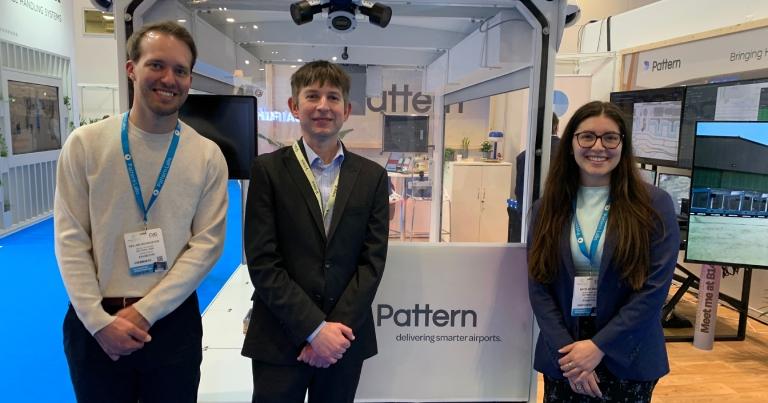
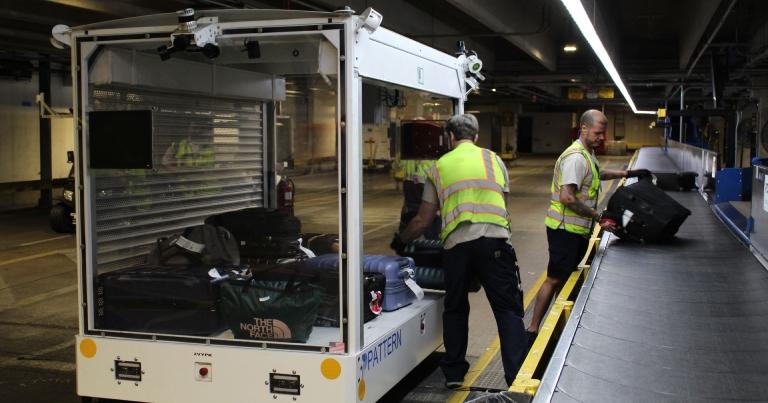
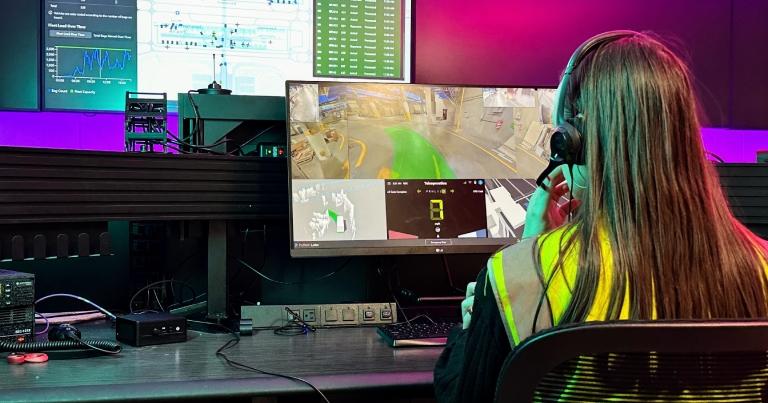
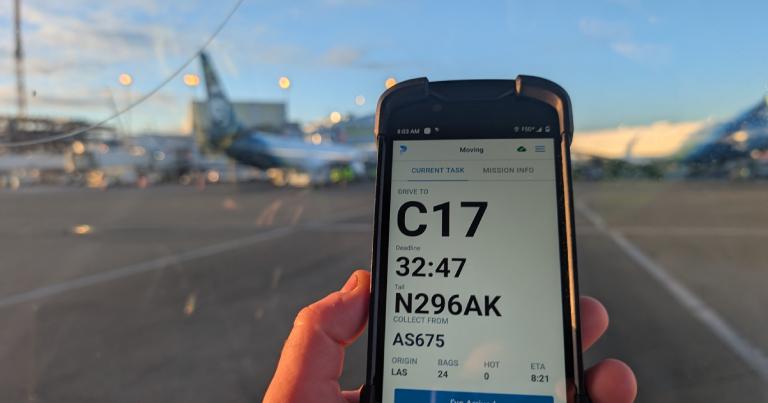
Pattern – a Partner of the FTE Baggage Innovation Working Group – presented a comprehensive approach to revolutionising baggage and ground handling operations through the use of autonomous technology and advanced routing capabilities. Skyeler Smith, Growth Director at Pattern, highlighted the company’s focus on making autonomous operations a natural extension of the existing airport infrastructure, particularly through its autonomous baggage shuttle, Pathfinder.
“Pathfinder is not just about autonomous capabilities,” says Smith. “It’s also about how we support this technology with a tele-operation layer to ensure smooth operations, even in unexpected circumstances.”
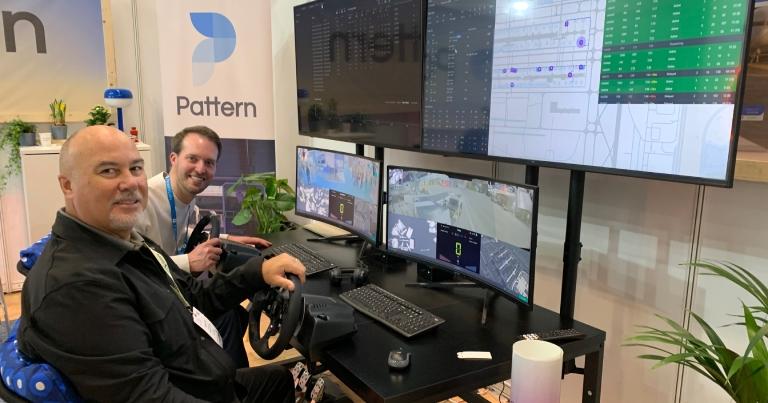
The tele-operation layer allows human operators to monitor the autonomous vehicles and intervene when needed – such as when an unplanned obstacle, like construction zones, impedes the shuttle’s path. By providing operators with a full 360-degree view of the shuttle’s surroundings, Pattern ensures the vehicle can continue its journey with minimal disruption.
Key innovations also include Pulse – Pattern’s dispatch and routing optimisation tool, which plays a critical role in managing both autonomous and human-operated systems. Pulse helps to orchestrate the movement of baggage across the airport ecosystem, ensuring that both efficiency and operational quality are maximised.
“By optimising routes and dispatching decisions, Pulse empowers airports, airlines, and ground handlers to move towards more autonomous operations while solving existing efficiency gaps,” Smith explains.
The efficiency gains offered by Pulse go beyond simply automating tasks. It allows airports to explore new possibilities for baggage movement, such as remote check-ins or linking baggage flows to off-site rental car facilities. This intelligent routing provides airports and airlines with the tools to better manage the complexity of baggage logistics, improving speed, accuracy, and overall experience for passengers.
The value of this technology is especially clear when considering the passenger journey. “With the tools we provide, passengers can gain real-time visibility into the location of their bags,” Smith shares. This transparency builds confidence and trust, addressing one of the most common pain points for travellers: uncertainty about where their baggage is and whether it will make it to its destination on time.
By integrating Pulse with existing airport operations, Pattern creates a seamless experience for both passengers and airport staff. The technology doesn’t just streamline internal processes but also ensures that every step of the baggage handling process is as reliable as possible. For passengers, the innovation means fewer delays, fewer lost bags, and a more predictable travel experience overall.
Unlike other autonomous systems that can feel detached from current airport operations, Pattern’s approach meets airports where they are today. “We don’t just serve autonomy as a concept,” Smith notes. “We bring airports along the journey, helping them integrate this technology with their existing systems, providing operational teams with the visibility and tools they need to improve their efficiency.”
Pattern is already making significant strides in deploying its solutions, with active operations underway at several airports. As the technology continues to evolve, the company envisions a future where autonomy is fully integrated into airport operations, driving not just improved efficiency but also enhanced passenger experiences.
Looking ahead, Smith emphasises that the transition to autonomy doesn’t need to be a daunting leap. “Our technology is designed to bring autonomy closer to reality today. It starts with optimising the team and the systems already in place and progresses toward fully autonomous operations. With Pulse, we’re making it possible to achieve operational excellence now, while laying the groundwork for a fully autonomous future.”
Pattern’s innovations highlight how autonomous technology can improve both operational efficiency and passenger experience in baggage handling. By combining autonomous vehicles like Pathfinder with intelligent routing and dispatching tools like Pulse, airports and airlines are equipped with the tools needed to streamline operations while also delivering a more predictable and reliable journey for passengers. As the technology continues to evolve, the future of baggage handling looks not just more efficient, but smarter and more passenger-centric than ever before.
BagsID: Leveraging data‑driven baggage intelligence across the entire journey
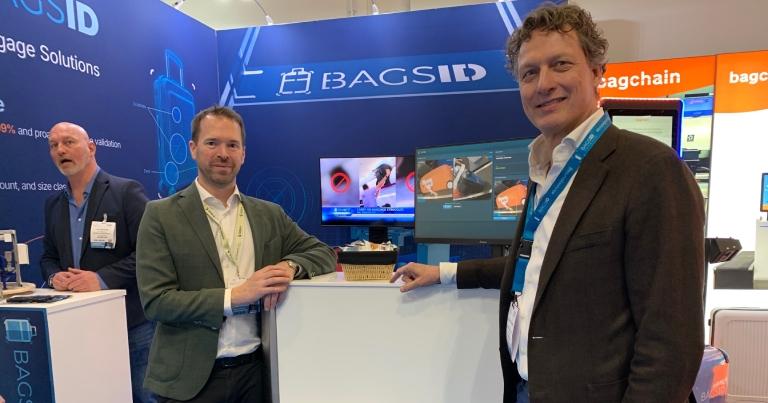
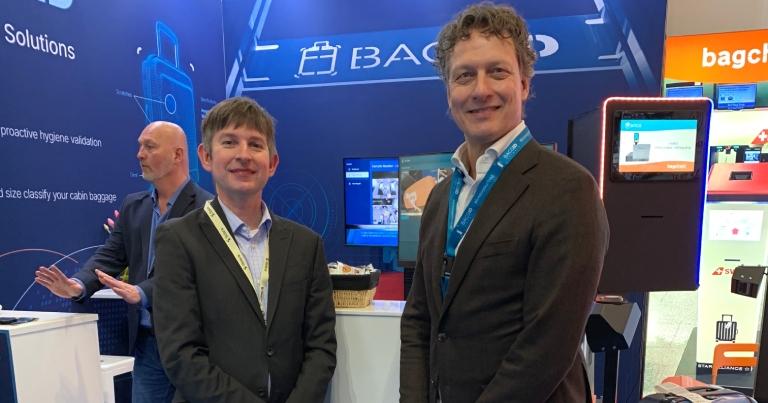
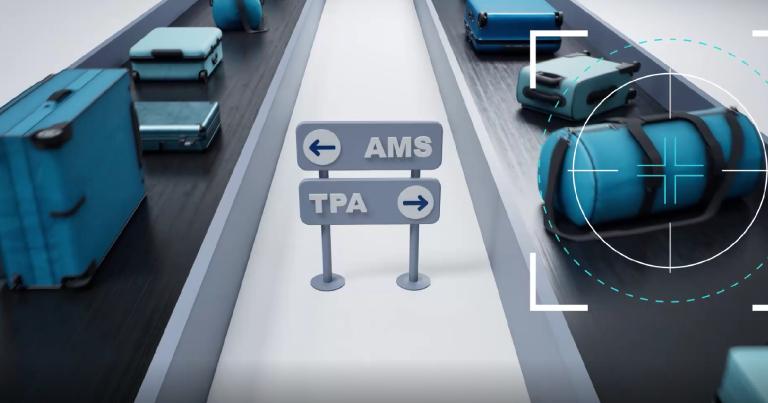

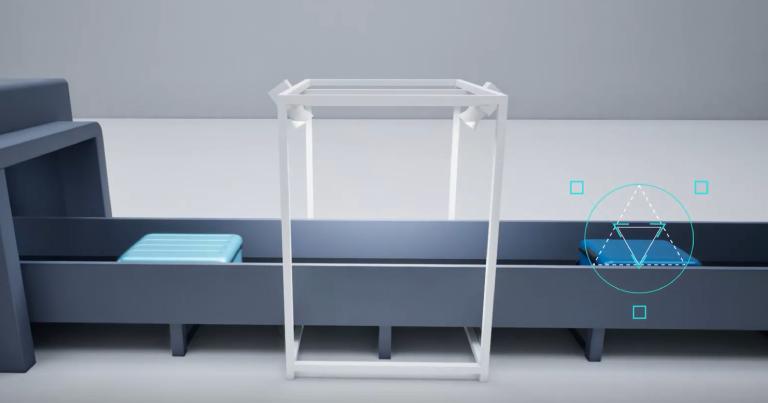
BagsID – a Strategic Partner of the FTE Baggage Innovation Working Group – showcased live demos and operational data from installations around the globe, leveraging data‑driven baggage intelligence centred around real‑time, bag‑level visibility and decisioning across the entire baggage journey.
“BagBridge, including our demo onsite, addresses bag hygiene into the system and then improved tracking capability across the BHS to reduce the ME and recirculation demand,” says BagsID CEO Richard Camman. “Our innovative system transforms baggage from a largely opaque, infrastructure‑driven process into a transparent, predictable, and passenger‑centric experience, where airports and airlines can proactively manage baggage flows, based on the baggage digital twin – and passengers regain confidence that their bag is exactly where it should be.”
Baggage remains one of the largest sources of passenger anxiety, driven by uncertainty about precious baggage items while travelling, baggage missing connections due to processing issues, lack of insight and timely communication when disruptions occur, and uncertainty of the number and size of bags being taken as carry-on. Camman explains that BagsID’s solutions address these pain points in several key ways:
- “Providing continuous bag visibility across handover points.”
- “Enhancing the number of scan points and enabling early detection of at-risk bags.”
- “Allowing airlines and airports to intervene before a bag becomes delayed or mishandled.”
- “Early identification of baggage through visual indicators for humans and machine.”
- “Automatically counting and size classifying the carry-on items going on each aircraft.”
“The result is a journey where baggage is no longer a ‘black box’ but a predictable and managed part of the passenger experience,” Camman shares.
The foundation of the BagsID approach combines:
- Advanced computer vision and artificial intelligence (AI) for bag recognition.
- High-accuracy identity matching across fragmented systems.
- Real-time data fusion from BHS, scanners, and operational systems.
- Event-driven and context-driven intelligence, rather than static reporting.
- Specific know-how for process & change management to benefit from the technology.
“What differentiates us is that we do not rely on a single identifier, like barcodes alone,” Camman explains. “Instead, we create a persistent digital twin for each bag, allowing reliable tracking even when traditional identifiers fail. This enables a level of accuracy and resilience that legacy systems simply cannot provide.”
Passenger experience and operational efficiency are tightly linked. For passengers, the BagsID solutions mean substantially fewer missed or delayed bags, faster recovery during disruptions, and increased trust in airline and airport operations through real-time information. Meanwhile, for airports and airlines, key objectives include:
- Reducing exceptions in baggage tracking to close to zero.
- Substantial reduction of resource demand and mishandling costs.
- Improved on-time performance across the full baggage journey.
- Better utilisation of existing baggage infrastructure.
- Data-driven decision-making instead of reactive firefighting.
“In essence, when baggage flows become predictable, operations become calmer – and passengers feel that immediately,” says Camman.
The BagsID solution is live and operational in production environments, supporting real airport and airline operations today. Looking ahead, BagsID sees a clear evolution:
- From anonymous bag (tag) to identified bags.
- From visibility to prediction.
- From monitoring to autonomous intervention.
- From isolated optimisations to network‑wide orchestration.
“Over the next few years, baggage intelligence will become a core layer of airport operations, supporting digital twins, predictive capacity planning, and ultimately a far more resilient and enjoyable travel experience,” Camman concludes.
BagsID’s approach highlights a fundamental shift in baggage operations – from reactive tracking to proactive, data-driven orchestration. By creating a persistent digital twin for every bag and enabling real-time visibility across the journey, airports and airlines can move towards near-zero exceptions and far greater operational predictability. As baggage intelligence evolves from monitoring to autonomous intervention, it is set to become a critical enabler of both operational resilience and passenger trust, transforming one of the most anxiety-inducing aspects of travel into a seamless, transparent experience.
Plaza Premium Group: Redefining airport hospitality with seamless, personalised services
Plaza Premium Group’s (PPG) comprehensive suite of airport hospitality services reflect a broader vision that extends far beyond airport lounges. As Jonathan Song, Chief Commercial Officer at PPG, explains, the company has evolved into a 360-degree airport hospitality provider, offering everything from branded lounges and hotel services to concierge assistance, dining experiences, and cutting-edge technology solutions.

“We’re not just about lounges,” says Song. “We’re a global airport hospitality company that provides an interconnected journey from departure, transit, to arrival. Our goal is to ensure that passengers have a consistent and seamless experience at every stage of their travels.”
PPG aims to serve diverse passenger needs through a tailored approach, offering a variety of services that appeal to different customer personas.
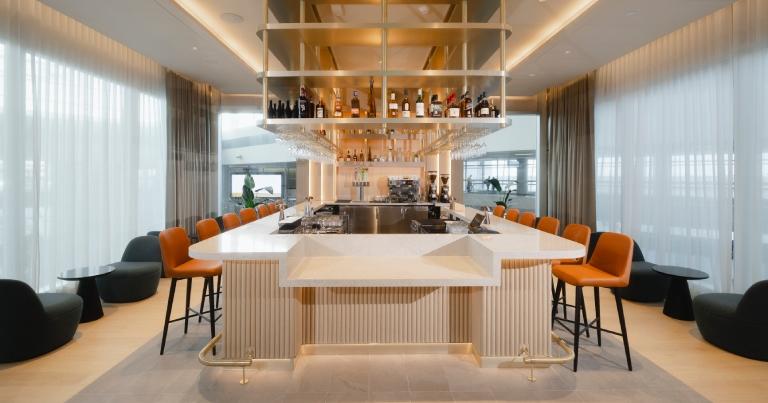
A significant highlight is Plaza Premium First, an elevated offering set to expand. According to Song, the growing demand for premium, tailored services reflects an increasingly discerning passenger base. “The days of a one-size-fits-all lounge are behind us,” he says. “There is a clear market for services that cater to different tiers of travellers, and Plaza Premium First is here to meet that demand.”
The new offerings aim to provide a higher level of exclusivity, offering passengers access to luxurious amenities and personalised service. This expansion is part of a broader investment strategy, which sees PPG focused on the world’s top 100 busiest airports and air routes, ensuring passengers can enjoy a seamless, interconnected experience wherever they go.
Digital transformation is a key pillar of PPG’s ongoing innovation strategy. The company is introducing several cutting-edge solutions that enhance both the operational side of airport services and the passenger experience. One notable example is the integration of self-check-in kiosks and e-gates in lounges, which streamline the entry process and reduce bottlenecks at reception desks. “By eliminating these friction points, we improve efficiency and allow guests to access our services with minimal wait time,” Song explains.
PPG’s oneTECO (One Travel Experience Ecosystem) platform further exemplifies the company’s digital ambitions. This non-aeronautical marketplace allows passengers to customise their journey by bundling various services – such as lounges, Meet and Greet, valet parking, and more – into a single package. “What we’re doing is offering a truly personalised experience,” says Song. “We let customers curate their own travel experiences, selecting services they want across different airports and geographies, all in one digital platform.”
The company’s Smart Traveller loyalty programme also plays a crucial role in this ecosystem. As passengers interact with PPG’s services, they earn points that can be redeemed across a broad range of offerings, from lounges to concierge services. “Smart Traveller lets us connect the dots across our wide range of services,” Song shares. “It’s not just about loyalty; it’s about giving customers the flexibility to use their points anywhere, across any of the services we offer.”

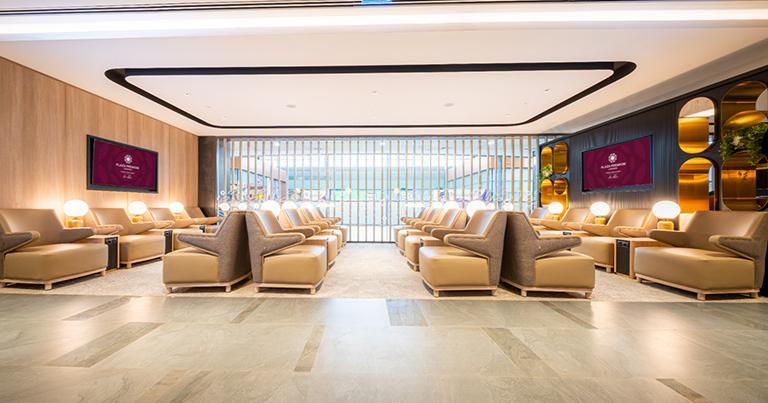
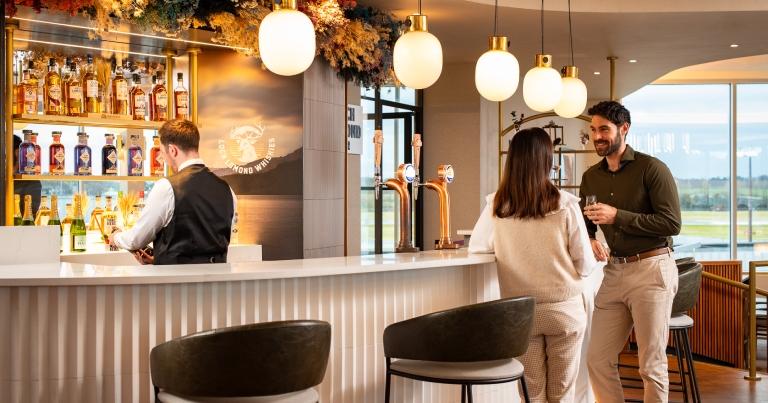
Innovation doesn’t stop at passenger-facing services. Behind the scenes, PPG is leveraging artificial intelligence (AI) and heat-mapping technology to optimise its operations. Song highlights the company’s focus on improving real-time efficiency in lounges and other services by dynamically allocating resources based on passenger flow. For example, during peak periods, the system automatically adjusts staffing levels and replenishes buffet stations to maintain smooth operations.
The introduction of autonomous wheelchairs and enhancements to the Meet and Greet service are further examples of how PPG is using technology to improve service delivery. “Our goal is to make these operations as efficient as possible, handling up to 3,000 passengers per day at Hong Kong International Airport with a high level of service quality,” Song explains.
While digital innovation is a key focus for PPG, personalised service remains at the heart of the offering. Song emphasises the importance of creating memorable, local experiences for passengers. In its lounges, PPG ensures that food offerings are hyper-localised, showcasing dishes that reflect the culinary culture of each location.
“When you step into our lounge in Hong Kong, you’ll be able to enjoy fish ball noodles,” says Song. “In Brazil, it’s feijoada, and in the Middle East, it’s lamb biryani. These local touches make the experience more authentic.”
For its premium lounges, Plaza Premium First, PPG elevates the dining experience even further with à la carte dining and curated cocktail menus, inspired by local chefs. “We’re not just serving food – we’re offering a destination for dining within the airport itself,” says Song.
At the core of all these offerings is the company’s commitment to delivering a human touch that makes passengers feel like guests. “At Plaza Premium Group, our people are the heart of our operations,” says Song. “We treat our customers like guests in our home, offering a sanctuary where they can relax, recharge, and enjoy high-quality service.”
PPG’s Smart Traveller programme is one of the key differentiators for the company, with over two million members already enrolled. As Song explains, this loyalty programme isn’t just about accumulating points – it’s about giving passengers access to a wide range of services across the airport ecosystem. “We’re making travel more convenient and personalised for our guests. From lounges to Meet and Greet services, we’re providing them with a holistic suite of services that match their individual needs,” says Song.
Moreover, PPG’s ability to partner with airlines, such as Hong Kong Airlines, to integrate loyalty programmes and convert airline miles into Smart Traveller points highlights the seamless synergy between airline and airport hospitality services. “We see loyalty to PPG as complementary to loyalty to airlines,” says Song. “Our role is to supplement airlines’ services, where we provide a full suite of hospitality services that airlines may not be able to offer at every destination.”
Plaza Premium Group’s innovations are pushing the boundaries of airport hospitality, offering passengers a highly personalised and frictionless experience. By combining cutting-edge digital solutions with a commitment to human-centred service, PPG is reimagining what it means to travel in comfort. With a growing suite of services, including lounges, concierge, dining, and the Smart Traveller loyalty programme, PPG is reinforcing itself as a global leader in airport hospitality, creating a seamless and elevated journey from start to finish.
Capacity through adaptability: AECOM reimagines airport performance for the predict-and-act era
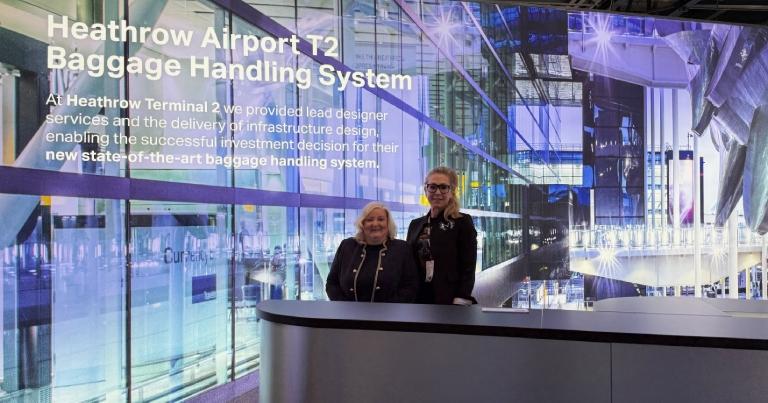
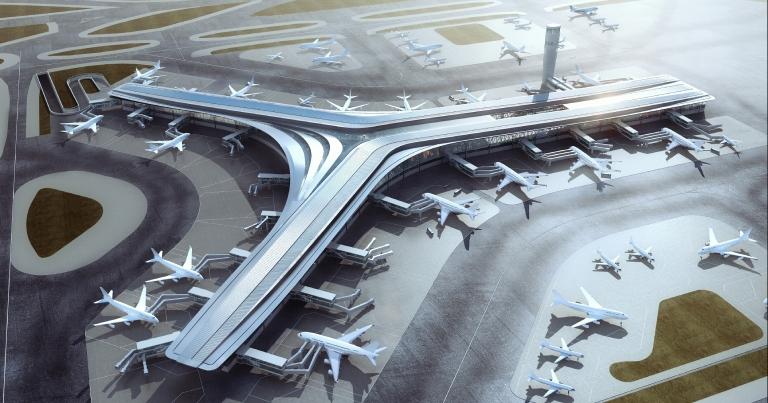
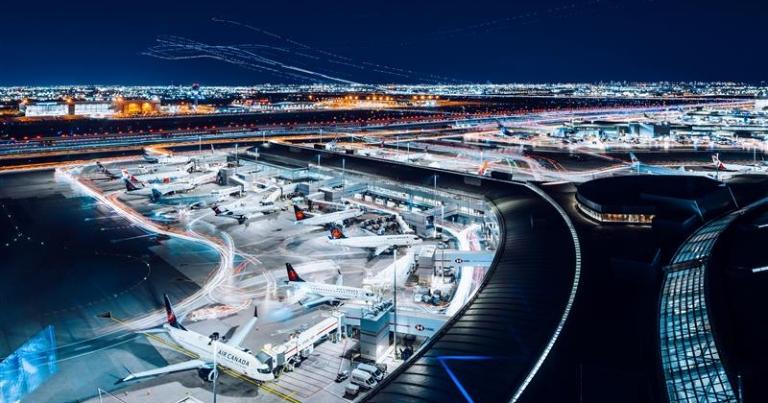
AECOM showcased a new definition of capacity: capacity through adaptability. “Practically, that means pairing Predictive Capacity Management with modular, reconfigurable terminal design so airports don’t just understand what’s coming – they can change fast to meet it,” says Yvonne Bilshausen, SVP | Global Head of Aviation, Architecture + Engineering, AECOM. “The result is a passenger journey that feels seamless, intuitive, and human-centred, even under pressure.”
Indeed, this approach addresses specific passenger pain points to improve the end-to-end journey:
- Long and uneven
- Confusing wayfinding and rework (being redirected, unclear next steps).
- Start-stop processingand bottlenecks at peak.
- Anxiety and inequity for Passengers with Reduced Mobility (PRMs) and neurodiverse travellers.
- Disruption amplificationduring IROPS.
“When we can predict demand and actively reshape flows, and reshape space when needed, we reduce dwell time, eliminate avoidable bottlenecks and create an experience that is more predictable, calmer, and more dignified,” Bilshausen shares.
The enabling stack includes:
- Data fusion across flow, baggage, stands/gates, curb, security, and schedules.
- Digital twin/scenario modelling to forecast and test interventions.
- Service design and staff enablementso the passenger experience remains human, not just automated.
- And, critically,standardised terminal interfaces: plug-and-play processing and reconfigurable zones.
“What differentiates our approach is we treat this as a system: design decisions that create optionality and operational governance that turns insight into action,” Bilshausen explains. “A model without authority is a dashboard; a model plus adaptable space is capacity.”
The AECOM model enhances both the passenger experience and operational efficiency. Travellers experience fewer pinch points and more certainty: shorter queues, clearer routing, fewer surprises, and a baseline of accessibility. Operationally, Bilshausen highlights that airports and airlines gain: higher throughput during peaks, better predictability and reliability (variance reductions), faster recovery from disruption, and more efficient use of staff and assets.
“The key outcome is performance you can measure: smoother peaks, fewer exceptions, and more resilient operations,” says Bilshausen. “Today, most major airports are in pilot-to-scaled deployment: elements are live, but the full ‘predict-and-act’ are often being built through MVPs – one terminal, one peak, one decision loop. Over the next few years we’ll see digital twins move from planning tools to daily operating tools; modular swing zones designed to change function in days, not months; shared performance rooms and shared KPIs across stakeholders; and increased automation where appropriate, with stronger governance around trust, privacy, and accountability.”
AECOM’s vision signals a clear shift in how the industry defines and delivers capacity – not as a fixed constraint, but as a dynamic capability. By combining predictive intelligence with adaptable physical environments, airports can move from reacting to demand to actively shaping it in real time. The result is not only stronger operational performance, but a more resilient, inclusive and passenger-centric journey. As these approaches scale, capacity through adaptability is set to become a defining principle of next-generation airport design and operations.
Paravision’s Contactless Corridor redefines seamless biometric travel with continuous, in-motion identity verification
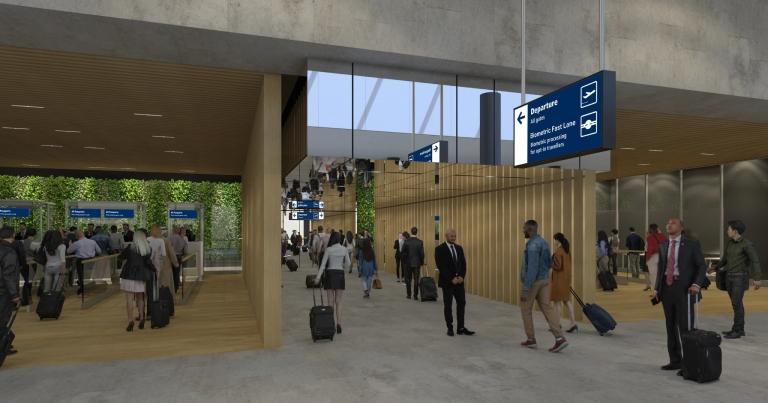
Paravision’s Contactless Corridor is a system for seamless biometric travel designed to keep passengers moving while identity is verified continuously in the background. Instead of stopping at checkpoints to present documents or use a gate, travellers can move naturally through spaces in the airport while their identity is verified in motion.
“By combining Paravision’s industry-leading face recognition with AiFi’s advanced 3D tracking and spatial intelligence, the Contactless Corridor enables continuous identity verification that integrates into passenger flow,” says Joey Pritikin, Chief Product Officer, Paravision. “Because the system works with standard IP cameras rather than specialised biometric gates or kiosks, airports can deploy high-security identity verification in software-defined zones, without adding visible infrastructure or disrupting the architectural environment.”

Airports today are still defined by stop-and-go identity checks, including document inspection, manual verification, or repeated biometric captures at different checkpoints. These moments slow passengers down and create friction throughout the journey. “The Contactless Corridor removes that friction,” Pritikin explains. “Travellers don’t need to pause, present documents, or interact with devices. Identity verification happens seamlessly as they move through the space. From the passenger’s perspective, the technology largely disappears into the airport environment. There is a lot of talk about ‘frictionless’ passenger processing in air travel. What makes this system unique is that the biometric capture is essentially transparent – no gates, kiosks, or counters – but because of the unique approach to 3D tracking, enables full operational insight and controls. Meanwhile, this approach to 3D tracking allows for remarkable operational configurability: precisely-defined opt-in zones, software-definable lanes, and fully flexible footprint design can all enable a faster, easier travel experience from curb to gate.”
The Contactless Corridor combines Paravision’s face recognition with AiFi’s advanced 3D tracking to verify identity continuously as people move through a space. “Rather than relying on a single capture moment, the system maintains awareness of travellers as they move through the corridor,” Pritikin shares. “This allows identity verification to occur without interrupting movement, while still delivering the high accuracy required for checkpoints such as security, immigration, or boarding. A key differentiator is the ability to operate reliably in dynamic, real-world environments. Airports involve varied lighting, heavy foot traffic, and large passenger volumes. Our technology is designed to maintain high throughput and consistent accuracy even when people move in large groups or unpredictable patterns.”
Advanced spatial tracking also enables the system to handle complex movement scenarios such as overlapping travellers, groups walking together, or tailgating. The system maintains persistent identity awareness within a digitally defined corridor, while providing operators with real-time visibility into how individuals move through the space.
“For passengers, the benefit is a faster and more seamless journey,” says Pritikin. “Instead of repeatedly stopping to verify identity, travellers move naturally through checkpoints, reducing stress and improving the overall experience. Because the technology operates through standard camera infrastructure rather than visible biometric gates, the experience feels like a natural part of the airport environment rather than a series of technology interactions. For airports and airlines, the Contactless Corridor improves throughput and operational efficiency. Continuous biometric verification reduces bottlenecks, shortens queues, and allows airports to support higher passenger volumes without expanding physical space or increasing staffing requirements. It also creates a more predictable and scalable passenger flow across the airport.”
Paravision and AiFi first introduced the Contactless Corridor concept last year and have since been selected for high-visibility pilot deployments with a number of travel partners. Pritikin highlights that, while the Contactless Corridor itself is entering pilot deployments, Paravision’s underlying Identity AI technology is already widely deployed across the travel industry, supporting identity verification in more than 40 airports and venues globally across 20+ countries. “Over the next few years, we expect to see growing adoption of continuous biometric identity systems that span the passenger journey, including security, immigration, VIP lounges, and boarding. As airports modernise infrastructure and passenger volumes grow, solutions like the Contactless Corridor will help deliver strong identity assurance while keeping passengers moving smoothly through the airport.”
Paravision’s Contactless Corridor points to a future where identity verification is no longer a series of interruptions, but an invisible layer embedded within the passenger journey. By combining advanced facial recognition with real-time 3D spatial tracking, the solution not only enhances throughput and operational control but also fundamentally reshapes how airports think about flow, infrastructure, and scalability. As pilot deployments progress, this approach signals a significant step toward truly frictionless travel – where efficiency and experience are no longer competing priorities, but mutually reinforcing outcomes.
Assaia’s StandManager brings predictive AI to stand allocation, unlocking efficiency across airside operations

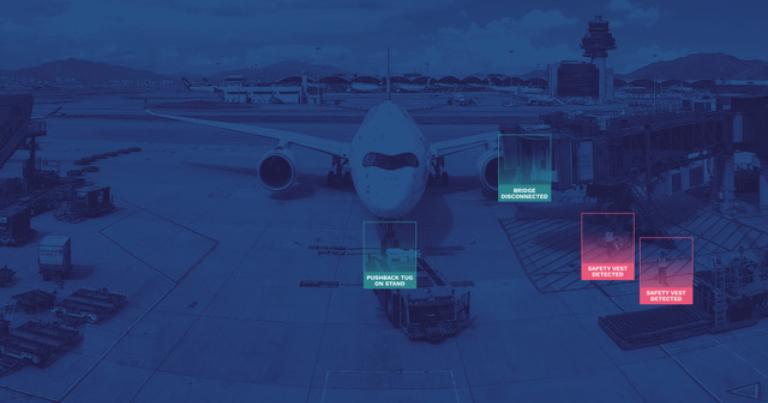
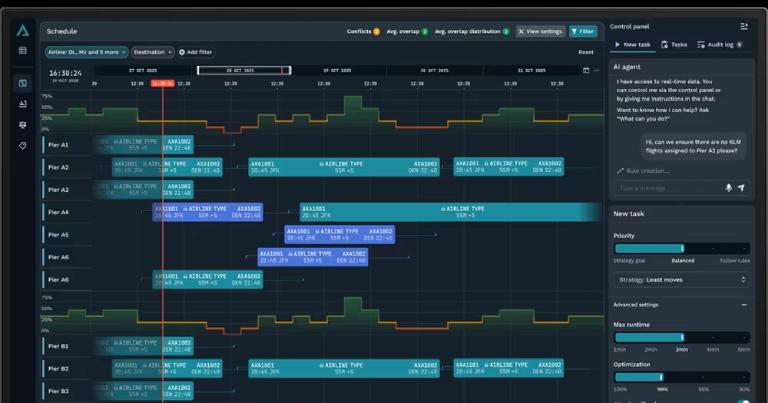
Assaia’s StandManager forms part of an advanced artificial intelligence (AI) ecosystem for airports. The Resource Management System (RMS) uses advanced AI technology to help airports determine where aircraft should park and for how long.
“Included in this, our flagship ApronAI tool allows customers to get a full overview of stand operations, analysing key milestones and ground handling activities such as passenger and cabin flow, baggage and cargo, aircraft servicing, ground equipment and positioning,” says Christiaan Hen, CEO, Assaia. “StandManager complements these insights by continuously analysing ApronAI’s live operational data to automate the stand allocation process, automatically assigning stands and gates based on current conditions. Traditionally, this process relied on static schedules and fixed buffer times, which does not reflect the unpredictable nature of airport operations.”
While largely invisible to passengers, stand allocation plays a critical role in the flow of airport operations. For example, fixed buffers can result in inefficiencies such as aircraft circling before landing due to unavailable gates, or passengers being held onboard prior to disembarkation while the pilot waits for an available stand.
“With solutions such as StandManager, airports and airlines can adjust stand plans automatically,” Hen explains. “By reducing arrival holds and improving gate availability, it helps create a smoother and more reliable passenger journey, while also reducing associated costs for airlines, particularly during peak periods where small disruptions can escalate quickly.”
Many of the delays passengers experience originate long before they reach the terminal. When an arriving aircraft must wait on the taxiway because a stand is still occupied, the impact quickly cascades through the schedule, in turn affecting passengers’ boarding times and onward connections.
“StandManager addresses this challenge by making stand planning more adaptive,” Hen shares. “If a flight arrives early or is delayed, the system automatically reallocates stands to keep aircraft flowing through the airport. For passengers, the benefits are often subtle but significant, from fewer arrival holds to more predictable departures. By improving coordination across aircraft movements on the ground, airports can protect the reliability of the wider travel journey.”
StandManager is built on AI models that process live operational data and apply predictive logic to stand planning. A key element of the approach is the connection with ApronAI, Assaia’s computer vision solution that monitors aircraft turnarounds and predicts milestones such as off-block times. This provides objective, real-time data on how ground operations are progressing, allowing stand allocation decisions to reflect the actual state of the operation.
“Operational efficiency on the airside has a direct influence on the passenger experience,” says Hen. “Delays can have a significant personal impact, causing people to miss important moments such as family events, holidays or crucial business meetings. For passengers with connecting flights, this stress is heightened and comes with potential financial losses. When aircraft movements are better coordinated, and stands are used more efficiently, the entire system becomes more predictable, communication more reliable, and passengers can travel with ease. For airports, this means improving utilisation of gates and stands at a time when physical expansion is often constrained by cost, space and regulation. Even relatively small improvements in stand utilisation can translate into meaningful capacity gains or reduced congestion during peak periods. For airlines, more predictable stand allocation supports smoother turnarounds and greater schedule reliability, as well as the ability to communicate more accurately with passengers. When aircraft spend less time waiting for gates or repositioning on the apron, it reduces the likelihood of delays cascading across tightly scheduled networks.”
StandManager is now a live solution, launched as the next step in Assaia’s broader efforts to bring predictive intelligence to airport operations. The launch follows Assaia’s recent Series B funding round led by Armira, a portion of which is supporting the development of new solutions, such as StandManager.
“This solution builds on Assaia’s existing AI-driven turnaround optimisation deployments at major international hubs, where real-time operational data already supports more efficient ground operations,” Hen shares. “Stand management is likely to become part of a wider connected operational ecosystem in the coming years. As airports integrate more automation and digital systems into operations, stand planning can evolve into a fully predictive capability, supported by solutions such as StandManager. Airports and airlines worldwide will be able to respond to changing conditions throughout the day, improving operational resilience as global passenger demand continues to grow. We’re offering a holistic, intelligent ecosystem for airports, which aims to address these challenges head on.”
Assaia’s StandManager highlights how AI-driven, real-time decision-making is transforming one of the most operationally critical – yet often overlooked – aspects of airport performance. By replacing static planning with predictive, data-led stand allocation, airports and airlines can improve resilience, optimise capacity, and minimise disruption before it reaches the passenger. As part of a broader shift toward connected, intelligent airport ecosystems, solutions like StandManager demonstrate how operational gains on the apron can translate directly into more reliable, less stressful travel experiences.
Thales advances integrated, contactless border ecosystems to balance security and seamless passenger flow
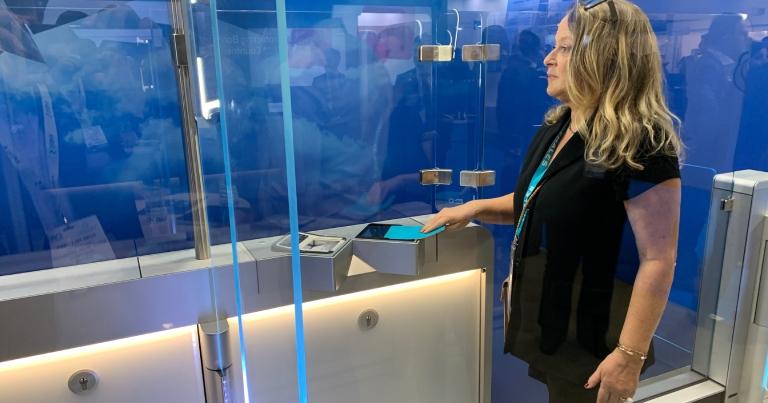
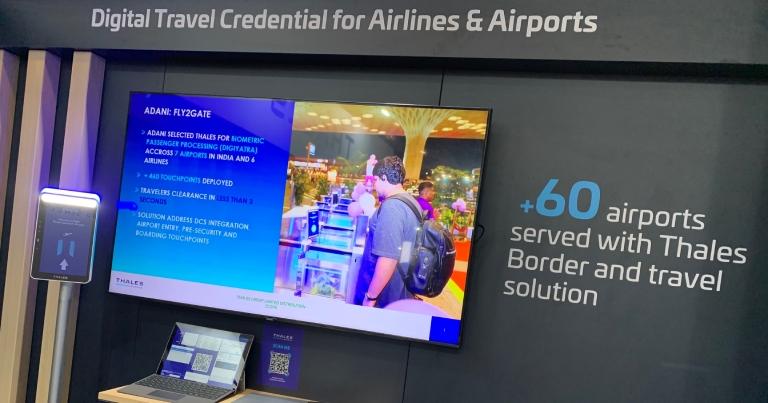
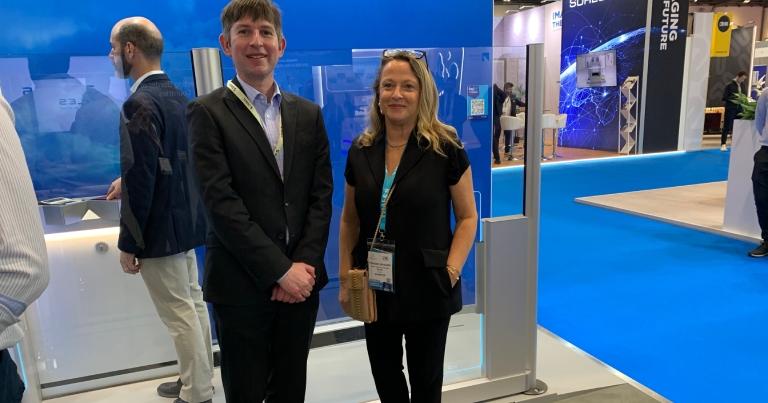
Thales is shaping the future of secure and seamless border management through its secure and scalable infrastructures powering the visible technologies used in border control and passenger journeys. Francoise Bergasse, Marketing Manager, Border and Travel, Thales Identity and Biometric Solutions, explains that these include:
- “Our latest eGate – using fast and accurate facial recognition through our advanced, automated Face POD and certified presentation attack detection to ensure unmatched identity verification.”
- “Sophisticated contactless technologies – including contactless fingerprint scanning, and both Face and Iris at a Distance solutions to address evolving biometric needs while delivering fast, accurate verifications with minimal user interaction.”
- “Advanced identity verification solutions – powered by in-house developed advanced algorithms for reliable verifications, and capabilities for new technology like Digital Travel Credentials and enrolment use cases.”
Border authorities and airports balance two key challenges today – ensuring strong security while enabling fast and seamless passenger journeys. “As a global end-to-end provider of proven border and travel solutions, Thales helps these authorities improve passenger flow and congestion while maintaining the highest security standards,” says Bergasse. “Thales has a unique ability to deliver fully integrated systems, combining border management platforms, biometrics, automated border control and passenger processing into one strong and cohesive ecosystem. Thales also designs and develops our own in-house core biometrics and document verification technologies, ensuring optimum performance, reliability and long-term lifecycles.”
Thales connects complex infrastructures across air, land and sea borders to help governments and airports manage identity verification, passenger flows, and security operations for smoother passenger journeys and more efficient airport operations. “In fact, Thales is recognised as the 2025 ABC Gate Company of the Year by Frost & Sullivan, and we lead the way in secure, efficient, and future-proof automated border control,” Bergasse shares.
Thales’ border and travel solutions are actively in use, with deployments across more than 20 countries and more than 60 international airports worldwide. “Our robust, scalable border management and document verification solutions ensure our strong global footprint now and in the future,” says Bergasse. “Some of our current eGate projects include France, Spain, Belgium, Eurostar, Argentina, and Jordan. Jordan eGate also includes Iris Face-at-Distance technology for trusted, responsible, and fast identity management. We have deployed hundreds of sophisticated document verification devices at border control points worldwide for reliable and secure biometric identification. While still in prototype phase, our contactless fingerprint capture solution has already obtained critical certifications including the FBI PIV – allowing it to be used in government projects.”
Thales’ approach underscores the growing importance of fully integrated, biometrics-driven ecosystems in modern border management. By combining advanced contactless modalities, robust infrastructure, and end-to-end system design, the company is enabling border authorities to strengthen security without compromising speed or passenger convenience. As deployments expand globally and new technologies such as Digital Travel Credentials mature, Thales is well positioned to help airports and governments transition toward more connected, scalable, and future-ready border operations.
Smarter Airports: AIRHART signals the rise of orchestrated, AI-ready airport operations
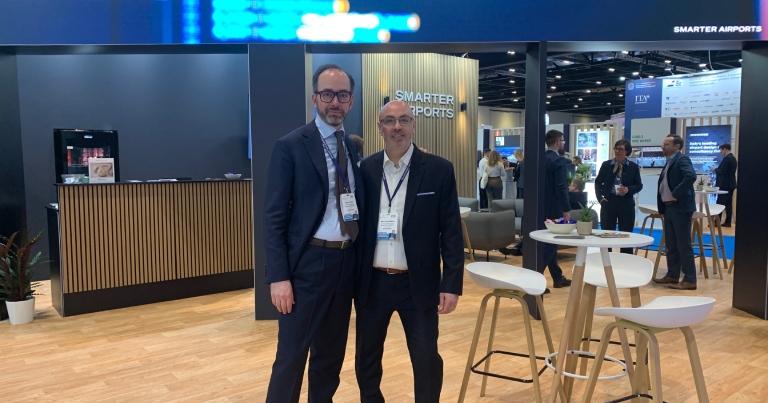
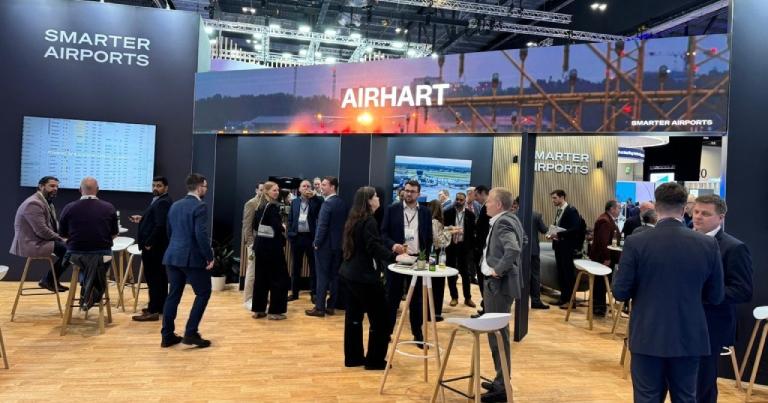
A growing trend among leading airports is to embrace orchestration platforms as the backbone of their digital transformations towards artificial intelligence (AI) and data-driven operations. AIRHART – Smarter Airports’ Airport Operations Orchestration Platform (AOOP) – represents a fundamental shift in how airports run their operations.
“For decades, airports have relied on the AODB as the central system, with multiple standalone operational products built around it,” says Martin Bowman, Principal, Netcompany, Chief Strategy Officer, Smarter Airports. “That model is increasingly struggling to cope with the complexity of modern airport operations. AIRHART replaces that fragmented approach with a platform that orchestrates data, systems and operational processes across the entire airport ecosystem. Instead of individual systems optimising isolated tasks, the airport can coordinate airside, terminal and landside operations as a single, integrated operation. In simple terms, the AODB era is ending, and airports are moving towards platform-based orchestration.”
Passengers experience airports as a single journey, but operationally airports are often managed through disconnected systems and silos. That fragmentation is behind many familiar passenger frustrations – unpredictable queues, late gate changes, operational delays and poor disruption management.
“AIRHART addresses this by enabling real-time orchestration of airport operations,” Bowman shares. “By bringing together flight data, passenger demand forecasts, operational status and resource availability, the platform allows airports to anticipate pressure points earlier and coordinate responses across multiple teams. The result for passengers is a more predictable and transparent journey – better managed queues, more stable gate information, improved on-time performance and fewer last-minute surprises.”
AIRHART is built as a cloud-native operational platform designed to orchestrate complex airport environments. It integrates data from across the airport ecosystem – including flight operations, passenger flows, resource management and airline systems – and creates a single operational picture. On top of that, the platform coordinates operational processes and decision-making across airport stakeholders.
“What differentiates AIRHART is that it is not just another operational system,” Bowman explains. “It provides the platform foundation on which airports can continuously add new capabilities such as predictive analytics, AI-assisted decision support and digital twin simulations. This reflects a broader technology shift we are seeing across industries: moving from standalone products to platform architectures.”
Passenger experience and operational performance are tightly connected. When airport operations are fragmented, inefficiencies ripple through the system and ultimately affect passengers. “By orchestrating operations across the airport ecosystem, AIRHART allows airports to anticipate operational challenges earlier and coordinate responses in real time,” says Bowman. “This improves the utilisation of infrastructure and staff, supports more stable operations and reduces the operational volatility that often causes passenger disruption. The result is a smoother and more predictable airport journey, alongside more efficient airport and airline operations.”
AIRHART is already live and operational at major European airports, including Copenhagen Airport, and it is being deployed as part of major modernisation programmes at Munich Airport and Heathrow Airport (read our full story here).
“The Heathrow and Munich programmes are particularly significant because they both signal a broader industry shift,” Bowman adds. “Large hub airports are beginning to move beyond traditional AODB-centric architectures and adopt platform-based operational environments. Over the next few years we expect this trend to accelerate as airports look for more flexible foundations to support AI, predictive operations and digital twins. In many ways, the industry is now entering the post-AODB era, where orchestration platforms become the backbone of airport operations.”
AIRHART reflects a broader inflection point for the industry, as airports transition from fragmented, system-centric operations to integrated, platform-based ecosystems. By orchestrating data, decisions and processes in real time, airports can unlock greater predictability, efficiency and resilience – with direct benefits for both passengers and stakeholders. As adoption accelerates across major hubs, orchestration platforms are set to become the digital core of next-generation airport operations, underpinning the shift to AI-enabled, continuously optimised performance.
Cobot Lift: COBRO brings collaborative robotics to airport baggage handling
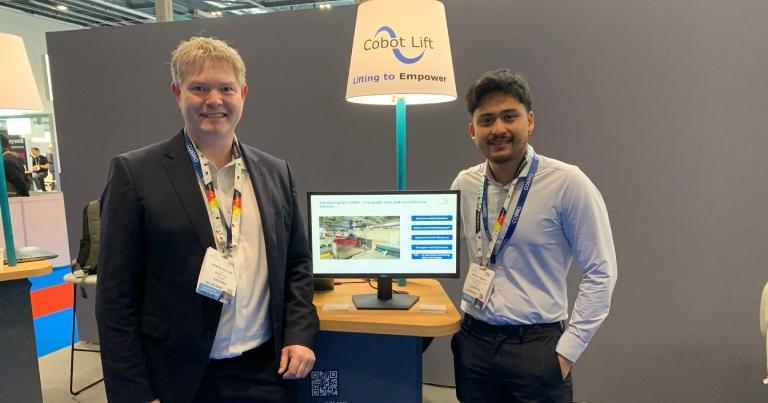
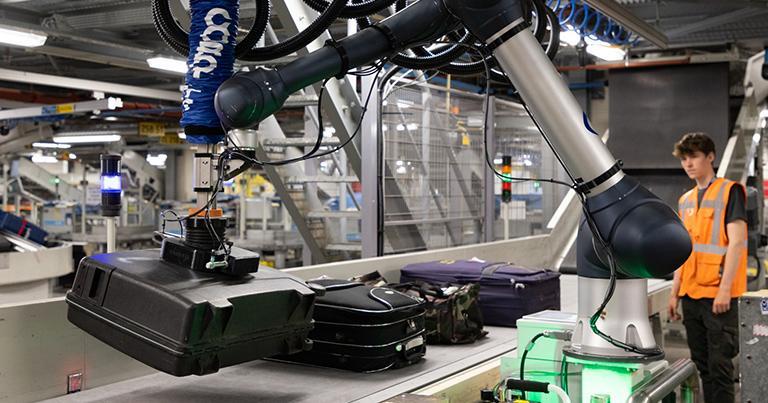
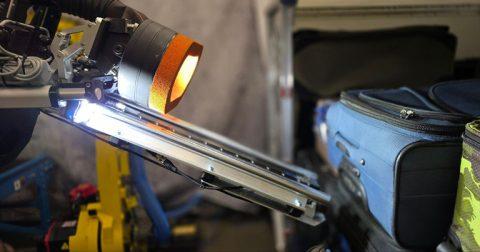
Cobot Lift – a Partner of the FTE Baggage Innovation Working Group – highlighted COBRO – its collaborative baggage robot for airport baggage halls. “COBRO automates the heaviest manual lifting tasks in departure flows, helping airports modernise baggage handling and increase efficiency of the existing infrastructure,” says Henrik Elm Gulløv, CEO, Cobot Lift.
The main passenger pain points COBRO addresses are delays, mishandled bags, and inconsistency during peak periods. By automating repetitive baggage lifts, COBRO helps create a more stable baggage flow by reducing the dependency on manual labour, which is especially important in peak periods with low staff ultimately causing significant delays to passengers.
“Our solution combines robotics, computer vision, and various safety sensors,” Gulløv explains. “What differentiates us is not just the technology itself, but the way it has been designed: with an understanding of how baggage halls actually work day-to-day. We recognise that loading/unloading is just one step in the entire baggage handling process, so we have taken an end-to-end operational view when designing the product. Combined with a strong focus on brownfield deployment, that gives us a practical competitive advantage.”
For passengers, the benefit is a more dependable baggage journey less prone to delays. For airports and airlines, the benefits are that COBRO eliminates manual lifting which results in more sustainable working environments and cost savings, and higher and more consistent throughput within the existing infrastructure.
“The solution is already live with a current installation in CGN underway,” Gulløv shares. “Over the next few years, we see the solution evolving from targeted heavy-lift automation into broader baggage hall automation across more workstations, with deeper integration into airport processes.”
COBRO illustrates how targeted robotics can deliver immediate, practical impact in one of the most physically demanding and operationally sensitive areas of the airport. By automating heavy lifting within existing infrastructure, airports can improve consistency, reduce reliance on scarce labour, and create safer working environments. As deployments expand and integration deepens, collaborative robotics like COBRO are set to play a key role in building more resilient, efficient and scalable baggage operations.
Ariadne unlocks real-time passenger flow intelligence for enhanced CX and operational efficiency
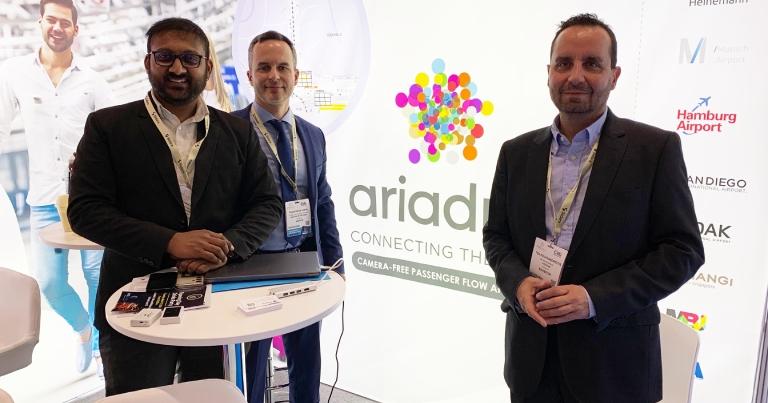
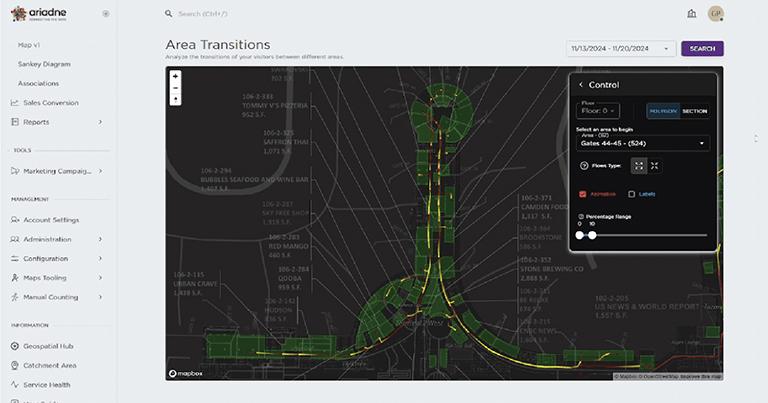
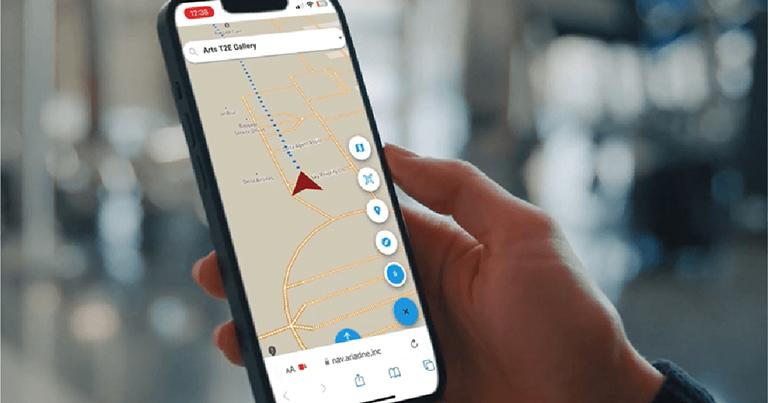
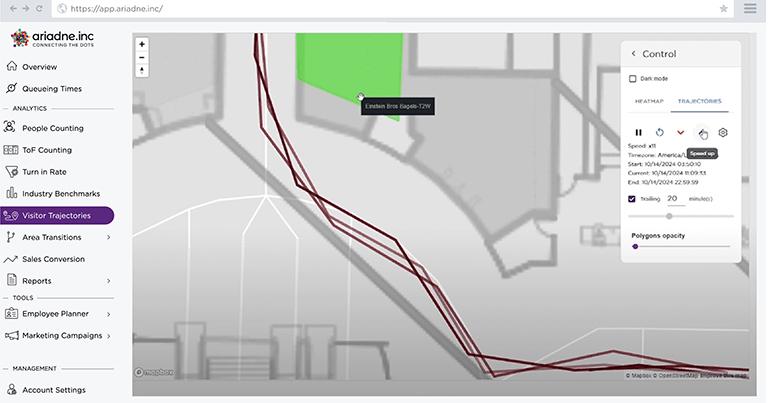
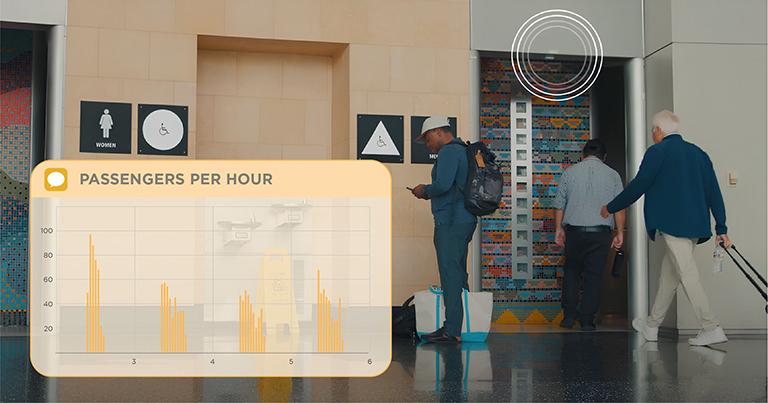
Ariadne’s unique sensor is capable of tracking both visitors and assets by simultaneously using optical and signal-based methods. This combination of technologies allows it to aggregate two distinct data sources, unlocking a wide range of new use cases that were previously impossible.
“For instance, we can now re-route passengers to less congested areas using a single, unified service source, enhancing both efficiency and passenger experience in real-time,” says Georgios Pipelidis, CEO, Ariadne. “We firmly believe in Tom Peters’ quote – ‘You can only improve what you can measure’. With this in mind, we are helping airports worldwide track passenger flow, whether arriving or leaving the airport, or moving within areas larger than 34sqm. This data enables airports to quantify key aspects of the passenger journey, including wait times at check-in, security, concession areas, restroom usage, and gate wait times. With Ariadne, airports can set alerts for critical KPIs, such as maximum and minimum values, and establish clear performance goals to enhance operational efficiency and the overall passenger experience.”
Pipelidis shares that Ariadne’s innovation is built on three core patents. “The first enables us to track the precise location of individuals with unparalleled accuracy, while reducing installation costs. By requiring only 10% of the sensors typically needed by our competitors, we can offer a subscription model that is, on average, 3x lower in cost. The second patent allows us to navigate visitors through airports without the need for additional hardware, cutting infrastructure costs by 20x. Additionally, this approach eliminates the need for app installation, resulting in a 40x increase in usage frequency.”
This solution significantly enhances both the passenger experience and operational efficiency by providing airports and airlines with real-time, precise data on passenger flow and key operational metrics. “By tracking passengers with unparalleled accuracy and at a lower cost, airports can proactively manage congestion, optimise waiting times, and improve overall passenger satisfaction,” Pipelidis explains. “Additionally, the ability to navigate visitors without requiring additional hardware or app installation reduces infrastructure costs and increases the frequency of usage, leading to better resource allocation and smoother operations. Ultimately, our solution empowers airports to make data-driven decisions that enhance the passenger journey while streamlining operational processes, creating a more efficient and enjoyable experience for everyone involved.”
Ariadne’s solution is currently deployed at several major airports worldwide, including Munich (MUC), Hamburg (HAM), San Diego (SAN), Oakland (OAK), and Montego Bay (MBJ), among others. “Over the next few years, we envision expanding our presence to even more airports, with a focus on further refining our technology to deliver even greater insights and automation,” Pipelidis adds. “As the solution evolves, we plan to integrate more advanced AI and machine learning capabilities to predict and optimise passenger flow in real time, further enhancing both operational efficiency and the passenger experience.”
Ariadne’s innovation underscores the growing importance of precise, real-time measurement as the foundation for smarter airport operations. By combining advanced sensing technologies with scalable, cost-efficient deployment, airports can gain a far more accurate and actionable understanding of passenger flow across the entire journey. As AI-driven insights and predictive capabilities continue to evolve, solutions like Ariadne’s will enable airports to move from monitoring to actively optimising flow in real time – delivering more seamless experiences for passengers while maximising operational performance.
Seating reimagined: Arconas blends comfort, choice and capacity in the modern terminal
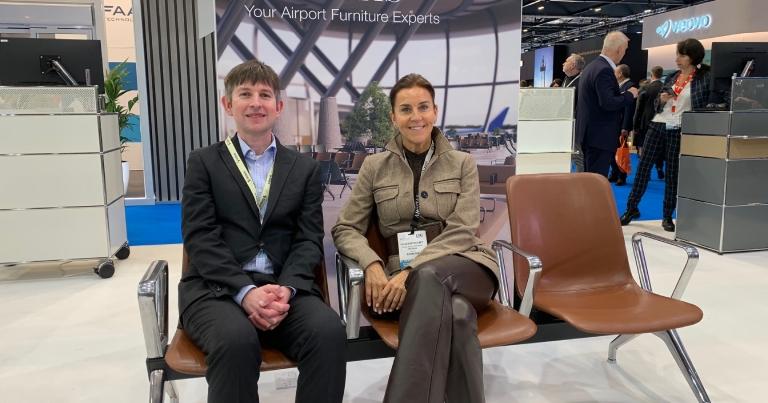
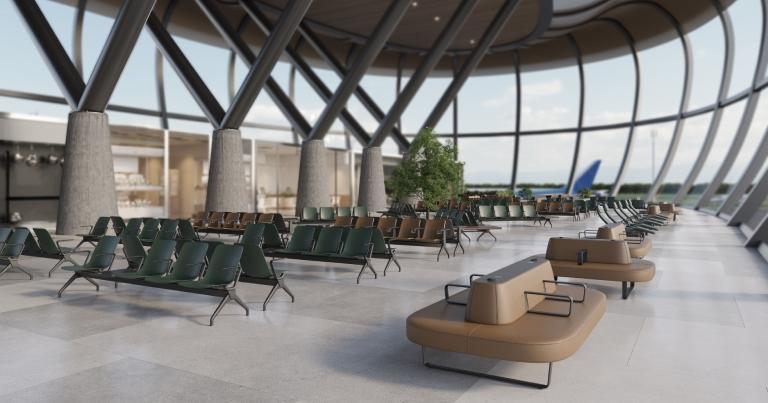
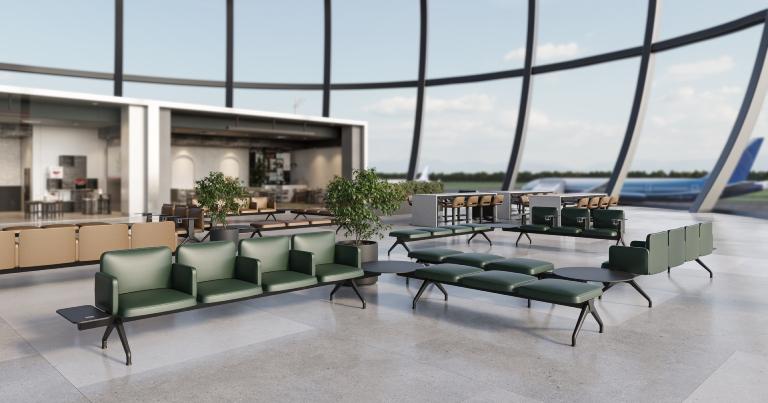
Arconas wide range of furniture products aimed at elevating the passenger experience include its Avro seating ecosystem, the emBARq charging workstation, and its newest seating innovation – Meanwhile, which introduces a lounge seating alternative designed to complement tandem seating, enhancing comfort without sacrificing the seating capacity that terminals require.
“Passengers use airport seating in many ways – working, resting, travelling with family, or simply waiting for their flight,” says Lucia Kortscheff, Global Account Manager, Arconas. “By introducing lounge-style seating alongside traditional beam seating, Meanwhile provides a more inviting experience and greater comfort within hold rooms. This variety helps create a more welcoming and adaptable environment, improving the overall passenger experience during the time spent in the terminal.”
Comfort and convenience define today’s travel expectations, and Meanwhile responds thoughtfully. “Optional charging modules offer USB-C, AC outlets (including UK and European options), and wireless charging,” Kortscheff shares. “Flexible armrest choices include standard arms or tablet arms with drink holders, perfect for areas where travellers want a spot for a coffee, snack, or to use their device.”
The material selections, including Fenix and Aleve wood-look finishes, elevate the overall aesthetic while providing the durability and ease of maintenance required in busy terminal environments.
“For passengers, the addition of lounge seating creates a more relaxed and comfortable gate environment – it gives travellers more choice in how they spend their time in the terminal,” Kortscheff explains. “For airports, Meanwhile provides variety while maintaining the efficiencies associated with traditional seating layouts. It allows terminals to introduce greater seating variety without sacrificing capacity or operational performance. Meanwhile’s sofa-like comfort creates a more inviting place to wait, something passengers consistently choose when given the option. This high level of seat utilisation helps airports make better use of their hold rooms.”
As terminals continue to rethink passenger spaces, Arconas expects to see a greater mix of furniture concepts within gate areas. “Lounge furniture, working tables, expanded hospitality areas, and biophilic materials will play an increasingly important role in creating terminals that feel more comfortable, flexible, and responsive to passenger needs,” says Kortscheff. “Material selection will also become an important part of shaping the passenger experience. A thoughtful mix of finishes, textures, and colours can help reflect the local character of an airport and create a stronger sense of place, while still meeting the durability and maintenance demands of high-traffic environments. Together, these elements allow airports to create spaces that feel more welcoming and connected to their surroundings while continuing to support efficient terminal operations.”
Arconas’ latest innovations highlight how thoughtful design can elevate the passenger experience without compromising operational efficiency. By introducing greater variety and flexibility into seating environments, airports can better accommodate diverse passenger needs while maximising utilisation of terminal space. As expectations continue to evolve, the integration of comfort, functionality and local identity will play an increasingly important role in shaping terminals that feel less transactional and more human-centred – enhancing both dwell time and overall journey satisfaction.
SITA: Pioneering a seamless digital journey with biometrics and mobile solutions
SITA – a Strategic Partner of the FTE Baggage Innovation Working Group – showcased its vision for a truly seamless and hassle-free passenger journey, with a focus on biometric technology and mobile solutions that aim to transform airport operations and enhance the passenger experience.
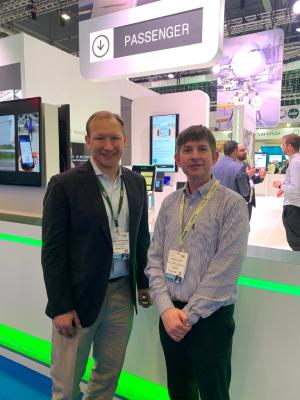
Georg Oschmann, VP Passenger Processing at SITA, emphasised the company’s commitment to a “digital journey” that offers continuous flow throughout the airport. “Technology on the move” is the mantra behind SITA’s approach to reducing friction at each checkpoint, from check-in to security and boarding gates. With a rapidly expanding global footprint, SITA’s biometric systems now span across airports worldwide, including a leading position in biometric credential deployments at various touchpoints.
“Passengers are now experiencing the advantages of biometrics more than ever before,” says Oschmann. “We are simplifying the journey, cutting down on the time spent at each checkpoint and making it easier for travellers to move through the airport seamlessly.”
One of the standout innovations is SITA’s enhanced biometric enrolment process, which allows passengers to start their digital journey directly from their smartphones. Rather than waiting in line at a kiosk or counter, passengers can complete their biometric enrolment before they even arrive at the airport. This means that travellers can enrol online and use their mobile phones to complete the process, making the entire airport experience smoother and more convenient.
“The idea is to minimise the pain points, especially at the points where people tend to get stuck,” Oschmann explains. “We’ve made it possible for passengers to start their journey digitally, right from the comfort of their own phone, and this significantly improves the end-to-end experience.”
What differentiates SITA’s approach is the focus on connected touchpoints across the airport ecosystem. Traditionally, airport operations have been fragmented, with various systems for check-in, security, and boarding. SITA aims to bring these touchpoints together, allowing airlines, airports, and governments to collaborate in real-time for a smoother, more cohesive process.
“Our strength lies in the ability to connect touchpoints – not just individual systems,” says Oschmann. “From agent-based solutions to mobile technology, we are bridging the gaps between different stakeholders, ensuring that the journey is not only more efficient for passengers but also streamlined for airports and airlines.”
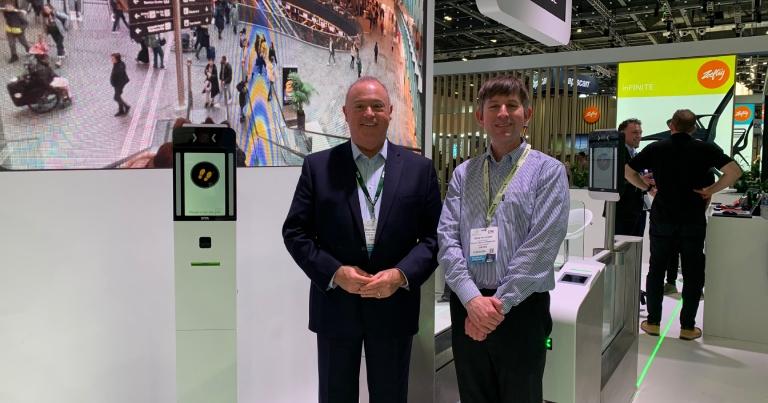
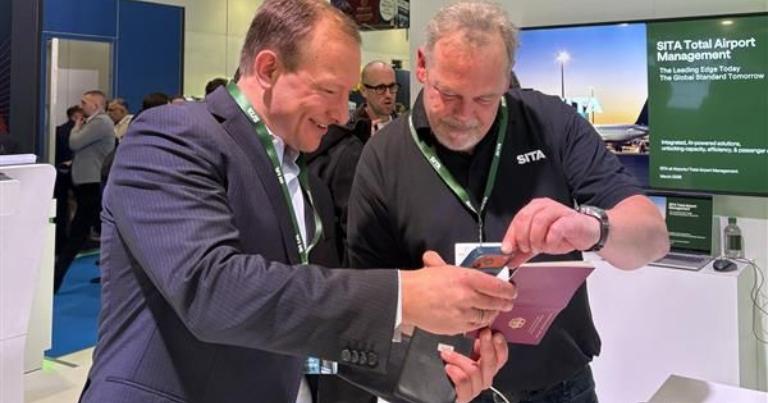
As part of its strategy, SITA is introducing mobile solutions that empower airport staff to move freely around the terminal. One of the highlights is the agent app, which allows agents to conduct check-in and boarding processes from mobile devices instead of being tied to counters.
“Imagine an agent walking around with a mobile device, assisting passengers where they are,” Oschmann shares. “This mobile flexibility helps airports adapt to demand in real-time. If there’s a bottleneck in one area, an additional agent can quickly be sent to assist passengers, reducing queues and improving the overall flow of operations.”
For easyJet, SITA has already deployed this mobile technology at major European airports, giving ground agents the ability to manage the check-in and boarding process without being confined to a physical counter. “After just two hours of training, agents were using the devices to check-in and board passengers seamlessly,” says Oschmann. “This intuitive technology is quickly embraced because it simplifies the process and makes the agents more efficient.”
SITA’s solutions aren’t just in the concept or pilot phase – they are live and actively transforming airport operations. The company’s partnership with easyJet represents a clear example of the deployment of these innovative technologies at scale. Through SITA’s mobile agent app, easyJet has been able to reduce the reliance on traditional check-in counters, creating more flexible and adaptable operations at airports across Europe.
“We’re seeing rapid adoption of this technology,” Oschmann notes. “The simplicity of the app makes it incredibly easy for agents to start using it with little downtime. This is a game-changer for efficiency.”
Looking ahead, SITA envisions an even more connected and intuitive passenger experience, where technology doesn’t just complement the physical journey but enhances it at every step. “The future is all about creating a continuous, digital journey that allows passengers to move through the airport with ease,” says Oschmann. “Biometric systems, mobile applications, and connected touchpoints will come together to make airports smarter and more efficient.”
For SITA, the future of passenger processing is about embracing technology on the move. By integrating biometrics, mobile solutions, and connected touchpoints, SITA is helping airports and airlines create a more flexible, seamless, and efficient travel experience. With biometric enrolment on smartphones and mobile agent apps already in use, the journey toward a fully digital and hassle-free airport experience is already underway.
Shaping the future of travel: A smarter, seamless, and more efficient journey ahead
As airports continue to evolve into hubs of advanced technology and seamless passenger experiences, the innovations highlighted here serve as a glimpse into the future of air travel. Whether it’s harnessing the power of artificial intelligence, robotics, or biometric systems, the industry is moving toward a future where operational efficiency and enhanced passenger experiences are no longer competing priorities, but complementary outcomes. These breakthroughs offer a roadmap to a more predictable, stress-free, and sustainable journey for passengers, while empowering airports and airlines to operate at peak efficiency. With these innovations, the sky’s the limit for what the future of travel holds, creating a smarter, more connected world for passengers and operators alike.
Mark your diary for FTE’s 2026 global event schedule in Dublin, Dallas and Singapore

- APEX FTE EMEA co-located with APEX FTE Ancillary & Retailing – 9-11 June 2026, Dublin. Headline Partner: Ryanair
- FTE Global – 8-10 September 2026, Dallas, Texas. Headline Partners: DFW, Southwest Airlines and Dallas Love Field Airport
- APEX FTE EXPO Asia – 18-19 November 2026, Singapore. Combining APEX Global EXPO with FTE’s regional APAC event. Headline Partners: Changi Airport Group and Singapore Airlines
You may also be interested in
12 technology and CX trends that can enhance airline and airport operations in 2026
The FTE Commercial Collaboration Playbook – delivered in partnership with Munich Airport