




International Women’s Day 2026: How female leaders from Schiphol, Star Alliance, CLT, ADR, YVR and more are driving the next era of passenger experience innovation
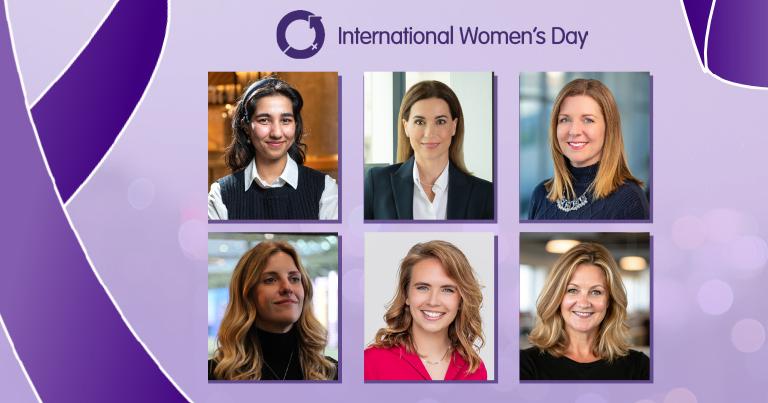
As aviation accelerates its digital transformation, strong innovation leadership is critical to delivering seamless, efficient and truly passenger-centric journeys. To mark International Women’s Day on 8 March, Future Travel Experience presents Part 1 of a special editorial focus in which we spotlight female innovation leaders from Schiphol Group, Star Alliance, Charlotte Douglas International Airport, Aeroporti di Roma, Vancouver Airport Authority and RAVE Aerospace. In a series of in-depth interviews, we explore their career journeys, the progress and challenges of gender equality in aviation, and the technologies shaping the next era of travel. You can view Part 2 of our special editorial focus – featuring female innovation leaders from Denver International Airport, KLM Royal Dutch Airlines, Fraport, Anuvu, and AirFi – by clicking here.
Zahra Merchant, Chapter Lead of Robotics, Royal Schiphol Group
Zahra Merchant, Chapter Lead of Robotics at Royal Schiphol Group (a Corporate Partner of the FTE Digital, Innovation & Startup Hub) was introduced to aviation and leadership early on. “Growing up, my mother held senior roles in revenue optimisation and forecasting at a major global airline,” she begins. “Aviation felt familiar – but innovation became my language for shaping it.”

Zahra studied at the Glasgow School of Art, where her interest in design evolved into a fascination with creative thinking and speculative futures. “For my graduation thesis project, I developed a subscription-based airline service that reimagined how passengers book and experience travel. That project gave me an early lesson I still carry: imagination becomes leadership when you can turn it into something others can build on.”
After graduating, Zahra knew she wanted to lead innovation in the sector, but also recognised the need for a stronger strategic grounding. She pursued a master’s degree in strategic Product Design at Delft University of Technology, and during those studies secured a summer internship at Schiphol Airport’s Innovation Hub – “quite literally a dream role where aviation and innovation intersect.” Over time, Zahra worked across a range of projects and gained a deep understanding of airport operations and emerging technologies.
“Leadership was always my ambition, and I was open about it from the outset,” she explains. “I’ve been fortunate to work with mentors who gave me the trust – and the responsibility – to step into leadership early. That naturally led to my ownership of robotics within aviation, where innovation meets operational reality. One thing I’ve learned quickly is that credibility in aviation isn’t granted by job titles – it’s earned in the places where operations are unforgiving. The more complex the environment, the more leadership becomes less about visibility and more about clarity, calm judgement, and follow-through. I’m still learning, but I’m deeply grateful to the people who shaped my journey – especially my mother, my leaders and my peers – who have helped me lead with purpose and persistence.”
“Visibility isn’t the end goal – but it is how possibility becomes real for the next generation”
While there has been meaningful progress in the aviation industry towards gender equality – particularly in leadership and innovation – the work is far from complete. “As someone at the start of my leadership journey, I genuinely feel I now have access to the same opportunities as my male counterparts, and that matters,” Zahra shares. “We’re also seeing more women in visible, influential positions across aviation. Closer to home, Schiphol Airport’s executive board includes Patricia Vitalis as COO and Esmé Valk as CPTO and of course within the Netherlands Marjan Rintel, CEO of KLM. Beyond the Netherlands, leaders such as Christina Cassotis, CEO of Pittsburgh International Airport, and Bernadette Berger, Director of Innovation at Alaska Airlines, are shaping the future of the sector. Visibility isn’t the end goal – but it is how possibility becomes real for the next generation.”
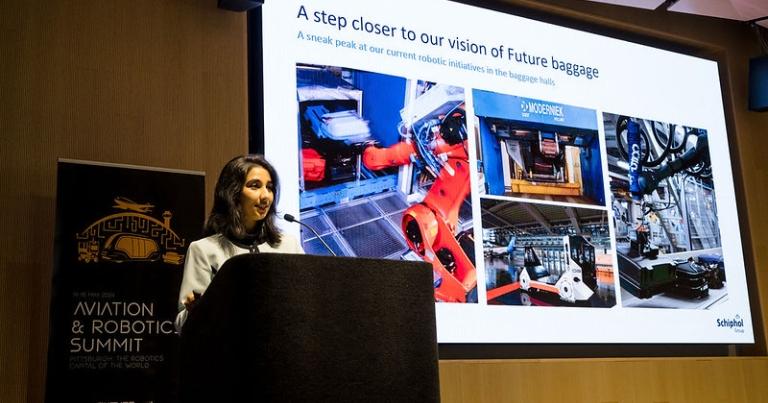
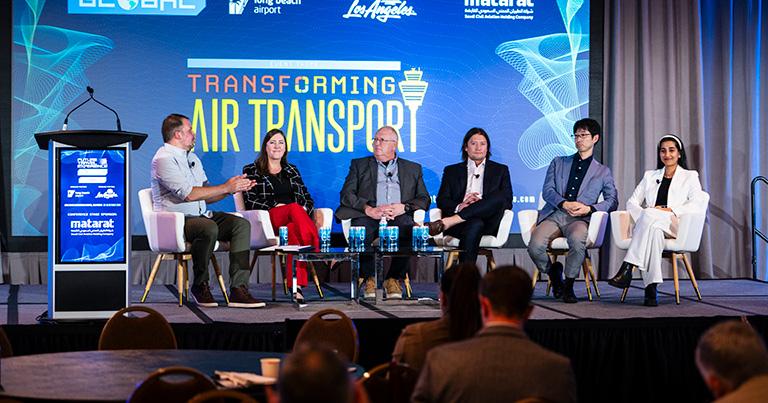
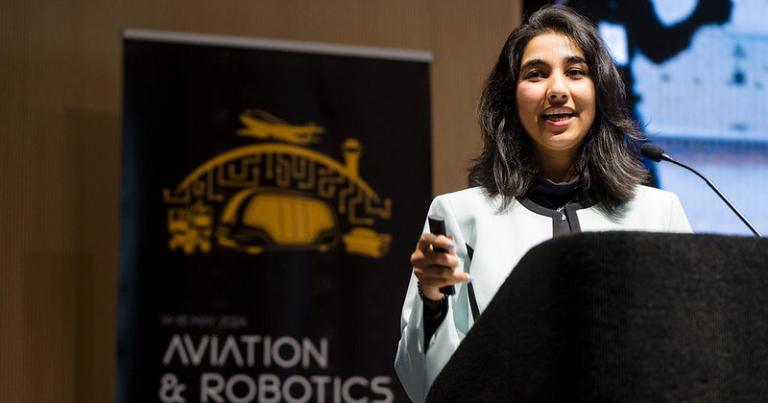
Progress is also supported by platforms such as Future Travel Experience (FTE), which focus on ideas, impact and innovation rather than gender or hierarchy. “I still remember the first time I was recommended to speak at an FTE event – I joined a call with Ryan Ghee, COO of FTE, feeling nervous and questioning whether my age, experience or lack of a grand title would count against me,” Zahra says. “Instead, I was met with respect and treated as an equal with something valuable to contribute. Being given that platform – and seeing the audience engage – was the moment I truly believed the industry was moving towards recognising ideas on their merit, regardless of gender, background or identity.”
That said, progress is uneven. In less visible areas of aviation – such as baggage handling and ramp operations – leadership and innovation remain heavily male-dominated, and outdated biases can surface. “As a woman working primarily in baggage innovation, I am often the only woman in the room: you can feel the scepticism before credibility, and you notice you’re being assessed before you’ve even spoken,” Zahra shares. “That’s precisely why the industry needs to accelerate change where it’s least glamorous – because that’s where operational reality lives. And there’s a second barrier that’s quieter but equally important: awareness. Until I stepped into this role, I didn’t even know these opportunities existed – and I believe that is true for many young women. If you can’t see the path, it’s much harder to choose it. With more women taking leadership roles across all parts of aviation, I’m confident meaningful change will follow – not as a campaign, but as a new normal.”
“Diversity isn’t there to serve optics; it improves the quality of decisions being made”
Zahra explains that her generation has grown up with fewer overt gender barriers, and in the Schiphol Group’s Innovation Hub, challenges and opportunities are shared equally. “In many ways, the fact that I struggle to attribute specific moments to gender alone reflects how progressively parts of the industry – and particularly my organisation – are moving.”
The difference becomes clearer when you step into physically and culturally demanding operational environments – baggage halls, ramp operations, heavy-equipment zones – where leadership presence is still often associated with being constantly on the ground, assertive and highly visible. “In those spaces, women may be tested more frequently or required to prove competence repeatedly,” Zahra says. “The opportunity is that these environments need diverse perspectives the most. When innovation is shaped by a single way of thinking, solutions often optimise for efficiency alone, rather than resilience, safety and long-term sustainability. Diversity isn’t there to serve optics; it improves the quality of decisions being made. Personally, the greatest opportunity I’ve encountered is the ability to act as a bridge – between technology and operations, strategy and execution, and often between very different voices in the room. When people feel safe to challenge assumptions, innovation becomes richer and more impactful. In an industry as complex and interconnected as aviation, that’s not just beneficial – it’s essential.”
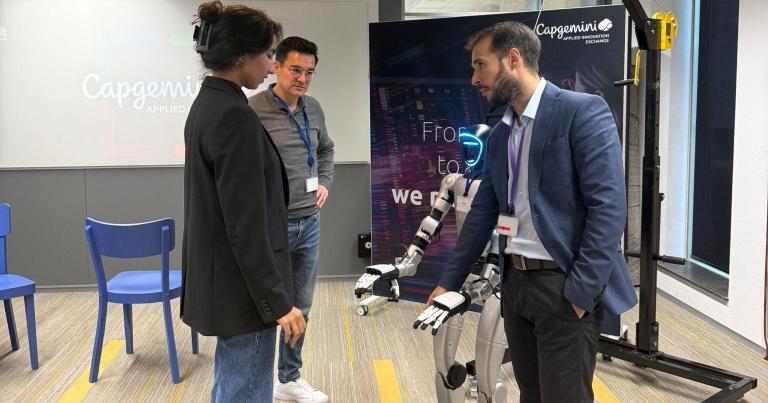
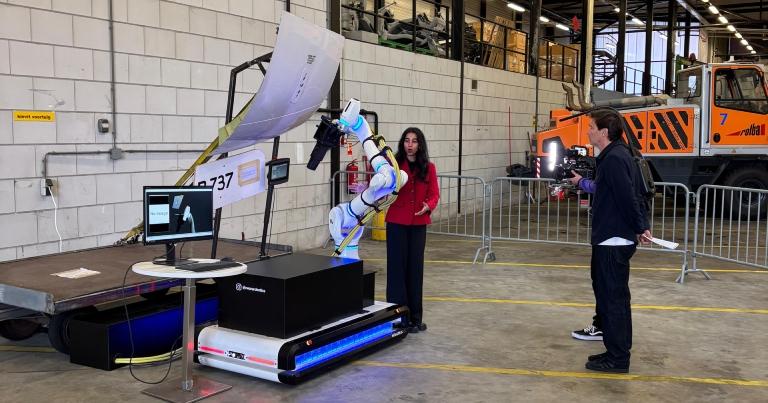
Schiphol’s collaborative approach to innovation
Technology has long been central to Schiphol Airport’s innovation agenda. In fact, robotics has been deployed in baggage halls for decades – long before robotics became an industry buzzword. So artificial intelligence (AI), robotics, automation and the Internet of Things aren’t new additions to Schiphol’s roadmap; they are long-standing focus areas it continues to refine and scale.
“Today, we are actively testing and implementing these technologies across a range of operational processes, from foreign object debris detection and ground power unit connections to baggage loading and unloading,” Zahra shares. “Our approach to investment is deliberately structured and risk-aware. We use a stage-gated innovation model that aligns technology maturity with operational readiness. Depending on the technology readiness level, we begin with proof of technology to validate whether a solution can technically perform a specific task, then progress through proof of concept, proof of operations, proof of implementation and finally proof of scale. This phased approach allows us to test and embed emerging technologies into live operations while minimising operational disruption and financial risk.”
Before entering even the earliest stage, Schiphol conducts thorough market scans and technology scouting to ensure it is pursuing viable and future-proof solutions. “Collaboration is key: we work closely with internal stakeholders and only invest once there is a clear operational need and collective validation,” Zahra explains. “Crucially, I believe innovation doesn’t happen in isolation. Aviation is an interconnected ecosystem, and progress accelerates when the industry moves together. That’s why we collaborate with airlines, ground handlers, technology partners and fellow airports – prioritising joint programmes and pilots where there is shared value. In our experience, innovation is most successful when it is co-created – and scaled – collectively.”
“Leadership is about showing up with clarity, doing the hard work consistently, and bringing others with you”
Zahra shares some invaluable advice for the next generation of women aspiring to leadership roles in aviation and technology:
- “My first piece of advice is simple: confidence matters. If you have been invited into the room, your perspective is valued – don’t undermine that. Ask questions, stay curious and speak up even when it feels uncomfortable. Most of the time, people respond positively to genuine interest. With practice, fear fades – and confidence follows.”
- “Second: learn to stop apologising for having an opinion. I often sit in high-level discussions where women preface their contributions with ‘Sorry to interrupt…’ or ‘Sorry, I think…’. You rarely hear men do the same. Speak with conviction. You [women] are just as entitled to that space as anyone else at the table.”
- “Third: be vocal about your ambitions and intentional about your development. Seek out leaders, mentors and peers whose careers inspire you and learn from their journeys. I’ve been fortunate to work with mentors who wanted to see me grow – but that support came because I was consistently clear about my aspirations. I said yes to opportunities, asked for feedback, and worked on myself continuously. Leadership paths don’t appear by accident; they are built through clarity, curiosity and commitment.”
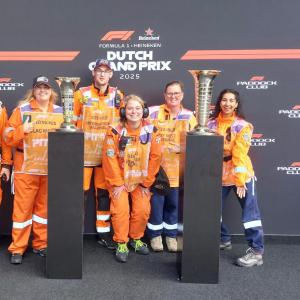
- “Finally: cultivate interests beyond aviation and technology. It has made a real difference for me – I marshal at motorsport events, and it’s become an unexpected conversation starter. Aviation and technology are still male-dominated fields, and a lot of relationship-building happens through informal networking. Having a hobby you are passionate about creates natural points of connection, makes conversations more memorable, and pushes you beyond your comfort zone – which is where growth tends to happen.”
In conclusion, Zahra shares that the principle beneath all of it is this: “Leadership is not about fitting a mould. It’s about showing up with clarity, doing the hard work consistently, and bringing others with you.”
Find out more about the FTE Digital, Innovation & Startup Hub >>Ambar Franco, Vice President Customer Experience, Star Alliance
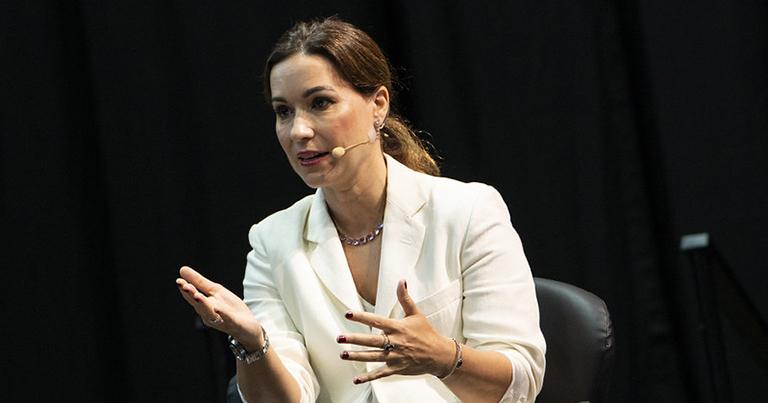
Ambar Franco, Vice President Customer Experience at Star Alliance, has spent two decades in travel and hospitality, working at the intersection of customer experience, partnerships and growth. “What drew me to Star Alliance was the scale of the opportunity,” Ambar begins. “Aviation is one of the most operationally complex industries in the world, and within an alliance environment, that complexity multiplies. We work across 25 member airlines, different systems, and cultures. Here, it is not about innovating for innovation’s sake. It is about making multi-airline journeys feel effortless for travellers. That challenge of aligning strategy, technology and collaboration on a global scale is what excites me.”
“Diversity of thought directly strengthens innovation and long-term performance”

Ambar notes that aviation has made visible progress in leadership representation and in broadening the talent pipeline. “The opportunity to accelerate change lies in continuing to expand access to leadership pathways and ensuring that diverse perspectives are actively shaping decision-making. In an industry that serves a global customer base, that diversity of thought directly strengthens innovation and long-term performance.”
Leading innovation in aviation means navigating complexity, aligning multiple stakeholders, and driving change within a highly regulated environment. “These dynamics require clarity of vision, resilience, and the ability to build alignment across diverse teams,” Ambar shares. “Diversity of perspectives is one of the greatest opportunities – bringing together different viewpoints often uncovers more resilient and practical solutions. In customer experience especially, nuance matters – understanding traveller expectations directly shapes the quality of innovation outcomes.”
Innovation in aviation must be purposeful. Star Alliance breaks the customer journey into four pillars – booking, airport, connections, and loyalty – to pinpoint key areas and focus on improvements that deliver measurable impact. “At Star Alliance, over 50 shared standards across member airlines create rhythm and consistency, supported by bi-annual audits,” Ambar explains. “This governance provides the foundation for scalable innovation. Culture is equally important. Innovation becomes sustainable when teams understand the shared ambition, creating a world that feels effortlessly connected, and when collaboration across member airlines is seen as a strategic advantage.”
Star Alliance’s work focuses on making multi-airline journeys seamless for customers. “We’ve expanded free seat selection across more than 93% of our network and paid seat selection across over 55%,” Ambar says. “For travellers, selecting a seat across multiple carriers feels simple. Behind the scenes, it requires alignment between systems – delivering convenience for customers while also unlocking ancillary revenue for our member airlines. Additionally, our Star Connection Centres operate at key hubs globally, combining real-time data with on-the-ground coordination to support passengers during tight or disrupted connections. In 2025 alone, over 300,000 passengers benefited, turning moments of uncertainty into reassurance. Across booking, airport, connections, and loyalty, each initiative brings the interline experience closer to what customers expect from a single airline journey.”
Technology is the backbone of the Alliance. When Star Alliance evaluates emerging technologies, it does so through the lens of the customer journey. “The question is never ‘How do we use AI?’ but rather ‘Where can technology remove friction or enhance decision-making?’,” Ambar explains.
A strong example is loyalty recognition across the 25 member airlines. “For a traveller, status recognition feels simple,” Ambar says. “But behind the scenes, this requires real-time validation across multiple systems and member airlines. Our proprietary technology processes millions of tier status checks daily, ensuring benefits such as priority services and lounge access are delivered accurately and securely. In just over a year, more than 167 million validation requests have been processed. This level of precision strengthens customer trust while also reinforcing fraud prevention. Technology is an enabler – not an end in itself. Ultimately, its value lies in how effectively it supports a seamless, consistently delivered experience across the Alliance.”
“Leadership in an Alliance environment is about influence, clarity and alignment”
Ambar concludes with some invaluable advice for the next generation of women aspiring to leadership roles in aviation and technology: “Stay curious about adjacent industries, hospitality, technology, retail, because innovation often happens at the intersections. At the same time, invest in developing your adaptability and soft skills. Aviation and technology evolve quickly, and the ability to learn continuously, navigate change and communicate with clarity is just as important as technical capability. Learning should be continuous, regardless of where you are in your career. And focus on collaboration. Leadership in an Alliance environment is about influence, clarity and alignment. The ability to bring different stakeholders together around a shared ambition is one of the most valuable skills you can develop.”
Martha Edge, Innovation and Experience Director, Charlotte Douglas International Airport
Martha Edge, Innovation and Experience Director at Charlotte Douglas International Airport (CLT) – a Corporate Partner of the FTE Digital, Innovation & Startup Hub – had an interest in an aviation career from a young age. “I was inspired by my aunt’s work as a flight attendant for Pan Am – a time I remember as an elegant era of flying. I was fascinated by the concept of flight and loved hearing her stories from trips around the world.”

When old enough to apply for a flight attendant position herself, Martha completed the application process and several recruitment steps. “While I didn’t land a flight attendant role, I was offered an interview for a part-time position with an airline at the airport,” she shares. “That opportunity opened my eyes to the wide variety of roles within the airport environment. I was thrilled to begin my career as a ticket agent and gate agent, occasionally assisting with baggage services when operational needs arose. Over the next decade, I advanced through multiple roles, each with increasing responsibility. Eventually, during a major airline merger, I was fortunate to take an early retirement package – a decision that prompted me to consider a career shift aligned with my academic background in the helping profession. Although I didn’t ultimately pursue that path, I found myself drawn back to the airport – this time working for the owner and operator of the facility. It was a full-circle moment that allowed me to continue contributing to an industry I’ve always loved.”
Fast forward to Martha’s fourth role at CLT Airport, where she has been intentional about moving into positions that allow her to be most helpful to the business and its operations. “Today, I have the privilege of leading CLT’s innovation and experience efforts. My journey has taken me through Airside Operations, Terminal Operations, and now into the Innovation and Experience division. Each role has offered the opportunity to make things better for the industry – and that’s where I thrive. To me, innovation is exactly that: making things better. I’ve always had a passion for solving problems and improving processes, and that passion has led me to the perfect place at this moment in my career.”
“Aviation thrives on innovation, and innovation thrives on diversity”
Martha shares that, in her opinion, the progress toward gender equality in the aviation industry has been truly transformative. “When I entered the industry almost three decades ago, there were many women working in aviation, but very few held leadership titles,” she explains. “At that time, a transition was just beginning to challenge the stigma that if you were a woman in aviation, you must be a flight attendant. Today, the industry looks very different – and I’m proud of the progress that’s been made. Seeing more women in executive leadership and innovation roles is inspiring. My hope for the future is that we continue to build the pipeline by encouraging girls at a young age. Targeting primary and elementary education and showcasing the wide range of careers in aviation can help spark interest early and sustain it through higher education and beyond. Aviation thrives on innovation, and innovation thrives on diversity. Ensuring women have equal opportunities to lead and shape the future of this industry isn’t just the right thing to do – it’s essential for growth and resilience.”
As a woman leading innovation with a background in operations, not technology, Martha highlights that unique challenges for her haven’t come in the traditional sense. “While I use technology extensively, I don’t write code or design data architecture,” she says. “Innovation and technology are often linked, but they’re not synonymous. Innovation can be as simple as a process improvement without a tech component. When I approach innovation, my focus is on fixing or improving things. My philosophy is to explore all possible solutions – those that work today and those that can evolve as circumstances change. For me, innovation is about adaptability and creating outcomes that stand the test of time. Diversity of perspective plays a critical role in this process. I’ve been a strong advocate for looking beyond the obvious and considering solutions that may not come from where we expect – such as assuming technology is always the answer. I value human-centred design, infrastructure innovations, and believe incorporating diverse viewpoints leads to solutions that are more inclusive, practical, and impactful.”
“Creating an environment where diverse perspectives are valued helps drive meaningful innovation”
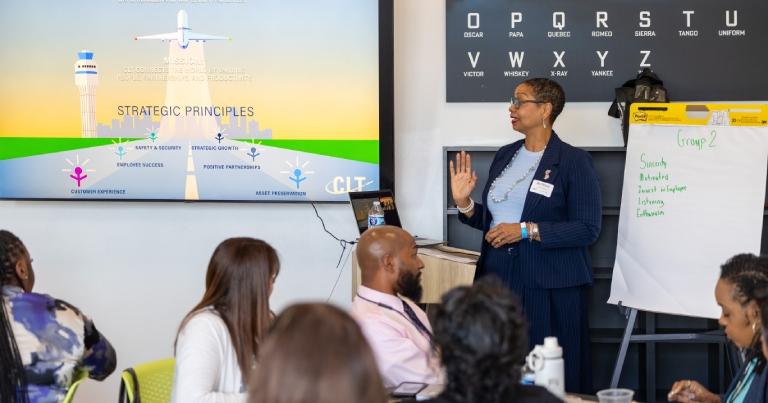
Collaboration is key to fostering innovation in a highly regulated environment. Martha champions positive change by encouraging input from all stakeholders to ensure compliance while exploring new ideas. “Clear compliance roles are essential, but equally important is listening to those who work daily within these regulations. Their insights often lead to practical, innovative solutions,” Martha explains. “Listening is critical – it builds trust and understanding, which are the foundation for influencing change. No one person knows everything, so creating an environment where diverse perspectives are valued helps drive meaningful innovation through positive change management.”
CLT strives to understand the entire customer journey and the diverse needs of its passengers. “Airports operate like complex ecosystems, where every element must work seamlessly together,” Martha says. “Our initiatives focus on creating smooth, connected experiences – from efficient movement through the airport to meaningful, face-to-face interactions with frontline teams.”
A current key effort is CLT’s new Customer-Centric Culture initiative, which establishes a consistent, airport-wide standard for customer interactions. “While focusing on people may seem basic, it has the greatest impact on passenger satisfaction,” Martha shares. “Empowering employees to leverage their unique service skills not only enhances the traveller experience but also boosts engagement, creating a positive ripple effect throughout the airport.”
CLT is also combining these human interactions with data-driven insights to optimise processes and understand realities. By analysing passenger flow and identifying chokepoints, the airport can marry seamless operations with exceptional service – reshaping the passenger journey into one that feels both efficient and personal.
A strategic approach: Evaluating technologies based on impact, scalability, and alignment with long-term goals
Technologies like artificial intelligence (AI), robotics, automation, and the Internet of Things (IoT) are already embedded in the aviation ecosystem. “Their influence on our innovation roadmap comes from figuring out how we can safely and effectively leverage these tools within our area of responsibility,” Martha explains. “Our focus is on growing their usefulness while solving real operational challenges – such as improving passenger flow, enhancing security processes, and creating more personalised experiences.”
Prioritising investment in emerging technologies is often the single most challenging aspect of innovating at airports. Many airports, including CLT, operate on budgets planned 18 months or more in advance. “Emerging technologies don’t always follow that timeline – they often appear when funds aren’t immediately available,” Martha says. “To address this, we take a strategic approach: evaluating technologies based on impact, scalability, and alignment with long-term goals, while exploring phased implementations and partnerships to maximise resources. Ultimately, our roadmap balances embracing innovation with fiscal responsibility and regulatory compliance, ensuring that every investment delivers measurable value to both passengers and operations.”
“Aviation and technology are a powerful combination for building a career that can take you far”
In conclusion, Martha’s advice to the next generation of women aspiring to leadership roles in aviation and technology is to write your own story and follow what excites you. “Let curiosity guide you toward opportunities that offer continuous growth. Aviation and technology are a powerful combination for building a career that can take you far. For me, the mindset of ‘How can I fix this?’ has been a guiding principle. Focus on solutions rather than getting stuck in problems. Innovation and leadership thrive when you approach challenges with a problem-solving attitude and a commitment to making processes better. Trust your instincts, stay curious, and never underestimate the impact of persistence and creative thinking.”
Find out more about the FTE Digital, Innovation & Startup Hub >>Giorgia Marizza, Open Innovation & Partnership, Aeroporti di Roma
Giorgia Marizza, Open Innovation & Partnership at Aeroporti di Roma (a Corporate Partner of the FTE Digital, Innovation & Startup Hub) began her professional journey in digital innovation consulting at PwC Italy. Here she worked on business analysis projects, the development of digital platforms, and AI- and RPA-based automation solutions for manufacturing companies and financial institutions.

“This experience enabled me to develop a systemic view of innovation: not just technology, but the integration of processes, people, and business models, with a strong focus on delivering measurable value,” Giorgia shares. “Then I joined Aeroporti di Roma within the Innovation team, where I had the opportunity to apply these capabilities in a highly complex operational environment. In this context, driving innovation means orchestrating a multifaceted ecosystem of internal and external stakeholders. In parallel, I strengthened my academic foundation by completing a Master in Innovation & Design at POLIMI Graduate School of Management, further reinforcing a human-centred and experimentation-driven approach. I was drawn to aviation because of its nature as an integrated ecosystem: an airport is both a physical and digital platform where mobility, retail, security, and logistics converge. Leading innovation in this context means generating tangible, measurable impact on both passenger experience and operational efficiency, contributing to the transformation of a critical national infrastructure.”
Diversity is a tangible asset to delivering truly passenger-centric innovation
Giorgia notes that, in recent years, the aviation sector has embarked on a concrete path toward greater inclusion. While historically a predominantly male industry, the landscape is gradually evolving: female representation is increasing, particularly in corporate, digital, and innovation functions, where more women are also taking on leadership roles. “In a complex and continuously transforming environment such as the airport and aviation ecosystem, innovation is increasingly recognised as a strategic lever, capable of valuing multidisciplinary expertise and diverse perspectives,” Giorgia says. “This is helping to broaden participation and make the sector more open to talent with varied backgrounds, where diversity can be one of the ingredients of success. Progress is not yet fully homogeneous across all functions, but new opportunities for growth are also emerging in more technical and operational areas – such as engineering, operations, and infrastructure. Female representation, particularly at senior levels, is gradually increasing and represents an area where the sector can continue to invest with confidence.”
Moving forward in this direction means strengthening inclusive leadership models, promoting merit-based development, and structuring clear career pathways to foster broader and more qualified participation. “In our case, for example, the Innovation team is composed almost entirely of women with diverse professional backgrounds across aviation, including colleagues who have held long-standing operational leadership roles such as Terminal Manager, demonstrating how technical expertise, operational experience, and strategic innovation can successfully converge within a highly specialised environment,” Giorgia explains. “Leading open innovation initiatives in a highly specialised sector means operating in complex environments where credibility is built through expertise, strategic vision, and strong execution capabilities. In this context, diversity is a tangible asset: truly passenger-centric innovation requires empathy, the ability to identify emerging needs, and cross-functional integration. Teams that are diverse in gender, experience, and background contribute to delivering more comprehensive, inclusive, and sustainable solutions, ultimately reinforcing the competitiveness of the aviation industry as a whole.”
“Leading innovation requires balancing rigour with openness to change”
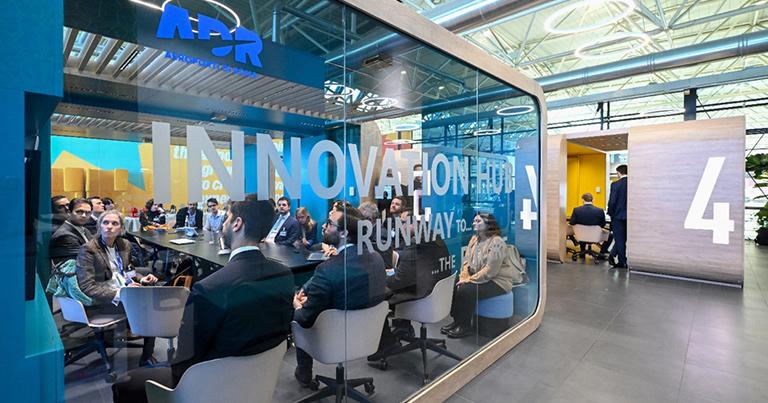
Aviation is a highly regulated and safety-critical industry, characterised by rigorous standards and structured processes. “In this context, innovation cannot be improvised: it must be methodically governed, strategically aligned, and fully compliant with operational and regulatory requirements,” Giorgia shares.
Aeroporti di Roma has developed a model built on four pillars:
- Internal innovation, leveraging ideas and expertise from colleagues
- Startup acceleration programmes
- Industrial and academic partnerships
- Corporate Venture Capital through ADR Ventures
“From a personal perspective, leading innovation requires balancing rigour with openness to change,” Giorgia says. “Diversity of perspective plays a critical role: it enables a systemic understanding of challenges, balancing operational needs, compliance constraints, and passenger-centricity, ultimately generating more robust and sustainable innovation outcomes.”
Through its Open Innovation model and Innovation Hub at Fiumicino Airport, Aeroporti di Roma provides startups with a real-world environment – a true ‘Smart City’ – where they can test solutions under concrete operational conditions. This approach reduces technological risk, enables rapid validation, and assesses scalability within a complex ecosystem.
“At the same time, the very richness and heterogeneity of the airport ecosystem represent a significant challenge for startups,” Giorgia explains. “They must adapt to a regulated environment, engage with multiple stakeholders, and integrate their solutions into existing processes while fully complying with safety and security requirements. The support of our internal teams is essential in this phase: we guide startups in designing and executing pilots, facilitating operational integration and accelerating their path toward adoption.”
ADR’s fourth Call4Startups: A structured open innovation pathway
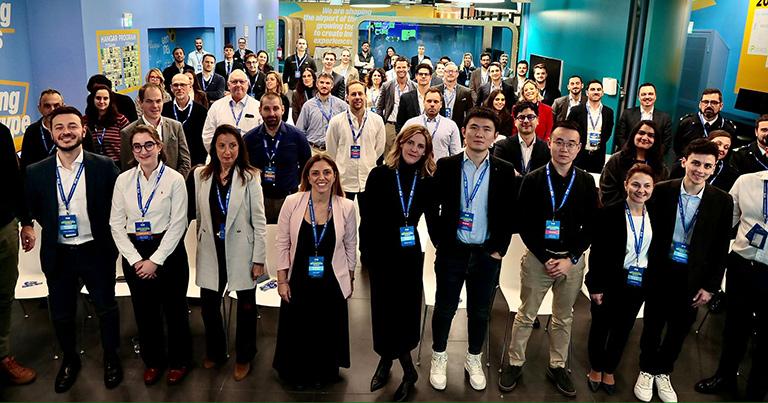
With the fourth edition of the Call4Startups, within the Runway to the Future Acceleration Program, Aeroporti di Roma is leading a structured open innovation pathway focused on six strategic areas that are concretely reshaping the passenger journey:
- Infrastructure innovation, to make airport spaces smarter, more modular, and more resilient.
- AI-based enterprise solutions, supporting data-driven decision-making, flow forecasting, and operational optimisation.
- Convergence between commercial offering and passenger experience, integrating retail, services, and digital touchpoints into a seamless omnichannel ecosystem.
- Robotics, to automate high-impact operational activities while enhancing safety and efficiency.
- Sustainability, with solutions aimed at decarbonisation and responsible resource management.
- Predictive maintenance and smart asset management, to increase reliability and ensure service continuity.
Selected startups develop an eight-month Proof of Concept at the Innovation Hub in Fiumicino, supported by dedicated funding and direct access to the live airport operating environment. “This model allows us to accelerate the adoption of emerging technologies and rapidly translate them into operational solutions that enhance passenger experience and overall airport performance,” Giorgia says.
Fostering a culture of innovation within a highly regulated and operationally complex organisation such as Aeroporti di Roma requires acting simultaneously on governance, mindset, and execution. Giorgia highlights four key elements:
- “The first element is strategic clarity. Innovation cannot be perceived as a stand-alone or experimental initiative; it must be fully aligned with the company’s industrial, operational, and sustainability objectives. Every initiative is therefore assessed based on its measurable contribution to operational performance, service quality, and infrastructure resilience.”
- “The second pillar is structured cross-functional collaboration. Through open innovation programmes, internal challenges, and early engagement of business units, we involve key stakeholders from the very beginning. In a safety-critical airport environment, the early involvement of operations, security, IT, and infrastructure teams is essential to ensure feasibility, regulatory compliance, and smooth integration.”
- “The third element is a culture of controlled experimentation. We promote a Proof of Concept approach within real operating environments, supported by clear validation metrics and defined timelines. This enables us to reduce technological risk, make data-driven decisions, and rapidly scale successful pilots.”
- “Finally, we strongly invest in people empowerment and capability building. Innovation is not driven by technology alone, but by individuals who are willing to challenge the status quo and propose tangible improvements. Creating structured listening channels and empowering operational teams is key to transforming a complex organisation into an adaptive and continuously evolving ecosystem.”
Technologies such as artificial intelligence (AI), robotics, automation, and the Internet of Things (IoT) are no longer experimental domains; they are strategic pillars of the innovation roadmap at Aeroporti di Roma. AI supports key activities including passenger flow forecasting, operational resource optimisation, and personalisation of the airport experience. “We are adopting a structured research and development approach in robotics, testing solutions that may further enhance airport operations in the future,” Giorgia shares. “These include robotic arms for specialised operational tasks, cleaning robots for high-traffic environments, robotic and intelligent systems for runway surface monitoring, and enabling predictive maintenance models. Automation and robotics increase productivity, operational safety, and service quality, while IoT enables predictive infrastructure management by transforming real-time data into actionable operational insights.”
Aeroporti di Roma’s investment prioritisation is based on three main criteria: measurable impact on passenger experience or cost efficiency, scalability and integration with existing systems, and time-to-value and economic sustainability. “We follow a data-driven approach centred on rapid Proofs of Concept and clearly defined validation metrics to reduce technological risk and accelerate the adoption of high-potential solutions,” Giorgia explains.
“The industry needs a new generation of leaders capable of integrating technical excellence with human-centred vision”
Giorgia concludes with some invaluable advice for the next generation of women aspiring to leadership roles in aviation and technology:
- “Build strong technical expertise: preparation is the foundation of credibility.”
- “Stay humble and keep learning, and do not wait until you feel ‘100% ready’ before stepping into responsibility. Growth happens outside your comfort zone.”
- “Understand the problem deeply before jumping to solutions: impactful innovation starts with listening and systemic analysis.”
“I also encourage young women to seek inspiration from female role models and to find a mentor who can support and enrich their professional journey,” Giorgia adds. “Continuous exchange and dialogue are essential – no leadership path is built in isolation. Aviation and technology are undergoing profound transformation driven by sustainability, digitalisation, and seamless travel and the industry needs a new generation of leaders capable of integrating technical excellence with human-centred vision.”
Find out more about the FTE Digital, Innovation & Startup Hub >>Danielle Palfery, Manager, Innovation, Vancouver Airport Authority

For Danielle Palfery, Manager, Innovation at Vancouver Airport Authority (a Corporate Partner of the FTE Digital, Innovation & Startup Hub) aviation has always been part of her story. “My grandfather was a VP at McDonnell Douglas, and my dad began his career there before becoming a VP at Avcorp. Aerospace manufacturing, and conversations about Canadian innovations like the Avro Arrow, were regular dinner-table topics growing up,” Danielle begins. “Some of my favourite childhood memories are at YVR. Growing up in the 90s, while most kids went to the park, my dad and grandpa would often take my mom, sister, and me to the airport on weekends. We would share a box of Tim Hortons Timbits while watching planes land and take off. I can still hear my New Yorker grandpa pointing at a plane and shouting in his Brooklyn accent, ‘look at that machine, built to last!’ It felt like magic. For us British Columbians, YVR has always felt like more than an airport – it’s a special place of connection and a true integrator of people, ideas and opportunity.”
Danielle’s path to innovation and to YVR wasn’t linear. She started in tech-sector communications, supporting product launches and translating complex technologies into clear narratives. “I later joined YVR’s Communications Team, closely connected to the operation, which gave me a deep appreciation for the complexity behind that childhood wonder. From there, I jumped over to the Innovation and Technology Group at YVR where I now manage an incredible team who leads digital transformation and adoption at the airport.”
“Diverse lived experiences lead to stronger decisions and better outcomes”
Danielle shares that it can feel difficult to talk about progress in aviation and technology in terms of gender equality without acknowledging the broader moment we’re living in. “In many parts of the world, women’s rights and fundamental human rights remain under serious threat, and it feels like our shared humanity is also being tested,” she says. “In that context, even having the space to discuss gender equality within industries like aviation and technology is, in many ways, a privilege. That’s why International Women’s Day is a moment for reflection, but more importantly a reminder to take action. Progress within our industries matters, but it doesn’t happen in isolation – it happens when we choose to see the humanity in one another first, and then choose to support, mentor, and lift each other up.”
Indeed, Danielle has experienced that progress personally. “I wouldn’t be where I am today without female leaders like my director, Keri Phoenix, who mentors me, challenges me, keeps me laughing, and creates space for both who I am as a person and my growth. That kind of sponsorship truly changes lives.”
It’s one of the reasons Danielle is so proud to work at YVR, where many key initiatives involve women at all levels – from executive and director leadership to women in key contributor roles. “This includes our work to become net zero by 2030, deliver resilient operations, enhance the passenger experience, and advance our commitments to Indigenous reconciliation,” Danielle explains. “It’s inspiring to see the same momentum of women stepping into pivotal roles at airports globally. However, acceleration is still needed. Women have long shaped the technological roadmap of our world, yet their stories are not always told. We need to amplify examples of female achievement so women and girls can see that careers in STEM and beyond are not only open to them, but theirs to shape and lead. Progress must also be inclusive. We need to do better at intentionally elevating women of colour, Indigenous women, women of all abilities, and LGBTQ+ women into leadership and innovation roles. Representation matters not only for equity, but because diverse lived experiences lead to stronger decisions and better outcomes.”
“Innovation thrives on diverse perspectives”
Teams with colleagues who have different lived experiences are able to challenge assumptions and uncover blind spots. “Innovation thrives on diverse perspectives,” Danielle says. “In my experience, as women, we’re often conditioned to believe we need to default to a certain tone or way of being to be taken seriously, especially in technical or operational environments. I felt that early in my career. Over time, I’ve realised that being a woman in leadership is also a celebration amid adversity. Standing firmly in my values and leading with joy is where I feel most grounded. Having fun, building energy, and bringing others up with me has genuinely helped me grow. Joy doesn’t diminish credibility, it strengthens connection, trust, and resilience. When people feel safe to show up fully, regardless of background or identity, innovation becomes more collaborative and more impactful.”
Innovation requires shared ownership. It takes time, patience, and a collective willingness to try new things – especially within a complex airport environment where long-standing systems, diverse disciplines and regulatory responsibilities exist. “Our internal teams have been incredible partners in this journey,” Danielle shares. “Innovation is embedded in our organisation, and I’ve seen teams continuously adapt, experiment, and evolve their mindset alongside us. Ultimately, culture is built on trust. When people feel heard, respected, and excited, they’re far more willing to experiment, adapt, and move forward together. It’s always about bringing people in early and making sure they’re coming along for the ride – innovation moves fast and sometimes as a leader in this space you need to strike a careful balance between momentum and inclusion.”
Embedding AI, data, and YVR’s Digital Twin into everyday workflows
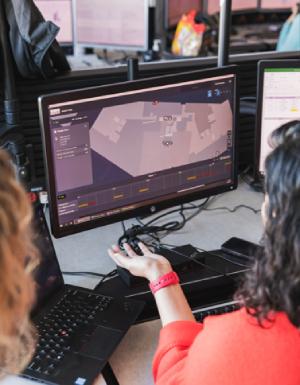
YVR is advancing its Digital Twin as the foundation for a more connected, flow-based operating model. It provides a real-time, shared view of passenger, airside, and soon to be cargo operations, enabling flight-centric, event-driven decision-making that strengthens on-time performance and operational resilience. “By integrating operational data into a shared enterprise platform, we enable more proactive decision-making, improved on-time performance, and better flow across the airport ecosystem,” Danielle explains. “We are also exploring AI to shift from reactive operations to predictive, ultimately working towards delivering a more seamless experience for passengers and teams alike. In parallel, YVR works closely with Innovate BC through the Integrated Marketplace. YVR was the first testbed for this initiative, which allows us to support the development and implementation of made-in-B.C. solutions that benefit YVR and our community as well as local businesses.”
Enterprise AI is top of mind for many organisations – and YVR is no different. Airports are complex, fast-moving environments, which makes them well suited for AI-enabled support. “Through our Enterprise AI Initiative, we’re building the governance and in-house AI tools needed to strengthen operational insight and decision-making, always with human judgment at the centre,” Danielle shares. “We’re on our way to piloting these tools with our engineering, operations, and guest experience teams to support real-world use cases and learn quickly. At the same time, we know technology only works if people use it confidently. That’s why we’re putting real focus on digital transformation and adoption, working closely with our Learning & Development team to ensure tools across AI, data, and YVR’s Digital Twin are embedded into everyday workflows.”
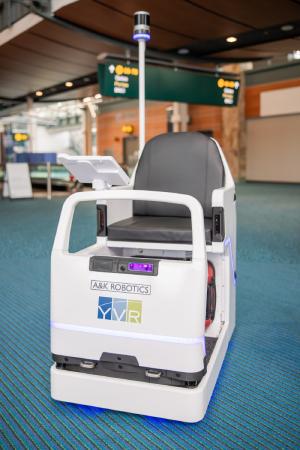
The Internet of Things and real-time data remain foundational through YVR’s Digital Twin, improving visibility and flow across the airport. YVR also continues to explore robotics with B.C.-based innovators like A&K Robotics, piloting practical solutions that improve efficiency while supporting local innovation.
“Aviation and technology don’t just need more women; they need our perspectives, our experiences, our resilience, and our energy”
Danielle concludes with some invaluable advice for the next generation of women aspiring to leadership roles in aviation and technology: “Know that there is space for your voice. Being a woman is powerful – look at all we accomplish simply by existing and sharing our light in the world. Aviation and technology don’t just need more women; they need our perspectives, our experiences, our resilience, and our energy. I led a team while almost 9 months pregnant and women do this all around the world every single day – tell me we’re not resilient! Stand firmly in your values, even when the room feels unfamiliar. Leadership is not about fitting into a box, it’s about bringing clarity, conviction, and authenticity. Lead with joy and have fun along the way. It builds upon that resilience and draws others toward your vision. Find mentors and allies who champion you – and be that person for someone else (this part is so important). Careers are rarely linear, and that’s a gift. The unexpected turns often become your greatest strengths. Lift others as you rise. True leadership creates pathways for those who come next. And in this moment when our shared global humanity feels strained, choosing to support one another – with empathy, courage, and solidarity – is one of the most powerful things we can do.”
Find out more about the FTE Digital, Innovation & Startup Hub >>Clare Josey, Senior Director, Passenger Services, RAVE Aerospace
Clare Josey, Senior Director, Passenger Services at RAVE Aerospace, started her career in media and content distribution, which provided a deep appreciation for how audiences engage with content and how to leverage technology to maximise the experience. Inflight entertainment and connectivity (IFEC) brings content, technology and service together in a highly complex, customer‑driven environment. “Across roles at BBC Worldwide, Rockwell Collins, Thales, Spafax, and now RAVE Aerospace, I’ve focused on turning airline needs and emerging capabilities into meaningful passenger solutions,” Clare begins. “What draws me to innovation leadership is the challenge of balancing creativity with practicality – delivering experiences that genuinely improve the journey for passengers while working within the realities of airline operations.”
“Diversity of perspective results in stronger, more innovative outcomes”

Clare shares that, from her perspective, aviation has made progress towards gender equality, particularly in giving women greater visibility in customer experience, commercial, and innovation roles. “I’ve also found it really encouraging to see more women coming through in engineering and software development, helping shape the technology that underpins the passenger experience. That said, representation still drops off at the most senior and technical leadership levels. To truly accelerate progress, the industry needs stronger sponsorship and a more deliberate commitment to inclusive leadership at the top.”
At times, being one of the few women in technical or innovation‑focused discussions has meant navigating different communication styles. “I’ve often found myself providing more context before getting to the punchline – taking time to question assumptions and fully explore what we’re trying to achieve and why,” Clare explains. “While that approach can take longer, it frequently leads to more comprehensive and durable solutions. I’ve consistently seen that diversity of perspective results in stronger, more innovative outcomes. When teams are willing to slow down, listen, and challenge long‑held assumptions, the solutions ultimately become more effective for the passengers we’re designing for.”
“Successful innovation is about applying emerging technologies thoughtfully”
Fostering a culture of innovation in aviation starts with creating space for curiosity, even within a highly regulated and operationally complex environment. “I encourage teams to focus first on the why – what problem we’re really trying to solve for the airline or the passenger – before jumping to solutions,” Clare says. “That helps innovation feel purposeful rather than risky. Equally important is psychological safety; it’s important to create an environment where people feel comfortable challenging assumptions, sharing early ideas, and learning from what doesn’t work. In aviation, innovation rarely means breaking the rules – it means working collaboratively across engineering, operations, and commercial teams to find smarter, more passenger‑centric ways forward. When people understand the constraints and feel empowered within them, innovation becomes both achievable and sustainable.”
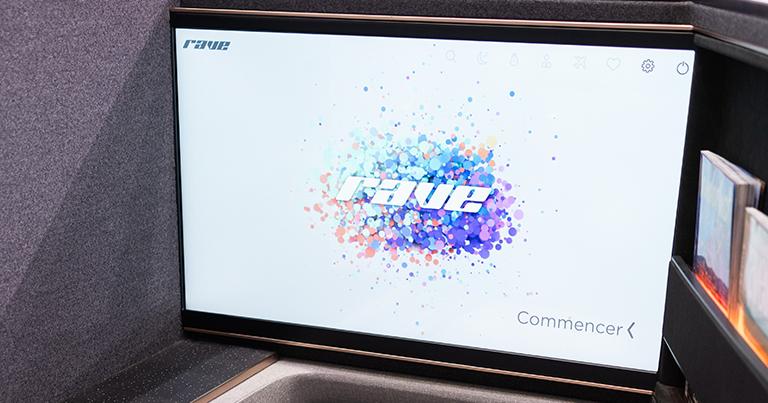
In her current role, Clare is focused on initiatives that bring together digital capability, content, and service design to create a more seamless and engaging passenger journey. “This includes evolving inflight digital platforms to better personalise the experience, making content and services more intuitive to discover and easier for airlines to manage operationally,” Clare explains. “A key theme across everything I’m working on is integration – connecting technology, data, and partnerships in a way that simplifies complexity for airlines while giving passengers more choice and relevance. Rather than innovation for its own sake, the goal is to deliver solutions that are scalable, operationally practical, and genuinely improve how passengers experience their time onboard.”
Technologies like artificial intelligence (AI), automation, and the Internet of Things (IoT) are increasingly shaping the RAVE Aerospace innovation roadmap, particularly in how it personalises the passenger experience and simplifies operational complexity for airlines. “AI has strong potential in areas such as content discovery, personalisation, and decision support, while automation and connected systems help improve reliability, scalability, and efficiency across the onboard ecosystem,” Clare shares. “When it comes to prioritising, I believe the focus should be less on the technology itself and more on the problem it’s solving, considering whether a new capability meaningfully improves the passenger journey, integrates realistically into airline operations, and can scale across fleets and markets. In a highly regulated industry like aviation, successful innovation is about applying emerging technologies thoughtfully – where they deliver clear value today, while building a foundation for what’s possible tomorrow.”
“Stay curious and build confidence in your perspective”
Clare concludes with some invaluable advice for the next generation of women aspiring to leadership roles in aviation and technology: “My advice would be to stay curious, build confidence in your perspective, and don’t wait until you feel ‘ready’ to put yourself forward. Aviation and technology need leaders who can connect people, systems, and experiences, so lean into skills like collaboration, communication, and strategic thinking alongside technical knowledge. Seek out sponsors as well as mentors – people who will advocate for you when you’re not in the room. And finally, don’t underestimate the value of your different viewpoint; it’s often that perspective that drives the most meaningful innovation.”
International Women’s Day 2026: How female leaders from Denver International Airport, KLM, Fraport and more are driving the next era of passenger experience innovation

As aviation accelerates its digital transformation, strong innovation leadership is critical to delivering seamless, efficient and truly passenger-centric journeys. To mark International Women’s Day on 8 March, Future Travel Experience presents Part 2 of a special editorial focus in which we spotlight female innovation leaders from Denver International Airport, KLM Royal Dutch Airlines, Fraport, Anuvu, and AirFi. In a series of in-depth interviews, we explore their career journeys, the progress and challenges of gender equality in aviation, and the technologies shaping the next era of travel. You can view Part 1 of our special editorial focus – featuring female innovation leaders from Schiphol Group, Star Alliance, Charlotte Douglas International Airport, Aeroporti di Roma, Vancouver Airport Authority and RAVE Aerospace – by clicking here.
Tracy Whitling, Senior Director of Analytics & Innovation, Denver International Airport
Tracy Whitling, Senior Director of Analytics & Innovation at Denver International Airport (DEN) – a Corporate Partner of the FTE Digital, Innovation & Startup Hub – spent the majority of the first two decades of her career in technology and telecommunications including wireless, fibre, and energy efficiency solutions during a brief stint in the electric utility industry. “I’ve always had the opportunity to be in various support and leadership roles including project management, process improvement and development, customer experience, and analytics,” Tracy begins. “These roles packaged together allowed me to develop a systems-thinking mindset and afforded me the tools and skillset to produce results. When I was considering making a transition in my career, one thing that I knew with certainty was that I wanted to be in an industry that was more tangible than telecom, cared about customers, and involved technology or digital transformation. The aviation industry meets all of these criteria and has given me the opportunity to put all my interests, passions, and skills together to make a difference!”
A continued focus on diversity, equity, inclusion, and accessibility

Assessing progress that the aviation industry has made towards gender equality – particularly in leadership and innovation roles – Tracy highlights that unfortunately, like many industries, she still finds herself to be one of the only women in the room too often. “Since I have only been in the industry for a couple of years, I cannot speak as much to the progress in the aviation industry, but I can say that there is still more opportunity,” Tracy says. “I would also say that DEN, which is a part of the City & County of Denver, does a fantastic job placing continued focus on diversity, equity, inclusion, and accessibility. They also emphasise pay equity, which I believe helps ensure that pay disparities are minimised and addressed. This is a very important step that I have not seen in past organisations, and there is a continued focus to help ensure that people from all genders and backgrounds are treated fairly. DEN also offers extensive training and programming focused on ensuring that all voices are heard and included in decisions – this is very valuable and supports future progress.”
Tracy highlights one very important factor that has contributed to her success so far, which is having a leader who is extremely empowering, supportive, and encourages her unique, often non-industry focused perspective. “He actively encourages me to ask questions and even ‘stir the pot’ when I see opportunities that should be addressed,” Tracy shares. “Having an ally in the workplace is huge for a woman or anyone from a diverse background and he has never failed to provide me with the opportunity to have a voice to encourage innovation and change in the organisation. My diverse perspective has helped influence innovation by helping bring focus to key foundational elements that will be required of our organisation to advance innovation in a meaningful way – such as data governance and joint roadmap development. Historically, I would say that some of the perspective was that many of these challenges were on the shoulders of our Business Technologies partners and not operational challenges or initiatives. What I have been able to bring focus to is the need for cross-functional partnership, the need for the operations to own, champion, or even sponsor technology focused efforts, the need to be business-value focused with our work, and the need for continued breaking down of siloes to advance our innovation capability.”
Denver International Airport’s “intentional culture of learning”
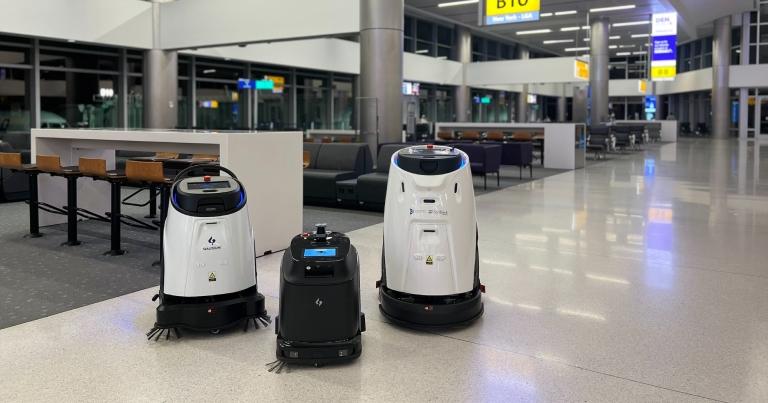
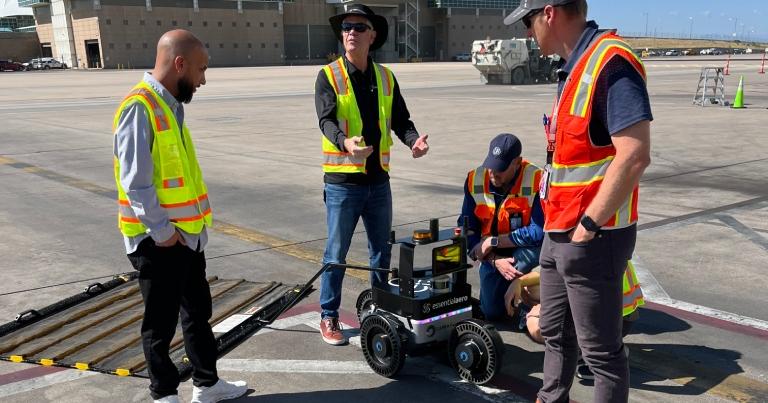
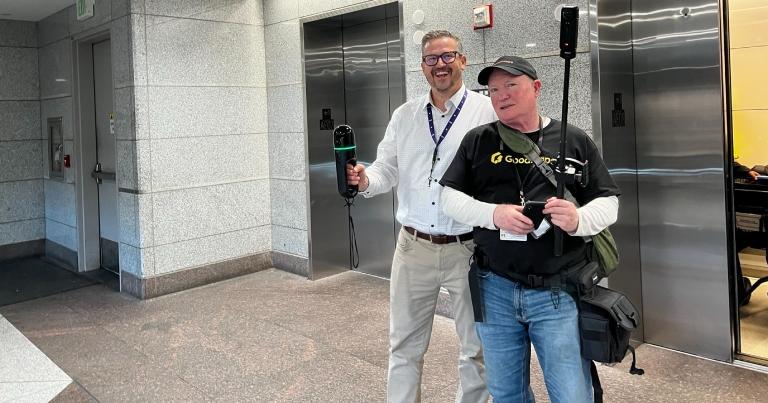
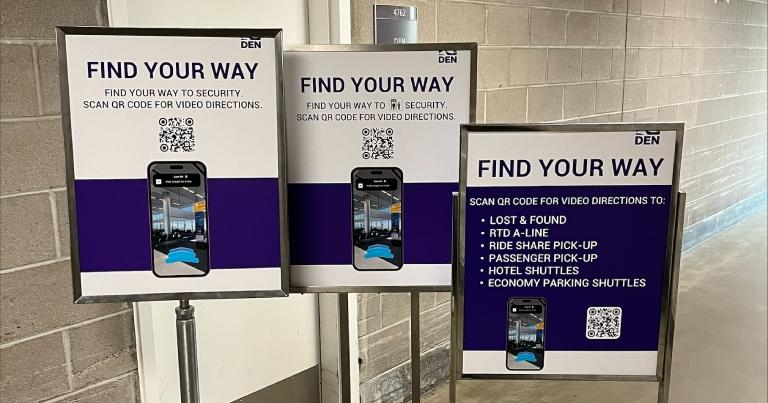
As a leader, Tracy focuses on empowerment – every member of the team has a voice, shares ideas, engages in the industry, and engages with vendors or other partners that may provide insights, ideas, or technologies of interest. “Then we build an intentional culture of learning, never stagnating, and sharing our learnings to encourage this across the team,” Tracy says. “Lastly, we set goals that are about today and the future and to shifting our capabilities towards tactics that will change and improve how we operate – including building out the data, tools, and skillsets required for the future.”
Tracy’s team focuses on both analytics and innovation, and as a result has built a roadmap that includes various technologies and solutions that will move DEN forward in both areas. “We have several autonomous solutions that we are working on piloting throughout the year including wheelchairs, snow removal (both airside and landside), and even some niche solutions focused on paint-striping and sweeping / washing various surfaces,” Tracy explains. “We also have several analytics and AI-based solutions that we are exploring including Advanced Weather Radar, passenger analytics, AI animal deterrence, and foreign object debris (FOD) and pavement detection. While we know that not every technology that we pilot will be successful or result in a justification to expand to scale, we are confident that we will identify some meaningful solutions that will improve passenger experience, drive operational efficiency, and/or help us digitally transform our operation.”
Artificial intelligence (AI), automation, and the Internet of Things (IoT) are all influencing the DEN innovation roadmap considerably. “We prioritise investment in researching/piloting innovations based on the business need, challenges, and opportunities to drive operational efficiencies,” Tracy shares. “We have a limited set of resources to drive these pilots, so we have leaned into a cross-functional governance committee for prioritisation input. We then use the pilot outcomes to determine which emerging technologies should receive further investment and/or scaled deployments. We are in the early stages of this work, so we expect this to be a process that we continually evaluate, refine and improve to ensure we are optimising our investments and driving the greatest value to the airport and our passenger experience.”
“Just do it! Aviation is incredible – an awesome place that truly has anything that you’d want to have in a career”
Tracy concludes with some invaluable advice for the next generation of women aspiring to leadership roles in aviation and technology: “Just do it! When I was a kid, I never thought of working in aviation or technology. Later, I received degrees in finance and marketing. At the time, it was not common for women to be in technology careers, so it was difficult to imagine myself within it. It didn’t take long to realise, however, that technology touches and influences everything we do. You can be on the leading edge and continuously learn, grown, fail, and learn some more. It’s very exciting and we need more women in this space. Aviation is incredible – again, I didn’t aim to move into this industry exclusively, but I have found an awesome place that truly has anything that you’d want to have in a career. While an individual airport can sometimes feel smaller than a major Fortune 500 organisation, the stakeholder community and all the various partners that have to come together to create the end-to-end experience for a passenger is massive, intricate, and so impressive. Beyond this, the larger global airport community is extensive and really provides endless opportunities for collaboration and learning. Most importantly, the opportunity to affect the daily experiences for millions of passengers a year makes my job especially meaningful.”
Find out more about the FTE Digital, Innovation & Startup Hub >>Melanie Andrews, Director Technical Innovation, KLM Royal Dutch Airlines
Melanie Andrews has worked in the aviation industry for more than 30 years, progressing from operational grassroots roles to her current position as Director Technical Innovation at KLM Royal Dutch Airlines (a Corporate Partner of the FTE Digital, Innovation & Startup Hub). “A common thread throughout many of these roles has been innovation in its broadest sense,” Melanie begins. “I have always been driven by the question of how we can improve the way we serve our employees and passengers, while also making a positive impact on the bottom line. What drew me to my current role is the belief that there are many technological opportunities ahead. However, it’s essential that we collaborate closely with both technology experts and the business. Only then can we be confident that we are solving the right problems and creating real business value.”
“Diversity leads to more creative solutions and stronger ownership of the outcomes”

Assessing progress that the aviation industry has made towards gender equality – particularly in leadership and innovation roles – Melanie highlights that if you attend any tech event, you’ll still notice that many of the participants and visitors are male.
“I don’t have a technical background, and in the past I sometimes found this quite intimidating,” she says. “However, it’s encouraging to see more and more female tech leaders and specialists emerging, and I can clearly see a new generation of women stepping into leadership roles in the tech world. I’ve also been fortunate to have people around me who encouraged me to step outside my comfort zone. This is where leaders – regardless of background – play a vital role in supporting and encouraging talent to grow.”
Diversity in all its forms adds value to the conversation. “It’s important that all relevant stakeholders have an equal seat at the table, so discussions are balanced and productive,” Melanie shares. “When people approach challenges from different perspectives, it creates space for empathy and understanding. In turn, this often leads to more creative solutions and stronger ownership of the outcomes.”
Driving innovation at KLM: Small steps towards big operational impact
At BlueLabs – KLM’s internal innovation hub – the team works closely with both technology and business colleagues to experiment with solutions that could help address their challenges. “In a highly operational environment like aviation, it can sometimes be difficult to allocate time and resources to explore new technologies,” Melanie explains. “That’s why we also encourage teams to look ahead and consider the future with a sense of inevitability. Which technologies are maturing? How will the workforce evolve? What challenges are we likely to face? When you start thinking about the future in these terms, it becomes easier to define the milestones needed to get there and the fundamental preparations required along the way. It’s never simple, but my mantra is: small steps, right direction.”
BlueLabs collaborates with several different business units across the organisation. Melanie emphasises that not all innovation has to be “ground-breaking”. Sometimes it’s the combination of technology that could make a positive impact on operations today. “One example that shows strong potential is the use of ‘speech-to-text’ solutions to make manual tasks far more efficient,” Melanie shares. “In operational environments, a lot of communication happens verbally and is not always captured. By converting voice communication into text, combining it with other data points, and analysing it with AI, we could generate valuable insights. This could not only support employees in removing manual reporting but also improve operational efficiency and identify opportunities for process improvements.”
Technologies such as artificial intelligence (AI), robotics, automation, and the Internet of Things certainly influence the innovation roadmap. “However, it’s always important to start with the core question: what problem are we trying to solve, or what opportunity are we exploring?” Melanie says. “Equally important is identifying the foundational layers needed for scaling solutions. Without those in place, even successful experiments can struggle to move forward.”
KLM typically work along two tracks:
- First, the business challenge leads the way: “Here, the business prioritises investment in a technical solution that has already been validated through experimentation.”
- Second, KLM analyses technological potential: “In this track, we identify cross-organisational opportunities and bring them to the C-level for discussion. Sometimes it’s about demonstrating the potential of a technology and starting important strategic conversations. It’s not just about the technical perspective, but also about broader questions: does this create value? How mature is the technology? Could it impact policy, our colleagues, or even our business model?”
“These conversations are crucial, because technology will continue to evolve faster than organisations can fully adopt it,” Melanie adds.
“Growth often comes from stepping into roles where you continue learning along the way”
Melanie concludes with some invaluable advice for the next generation of women aspiring to leadership roles in aviation and technology: “I’m optimistic that the next generation of female leaders is already very well equipped for the future. From my own experience, however, I’ve noticed that women sometimes hesitate to pursue opportunities if they feel they don’t meet every single requirement. In reality, growth often comes from stepping into roles where you continue learning along the way. Leaders today have an important responsibility to guide and coach the next generation, so they can reach their full potential. I’m confident they will.”
Find out more about the FTE Digital, Innovation & Startup Hub >>Marina Lützenberger, Senior Project Manager Corporate Strategy & Digitalization, Fraport
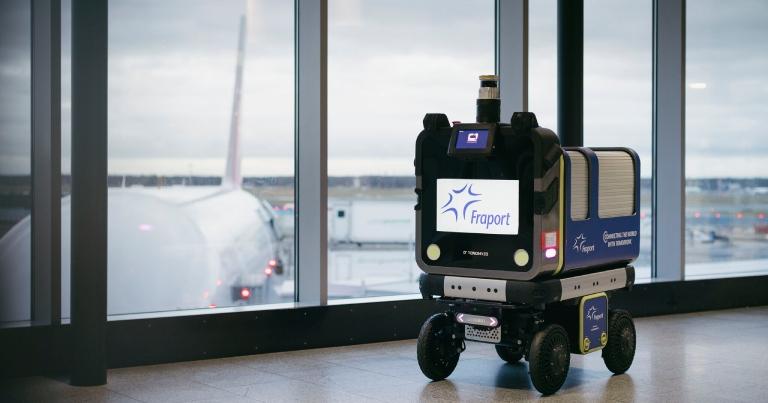
Marina Lützenberger, Senior Project Manager Corporate Strategy & Digitalization at Fraport (a Corporate Partner of the FTE Digital, Innovation & Startup Hub) begins by sharing that her career has been shaped at the intersection of transport, strategy and implementation. “I started in management consulting focused on travel, transport and logistics, where I built a track record leading complex transformation and operations programmes and advising top management teams,” she explains. “Today at Fraport, I shape digital and innovation initiatives that directly impact operations and the passenger experience. What motivates me most is translating strategy into solutions that work at real-world scale. What drew me to innovation leadership in aviation is the unique combination of real-world operational complexity and visible customer impact: when airports innovate well, millions of passengers feel it immediately and the organisation benefits through resilience, efficiency and a better end-to-end experience.”

“Different viewpoints lead to more creative, robust and operationally viable solutions”
Marina highlights that the aviation industry has made visible progress, particularly in acknowledging the importance of diversity in leadership and innovation roles. “We see more women stepping into digital and transformation positions, which is encouraging,” she shares. “However, the biggest gap still exists at senior decision-making levels, especially in technical and operational leadership. The next step is to embed gender equality into succession planning and leadership accountability. Leading innovation in aviation, particularly in technical domains, can mean that respect and credibility have to be earned more deliberately, especially as a woman. Technical depth, consistency and delivery are essential to build trust in environments that are still traditionally male‑dominated. Once that trust is established, however, a more diverse perspective is not only accepted but actively valued. Different viewpoints tend to broaden how challenges are framed and lead to more creative, robust and operationally viable solutions.”
“Innovation must be treated as part of operational excellence, not as an experiment on the side”

A strong innovation culture in aviation requires trust, structure and speed. “I focus on clear governance, transparent prioritisation and close collaboration between operations, IT and business teams,” Marina explains. “Innovation must be treated as part of operational excellence, not as an experiment on the side. When teams see that ideas can move from pilot to rollout, momentum builds naturally.”
To drive digitalisation, Fraport uses the Digital Factory as an established tool for the implementation of digital projects. It allows Fraport to translate innovative ideas into concrete solutions through structured collaboration with the business units.
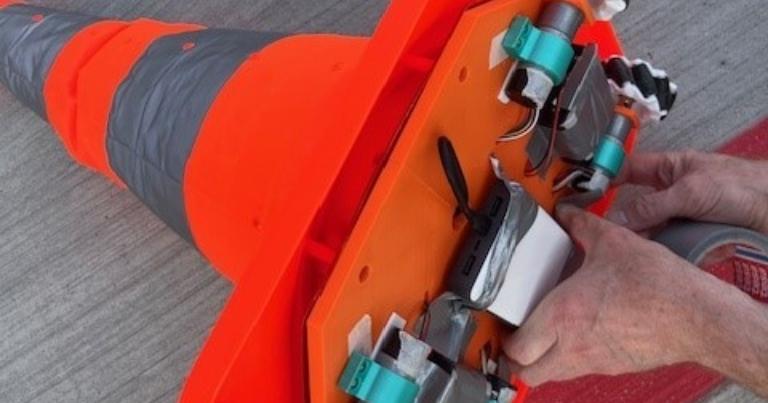
“On the passenger side, current themes include smarter, more personalised passenger communication and targeted use of AI to reduce manual corrections and friction points around baggage processes and terminal services,” Marina says. “On the operational side, we are advancing scalable concepts such as digital twins for critical infrastructure, asset tracking, and safety-oriented solutions like push-back collision avoidance – all aimed at improving reliability, situational awareness and efficiency. More broadly, I’m particularly interested in innovations that bridge operations and experience: when you increase predictability and reduce disruption behind the scenes, passengers feel it as smoother journeys, fewer delays and better service recovery.”
Artificial intelligence (AI), robotics, automation and the Internet of Things (IoT) are increasingly central because they can augment frontline capacity, improve decision quality and enable predictive operations. “In our innovation roadmap, a key focus is moving beyond pilots toward solutions that integrate into real operations, including governance, technical standards and scalable rollout mechanisms,” Marina shares.
When prioritising investments, Fraport uses a pragmatic framework:
- Value and feasibility: Clear benefit, proven technical path, and manageable integration complexity.
- Scalability: Not just “does it work once,” but “can we operate it sustainably across the airport ecosystem.”
- Risk and compliance by design: Security, safety and regulatory requirements are considered upfront, not after the fact.
- Adoption readiness: Training, change management and stakeholder ownership are treated as first-class deliverables.
“This is how emerging technologies become real operational capabilities rather than isolated showcases,” Marina adds.
“Aviation rewards leaders who can connect strategy with execution”
Marina concludes with some invaluable advice for the next generation of women aspiring to leadership roles in aviation and technology: “First, build a strong foundation in one ‘core craft’ – operations, engineering, digital, data, commercial – and then deliberately broaden into cross-functional leadership. Aviation rewards leaders who can connect strategy with execution. Second, seek environments and sponsors that give you real stretch opportunities early: visible projects, stakeholder complexity, and accountability for outcomes. You don’t have to tick every box before stepping up – you grow by doing. Third, invest in networks and confidence. Your perspective is an asset, not a caveat. Bring ideas forward, ask for feedback, and don’t wait for perfect certainty. In innovation especially, progress comes from learning cycles.”
Find out more about the FTE Digital, Innovation & Startup Hub >>Estibaliz Asiain, Executive Vice President, Media & Content, Anuvu
Estibaliz Asiain, Executive Vice President, Media & Content at Anuvu, began her career in aviation at a young age. “After many years in banking, my father started a small CSP business in Spain, that gradually became the vendor for the Spanish airlines,” she begins. “I was in IT sales when, due to a change in employer, I had a gap and went to ‘help’ my dad for a couple of weeks. I never joined the new company, so exciting I found aviation to be. The innovation piece came later, when joining Anuvu years after. Anuvu had innovation in its DNA through the non-CSP services it delivered, such as connectivity or data analytics. I have been privileged to see how we have innovated the content delivery side of aviation, becoming a thought leader and first to market across multiple initiatives that continue to redefine the inflight experience.”
“Diversity of perspective has directly influenced better outcomes”

Estibaliz highlights that the aviation industry has made meaningful progress in gender equality, particularly in recognising the importance of diverse leadership and elevating more women into visible innovation roles. “We’re seeing stronger mentorship networks, leadership development initiatives, and a broader commitment to representation across the ecosystem,” she shares. “That said, women remain underrepresented in senior, technical, and operational leadership positions. The challenge now is accelerating advancement, not just entry, by ensuring equitable access to sponsorship, decision-making influence, and career-defining opportunities. Sustainable progress will come from embedding inclusion into leadership pipelines and culture, so diversity isn’t an initiative; it’s a standard.”
For Estibaliz, leading innovation in aviation as a woman has meant operating in an industry that has traditionally been technical and male-dominated. “One challenge has been ensuring that experience-led innovation, such as storytelling, passenger engagement, emotional connection, is valued alongside engineering and operations,” Estibaliz explains. “But that has also been the opportunity. I’ve found that bringing a passenger-first perspective shifts the conversation from ‘what can we build?’ to ‘how will this make someone feel at 35,000 feet?’ Innovation isn’t just about infrastructure, it’s about relevance, representation, and connection. The diversity of perspective has directly influenced better outcomes. When leadership reflects different lived experiences, we challenge assumptions more effectively and design solutions that serve a broader range of travellers. In content especially, diverse voices shape what stories are elevated and how passengers see themselves reflected onboard. Inclusive leadership doesn’t just change who’s in the room, it changes the results.”
“Technology is an enabler – people remain the differentiator”


Innovation in aviation requires discipline as much as creativity. Anuvu fosters it by creating safe spaces for ideas while grounding everything in operational reality. “That means encouraging cross-functional collaboration, such as content, product, engineering, operations, so innovation is both aspirational and executable,” Estibaliz shares. “We also stay relentlessly passenger-focused. In a regulated environment, constraints are real, but they often spark smarter solutions. When teams understand the ‘why’ behind the experience we’re trying to create, innovation becomes purposeful rather than experimental.”
Anuvu is focused on reshaping the journey through smarter content ecosystems, personalisation, and more seamless digital touchpoints. “That includes leveraging data insights to curate more relevant entertainment, expanding streaming and onboard platform capabilities, and exploring immersive and next-generation viewing environments,” Estibaliz says. “The goal is simple: make the inflight experience feel less static and more connected to how passengers consume media on the ground.”
Artificial intelligence (AI) and automation are transforming how Anuvu analyses content performance, forecasts demand, and optimises curation. “They allow us to move from reactive programming to more predictive, insight-led strategy,” Estibaliz explains. “But importantly, these technologies enhance our teams, they don’t replace them. Human judgment, cultural understanding, and creative instinct remain essential, especially in content and passenger experience. When prioritising investment, we focus on technologies that materially improve the passenger experience or meaningfully increase operational efficiency, while empowering our people to work smarter and more strategically. Innovation must be scalable, secure, and aligned with long-term goals. Technology is an enabler – people remain the differentiator.”
“Aviation and technology need diverse voices”
Estibaliz concludes with some invaluable advice for the next generation of women aspiring to leadership roles in aviation and technology: “Prepare and educate yourself to be the best in your field. Be resilient and strong. Ask for opportunities if they don’t come your way. Be confident in the perspective you bring. Aviation and technology need diverse voices, not just to improve representation, but to build better solutions. Seek sponsors, not just mentors. Stay curious about both the technical and commercial sides of the business. And don’t wait until you feel 100% ready. Growth often happens in the stretch roles.”
Laura Rösges, CEO, AirFi
Laura Rösges, CEO at AirFi, started her career in consumer electronics retail, where travel quickly became one of the more exciting parts of her job. “I loved everything about it, the energy of airports, the aircraft, the crews, the constant feeling of being on the move,” Laura begins. “For someone in their early twenties, it was very thrilling. Aviation was also personal for me. My family is German and Italian, so flying was how we stayed connected. Certain airlines became ‘the brand that brings a parent home’. That emotional side of aviation stayed with me. After completing my Master’s in International Business and Disruptive Innovation, I wanted to work in an industry I loved but that was also ready for transformation. Aviation is fascinating, yet many of its systems and concepts still originate from the mid-20th century. That creates enormous potential for innovation.”
Laura joined the Lufthansa Group after her Master’s as Sales & Commercial Steering Manager, and has been hooked on aviation innovation ever since. “I then later moved into Strategy and Business Development at Lufthansa Service Group (LSG), then became Director Onboard Retail Sales at Lufthansa’s daughter Retail inMotion (RiM), became Chief Commercial Officer at RiM some years after, and moved to AirFi as CEO on 1 April 2025.”
“Diverse viewpoints consistently lead to better innovation outcomes”

Laura highlights that “aviation has made real progress in gender equality, which is fabulous, but we’re really not where we should be yet in leadership roles”.
“I am lucky and have been working with many inspiring women in the last years, but there are still moments at conferences, panels or negotiations where creative, diverse ideas are presented by expert women, yet the final leadership role or decision often still sits with a male peer,” Laura shares. “It’s more often the case than not in my experience. Where we’ve made strong progress is in access to our field, I suppose. More women are entering aviation than ever before. The challenge now is making sure they can grow into the leadership roles that they are so capable of. Many of those opportunities that allow you to have a leadership position in your later career emerge or come up often during people’s thirties and forties, a period where flexibility and supportive work structures would be so immensely important to keep female talent. This is where we really need to get better. We are starting to see encouraging change though. Women now lead several major airlines on most of the continents, including Marjan Rintel at KLM, Joanna Geraghty at JetBlue, and Mitsuko Tottori at Japan Airlines or at RwandAir and Qantas. But, frankly speaking, as long as the list of women leading airlines or their innovation teams still feels more like a ‘top ten’ than a long list, the industry clearly still has work to do.”
Laura emphasises that innovation thrives on diversity of thought. “That’s where different perspectives, especially those of women (we make up half of the world, after all!) can make a real difference,” she says. “One opportunity I’ve experienced is the strength of collaborative networks. Many women in aviation actively support each other, testing ideas, sharing insights and challenging assumptions. Because we know that innovation is not a competition, we all benefit, even if we’re not the inventor. Innovation benefits enormously from that openness, the interconnectedness and the team spirit. At the same time, challenges still exist. In some negotiations or cultural contexts, there can still be an expectation that the final decision should come from a male counterpart. Occasionally you notice hesitation when a woman leads the discussion or sets the direction. But perspectives are evolving quickly. In some places we’re already running; in others we’re still choosing the shoes we’ll walk in and that’s OK, as long as we’re making steps forward. The important part is that diverse viewpoints consistently lead to better innovation outcomes, and that also means that not only the teams, but the ones leading the teams need to show balanced leadership. Because the more perspectives you bring to the table, the better the solutions become. See, if our passengers are well balanced and gain more and more equality in travel, our companies serving aviation should reflect that, our passengers are diverse, so should be the colleagues we work with and managers who lead us. If we don’t bring in a well-balanced and equal chance for genders in our field, our products will simply not benefit long-term.”
Fostering innovation in aviation – the power of creativity and AI in shaping the passenger journey
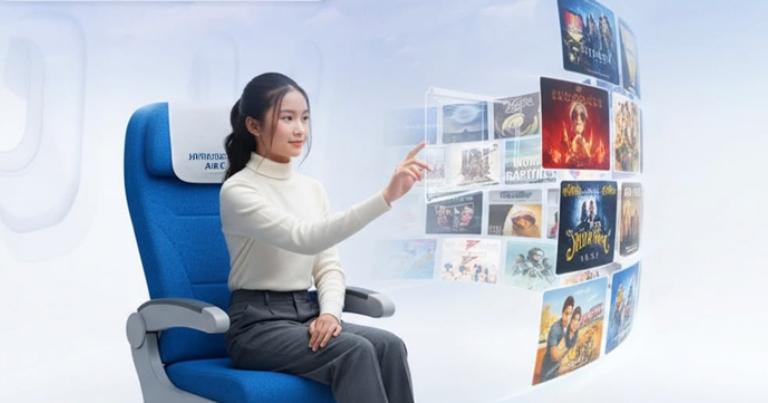
Aviation is highly regulated and operationally complex, which means innovation doesn’t happen by accident. “You have to very intentionally and deliberately create space for it, make time for it. Prioritise it. Block your calendar with the team,” Laura shares. “One principle I strongly believe in is keeping innovation fun, even in a restricted environment. Aviation and regulation often go hand in hand, but creativity still needs room to play. We currently use formats like ‘Think Tank Tuesdays’, challenge panels, or small internal awards for the most creative contribution to a product roadmap. In previous companies we did hackathons. When you mix teams from different disciplines and give them permission to explore ideas, innovation tends to appear naturally, and if you give this time importance from a Management Team perspective, you will get innovative suggestions naturally – some more, some less feasible. From there, iteration is more work, but can turn playful, fun ideas into commercially viable solutions. In fact, that’s exactly how our Wingman AI Travel Agent concept was born.”
AirFi’s current innovation focus targets passenger convenience and digital transformation for crew and operators, making onboard concepts smarter and passenger experiences more personalised. “We’re quite proud about two of our latest initiatives,” Laura says. “First, AirFi Wingman, our AI travel companion, brings contextual digital services to the IFE experience. It helps passengers navigate their journey with real-time guidance and personalised recommendations and also creates new ways to engage and monetise services. And it’s fun and flexible. Second, we’ve managed to simplify aviation retail with mobile and NFC payments that work even offline. Self-checkouts and contactless payments let airlines move from heavy onboard infrastructure to lightweight, flexible systems that are easier to deploy, scale, maintain which we believe is a game-changer, especially for carriers with tighter budgets and crews that don’t want an extra payment device.”
Artificial intelligence (AI) has a lot of potential to foster more and more transformative technologies in innovation roadmaps. “For us, automation had become a standard we rely on from Q&A testing to protocols, reporting and queries, however AI is still something as an industry we haven’t fully tapped into beyond suggestive selling, load planning and personalised travel experiences,” Laura explains. “At AirFi, at the moment, we have only just started building it into our products and are still learning as we go, for now we have embedded it into our new products and are ‘retrofitting’ it into our core line of business to improve features and UX. AI can make your product more conversational, more relevant, more impactful, especially when prompting it correctly.”
One of AirFi’s current examples is AirFi Wingman, its AI-powered travel companion concept. The idea is to give passengers a digital assistant that supports them throughout the journey – answering questions, providing contextual information and helping them discover onboard services and products.
“For airlines, technologies like AI, automation and connected systems can fundamentally change how services are delivered,” Laura says. “The real challenge is not just adopting new technologies but prioritising the ones that genuinely improve the passenger experience while remaining operationally practical. In aviation, innovation always needs to balance creativity with realism, especially if your AI or automation consume a lot of capacity, for example on hardware, especially in the IFE and IFEC space where one can face limitations. But this just invites to be even more creative.”
“Allow yourself to take up space. Ask the question. Share the idea. Don’t undersell your perspective”
Laura concludes with some invaluable advice for the next generation of women aspiring to leadership roles in aviation and technology: “Innovation can come from anywhere, you don’t need to be an aviation expert to bring valuable ideas into this industry. Sometimes the best innovations come from bringing ideas from outside aviation into aviation. If you see something that works elsewhere, bring it in and own it. Most importantly though, allow yourself to take up space. Ask the question. Share the idea. Don’t undersell your perspective. You also don’t need to imitate your male peers to lead. True leadership comes from authenticity and you can lead collaboratively and empathetically, which are incredibly powerful qualities, too.”
Inclusive leadership as a catalyst for transformation
As the insights from leaders at Schiphol Group, Star Alliance, Charlotte Douglas International Airport, Aeroporti di Roma, Vancouver Airport Authority, RAVE Aerospace, Denver International Airport, KLM Royal Dutch Airlines, Fraport, Anuvu, and AirFi make clear, innovation in aviation is no longer defined solely by infrastructure or technology – it is defined by leadership. The ability to deliver seamless, data-driven and passenger-centric journeys depends on inclusive teams that bring diverse perspectives to complex operational and digital challenges. As the industry continues to reimagine the end-to-end travel experience, advancing gender equity must be viewed not as a parallel initiative, but as a strategic enabler of transformation. On International Women’s Day, the message for the air transport community is both timely and practical: cultivating diverse innovation leadership today will shape a more resilient, efficient and passenger-focused industry tomorrow.
You may also be interested in
12 technology and CX trends that can enhance airline and airport operations in 2026