




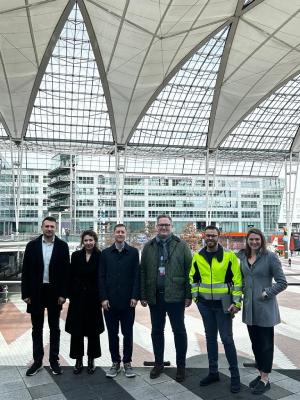
In an increasingly complex aviation ecosystem, innovation rarely happens in isolation. Airlines, airports and technology providers must work together to tackle shared operational challenges – from improving aircraft turnaround efficiency to integrating emerging technologies such as robotics, automation and autonomous vehicles. Recognising the power of collaborative innovation, Munich Airport and Lufthansa are deepening their long-standing partnership through the FTE Smart Ramp initiative, exploring how a more connected, data-driven approach to ramp operations can unlock new levels of efficiency, safety and reliability. In this deep-dive article, Dr Jan-Henrik Andersson, Chief Commercial and Security Officer (including IT/Digital and Technology) at Munich Airport; Thomas Hoff Andersson, Chief Operating Officer at Munich Airport; and Roswitha Becker, Head of Ground Operations for Lufthansa at Munich Airport, share how the airport and airline are collaborating on an autonomous-focused Proof of Concept designed to explore how robotics, automation and autonomous vehicles could transform aircraft turnaround processes at a major hub.
Smart Ramp is the latest initiative as part of the groundbreaking FTE Accelerating Collaboration & Engagement (ACE) platform launched in partnership with innovation consultancy nlmtd. The focus on Smart Ramp operations has the ultimate goal that aircraft turnaround can be achieved autonomously and more efficiently. Alongside Munich Airport and Lufthansa, International Airlines Group, Miami International Airport, All Nippon Airways, Royal Schiphol Group, KLM Royal Dutch Airlines, and Metropolitan Washington Airports Authority are all members of what is a truly global collaborative innovation initiative.
Learn more about Smart Ramp and the FTE Accelerating Collaboration & Engagement (ACE) platform and how to participate >>A shared commitment to setting new industry benchmarks for ramp operations

Munich Airport decided to join the FTE Smart Ramp initiative to underpin its ambitions in the field of autonomy and automation. “Our goals are clear and our ambitions are strong as we work toward becoming the smartest, data-driven airport with an autonomous ramp,” Thomas Hoff Andersson explains. “Participating in this initiative supports our long-term vision while helping us make tangible progress in the short and medium term. A key motivation is learning from other airports, airlines, and technology providers who face similar challenges and pursue similar goals. By sharing insights, best practices, and operational experiences, we can determine what is feasible today and what must be developed moving forward.” At the same time, Munich Airport wants to drive the industry forward. “Many essential technologies, processes, and standards for autonomous ramp operations have yet to be fully defined or developed,” says Thomas Hoff Andersson. “The Smart Ramp initiative will encourage solution providers and industry bodies to collaborate and close those gaps, creating the frameworks that will enable autonomy at scale. In short, we are joining to contribute, learn, and help accelerate an industry-wide transformation that benefits us all.”

Roswitha Becker similarly highlights a shared commitment to innovation, operational excellence and sustainability as the driving force behind Lufthansa joining the FTE Smart Ramp initiative alongside Munich Airport. “The ramp is critical for our aircraft turnaround process and improving its efficiency has a direct impact on customer satisfaction,” says Roswitha Becker. “We are eager to pilot and implement cutting-edge technologies, focusing on autonomous vehicles and data-driven solutions to optimise ramp activities and minimise disruptions. Through participation, we aim to begin the journey towards setting new industry benchmarks for ramp operations.”
The airside environment’s complexity means innovation can be accelerated greatly from shared experiences and joint problem-solving. “We anticipate gaining insights from the other trials being run by the member airlines and airports, so that we can avoid already known pitfalls and can focus on testing new technologies, particularly for autonomous vehicles,” Roswitha Becker shares. “Also for regulations it helps to be in close exchange on topics such as risk assessments and to consider recommendations for industry standards.”
As a member of the FTE Smart Ramp initiative, Munich Airport also recognises the immense value of collaborating with other airports and airlines. “Indeed, it is one of the key assets of the entire programme,” says Thomas Hoff Andersson. “In an industry where many of us face similar operational challenges, it is essential that we do not invest resources into solving problems that have already been successfully addressed by others. We benefit enormously from shared learning, collective intelligence, and the transfer of proven best practices. The Smart Ramp approach aligns closely with our ambition to act as an ecosystem orchestrator, shaping future-ready processes through cooperation rather than isolated efforts.”
Proof of Concept to outline a future operational model for autonomous inbound, turnaround, and outbound processes
Instead of developing isolated solutions, Munich Airport is building an integrated, scalable model for autonomous applications. “That is why we have joined forces with Lufthansa,” Thomas Hoff Andersson explains. “Our joint approach combines several interconnected use cases on autonomous freight and baggage transport that build on one another.”
An autonomous freight transport pilot with TractEasy is the starting point. “We are testing an autonomous vehicle for moving freight pallets,” says Thomas Hoff Andersson. “The goal is driverless operation, including a seamless drive through the cargo gates into the airport’s security area.”
Exploring autonomous baggage transport represents the next step and would open up further possibilities of reliability and efficiency. Beyond automating existing human-centric workflows, Munich Airport and Lufthansa will test new operational concepts. “One example is virtual geofencing around aircraft as an alternative to physical pylons or ground markings,” Thomas Hoff Andersson shares. “The Proof of Concept aims to outline a future operational model for autonomous inbound, turnaround, and outbound processes. Our goal is to help the entire industry understand how autonomy can be safely and effectively integrated into live airport operations.”
Close collaboration key to accelerating innovation
The partnership between Munich Airport and Lufthansa is already well rooted with their collaboration on the jointly owned Terminal 2. “Through our joint efforts we drive tangible benefits such as improved on-time performance and more predictable passenger journeys,” says Roswitha Becker. “We believe that close collaboration is a key to accelerating innovation. To fully realise the potential of autonomous vehicles, we must work closely together to ensure that the necessary changes – for example to infrastructure – are in place, to allow these vehicles to operate safely and effectively at scale.”
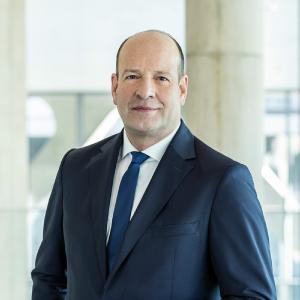
Dr Jan-Henrik Andersson similarly highlights the importance of the cooperation with Lufthansa, underscoring the close relationship with the airline as Munich Airport’s home carrier and system partner. “We co-own Terminal 2 and operate it through a unique joint venture,” he says. “This reliable, innovative collaboration benefits both sides. One important joint project is Next Best Process – an AI-based innovation project by Lufthansa, Munich Airport, and the Terminal 2 operating company that aims to make aircraft handling and operations at the Munich hub noticeably faster, more efficient, and smarter. It combines process mining, artificial intelligence, and strategic airport development.” (More information on Next Best Process can be viewed in this article.)
Beyond their cooperation within the Smart Ramp initiative, Munich Airport and Lufthansa work hand in hand across several strategic programmes dedicated to elevating the passenger experience. “The cornerstone of our collaboration is the MUC2030 joint innovation roadmap,” Dr Jan-Henrik Andersson shares. “Together, we combine our strengths to align future concepts, test scalable solutions, and shape the digital and operational airport experience of tomorrow. One standout is our Loyalty Hub partnership with Lufthansa and Miles & More, a trilateral alliance that unites our digital channels and strengths to deliver passengers the ideal offers at just the right time. This model shows how coordinated innovation can significantly improve customer experience.” (The Loyalty Hub partnership success story was covered by FTE in this article).
The strong partnership between Munich Airport and Lufthansa also involves extensive data sharing, which enables smarter decision-making, predictive passenger services, and improved operational stability.
Robotics, automation and autonomous vehicles: Bringing scalable solutions to life
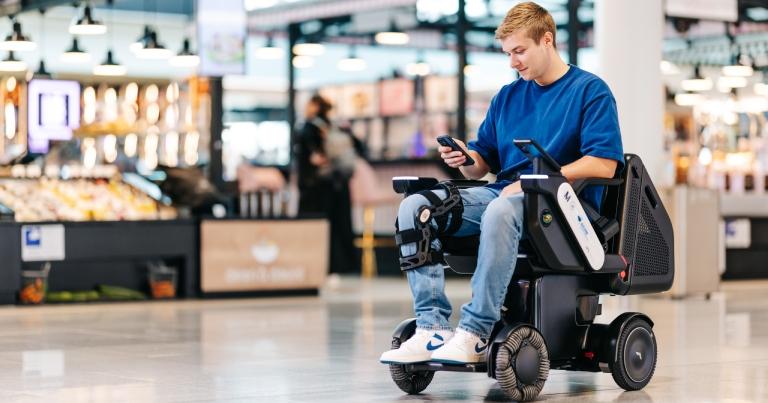
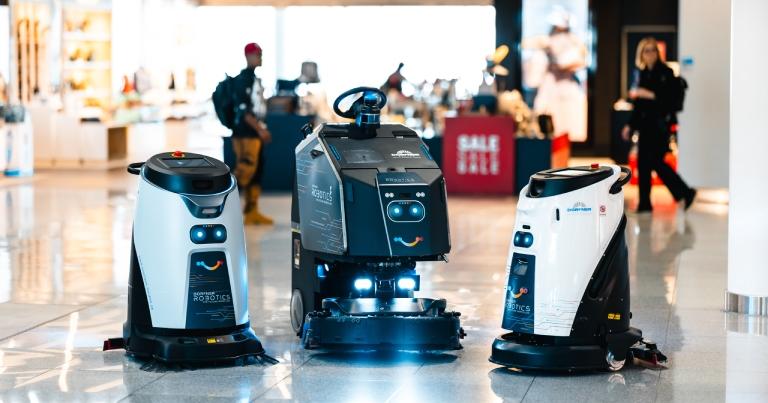
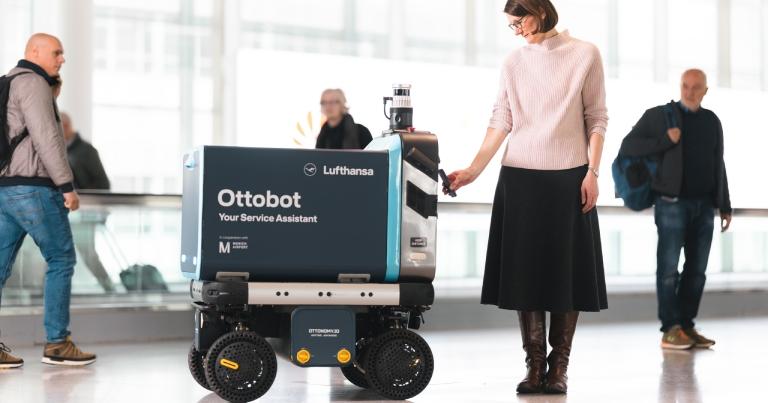
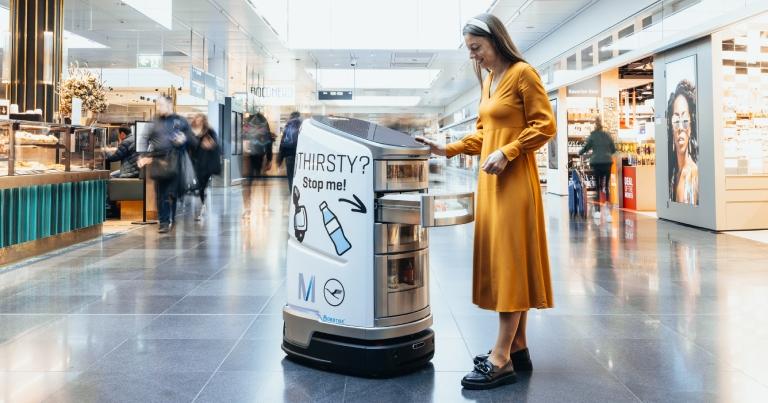
Lufthansa and Munich Airport are embracing the potential of robotics, automation and autonomous vehicles across their operations. “Lufthansa Group has been actively exploring the broad range of innovation topics, e.g. in the field of robotics to load and unload baggage,” Roswitha Becker explains. “In the area of autonomous vehicles, we have autonomous tugs in live operations moving freight between two warehouses.”
Munich Airport is similarly currently driving a broad portfolio of robotics, automation, and autonomous vehicle projects that span multiple business units. Its ambition is to bring scalable, airport‑wide solutions to life. “Among our key projects are the above-mentioned autonomous freight and baggage transport operations to streamline logistics processes on the apron and in freight warehouses,” Thomas Hoff Andersson shares. “Moreover, we are developing remotely operated passenger boarding bridges.”
Beyond airside automation, Munich Airport is also advancing several service robotics solutions for passengers. Recent examples include cleaning robots; JEEVES, a service robot that moves through the gate area selling drinks and snacks; Ottobot, an autonomous service assistant designed to provide passengers with information on airport-related topics, such as tax refunds or lost and found, and to assist with processes such as rebooking or refunds; plus, new self-driving wheelchair options that improve access and customer convenience.
“With an eye on the future, Munich Airport is preparing further automation milestones for 2027,” Thomas Hoff Andersson adds. “These include autonomous foreign object damage (FOD) checks to identify dangerous objects on runways, taxiways, and aprons. The benefit of this development will enable automatic detection, mapping, and removal of FOD. Initial trials by partners in the FTE Smart Ramp programme show that machines can detect 10 times more FOD than humans. We want to learn in this area from our partners within the FTE ecosystem.”
FTE Digital, Innovation & Startup Hub: Turning digital concepts into tangible, real-world solutions
Munich Airport has also joined the FTE Digital, Innovation & Startup Hub – a truly unique community designed specifically for the individuals and organisations who are at the forefront of digital transformation and innovation in the aviation industry. “There, we will be exploring the added value that the startup network and collaboration with various airports and airlines will bring in 2026,” says Dr Jan-Henrik Andersson. “This complements our existing innovation ecosystem at Munich Airport, which is built on strong partnerships with both established players and emerging ventures. This platform is unique because it brings together airlines, airports, and startups to explore the future of travel. It allows us to broaden our perspective. We are also expanding our innovative ecosystem while gaining access to a dedicated startup database. As with our corporate innovation agenda, we are particularly interested in the joint development of robotics and AI solutions.”
Munich Airport is strongly committed to turning digital concepts into tangible, real-world solutions. It does so by actively collaborating with various innovation partners, including startups. “We select our partners based on their capacity to deliver meaningful results for each project, whether that partner is an agile startup or a well-established technology provider,” Dr Jan-Henrik Andersson explains. “Depending on the topic, we also enter into larger strategic partnerships, such as with Celonis for process mining or the major IT framework agreements with Lufthansa Industry Solutions and Netcompany. In fast-moving fields like robotics and AI, we often see that young ventures are at the forefront of technological progress. In recent years, we used different platforms to identify promising technologies, test them under real airport conditions, and scale them when they create value for passengers, partners, and operations.”
Munich Airport took a major step forward in 2023 when it opened LabCampus, its own cross-industry innovation centre bringing together established companies, startups, creative minds and research institutions. “At LabCampus, we connect people, ideas and technologies, right on the airport premises,” Dr Jan-Henrik Andersson shares. “By offering a real testbed environment and direct access to airport operations, LabCampus accelerates the development and piloting of new digital services, smart infrastructure solutions, and mobility concepts. We are an active member of the Airports 4 Innovation (A4I) network, where we collaborate with other leading international airports. This initiative unites airports who jointly want to shape the future of aviation. A4I invites startups to respond to designated calls for proposals and submit solutions that will be piloted at the airport test sites.”
The vision for a truly ‘smart ramp’
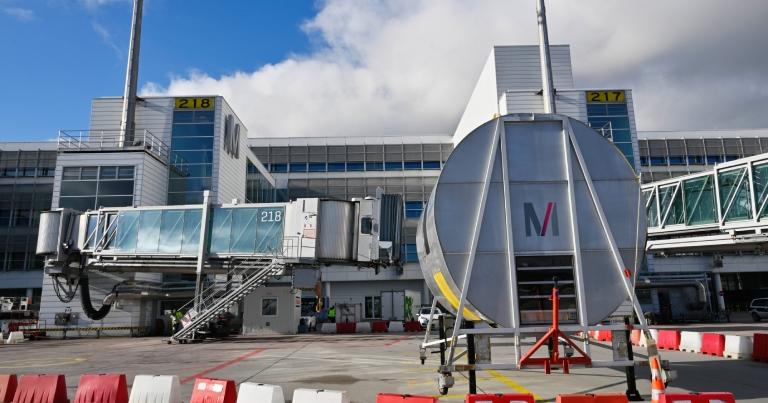
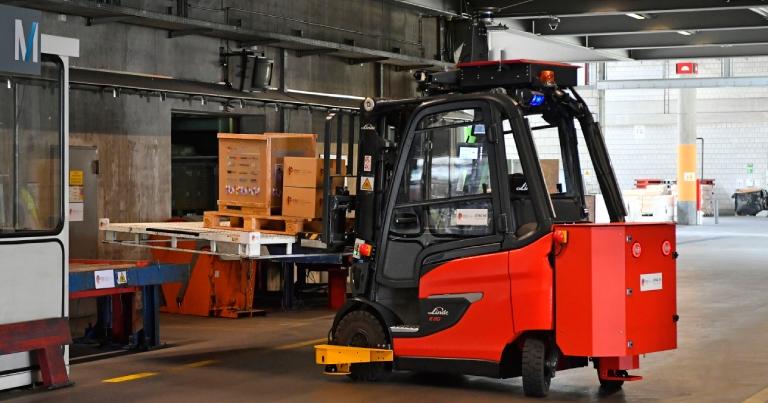
Looking ahead, in three to five years a truly ‘smart ramp’ at Munich Airport will be a highly automated, data-driven environment, characterised by seamless integration between airlines, airport operators, air traffic management and ground handling. “Autonomous vehicles and robotics will handle routine and physically demanding tasks,” says Roswitha Becker. “Predictive analytics will enable proactive management of resources, anticipating delays before they occur. Collaboration will be the backbone of this vision, including transparent data sharing and joint innovation efforts among all stakeholders. Automation will not replace human expertise but rather augment it, allowing staff to focus on decision-making and customer service. Ultimately, this smart ramp will deliver punctual turnarounds, increase safety, and offer passengers a smoother, more reliable travel experience.”
Thomas Hoff Andersson highlights that today’s technologies will become an integral part of daily operations, unlocking entirely new possibilities for managing the complexities and challenges of a major international hub. “Several projects will have evolved from pilot programmes towards full-scale operations,” he says. “Our plan is to introduce a Control Center with specialised workstations to oversee remote operations and manage autonomous vehicles across the airport campus. We anticipate that this will lead to a new operational concept where humans and machines work seamlessly together in ways that go far beyond current models. There will be many operational gains. As autonomous vehicles operate according to defined patterns and communicate seamlessly with each other and a central control system, traffic flows will become more predictable and efficient. This will help prevent congestion, make the apron safer and more spacious and ensure the smooth flow of ground operations. An automated, optimised routing for airside vehicles reduces unnecessary driving, lowers energy consumption and emissions, and thus helps us to realise our Net Zero 2035 sustainability strategy.”
The bottom line is that digitisation and automation will enable Munich Airport to operate more reliably, competitively, and sustainably. “Automated processes improve punctuality, ease workforce shortages, and support employee well-being by taking over strenuous or monotonous tasks,” Thomas Hoff Andersson adds. “These processes will improve our unit cost per passenger and reduce the cost of aircraft turnaround handling. At the same time, they will lower emissions through more efficient operations. Together, these technologies will strengthen Munich Airport’s resilience and operational efficiency in the future.”
As airports and airlines prepare for continued passenger growth and increasing operational complexity, initiatives such as FTE Smart Ramp highlight the importance of industry-wide collaboration in turning ambitious concepts into practical solutions. By combining their operational expertise, shared infrastructure and innovation ecosystems, Munich Airport and Lufthansa are not only exploring what an autonomous ramp could look like at a major global hub, but also helping to shape the frameworks and technologies that could define the next generation of aircraft turnaround operations across the industry.
Hear more from Munich Airport and Lufthansa at the co-located APEX FTE EMEA and APEX FTE Ancillary & Retailing events, taking place in Dublin on 9-11 June 2026. Vera Jakobsen, Director of Digital, Munich Airport, is participating in a session exploring ‘Making the autonomous ramp a reality: lessons learned, opportunities and challenges’. Anja Schuhmacher, Senior Manager Airport Experience & Partnerships, Lufthansa, is speaking in a session focused on ‘How can airports and airlines successfully scale baggage handling innovations to make a real difference across the industry? Is the time now?’ Meanwhile, Stefan Nothelfer, Senior Director, Head of Corporate Venturing & Strategic Growth, Lufthansa Innovation Hub, is participating in a session titled ‘How Agentic AI is shifting the way the aviation commercial ecosystem operates, and what the future might hold’. Dr Jan-Henrik Andersson, Chief Commercial and Security Officer (including IT/Digital and Technology), Munich Airport, is also among the confirmed speakers.
Register for the co-located APEX FTE EMEA and APEX FTE Ancillary & Retailing events – free for airlines, low-cost for airports >>Groundbreaking FTE Smart Ramp program, accelerating automation and collaborative innovation
Smart Ramp is the latest initiative as part of the groundbreaking FTE Accelerating Collaboration & Engagement (ACE) platform launched in partnership with innovation consultancy nlmtd. ACE is dedicated to driving real collaborative action among stakeholders, facilitating fast progress and dynamic change in key areas of the aviation industry which are ripe for transformation. International Airlines Group, Miami International Airport, All Nippon Airways, Royal Schiphol Group, KLM Royal Dutch Airlines, Metropolitan Washington Airports Authority, Munich Airport and Lufthansa are all members of what is a truly global collaborative innovation initiative.
The focus on Smart Ramp operations has the ultimate goal that aircraft turnaround can be achieved autonomously and more efficiently. A phased approach will assess which solutions truly work by each member testing new technologies, while incorporating requirements from the other participants. The program will support startups and introduce new suppliers not yet active in aviation, forging paths together on how to overcome hurdles while also exploring the potential for shared investments in the future. Results of the innovations will be shared with respective experts, industry bodies and regulators, meaning the outcomes can be used to create recommended practices and standards in the industry.
Learn more about Smart Ramp and the FTE Accelerating Collaboration & Engagement (ACE) platform and how to participate >>You may also be interested in
12 technology and CX trends that can enhance airline and airport operations in 2026