




At APEX FTE Asia Expo 2025 (Singapore, 11-12 November), Jan Takacs, Head of Design & UX, AirAsia MOVE, delivered an insightful Opening Keynote on the Expo Stage, which examined how AirAsia’s new travel platform is fundamentally reshaping the online travel agent (OTA) space. With a focus on putting the traveller back at the heart of the experience, Takacs shared AirAsia MOVE’s vision of a future where emotional connection and personalised journeys are more important than mere transactions.
View the full APEX FTE Asia Expo 2025 report >> Mark your diary for APEX FTE Expo Asia, Singapore, 18-19 November 2026 >>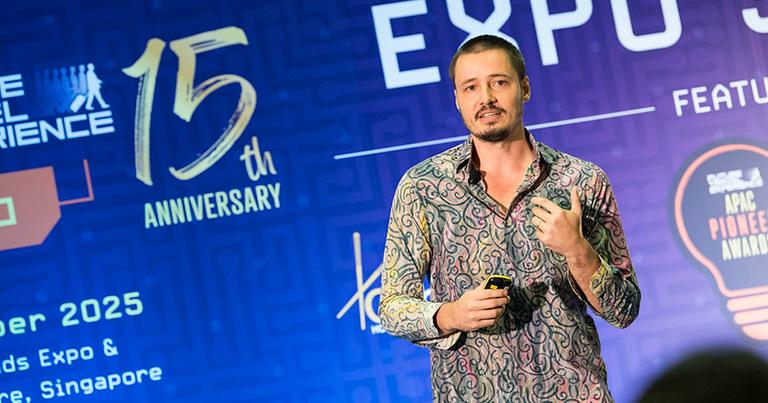
Redefining the travel experience
Takacs opened his keynote by acknowledging the traditional strength of OTAs: the transactional side of travel bookings. However, he emphasised that travel is much more than a transaction – it’s an emotional journey. For AirAsia MOVE, this means shifting the focus away from just booking flights and hotels and instead concentrating on the emotional experience of travel. “What we are doing differently is putting the human back into the travel equation,” Takacs explained, noting how most OTAs focus so heavily on the transactional aspects that they miss out on building loyalty or emotional connections with travellers.
From AirAsia to AirAsia MOVE: the evolution of a Superapp
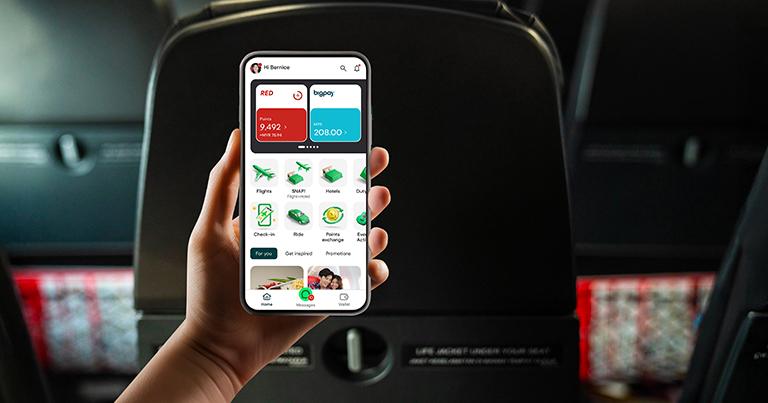
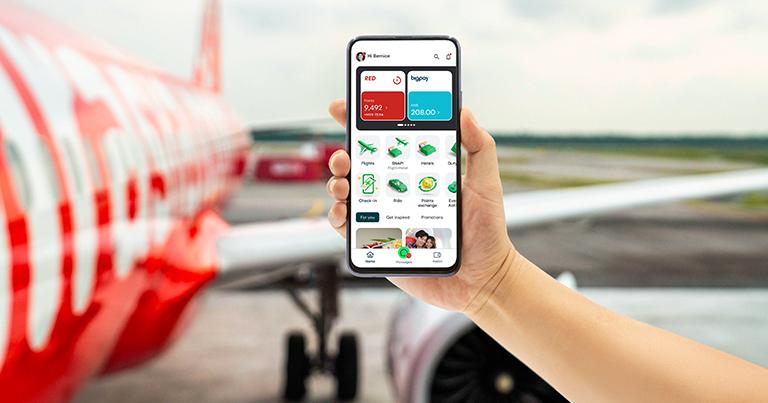
AirAsia MOVE is not just an extension of the AirAsia brand; it represents a bold reinvention of the travel platform ecosystem. Originally born as a single airline booking app, AirAsia’s transformation into a comprehensive travel platform was accelerated during the pandemic. Takacs highlighted how the company innovated to survive, adding new verticals like insurance, logistics, food, and finance to its app, ensuring that it remained relevant when travel was at a standstill.
Now, AirAsia MOVE is a standalone entity, rebranded with a new green identity to distinguish itself from the airline. The platform’s main pillars are its deep understanding of Southeast Asian culture and its commitment to offering travellers the best value. As Takacs pointed out, AirAsia MOVE is uniquely positioned to serve the region’s travellers because it’s a homegrown company that understands local cultures, needs, and behaviours – a crucial edge over OTAs based in Europe or the U.S.
The changing traveller: from logic to inspiration
Takacs then delved into how the nature of travel itself has changed, particularly among younger generations. Historically, travel planning was a logical process – first choosing a destination, then booking transportation and accommodation. But for today’s younger travellers, particularly Gen Z and Millennials, the journey starts with inspiration. Social media, content platforms, and peer recommendations now dominate the travel planning process. Instead of simply booking a flight to a destination, young travellers are first drawn in by videos, stories, and Instagram reels that spark a sense of wanderlust.
This shift, Takacs believes, marks a fundamental change in the OTA landscape. “New generations of travellers don’t just look for a place to go – they look for the dream,” he said. The process is no longer linear; it begins with the spark of inspiration, often fuelled by social media, and only later moves to booking. For AirAsia MOVE, this means understanding the emotional drivers of travel – not just the transactional aspect.
Building emotional connections and loyalty
According to Takacs, while OTAs continue to dominate travel bookings, they still account for only 30% of the global market. The vast majority of bookings still happen outside of the OTA ecosystem. The key reason, Takacs argues, is that OTAs focus too much on the transaction and not enough on building an emotional connection with travellers. AirAsia MOVE, by contrast, aims to foster long-term loyalty by focusing on the human side of travel – by inspiring travellers, engaging them with genuine content, and offering tailored experiences that go beyond the transaction.
Takacs pointed out that peace of mind, not just price, plays a critical role in travellers’ decision-making process. Family travellers, for instance, often prioritise convenience and peace of mind – being willing to pay more for a smoother experience. Similarly, young group travellers are more concerned with how easy it is to organise their trips than the actual cost. Tools like WhatsApp groups, Instagram, and even Google Sheets are part of their travel planning process. This insight is crucial for designing travel platforms that cater to the emotional needs of modern travellers.
The role of content in the new travel journey
One of the most significant changes in the travel industry, Takacs noted, is the rise of user-generated content and how it’s reshaping the inspiration phase of travel. No longer do travellers want highly polished, professional videos; they seek real, human experiences. “The most engaging content is no longer about perfection, but authenticity,” he said. Travel platforms that recognise this shift and embrace user-driven content – such as genuine travel tips, raw experiences, and even mistakes – will build trust with today’s savvy consumers.
This also ties into the growing importance of food and entertainment in the travel experience. As Takacs shared, travellers are increasingly planning their trips around food and cultural experiences, with platforms like AirAsia MOVE seeking to integrate these elements into the broader travel ecosystem. Content focused on food, music, and entertainment is now a critical part of the modern traveller’s journey.
The future of OTAs: speed, agility, and emotional connection
Takacs wrapped up his keynote by discussing the need for OTAs to evolve and adapt to the rapidly changing travel landscape. He stressed that innovation speed is paramount and that the travel industry must move at the pace of technology and consumer expectations. For AirAsia MOVE, this means being agile, continually iterating on design and products, and always keeping the traveller’s emotional journey at the forefront.
The success of AirAsia MOVE, Takacs believes, lies in its ability to strike the right balance between offering great value, building emotional connections, and remaining agile in a fast-evolving industry. The future of OTAs, he argues, lies not just in transactions, but in creating experiences that resonate deeply with travellers, turning a one-time booking into a lasting relationship.
As the travel ecosystem continues to evolve, Takacs’ keynote served as a timely reminder that the next frontier for OTAs will be defined not by who has the fastest booking engine, but by who can inspire, guide, and connect with travellers on a deeper level. AirAsia MOVE’s human-centred, Southeast Asia-rooted approach offers a compelling blueprint for how digital travel platforms can stay relevant in an era shaped by new behaviours, new technologies, and new expectations. For an industry poised for continued transformation, Takacs’ message was clear: the real opportunity lies in owning not just the booking, but the dream.
Save the date for APEX FTE Expo Asia, 18-19 November 2026 – uniting the world in Singapore for the largest end-to-end passenger experience and innovation expo
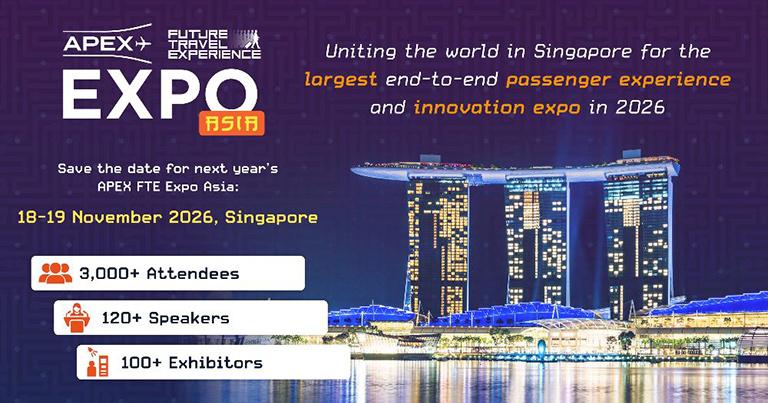
Next year, we’re building on 15 years of incredible momentum, as our long-running regional show evolves into a true global mega event with the launch of the unified APEX FTE Expo Asia, bringing together two of the industry’s most respected brands under one roof at the Marina Bay Sands. APEX will bring its largest event, APEX Global EXPO, to Singapore, combining its unrivalled customer experience heritage with FTE’s long-established regional innovation APAC event, which will now take on a broader global focus.
This powerful new collaboration will unite the world in Singapore for the largest end-to-end passenger experience and innovation expo, connecting airline, airport, and technology leaders from across APAC and beyond to showcase the ideas, solutions, and partnerships redefining the future of travel.
With more than 3,000 participants expected, including representatives from 100+ airlines and airport operators from around the world, attendees will experience a dynamic exhibition and conference programme featuring C-suite interviews, case studies, and discussions exploring the strategies, technologies, and collaborations driving the next era of air transport innovation.
Mark your diary for APEX FTE Expo Asia, Singapore, 18-19 November 2026 >>