




Personalisation in aviation is no longer a niche initiative – it is becoming a core operational focus. Travellers increasingly expect end-to-end personalisation at every step of their journey. As technology evolves, customers expect their travel experience to adapt and evolve in a way that is intuitive, contextual and seamless. Indeed, personalisation features in FTE’s ‘12 technology and CX trends that can enhance airline and airport operations in 2026’. As airlines strive to create memorable and seamless journeys, personalising the passenger experience has become a key priority. From high-tech solutions to premium services, in this deep-dive focus, featuring a series of in-depth interviews, Air France, All Nippon Airways, Lufthansa and Virgin Atlantic share how they are taking personalisation to the next level.
Air France: A deep transformation of CX personalisation built on data centralisation, omnichannel orchestration and AI
Personalisation has become a key strategic lever, a true differentiator, for Air France and has been at the heart of its customer care programme for over 15 years. This programme – ‘La Relation Attentionnée – is deployed across all frontline staff in direct contact with customers, both on the ground and in the air: call centre agents, ground staff, and cabin crew.

“It strengthens emotional engagement by recognising the customer, anticipating their preferences, and delivering a seamless experience throughout the entire journey – onboard, entertainment, catering, connected IFE,” says Fabien Pelous, Executive Vice President Customer, Air France. “This approach increases long-term customer value.”
Beyond the everyday experience, personalisation plays a decisive role in times of disruption. “By anticipating needs, delivering targeted communications, and offering tailored solutions – such as proactive rebooking and contextualised notifications – it reduces stress, improves satisfaction, and helps rebuild trust during critical moments,” Pelous shares. “In a context of growing self-service, interactions with customer service increasingly involve more complex and high-stakes situations. The ability to provide personalised, human, and empathetic support therefore becomes essential. Since COVID, Air France has viewed personalisation not only as a driver of operational efficiency, but as a major emotional and relational differentiator – enabling a shift from a reactive approach to the proactive anticipation of passenger expectations.”
Air France has embarked on a deep transformation of passenger experience personalisation, built on data centralisation, omnichannel orchestration, and the growing use of artificial intelligence (AI). “The objective is to deliver a seamless, consistent, and contextualised experience at every stage of the journey – from booking to post-flight – shifting from a transactional logic to a continuous and proactive relationship,” Pelous explains. “At the core of this transformation are structuring platforms called Customer Data Hubs, which centralise all customer information – travel history, preferences, loyalty status, ancillary purchases, travel context.”
This unified view enables real-time integration and sharing of data across different systems, offer optimisation (dynamic pricing, bundles, targeted promotions), and a granular understanding of passenger context to better anticipate needs.
The airline is also shifting from transactional messaging to hyper-personalised engagement. “Thanks to a platform called One CRM, Air France is evolving its communications from primarily operational and reactive exchanges to personalised communication throughout the entire customer lifecycle,” says Pelous. “Messages are tailored to the passenger’s profile and situation and delivered across all relevant channels: email, mobile app, SMS, WhatsApp, website, and airport kiosks.”
Operational personalisation, particularly in disruption situations, is a key element. “Personalisation becomes especially tangible during emotionally sensitive moments,” Pelous shares. “Some digital channels have been developed, including guided journeys in case of irregular operations (proactive rebooking, personalised compensation, e-vouchers, baggage tracking), and targeted short connection passes delivered via the app and email.”
Air France also provides dedicated journeys and targeted communications for travellers requiring special assistance. “Certain segments benefit from tailored journeys, illustrating a high level of personalisation, including Unaccompanied Minors (UM) and People With Disabilities (PWD), who are supported by dedicated initiatives all along the customer journey,” Pelous explains. “Messages are adapted to the passenger’s profile, travel stage, and channel, reinforcing reassurance and clarity of information.”
Above all, the focus is on a consistent and caring omnichannel experience. Pelous highlights that data sharing across customer service, airport, and inflight teams enables the delivery of a continuous and consistent experience with:
- “Enhanced passenger knowledge at every touchpoint.”
- “Next Best Action / Next Service Action (NBA / NSA) capabilities to recommend the most relevant action at the right moment.”
- “Strengthening of a more human and personalised relationship, even within highly digitalised environments.”
AI providing operational efficiency and “relevant, faster and better tailored” customer interactions
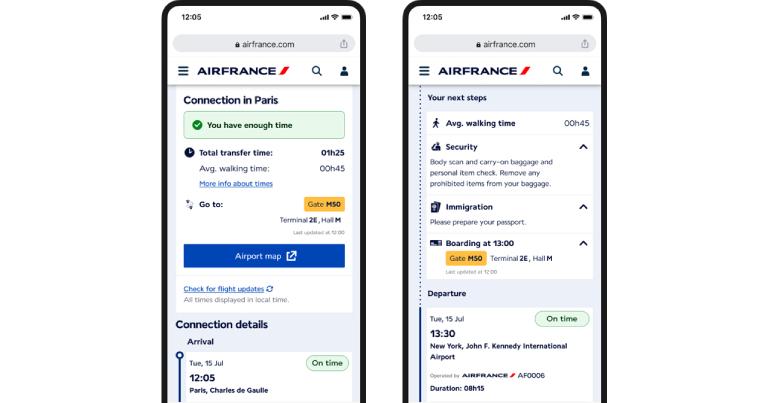

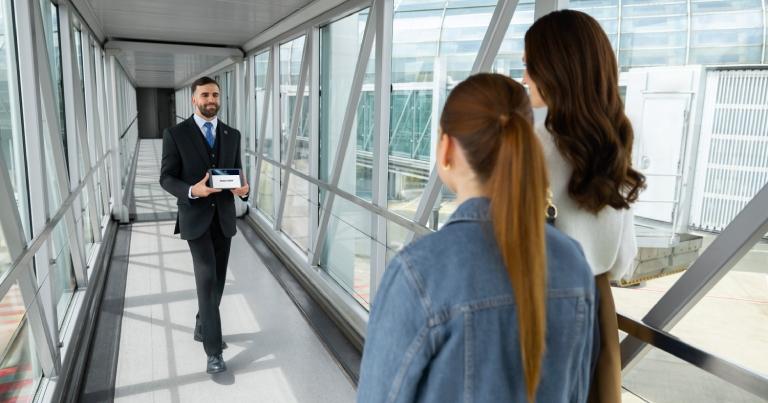
AI plays a central role in strengthening personalisation of the passenger experience by enhancing both operational efficiency and the quality of customer interactions. “It enables the rapid analysis of data and conversations to deliver responses that are more relevant, faster and better tailored to each customer’s context,” says Pelous. “Each year, our 4,500 customer service assistants connect with customers all over the world through nearly 15.6 million interactions in 24 languages.”
Pelous notes that AI creates concrete value at several levels:
- “Team efficiency through the automatic summarisation of written interactions (chat, email), which facilitates case handovers, reduces handling time, and improves response quality.”
- “A seamless and inclusive customer experience via automatic translation, which is essential for managing a large-scale multilingual environment, pooling expertise, and limiting training needs.”
- “Intelligent customer routing with intent detection, directing requests to the right channel or team from the first contact, thereby improving resolution rates and customer satisfaction.”
- “Active listening to the ‘Voice of the Customer’, where AI quickly identifies trends, pain points, and weak signals, enabling faster responses, continuous process improvement, and more refined personalisation.”
The goal is therefore not to replace humans, but to relieve them of repetitive tasks, allowing them to focus on complex requests and personalised service. “This strategy places AI at the heart of a synergy: digital efficiency and human expertise work together to deliver a customer experience that reflects our brand promise – elegance and care,” Pelous adds.
Air France is particularly enthusiastic about advanced AI technologies capable of leveraging the ‘Voice of the Customer’ in real time to anticipate expectations and act proactively across the entire passenger journey.
“Solutions with a dedicated tool called FOX – tailored to Air France’s own requirements – illustrate this potential by enabling the automatic categorisation of customer verbatims, the detection of weak signals, and the generation of alerts, allowing irritants to be quickly identified and addressed as close as possible to customer needs,” says Pelous. “Moreover, the development of advanced intent analytics and predictive models paves the way for even more proactive personalisation, capable of anticipating needs before the customer even contacts the airline. Combined with real-time sentiment and trend detection, these technologies enable faster, more targeted, and more customer-centric continuous improvement of the experience. At the heart of the relationship, personalisation is a key pillar of our premium strategy. The ‘Next Service Action (NSA)’ system perfectly illustrates this approach: by leveraging customer data while complying with GDPR regulations, personalised and contextualised actions are suggested to advisors, enabling them to assist customers more quickly – even on complex issues. AI reduces superficial interactions, refocusing exchanges on high-value matters.”
These innovations position AI as a key lever for moving from reactive personalisation to predictive personalisation, strengthening both customer satisfaction and the airline’s ability to manage the end-to-end experience. “Thanks to these tools and the growth of conversational self-service, contact volumes have dropped by 15% over the past two years – even as passenger numbers continue to rise,” Pelous shares.
“The value of personalisation primarily lies in the ability to anticipate customer needs rather than simply react to them”
For Air France, the key lessons learned from implementing personalisation strategies revolve around anticipation, the central role of humans, and strong compliance governance. “Experience shows that the value of personalisation primarily lies in the ability to anticipate customer needs rather than simply react to them,” says Pelous.
His recommendations for other airlines looking to enhance passenger personalisation are structured around three major pillars:
- “Invest in a unified customer data platform, enabling consistent and continuous personalisation across all touchpoints.”
- “Position AI as a co-pilot, organising processes around close collaboration between human agents and AI agents to maximise both efficiency and service quality.”
- “Put compliance first, particularly regarding data protection and internal validation processes. While these requirements may slow down AI deployment, they are essential to ensuring trust and the long-term sustainability of the solutions.”
“In summary, successful personalisation depends as much on technology choices as on governance, organisational design, and the role given to humans within the digital ecosystem,” Pelous concludes.
All Nippon Airways: Connecting customer insights across every touchpoint to enable true personalisation
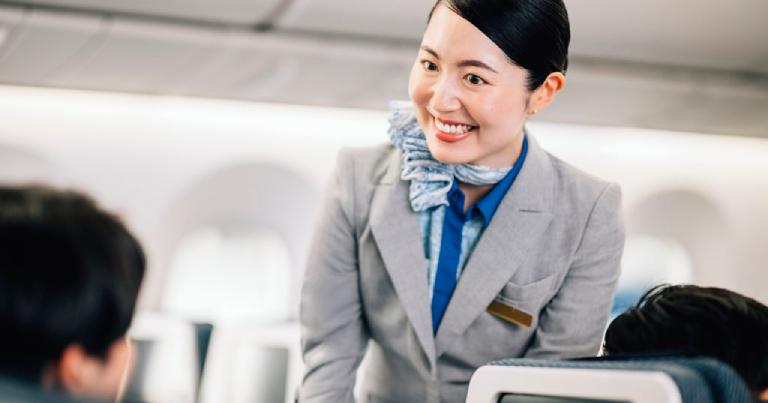
All Nippon Airways (ANA) sees personalisation as a fundamental requirement shaping the future of the travel experience. “It’s no longer just a ‘nice-to-have’ option and the effectiveness of a carrier’s personalisation framework directly impacts its revenue-generating potential,” says Keiji Omae, Executive Vice President of Customer Experience, All Nippon Airways.

Consumers today are already accustomed to seamless, highly curated purchasing experiences in their daily lives. When it comes to air travel, they expect the same level of efficiency – or even higher, given the significant investment involved. “While physical and pragmatic service offerings remain vital, the real competitive edge now lies in our ability to filter those options and present them based on a passenger’s specific context and preferences,” Omae explains. “This ‘smart filtering’ is what ultimately drives conversion in a crowded market.”
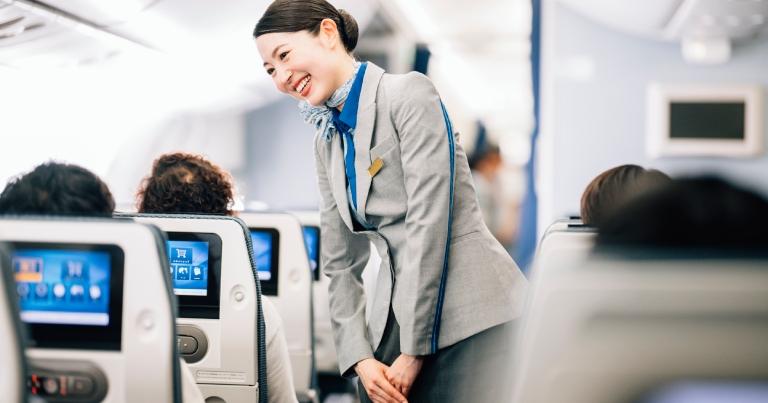
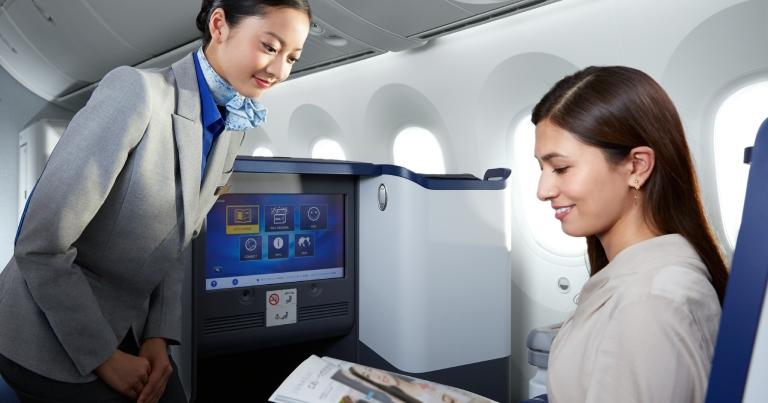
ANA envisions a seamless architecture where customer insights gathered at one touchpoint flow effortlessly throughout the entire customer journey. “It’s fairly common for airlines to use databases or Customer Data Platforms (CDPs) for siloed tasks, such as linking sales promotions to loyalty programme data,” Omae shares. “However, very few have successfully bridged the gap between the booking phase and the day-of-travel experience. Our goal is to ensure that individual preferences a customer shows during booking are reflected in the app interface during check-in and accurately communicated to our cabin crew onboard to provide truly tailored service.”
AI: “We are on the verge of a paradigm shift”
Omae highlights that, while the industry is still in the early stages of seeing massive ROI from artificial intelligence (AI), we are on the verge of a paradigm shift. “Within a few years, generative AI will become the primary interface for travel planning, fundamentally altering both personalisation and distribution strategies,” he says. “Generative AI sources information differently, far more advanced compared to traditional web searches. While SEO maturity still matters, optimising our proprietary platforms specifically for AI-driven discovery is now an urgent priority. Furthermore, as agentic AI begins to handle bookings and purchases autonomously, an airline’s success will depend on its ability to leverage AI to predict a customer’s needs accurately so that the proposed itinerary feels intuitive and effortless.”
Indeed, Omae is particularly excited about the evolution of Agentic AI. “Imagine a world where a traveller delegates their entire planning process to a personal AI agent. By implementing a compatible AI framework on the airline side, we can create a seamless flow – from destination selection to seat assignment – that completes without the user ever having to manually input a prompt.”
One of ANA’s key strategic considerations is ensuring that airlines lead this innovation. “There is a risk that external digital platforms and third-party aggregators may deploy these AI-driven interfaces more rapidly than carriers themselves,” Omae highlights. “To maintain a strong direct relationship with our customers, we must ensure our digital infrastructure is robust enough to offer uniquely differentiated products across every distribution channel.”
Another area of great potential is Virtual Reality (VR). “Travel is a significant investment that customers traditionally have to make without a ‘trial run’,” Omae says. “Much like trying on clothes, VR allows passengers to virtually experience their journey before booking. This immersive preview builds confidence, helping customers tailor their travel plans with much greater certainty and excitement.”
“Build a unified data foundation that spans the entire customer journey”
Omae concludes with some invaluable advice for other airlines looking to enhance passenger personalisation: “The most critical lesson is to avoid data silos. You must build a unified data foundation that spans the entire customer journey. My advice is to be strategic about data freshness. Not every data point needs to be updated in real-time, but you must identify which specific interactions require instantaneous synchronisation to be effective. Success lies in balancing that technical infrastructure with a clear understanding of which insights actually drive value for the passenger.”
Lufthansa: Personalisation as differentiation, choice without complexity, and Allegris enabling individualised travel
As airlines reach the practical limits of differentiating through cabin hardware alone, Lufthansa sees personalisation as an increasingly important way to create value for passengers. With traveller expectations continuing to rise, the airline is focusing on tailoring experiences to individual needs across different travel contexts – from seat selection and onboard environment to ground services. By introducing more flexible choice while keeping the experience simple and optional, Lufthansa aims to deliver meaningful individualisation without adding complexity for passengers or operations.

“In a time where expectations rise, but at the same time the possibilities to differentiate with the cabin hardware itself come to a limit – bigger footprints become very expensive and further pure luxury elements generate declining marginal customer values – individualisation becomes a key differentiator,” says Dr. Björn Becker, Head of Lufthansa Intercont Fleet and Product Transformation Program. “Different customers have different needs – even the same customer has different needs in different travel (for example business vs. leisure) situations. Tailoring the experience to those needs without generating choice or servicing complexity is a customer value generating element.”
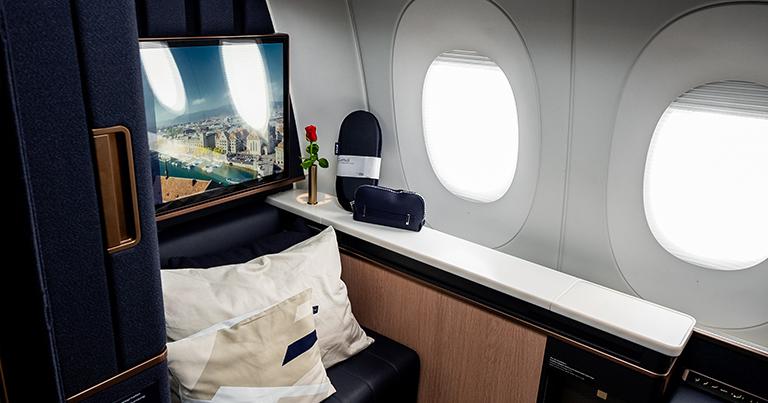
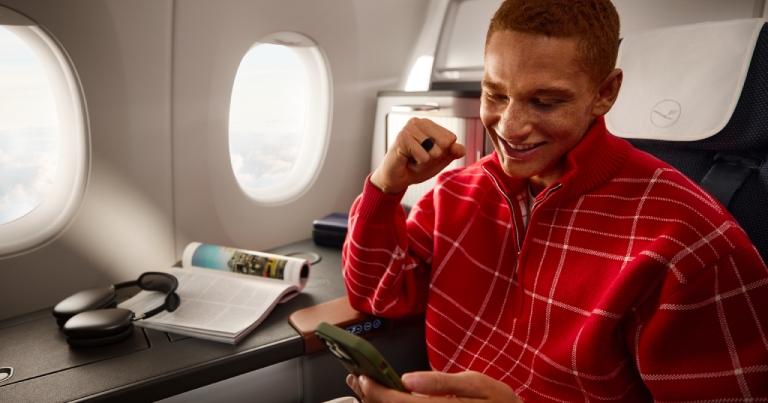
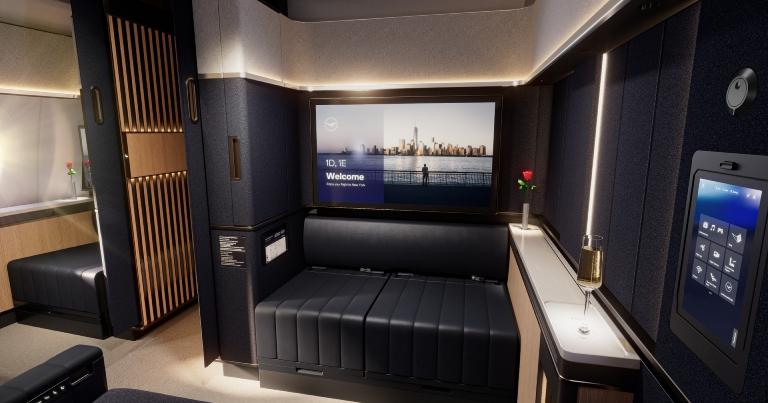
Lufthansa has added individualisation elements throughout the journey: from food pre-order with more options to ground experience choices. The airline took personalisation to a new level with the launch of Lufthansa Allegris – its new long-haul travel experience. At its heart, Allegris is about individualising travel and doing so in a way that is simple for customers. The individuality comes in passengers’ ability to create their own travel experience according to their personal needs, with choices in seats, meals and other elements of the journey. Indeed, the Lufthansa Allegris offer features seven kinds of seat.
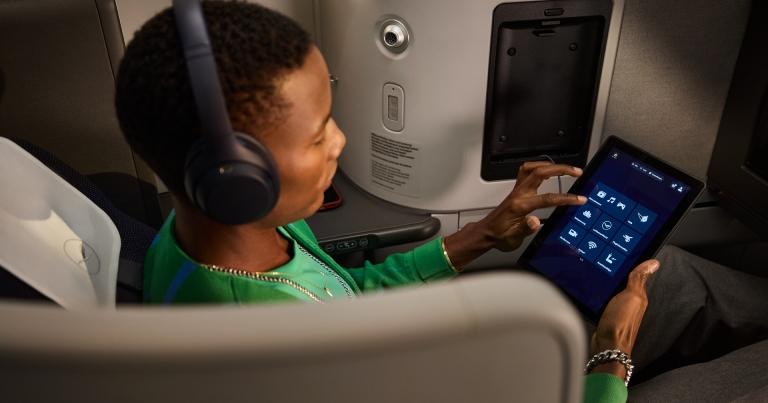
“Lufthansa Allegris, with the different seat types, especially in Business Class, is the latest element,” Becker shares. “But also, the individual seat climate in the Lufthansa Allegris Business Class or the fully individual controlled light concept in the First Class is part of this individualised experience. The seat types can be reserved via almost all distribution channels, often with additional rich content, explaining what a guest can expect from high choice. Also, it is all optional. If you care about an individualised experience, you have all the choices. If you don’t care, nothing changes – you just buy your ticket and will have a great experience.”
AI to enhance personalised offers and servicing
While artificial intelligence (AI) has not been a factor in developing or offering those new choices, Becker highlights that it will be helpful in two ways:
- “Offering the right choices, maybe even pre-select choices based on the passenger’s preferences from earlier flights.”
- “Further improving the servicing experience. We already made sure, that in case something goes wrong, the servicing and a seat reservation refund is quick and easy. AI can help to bring this to the next level, for example in more complex cases that today still need annual attention.”
Becker shares that personalisation should be driven by travellers’ needs, not by technology. However, AI will help to better understand those needs and improve the quality of individualised offers. “Robotics will help consistently deliver those offers, for example in the ground experience, where sufficient qualified staff becomes more and more scarce in many countries,” Becker explains. “Also, wearables and Augmented Reality can help improve the offer and delivery quality – and can unlock new opportunities when it comes to innovative personalisation elements.”
Keep personalisation simple and think end-to-end
Becker concludes with some invaluable advice for other airlines looking to enhance passenger personalisation: “First, personalisation only adds value if it’s simple – and that’s easy said, but hard to implement. Simply extending the choices does not necessarily add customer value. Second, think E2E. Most choices are designed until they are on the shelf – often even here, the complex world of airline distribution is not reflected. It is important to think about servicing aspects, too. In our industry, things might go wrong and we face disruptions. If this leads to a bad servicing or refund experience for the chosen experience elements, the customer will not choose again – maybe not even come back.”
Hear more from Lufthansa at the co-located APEX FTE EMEA and APEX FTE Ancillary & Retailing events, taking place in Dublin on 9-11 June 2026. Anja Schuhmacher, Senior Manager Airport Experience & Partnerships, Lufthansa, is participating in a session focused on ‘How can airports and airlines successfully scale baggage handling innovations to make a real difference across the industry? Is the time now?’ Meanwhile, Stefan Nothelfer, Senior Director, Head of Corporate Venturing & Strategic Growth, Lufthansa Innovation Hub, is speaking in a session titled ‘How Agentic AI is shifting the way the aviation commercial ecosystem operates, and what the future might hold’.
Register for the co-located APEX FTE EMEA and APEX FTE Ancillary & Retailing events – free for airlines, low-cost for airports >>Virgin Atlantic: Unlocking the massive opportunity of personalisation through AI, loyalty and connectivity

As traveller expectations continue to rise, Virgin Atlantic sees significant untapped potential in personalisation across the air travel journey. By leveraging its growing digital ecosystem – including loyalty programmes, new artificial intelligence (AI)-powered tools and enhanced connectivity – the airline aims to deliver more relevant, value-adding offers and experiences to its customers. With initiatives such as its recently launched AI Concierge, a new mobile app and future fleet-wide connectivity plans, Virgin Atlantic is laying the foundations for a more predictive and personalised travel experience.
“The opportunity with personalisation is massive,” says Juha Järvinen, Chief Customer Officer (CMXO), Virgin Atlantic. “Our industry hasn’t traditionally been very good at it, despite having all the travel data on our customers. GDPR data regulations limit the opportunity but the underlying mission for us is to generate value adding and inspirational content and offers, which Virgin Atlantic can naturally operate in. We will continue developing our loyalty ecosystem with Flying Club and Virgin Red, especially in the UK, which creates a unique opportunity.”
AI Concierge and new app lay the foundations for more personalised and predictive travel
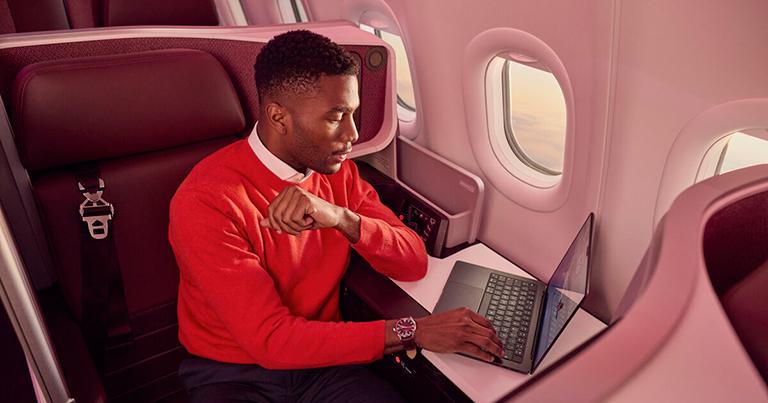
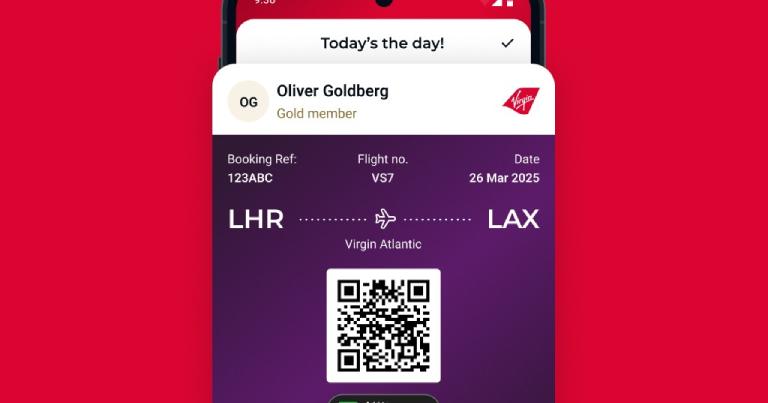
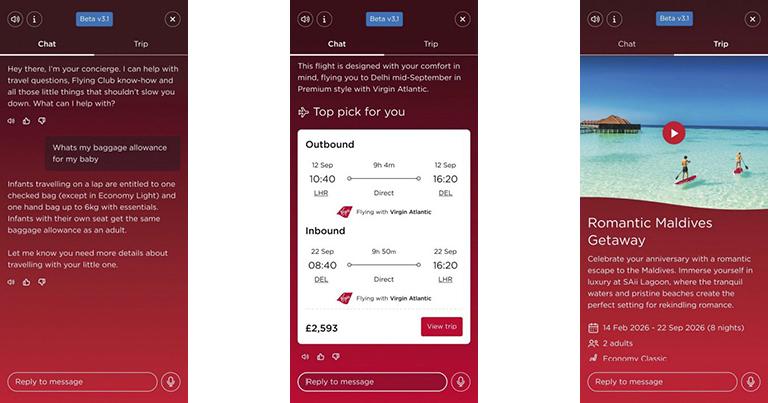
Virgin Atlantic launched its AI Concierge in December 2025 and its new Virgin Atlantic app in March 2026. “These are crucial enablers for us to drive greater personalisation, and the future roadmap towards airline and travel distribution through Offer & Order distribution will revolutionise the way we distribute and serve our customers with relevant offers,” Järvinen explains. “We will be the first airline in Europe with fleet-wide Starlink connectivity in 2027, which will open further opportunities to elevate our inflight experience and capabilities to drive more commercial upsides.”
Indeed, the launch of AI Concierge and the new Virgin Atlantic app have been crucial foundations for the airline’s AI journey, and it is actively exploring ways to improve customer contact touchpoints, utilising AI capabilities to bring more value to customers and speedy processing times.
“There is more to come in 2027,” Järvinen shares. “AI will be enabling improved choices and optionality for our customers across all our touchpoints. There is also an opportunity to be even more predictive both on customers’ needs and changed circumstances during a travel journey. AI will play a significant role in both. We need to give our customers the next best opportunity and recommendation based on the insights we have.”
Järvinen concludes with some invaluable advice for other airlines looking to enhance passenger personalisation: “We need to explore more what other industries and verticals have done. We have been constrained by – but also used as an excuse – the limitations of airline distribution systems. Now we truly have alternatives which will unlock many of those limitations.”
Looking ahead, Virgin Atlantic is focused on unlocking the full potential of personalisation by combining AI, enhanced digital platforms, and connectivity to anticipate passenger needs and deliver more relevant, value-adding experiences. Järvinen highlights that the airline is learning from other industries and exploring alternatives to traditional distribution limitations, positioning Virgin Atlantic to lead in predictive, customer-centric travel as these new technologies and platforms continue to evolve.
Personalisation as an operational imperative: Leading airlines shape the future of customer-centric travel
Personalisation is no longer a conceptual idea for aviation: it is an operational imperative. Airlines such as Air France, All Nippon Airways, Lufthansa, and Virgin Atlantic are demonstrating how anticipating passenger needs, simplifying choices, and leveraging technology – from AI and unified data platforms to digital ecosystems and connectivity – can transform the travel experience. Whether through predictive services, individually tailored journeys, or intuitive digital touchpoints, these carriers are turning data into actionable insights that enhance satisfaction, reduce friction, and strengthen loyalty. As the industry continues to innovate, the ability to deliver meaningful personalisation at scale will increasingly define the competitive edge, shaping a future where travel is not just efficient, but genuinely customer-centric.
Read more about the 12 technology and CX trends that can enhance airline and airport operations in 2026 >>You may also be interested in
12 technology and CX trends that can enhance airline and airport operations in 2026
The FTE Commercial Collaboration Playbook – delivered in partnership with Munich Airport