




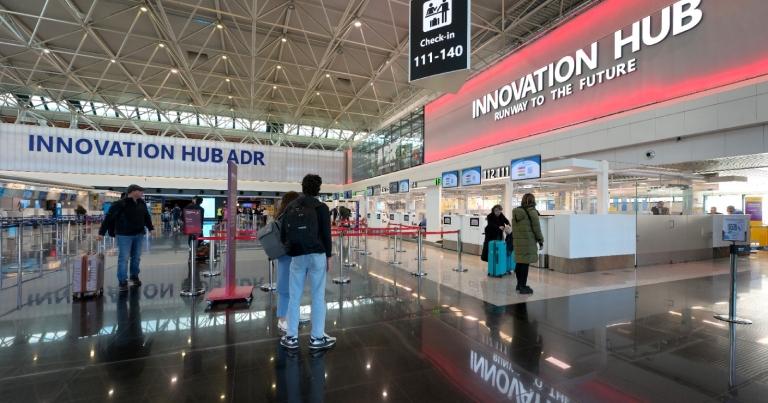
Artificial intelligence (AI) at Aeroporti di Roma – a Corporate Partner of the FTE Digital, Innovation & Startup Hub – is not seen as a standalone technology, but as a concrete operational capability that enhances human expertise. This approach began to take shape in 2022 with the launch of the ‘Runway to the Future’ innovation programme, designed to collaborate with startups and rapidly test new solutions directly within the airport ecosystem.
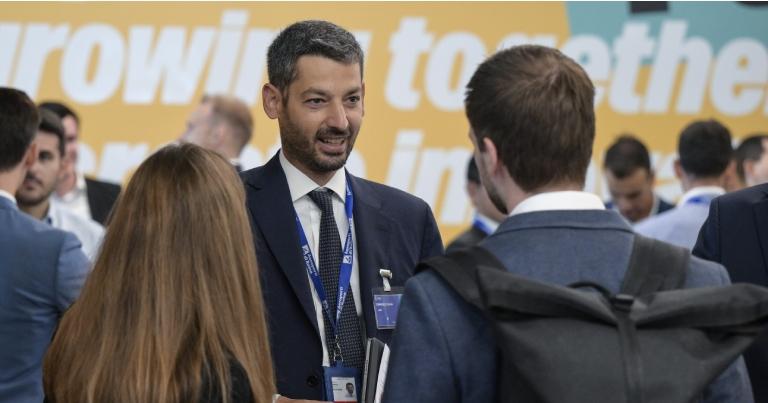
Emanuele Calà, SVP Transformation & Technology, Aeroporti di Roma, is participating at the co-located APEX FTE EMEA and Ancillary & Retailing events, taking place in Dublin on 9 to 11 June 2026, in a session focused on ‘When technology becomes a teammate: Embracing human/AI collaboration to help your organisation optimise operational efficiency’. In this interview, Calà discusses Aeroporti di Roma’s structured model that integrates AI across three key dimensions: operations, customer engagement, and safety.
Register for the co-located APEX FTE EMEA and APEX FTE Ancillary & Retailing events – free for airlines, low-cost for airports >>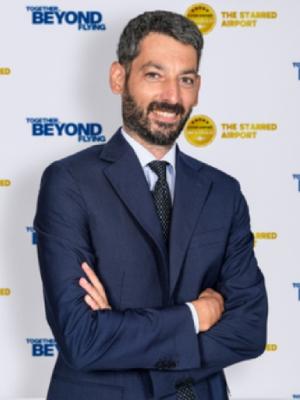
“AI is enabling a more predictable, efficient, and data-driven management of airport processes,” Calà shares. “Through the collaboration with Assaia, AI-based video analytics monitor airside activities in real time, allowing a shift from simple observation to the anticipation of inefficiencies and improved turnaround performance. At the same time, the integration of multiple operational data sources through Aeroficial Intelligence’s Live Cockpit platform provides a real-time, end-to-end view of aircraft movements. This makes it possible to detect potential congestion early and move toward a more proactive operational model.”
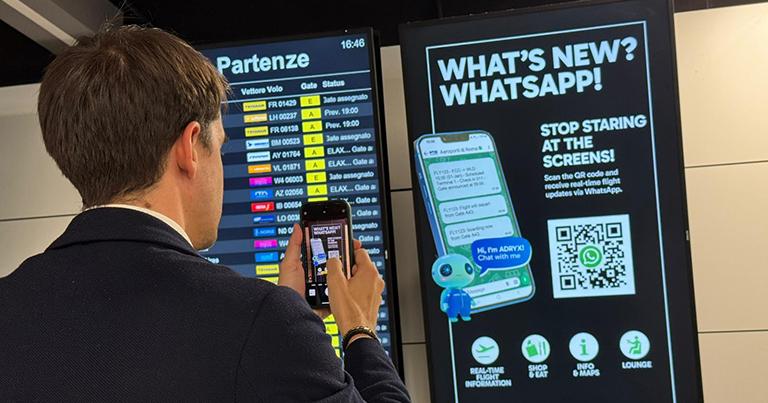
AI is also redefining how Aeroporti di Roma interacts with passengers, becoming a direct and continuous interface. The objective goes beyond efficiency, focusing on transparency and trust. “A chatbot has been developed to stay connected with passengers throughout their journey, delivering real-time updates on flight status and relevant information through familiar channels such as WhatsApp,” Calà explains. “This shifts communication from a passive model to a proactive one, where passengers are constantly informed and supported.”
Meanwhile, safety of course remains a top priority and an area where AI can deliver immediate impact. Aeroporti di Roma has, for example, tested optical systems developed by Argos AI to automatically detect Foreign Object Debris at the gates, reducing operational risks and enhancing safety standards. In parallel, work on weather resilience leverages solutions from Tomorrow.io. By combining satellite data with AI models, it becomes possible to anticipate disruptive weather conditions not only locally but also across other hubs, enabling better coordination and more effective disruption management.
“Overall, AI is supporting a transformation across how operations are managed, how passengers are engaged, and how safety is ensured,” says Calà. “Most importantly, it is driving a shift from reactive to predictive processes, where human oversight remains essential to guide, validate, and strengthen decision-making.”
AI progressively becoming a digital teammate that augments human expertise
The evolution of AI from a simple enabling technology to an active operational partner represents a fundamental shift in how organisations approach digital transformation. “In the past, technology was mainly used to digitise existing manual processes,” Calà notes. “Today, AI systems are increasingly able to interpret data, identify patterns, and provide recommendations that directly support decision-making.”
At Aeroporti di Roma this transformation is happening on two parallel fronts. The first concerns infrastructure and airside operations. In this context, AI acts almost as an expert observer. “Instead of simply displaying data to operators, AI systems continuously analyse operational activities and proactively highlight potential inefficiencies or anomalies before they escalate,” Calà explains. “This significantly enhances the situational awareness of our teams and allows them to focus less on constant monitoring and more on higher-value operational decisions.”
The second dimension involves corporate processes and internal workflows. Aeroporti di Roma is increasingly embedding AI across its administrative and staff functions to streamline procedures, support predictive cost analysis, and improve resource allocation. “Through the introduction of generative AI tools and intelligent automation, we are reducing bureaucratic bottlenecks and enabling our teams to operate in a more agile and data-driven way,” Calà shares. “In this sense, AI is progressively becoming a digital teammate: it does not replace human expertise, but augments it by providing insights, recommendations and analytical capabilities that help our people move from operational execution to strategic supervision.”
Agentic AI: “Working alongside people to deliver more efficient, resilient and intelligent operations”
In the future, agentic AI could become a key connective layer across complex operational environments such as airports, helping coordinate processes, systems and people more efficiently. Aeroporti di Roma is approaching this evolution through a structured process of experimentation and validation.
“One of the areas where we are already testing these capabilities is through AI copilots and agent-based solutions within several internal functions, including Procurement and Human Resources,” says Calà. “In these contexts, AI does not simply retrieve information but actively assists teams in managing processes, accelerating workflows and reducing the likelihood of human error.”
At the same time, Aeroporti di Roma places strong emphasis on quality, reliability and governance. Every new AI capability undergoes rigorous testing before being integrated into the operational environment. “Our objective is not simply to move faster, but to ensure that AI systems meet the highest standards in terms of accuracy, security and compliance,” Calà explains. “Looking ahead, we see agentic AI as a powerful partner that can handle many layers of operational complexity, enabling human teams to focus on strategic oversight and decision-making. In this perspective, AI becomes an integral component of the airport ecosystem, working alongside people to deliver more efficient, resilient and intelligent operations.”
Making passenger experience increasingly seamless, personalised and digital
AI plays a fundamental role within Aeroporti di Roma’s innovation strategy, not only in improving operational efficiency but also in making the passenger experience increasingly seamless, personalised and digital.
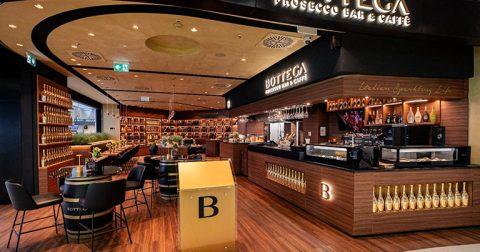
“In recent years, we have developed an AI-based chatbot that enables our passengers to easily and immediately access a wide range of airport services,” says Calà. “Through this digital assistant, passengers can receive information about the services available at the airport, book a personal shopping assistant for their airport shopping experience, or reserve a table at restaurants located within the terminal. This system also serves as an integration platform that allows us to rapidly connect solutions developed within our startup ecosystem with the digital services offered to passengers.”
A relevant example is Aeroporti di Roma’s collaboration with Ailytics, a startup that leverages AI-powered cameras to monitor construction sites in real time. This approach improves coordination across site activities and ultimately enhances overall safety and operational efficiency.
“At the same time, we have tested solutions from Outsight that leverage LiDAR sensors combined with AI to analyse passenger flows within the terminals,” Calà shares. “These technologies, developed in full compliance with privacy regulations and General Data Protection Regulation requirements, allow us to understand in real time how passenger flows are distributed across different areas of the airport, helping prevent congestion and optimise the management of terminal spaces. Overall, AI enables us to gain a more precise and dynamic understanding of what is happening across the terminal and to intervene proactively, improving both operational efficiency and the passenger experience.”
“AI lets us move from fragmented operations to an integrated, predictive, continuously learning airport”
Across the airport environment, Aeroporti di Roma is seeing AI shift from being a technology project to becoming a true operational teammate – and the biggest opportunities are emerging into operations.
“With our AI transformation, we are building a single, shared Airport Operations Control Centre that connects all relevant stakeholders – airside/landside operations, security checkpoints, and border control – on top of the same real-time data layer, enhanced with advanced AI capabilities,” says Calà.
Machine learning models are now predicting flight delays, passenger presentation curves, baggage loads, and even ready‑time and boarding completion times. “These forecasts are powering smarter planning, optimising stands, gates, check‑in counters, security lanes, and border booths before the day even starts, reducing the pressure on real‑time operations,” Calà explains. “When a disruption hits, instead of reactive phone calls, the system provides early warnings, suggests alternative scenarios, and synchronises stakeholders from tower to terminal to handlers and security. AI turns what used to be a manual, experience‑driven re‑plan into a coordinated, data‑driven recovery.”
Aeroporti di Roma is bringing all of this to frontline teams through natural‑language chatbots and operator co-pilots. “Instead of hunting for information, operators can simply ask: ‘What’s driving this delay?’, ‘What’s the best re‑allocation?’, ‘What happened last time?’, and the system responds instantly, with data and recommendations,” Calà highlights. “So, in practical terms, the biggest opportunity is this: AI lets us move from fragmented operations to an integrated, predictive, continuously learning airport, where technology doesn’t replace expertise, it amplifies it.”
A growing evolution in collaboration between people, intelligent systems and robotics
As AI becomes increasingly embedded in daily operations, Aeroporti di Roma sees a growing evolution in collaboration between people, intelligent systems and robotics.
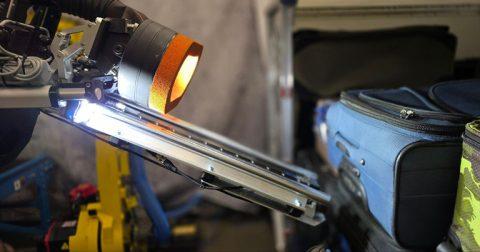
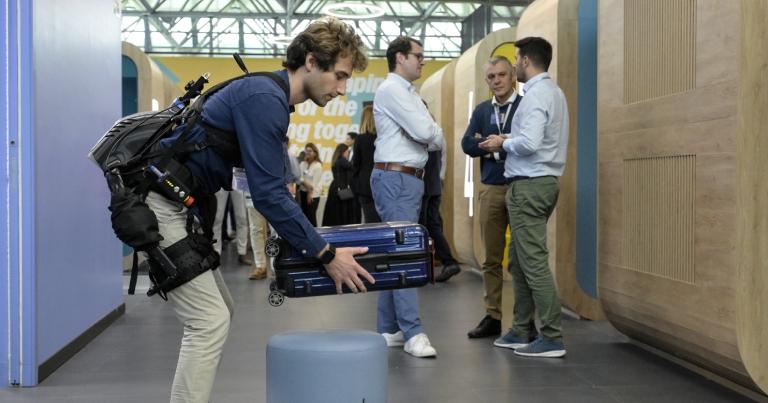
Within its ‘Runway to the Future’ innovation programme, Aeroporti di Roma is already testing several solutions in this direction. One example is its collaboration with Azalea Robotics, which is piloting a robot designed for baggage handling system operations. “The robot uses cameras supported by AI algorithms to identify luggage, grasp it correctly, and place it onto baggage carts,” Calà explains. “AI not only guides the robot’s movements but can also automatically stop operations if nearby objects or obstacles are detected, ensuring high safety standards. Another example involves cleaning robots developed by Loki Robotics, which we are currently testing within the airport environment. In this case, Virtual Reality headsets supported by AI are used during the training phase to teach the robot how to replicate human cleaning movements. By capturing and translating human gestures into data, the AI helps train the robot to perform cleaning tasks with a level of precision and effectiveness similar to that of a human operator once deployed in the operational environment.”
Looking ahead, Aeroporti di Roma believes the future of airport operations will increasingly rely on strong collaboration between people, AI and robotics. Intelligent systems will manage repetitive or operationally complex tasks, while humans will continue to play a central role in supervision, control, and strategic decision-making.
Enterprise AI Transformation as part of ADR’s fourth ‘Call4Startups’
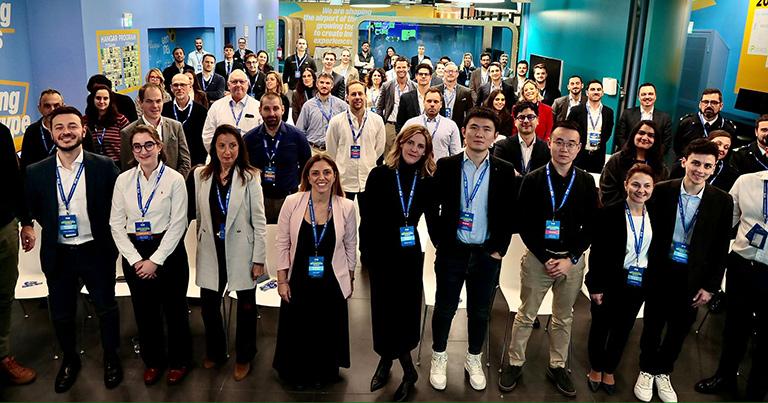
Enterprise AI Transformation is one of the challenges in the fourth edition of Aeroporti di Roma’s ‘Call4Startups’. This represents an important step in the journey through which Aeroporti di Roma is integrating AI into its internal processes.
“In this edition we selected Jasper, a generative AI platform designed to support External Relations teams in creating content at scale,” says Calà. “The technology allows the automation of text, images, and other communication formats while ensuring consistency with brand identity and adapting content to different channels and audiences. Through this platform, we provide additional support to our External Relations team. By leveraging Jasper, we can accelerate the creation of materials such as LinkedIn posts, press releases, and other institutional communications, while maintaining a consistent ADR brand identity.”
Airports for Innovation: A global experimentation platform
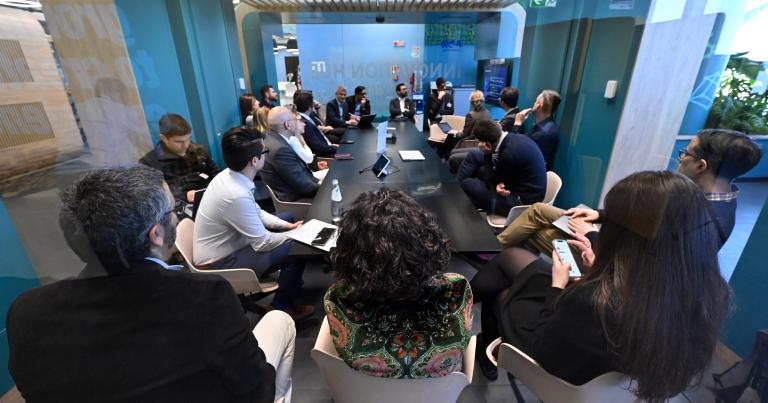
Collaboration within the airport ecosystem is absolutely essential, as many of the most impactful innovations can only be achieved through close integration between airports, airlines, and technology partners. A concrete example is ‘Airports for Innovation’, a global network co-founded by Aeroporti di Roma and Aena. This network currently brings together ten of the world’s leading airport operators, including Athens, Dallas Fort Worth, Dubai, Munich, Oman, Tokyo Narita, and Vancouver, with the mission of defining new industry standards through open innovation. The alliance, which collectively represents a passenger base of over 800 million, acts as a global experimentation platform. “The initiative enables airports to jointly launch innovation challenges, select startups globally, and test their solutions in parallel across multiple hubs, creating a truly global ‘living lab’ for aviation,” Calà shares. “The results of the first joint ‘Call4Startups’ clearly demonstrate the value of this model. The initiative attracted over 290 proposals from more than 280 startups across 36 countries, addressing key industry challenges such as seamless passenger experience, sustainability, smart baggage, and AI-powered airport operations.”
Following a joint evaluation process, a group of selected startups has been deployed in real airport environments to run pilot projects across multiple hubs, with the objective of validating their solutions and assessing their scalability at an industry level. “What makes this approach particularly powerful is its ability to move from isolated experimentation to shared innovation,” says Calà. “By testing solutions simultaneously in different operational contexts, we can accelerate validation, compare results, and, when successful, scale them more efficiently, ultimately contributing to the definition of new common standards for the aviation industry.”
Integrating multiple innovative technologies into unified digital platforms
Looking ahead to the next five to ten years, one of the most transformative developments will be the deeper integration of AI into airport operational and decision-making processes. “Many of the technologies that are currently being tested through innovation programmes and startup collaborations will gradually become fully embedded within airport systems, becoming a core component of daily operations,” Calà highlights. “Another area with significant impact will be the use of AI for monitoring and optimising energy consumption and resource management across the airport, contributing both to sustainability goals and to greater operational efficiency.”
One of the most important developments will be the ability to integrate multiple innovative technologies into unified digital platforms capable of aggregating data from various sources and generating increasingly advanced operational insights. “This will enable airports to gain a more comprehensive and real-time view of their operations, supporting faster and more informed decision-making,” Calà adds.
APEX FTE EMEA: “Bringing together leading airports, airlines, and technology partners to share real use cases and lessons learned”
Calà is eager to participate at the co-located APEX FTE EMEA and Ancillary & Retailing events, taking place in Dublin on 9 to 11 June 2026, where he is most looking forward to understanding how the industry is evolving from digital experimentation to the large-scale adoption of AI across airport operations. “In particular, I see two major developments that will shape the next phase of innovation. The first is the rise of Physical AI, where artificial intelligence is increasingly embedded into robotics and autonomous systems operating directly in the airport environment from ramp operations to baggage handling and terminal services. The second is workflow automation, where AI transforms how decisions are made by orchestrating complex processes across departments, reducing manual tasks, and enabling faster and more consistent execution. Events like APEX FTE EMEA are extremely valuable because they bring together leading airports, airlines, and technology partners to share real use cases and lessons learned. For me, the key interest is to see how these two trends are moving from pilot projects to scalable solutions, and how they can be integrated to create more efficient, resilient, and intelligent airport operations.”
Register for the co-located APEX FTE EMEA and APEX FTE Ancillary & Retailing events – free for airlines, low-cost for airports >>AI as a teammate: Scaling intelligence across the airport
Aeroporti di Roma’s approach to AI offers a clear signal of where the industry is heading: away from isolated digital initiatives and toward fully integrated, intelligence-driven airport ecosystems. By embedding AI across operations, passenger engagement, safety, and enterprise functions, Aeroporti di Roma is not only improving efficiency but fundamentally reshaping how decisions are made – shifting from reactive management to predictive, coordinated execution. Crucially, this transformation is not about replacing human expertise, but elevating it. AI is emerging as a true operational teammate, augmenting human judgement with real-time insights, scenario modelling, and continuous learning capabilities. As agentic AI, robotics, and unified data platforms mature, airports will be increasingly defined by their ability to orchestrate complex systems seamlessly while keeping people at the centre of oversight and strategy. For industry stakeholders, the message is clear: the competitive advantage will lie in how effectively organisations can integrate AI into everyday workflows, scale innovation through collaboration, and build trust in intelligent systems. In this new paradigm, the airport becomes not just a transport hub, but a dynamic, adaptive environment – one that learns, anticipates, and evolves in real time to deliver smarter operations and better passenger experiences.
You may also be interested in
12 technology and CX trends that can enhance airline and airport operations in 2026
12 innovations that have the potential to enhance CX and future-proof airport operations
The FTE Commercial Collaboration Playbook – delivered in partnership with Munich Airport