

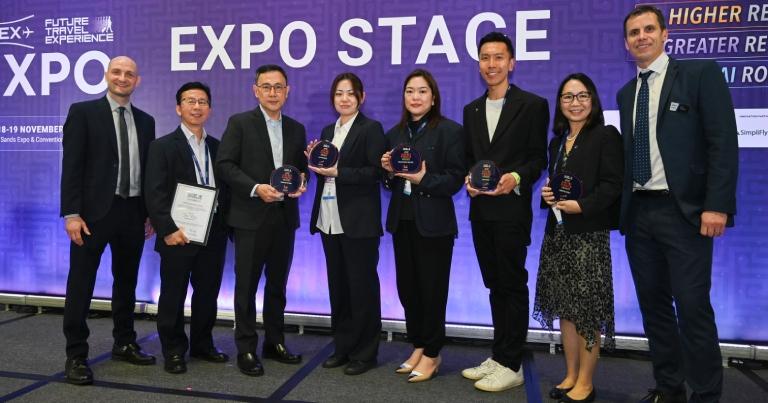
The most pioneering airlines and airports in Asia-Pacific were recognised at the FTE APAC Pioneer Awards 2026 ceremony. The winners were announced on 18 November during APEX FTE EXPO 2026 at the Marina Bay Sands Expo & Convention Centre in Singapore. 30 leading airlines and airports from across the region were nominated for pushing the boundaries of innovation, enhancing the customer experience, and playing a vital role in advancing the air transport industry. Six of the nominees were presented with an ‘Outstanding Achievement’ trophy.
Mark your diary for APEX FTE EXPO 2027, Seoul, 3-4 November >>FTE APAC Airline Pioneer Awards
All Nippon Airways
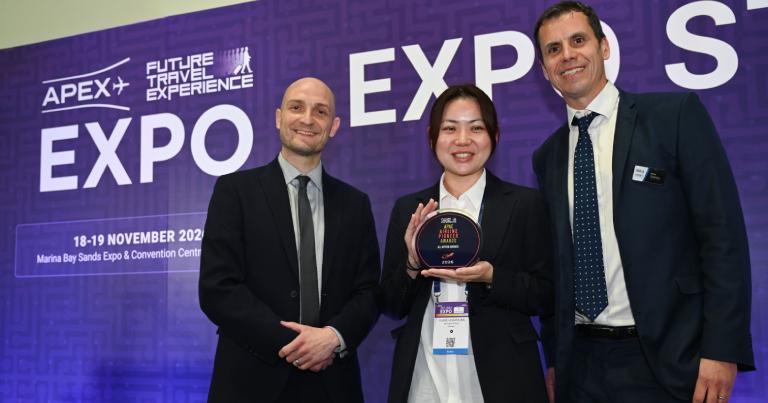
All Nippon Airways (ANA) was recognised for its pioneering approach to transforming airline and airport operations through automation, artificial intelligence (AI) and human-machine collaboration. As part of the FTE Smart Ramp initiative, ANA is helping to shape the future of aircraft turnaround operations, with autonomous technologies designed to improve efficiency, safety and sustainability.
A key development is ANA’s deployment of autonomous towing tractors for cargo transportation between warehouses and the apron. Following extensive Proof of Concept testing, the vehicles entered operational use in 2025, providing valuable insight into how autonomous technology can be integrated into complex ramp environments while working alongside ground handling personnel. ANA is also collaborating with industry partners and the Japan Civil Aviation Bureau to help establish the infrastructure and regulatory frameworks needed to scale autonomous airport operations.
Beyond the ramp, ANA is pioneering AI applications for flight safety. The airline became the first in the world to implement BlueWX’s AI-based turbulence prediction service, using deep learning trained on a decade of turbulence data. Validated through trials involving approximately 2,500 ANA pilots, the system achieved 86% accuracy, helping crews anticipate turbulence and potentially improve passenger comfort and safety.
ANA is also advancing its ANA Smart Travel proposition, enabling passengers to use their smartphones throughout their journey for a smoother, increasingly contactless experience.
By combining autonomous ground operations, AI-powered flight safety and digital passenger services, ANA is demonstrating how intelligent technology and human expertise can work together to create safer, more efficient and seamless aviation operations.
Singapore Airlines
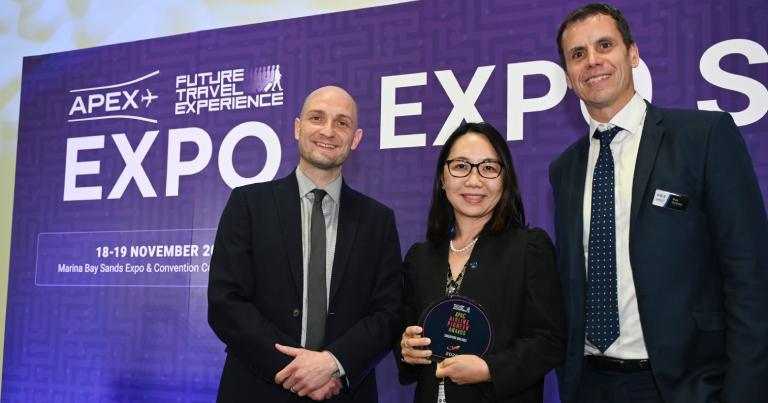
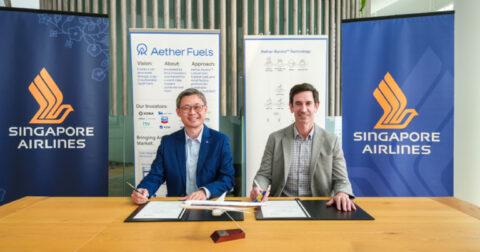
Singapore Airlines was recognised for placing digital innovation at the heart of its customer experience and operational strategy, combining artificial intelligence (AI), generative AI (GenAI), employee-focused digital solutions and next-generation connectivity to create more seamless journeys.
A major focus is the airline’s collaboration with OpenAI to develop a blueprint for adopting GenAI across its operations. The partnership is exploring advanced solutions capable of interpreting text, audio, diagrams and video to enhance customer servicing, streamline processes and improve employee productivity. An initial priority is developing Singapore Airlines’ AI-powered virtual assistant, creating a more intuitive way for customers to plan, book and manage their journeys.
The airline is also applying AI to empower its people. Through its Digital Innovation Lab, KrisLab, Singapore Airlines works with startups and entrepreneurs to identify practical applications of emerging technologies. One example is an AI- and speech-recognition-powered crew language competency app, which supports cabin crew in improving their language skills, enunciation and onboard announcements through flexible digital learning.
Connectivity is another important part of the airline’s innovation strategy. Singapore Airlines is preparing to introduce Starlink low Earth orbit satellite broadband progressively from the first quarter of 2027, initially across its Airbus A350-900 long-haul, A350-900 ultra-long-range and A380 fleets. The service will provide high-speed, low-latency connectivity in all cabin classes, enabling customers to stream, game and stay connected throughout their journeys.
Through collaboration with the Civil Aviation Authority of Singapore’s International Aviation Lab, the airline is also exploring wider opportunities for industry innovation.
By bringing together GenAI, employee empowerment, startup collaboration and next-generation connectivity, Singapore Airlines is turning emerging technologies into practical improvements for customers and employees alike.
Cathay Pacific
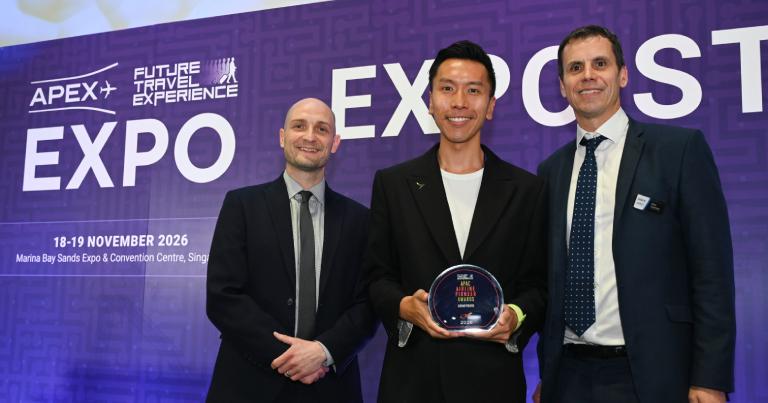
Cathay Pacific was recognised for turning digital transformation into a platform for practical innovation, using artificial intelligence (AI), real-time data and next-generation connectivity to enhance the customer experience, optimise operations and extend its technology capabilities across the aviation industry.
A significant development is the evolution of Cathay Technologies, the airline group’s wholly-owned subsidiary established in 2025 to commercialise digital solutions developed within the business. Its Electronic Flight Folder (EFF), which provides pilots with digital flight information and real-time operational data, is now being extended beyond Cathay, with Cargolux partnering with Cathay Technologies in 2026 to deploy the solution across its flight operations. This demonstrates how the airline is turning internally developed technology into solutions with wider industry potential.
AI is also becoming increasingly embedded across Cathay’s operations. The airline has developed more than 85 machine learning models supporting areas such as operational optimisation and simulation of Hong Kong International Airport’s Three-Runway System. Enterprise Retrieval Augmented Generation capabilities and Microsoft Copilot are also helping employees access information, enhance decision-making and improve productivity.
Cathay is applying AI to environmental challenges too. In partnership with Google, it is trialling AI-powered contrail avoidance technology, becoming Google’s first commercial airline partner in Asia-Pacific to test the solution and the first airline globally to trial contrail avoidance on ultra-long-haul flights. More than 80 flights participated in the initial trial.
Meanwhile, AI-powered disruption assistance, biometric boarding and high-speed inflight WiFi are enhancing the passenger journey.
By combining in-house technology development, AI-powered operational improvements and strategic industry partnerships, Cathay Pacific is demonstrating how digital innovation can deliver benefits well beyond individual customer touchpoints, helping shape the future of aviation.
FTE APAC Airport Pioneer Awards
Changi Airport Group
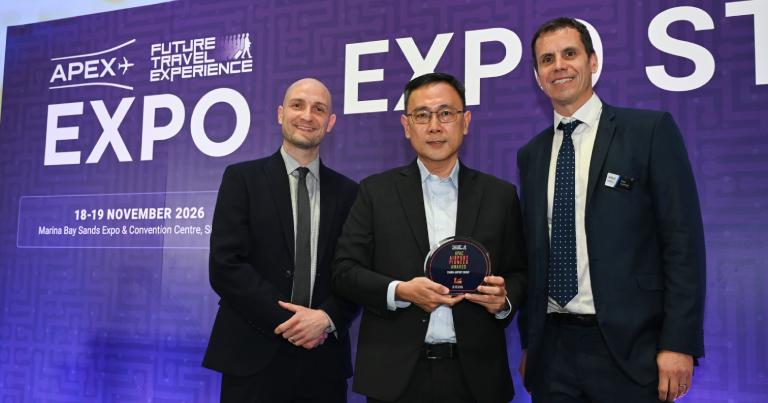
Changi Airport Group (CAG) was recognised for its continued commitment to digital transformation and innovation, combining smart technologies, collaborative innovation and forward-thinking infrastructure to shape the airport of the future. At the centre of this strategy is DIVA – Digital, Innovation, Ventures and Analytics – its digital factory, which develops, tests and launches solutions designed to transform airport operations and enhance the end-to-end traveller experience.
CAG has further strengthened its innovation ecosystem through Terminal X, a new innovation hub bringing technology companies, startups and industry partners together to experiment and collaborate. Featuring a makers’ lab, UI/UX testing environments and immersive storytelling chambers, the facility provides a dedicated environment for developing and testing ideas that could shape the future of travel.
Through its SMART Airport Vision, Changi is exploring artificial intelligence (AI), biometrics, automation, data analytics and connected technologies to make journeys more seamless, personalised and efficient. This technology-led approach is complemented by innovative infrastructure, including Changi’s first satellite gate, which brings an aerobridge-style experience to remote stands. Designed to improve accessibility, the zero-energy facility uses rooftop solar panels, off-grid battery storage and smart building technology.
Looking further ahead, CAG is developing a new private terminal and premium amenities cluster, scheduled to open in mid-2027, while Terminal 5 remains central to its long-term expansion plans. Construction began in May 2025, alongside a S$3 billion investment over six years to modernise Terminals 1 to 4.
By combining DIVA, Terminal X, smart infrastructure and large-scale development, Changi is creating a living testbed for aviation innovation. Its approach demonstrates how technology, collaboration and passenger-centric design can work together to continually reinvent the airport experience.
Japan Airport Terminal Co., Ltd.

Japan Airport Terminal was recognised for its visionary approach to airport innovation through terminal.0 HANEDA, an ambitious cross-industry initiative bringing together technology companies, startups and industry stakeholders to reimagine the airport of the future. With Haneda serving as a living testbed for new ideas, the initiative is exploring how emerging technologies can deliver more seamless passenger journeys, improve operational efficiency and support more sustainable airport environments.
At the heart of terminal.0 HANEDA is the development of practical, scalable solutions with potential for deployment at airports worldwide. Artificial intelligence (AI), robotics, automation, biometrics and the Internet of Things (IoT) are among the technologies being explored. AI could help predict passenger flows and peak periods, enabling more proactive resource allocation, while robotics and automation offer opportunities to transform processes such as baggage handling. Biometric technologies, including facial recognition, could also streamline passenger processing from check-in and security through to boarding.
Sustainability is another important pillar of the initiative, with a focus on green technologies, energy-efficient infrastructure and waste reduction. This commitment is reflected in the Terminal 1 North Satellite facility, which opened in September 2026 and features a hybrid timber-and-steel structure designed with carbon neutrality in mind.
Crucially, Japan Airport Terminal’s approach is built around collaboration and co-creation, enabling airports, airlines, technology companies and startups to identify operational challenges, test new concepts and develop solutions together.
By combining advanced technology, sustainable design and cross-industry partnerships, Japan Airport Terminal is demonstrating how airports can become platforms for continuous innovation. Its role in hosting the FTE World Innovation Summit in Tokyo in March 2027 will further strengthen this commitment to shaping the future of global aviation.
Airport Authority Hong Kong
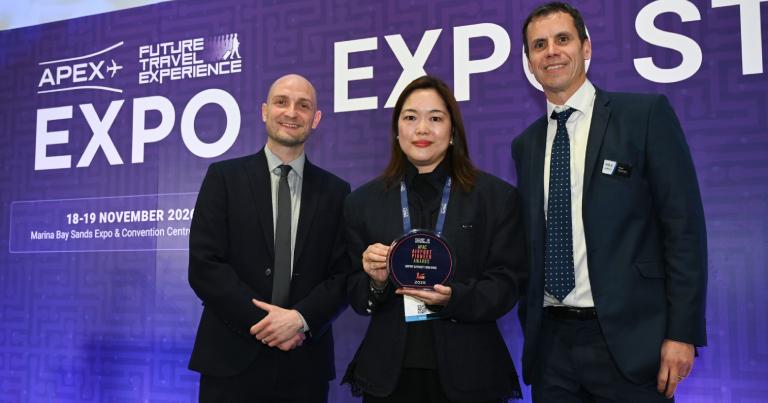
Airport Authority Hong Kong (AAHK) was recognised for its ambitious transformation of Hong Kong International Airport (HKIA) into a smarter, safer and more connected Airport City, leveraging high-performance connectivity, automation, biometrics and intelligent infrastructure to redefine airport operations and the passenger experience.
A key enabler is HKIA’s Enterprise 5G Infrastructure, which provides a shared, high-capacity and low-latency network supporting connected devices, autonomous vehicles and intelligent airport systems. In 2025, AAHK expanded its autonomous vehicle fleet to 70, while private 5G connectivity is also enabling autonomous apron line-marking robots to automate complex operational tasks, improving safety and efficiency.
The airport is deploying 5G, artificial intelligence (AI) and the Internet of Things across its infrastructure. More than 150 5G-enabled movable display panels provide real-time flight information and wayfinding, while connected systems support remote monitoring, preventive maintenance and more predictive operations.
Passenger processing is also being transformed through Flight Token (One ID), which uses facial recognition to create a seamless biometric journey across departure checkpoints. This digital-first approach is complemented by the newly opened Terminal 2, featuring extensive self-service and smart technologies, including express self-bag-drop counters, smart check-in kiosks, facial recognition-enabled security gates and automated immigration channels.
Beyond the terminal, AAHK continues to expand autonomous mobility, robotic apron operations and advanced video analytics across the airport.
By combining enterprise 5G, AI, biometrics, IoT and autonomous technologies, AAHK is demonstrating how digital infrastructure can support innovation at scale. With Terminal 2 providing a digitally enabled gateway and Flight Token connecting key passenger touchpoints, HKIA is establishing a compelling blueprint for the smart, connected and passenger-centric airport of the future.
Special Appreciation Award: Joe Chiu, Changi Airport Group
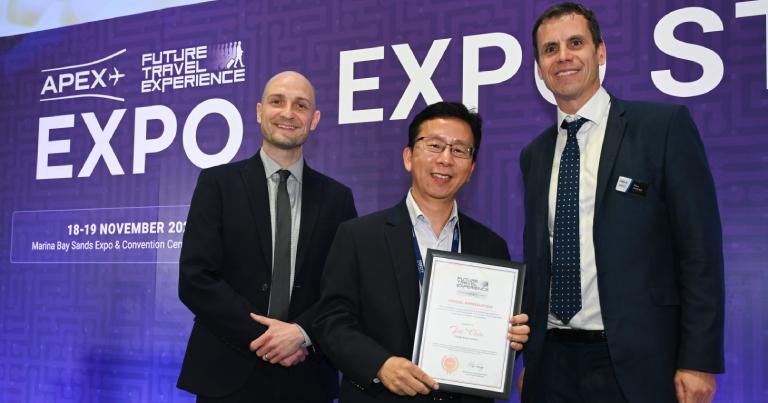
The awards ceremony concluded with Changi Airport Group’s Joe Chiu receiving a Special Appreciation Award. Over the last 10-plus years, Joe has leant his invaluable support to APEX Future Travel Experience, helping to ensure that every conference, expo and industry meeting that we’ve hosted here in Singapore adds as much value as possible to the industry. Over the years, Joe has been incredibly generous with his time and advice and has been an important collaborator of APEX Future Travel Experience.
Mark your diary for APEX FTE EXPO 2027, Seoul, 3-4 November >>You may also be interested in
12 technology and CX trends that can enhance airline and airport operations in 2026
How Nice Airport is blending personalisation, experiential retail and omnichannel innovation