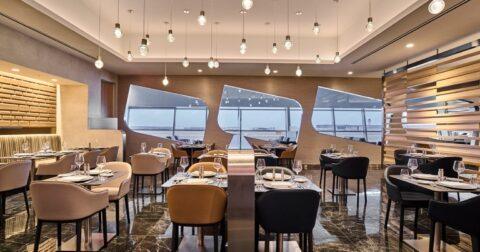





Pittsburgh International Airport (PIT) – a Corporate Partner of the FTE Digital, Innovation & Startup Hub – is entering a new phase following the opening of its transformational new terminal, with the facility now approaching its first full year of operations. In this video interview at the recent FTE Global 2026 in Dallas, Texas, Christina Cassotis, CEO, Pittsburgh International Airport, reflects on the response to the new terminal, the technologies making the biggest difference to passenger experience and operational efficiency, lessons learned around communication and organisational readiness, and PIT’s priorities for the next phase of its transformation.
Mark your diary for FTE Global 2027 – 7 to 9 September, Las Vegas >>New terminal delivering a strong response from passengers and the Pittsburgh community
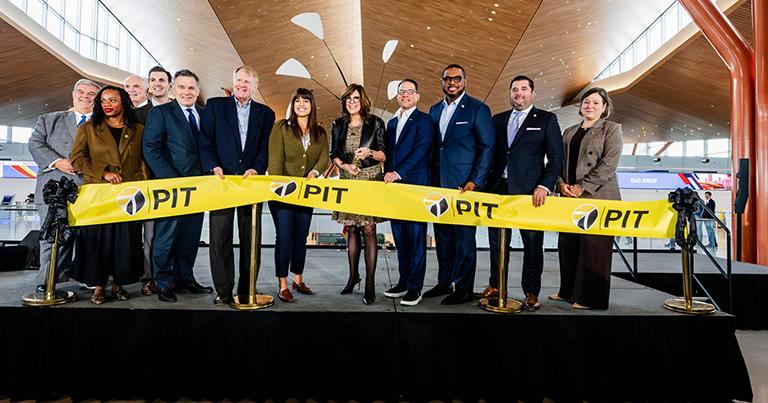
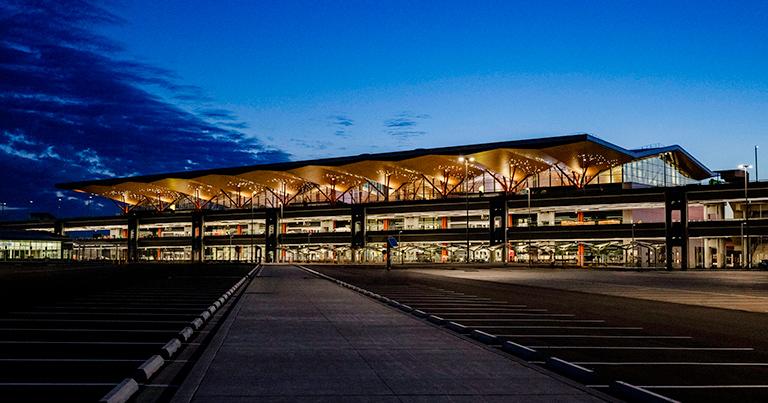
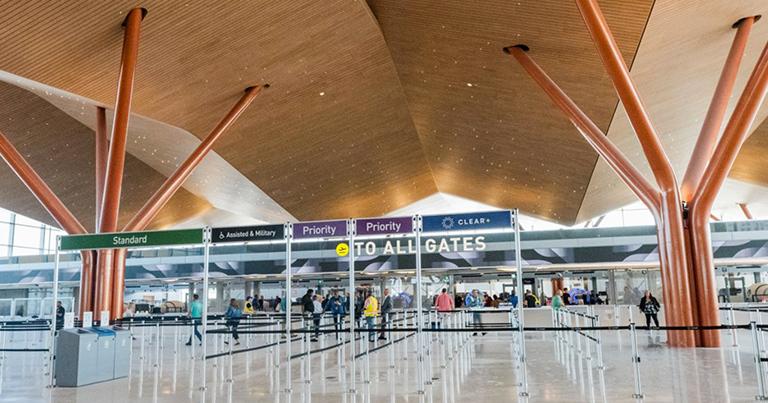
Almost a year after opening on 18 November 2025, Pittsburgh International Airport’s new terminal is already generating a strong response from passengers, airlines and the wider Pittsburgh community. Cassotis says the facility is not only delivering an improved aesthetic experience, but is also making the airport easier to navigate and more functional for passengers.
“The reaction has been fantastic,” Cassotis explains. “It works well. People are really excited about how well it functions, how beautiful it is, and how much easier it is to navigate.”
The positive response represents an important milestone for PIT following one of the most significant transformation projects in the airport’s history, but the first year of operations has also provided valuable lessons about what it takes to successfully transition an entire airport ecosystem into a new operating environment.
Communication and collaboration critical to successful transition
For Cassotis, one of the clearest lessons from the first year has been the importance of communication – and, specifically, the value of over-communicating throughout a major transformation.
From construction and operations teams to airlines, airport partners, elected officials, the media and community stakeholders, PIT recognised that everyone needed to understand what was changing, what the new terminal would mean for them and how the new operating environment would work.
“Communication has been key, and I would say over communicating has been key to make sure that everybody involved, whether they were helping to build, operate, and/or moving into the new terminal, would understand what was coming, what was going to change, and how things would work,” says Cassotis.
Importantly, communication was not treated as a one-way exercise. Questions from employees and stakeholders also provided an opportunity for PIT to identify where further information or clarification was required.
Cassotis also highlights cross-functional collaboration as another critical success factor, with the airport focused on ensuring that the needs of its various stakeholders were considered throughout the transformation. “So I would say that cross-functional collaboration and communication have been key for us,” she adds.
Technology working together to transform passenger experience and efficiency
PIT positioned its new terminal as a showcase for innovation, and one year into operations, Cassotis says the most significant impact is not being generated by any single technology. Instead, it is the cumulative effect of multiple technologies working together to improve both the passenger experience and the airport’s operational performance.
One particularly significant transformation has been the replacement of PIT’s ageing baggage system, which was around 35 years old and had become increasingly difficult to maintain. The new baggage system incorporates magnetic motors, delivering not only operational benefits but also an improved working environment for employees. Cassotis points to the reduction in noise in the baggage claim area as a tangible quality-of-life improvement for staff.
PIT is also using new technologies and the data they generate to become more predictive in areas such as maintenance and customer service. “We have had a number of new technologies that are enabling us to be much more predictive in our maintenance as well as customer service issues,” Cassotis explains. “The data that’s generated by a lot of these technologies has been amazing.”
For PIT, the lesson is that the value of digital transformation lies not necessarily in individual technology deployments, but in how multiple systems and data sources work together to create a more efficient and responsive airport. “I can’t point to one because, candidly, all of them working together is what’s making the difference,” says Cassotis.
Putting people at the centre of the transformation
A technology-led transformation on the scale of PIT’s new terminal also required significant change for the people working across the airport ecosystem. Cassotis says one of the most important lessons was to involve employees and partners from the earliest stages of the project, rather than waiting until the terminal was nearing completion.
PIT deliberately sought feedback from frontline employees and partners during the design process, helping the airport understand what would be required to make the new facility functional from an operational perspective.
“We were very interested in feedback and opinions from the front lines, from our partners, right from the point of design, so that we could design functional first, and then worry about form,” Cassotis explains.
The principle was clear: “Form should follow function.”
Giving employees and partners the opportunity to ask questions, challenge decisions and explain what they would need from the new environment also helped build ownership and buy-in ahead of opening. “And enabling people to either ask a question or say, ‘I’m not sure I understand why,’ or ‘this is what I’m going to need,’ is really important to get buy-in, and it helps when it’s time to open,” says Cassotis.
The next evolution of ORAT: Organisational readiness from day one
Looking back at the project, Cassotis says there is one area where PIT would make a change if it could start again: organisational readiness. The airport made a deliberate decision to begin its Operational Readiness and Airport Transfer (ORAT) work during the design phase, helping ensure that operational requirements were considered well before the terminal opened.
However, Cassotis believes the same philosophy should have been applied to organisational readiness and transition much earlier. “We are really proud of the fact that we started ORAT – operational readiness and transition in design,” she says. “I wish we had started organisational readiness and transition in design.”
PIT began this organisational work around 18 months before opening, but feedback suggested that the wider organisation and entire airport campus could have been brought into the journey sooner. The experience provides an important lesson for other airports planning major infrastructure projects: operational readiness cannot be separated from organisational readiness, and both need to begin early enough to allow employees and stakeholders to understand and adapt to the transformation.
“Sticking the landing” and proving the new platform
With the new terminal now operational, PIT’s focus is shifting from delivering the transformation to demonstrating its long-term value. The airport has recently completed its strategic plan through the end of 2027, with Cassotis describing the next phase as being about “sticking the landing”. The objective is to prove that the platform PIT has built can deliver on the original ambitions for transformative customer service, cost efficiency and revenue generation.
“We really are focused on, I would call it, sticking the landing, proving that the platform that we built really will deliver the kind of transformative customer service, cost efficiency, revenue generation platform that we hoped for,” says Cassotis.
This means moving beyond deploying technologies and infrastructure and ensuring that the airport changes the way it works as a result. For PIT, the next stage of transformation is therefore about putting the new capabilities into practice, embedding new ways of working and ensuring that the benefits of the terminal are realised across the organisation.
FTE Hall of Fame recognition celebrates the wider PIT team
Cassotis was inducted into the new Future Travel Experience Hall of Fame at FTE Global 2026, recognising her contribution to innovation and transformation within the air transport industry. However, she is quick to emphasise that the recognition belongs to the wider Pittsburgh International Airport team. “It is all about the team because we have worked really hard to make this transformation possible,” says Cassotis.
The recognition also reflects the longstanding relationship between PIT and Future Travel Experience, with Cassotis highlighting the airport’s continued engagement with FTE and its community. “We’re incredibly proud of all the work we’ve done with Future Travel Experience over the years, and really proud to get this Hall of Fame recognition,” she adds. “It’s validating, and we appreciate it very much.”


Continuing to learn, collaborate and share at FTE Global
Cassotis also highlights the value of Future Travel Experience events as a forum for bringing together different parts of the air transport ecosystem. For PIT, FTE Global provides an opportunity to engage with organisations and individuals that the airport might not otherwise interact with regularly, while also providing access to new ideas, technologies and perspectives. “I love coming to Future Travel Experience events because they are a great cross-section of the industry, and we get to talk to folks that we might not otherwise see on a regular basis,” Cassotis says.
The combination of conference sessions, sponsors and exhibitors provides a valuable source of learning and inspiration as PIT continues the next phase of its transformation. “There’s a lot that we can learn,” Cassotis adds. “So it’s just one of the things we look forward to, and we’re always happy to be here.”
From transformation project to long-term performance
With the new terminal now firmly into its first year of operation, Pittsburgh International Airport is entering a new chapter of its transformation journey. The focus is shifting from delivering the infrastructure to embedding new technologies, ways of working and organisational capabilities that can unlock its full potential. For Cassotis, the experience has reinforced that successful airport transformation is about much more than technology or construction: it requires early engagement, clear communication, cross-functional collaboration and a relentless focus on the people who will ultimately operate and use the airport. As PIT works to “stick the landing” and demonstrate the long-term impact of its new platform, the next phase will be about turning the promise of transformation into measurable improvements in customer service, efficiency and revenue generation.
Mark your diary for FTE Global 2027 – 7 to 9 September, Las Vegas >>What’s next – APEX FTE EXPO, Singapore, 18 to 19 November 2026

You may also be interested in
12 technology and CX trends that can enhance airline and airport operations in 2026
How Nice Airport is blending personalisation, experiential retail and omnichannel innovation
Air Canada targets more proactive, personalised passenger experience with AI and better data