




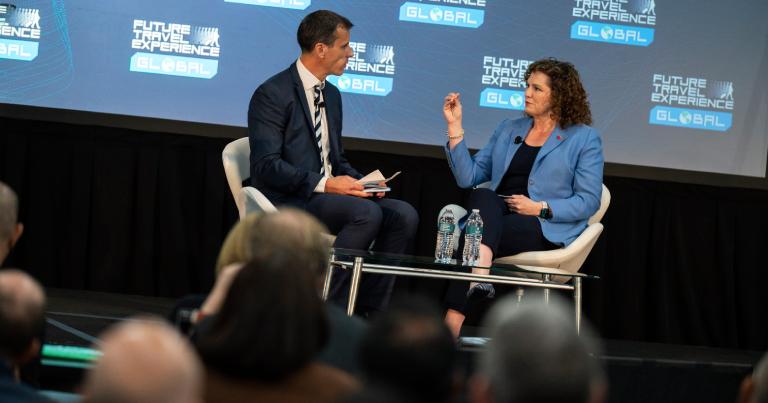
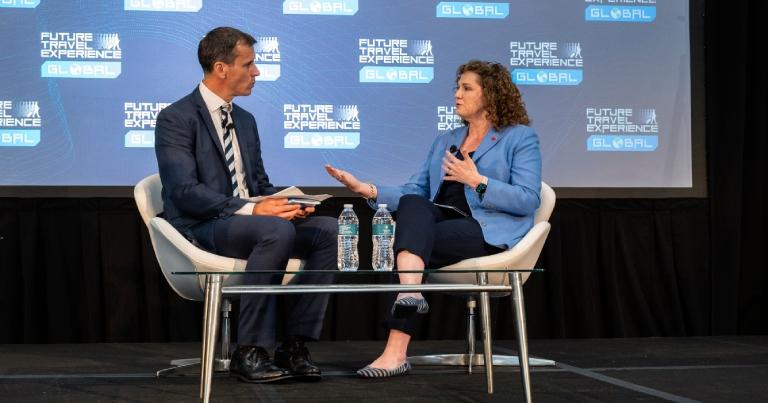
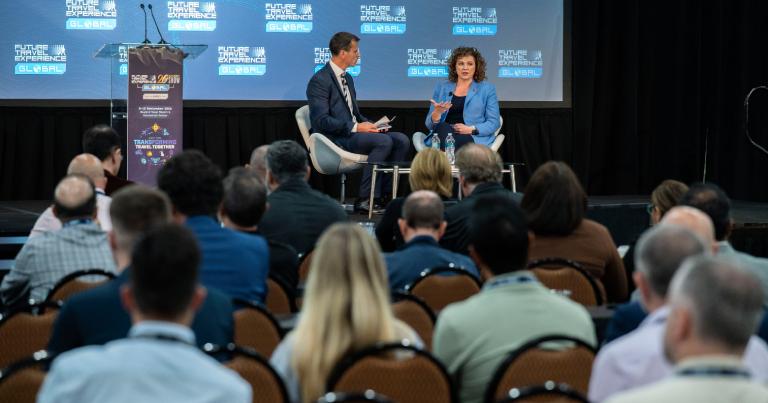
At the 20th anniversary edition of FTE Global, which took place in Dallas, Texas, on 8 to 10 September 2026, Southwest Airlines Executive Vice President and Chief Information Officer Lauren Woods, participated in a compelling Keynote Fireside Chat focused on ‘How Southwest Airlines will use technology to achieve its aim to be the world’s most loved, most efficient, and most profitable airline’. In conversation with Future Travel Experience Managing Director Max Gosney, Woods discussed how data, artificial intelligence (AI), and new employee tools can make travel easier, improve reliability, and help employees take better care of customers. Woods said the investments should strengthen the passenger journey while keeping Southwest’s human touch at the centre.
Mark your diary for FTE Global 2027 – 7 to 9 September, Las Vegas >>Technology creates more time for hospitality
Woods opened by discussing how technology touches nearly every part of the passenger journey, from booking and the airport experience to inflight service and baggage claim. Southwest – a Corporate Partner of the FTE Digital, Innovation & Startup Hub – is looking at where digital tools can remove unnecessary steps, make the trip easier, and give employees more time to help customers.
“What can technology do to take friction out of the process so that our employees have time to give that hospitality that they’re so known for? [Can] our digital products showcase that hospitality?” she said.
Southwest is already putting this approach into practice at the airport. Woods pointed to mobile tools that allow lobby agents to step away from the counter and use an iPad to meet passengers where they are. The airline also uses technology around aircraft turns to reduce some of the manual work employees previously had to complete.
The goal goes beyond simply automating more tasks. Southwest wants to free employees to answer questions, help passengers board, solve problems, and create the personal interactions that have long shaped the airline’s identity.
“I think it’s really about simplifying,” Woods said. “What are the tools that we can give them that actually frees them up again to have those human interactions?”
The same approach extends behind the scenes. Better tools can help crew schedulers, flight attendants, pilots, and other employees find information and make decisions more quickly. Those improvements can create a smoother experience for passengers, especially when plans change or something goes wrong.
Using data to improve disruption recovery
Irregular operations offer one of the clearest examples of how better technology can improve the passenger journey. Woods said Southwest has spent years strengthening its data foundation, including major work during the COVID-19 pandemic. Those investments became even more important as the airline modernised its operation and focused on improving reliability.
Better data can give customers clearer information during delays, cancellations, weather events, and other disruptions. It can also give employees a better understanding of what is happening, so they can provide passengers with answers sooner.
Woods shared that Southwest wants to use that information to reduce anxiety and help customers navigate disruptions more easily.
Instead of waiting while an employee searches across several systems, passengers can receive information and support more quickly. “Making it easier for our people to do their job means that they can make decisions faster rather than searching for data,” Woods said. “[It] means that they can help our customers quicker.”
AI could make the journey more personal
AI could take that approach further by changing how passengers interact with Southwest before, during, and after a flight. When APEX Group CEO Dr. Joe Leader asked how AI could change the customer experience over the next three years, Woods said Southwest wants to follow how customers actually prefer to interact with the airline.
Southwest is exploring natural-language tools that could make digital interactions simpler. Rather than forcing passengers through rigid menus or processes, the airline wants to make it easier for customers to find what they need in the way they prefer.
AI could also support more personalised service by putting useful passenger information in employees’ hands sooner. Woods said information about who customers are, where they sit, and what they may need could help employees respond more quickly and provide a more personal experience.
The airline, however, does not plan to make every interaction digital. “If a customer wants to call us, they’re going to call us and talk to a human,” Woods said.
That balance also applies onboard. Flight attendants and pilots will continue to play a major role in shaping the passenger experience, while AI can give them useful information that helps them respond to customer needs and personalise service.
Behind the scenes, Woods explained that AI could also support reliability and on-time performance. She noted that while passengers may enjoy Southwest’s personality and fun announcements, they still expect the airline to get them where they are going on time.
Using technology to make travel more reliable and easier
As Southwest introduces new tools, Woods said safety and reliability will remain the priority. “First and foremost, we have to be safe,” she said. “We will never do something to compromise that.”
Reliability also shapes how passengers view their trip. New digital features only matter if the systems behind them work and the airline gets customers where they need to go. “When your systems do not work, people do not want to have strategic conversations,” Woods said. “They just want the systems to work.”
Southwest has invested in cloud systems, data, and operational tools to strengthen its reliability. Passengers may not always see those investments, but they can feel the results through fewer disruptions, quicker decisions, and a smoother journey. Woods said the airline also needs to keep pace with changing customer expectations by testing new ideas, learning from them, and improving without sacrificing reliability.
The same focus extends to the airport. During the keynote, Julie from SkySpot asked how airlines can better support older travellers and passengers who may not want to rely on a smartphone throughout their trip. Woods said digital tools can help, but they cannot solve every problem on their own.
Passengers still need airports that feel clean, easy to understand, and simple to navigate. Technology can support that experience by providing gate information, directions, and other updates without forcing customers to search for them.
Digital tools can also give employees more time to help passengers who need extra assistance. Woods pointed to wheelchair users as one example. If technology reduces routine work for gate agents, those employees can spend more time directly helping customers.
Woods also said airlines need to work closely with airports because carriers do not control every part of the journey. Better coordination can help create a smoother experience across both the digital and physical sides of the airport.
Keeping Southwest’s human touch
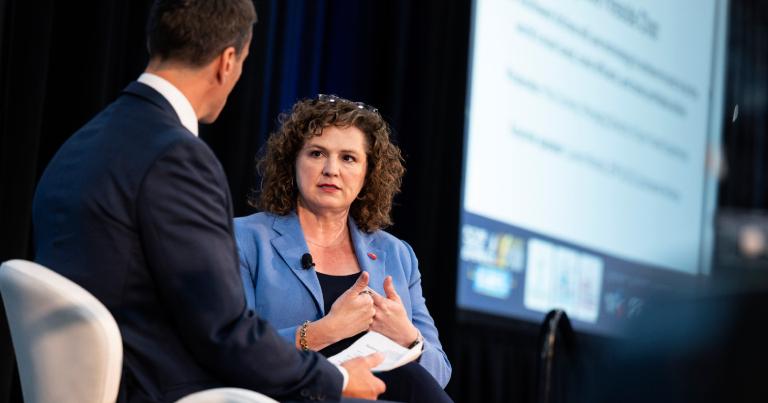
As Southwest expands its use of AI, automation, and other technology, Woods emphasised that employees will remain central to the passenger experience.
The goal is to give employees better tools, so they can spend more time helping customers. Faster systems can help gate agents answer questions sooner, give crew members the information they need, and reduce routine work that takes time away from passengers.
“We want to welcome our customers, solve their problems, and create memorable moments for them,” Woods said.
As Southwest changes parts of its business and introduces new customer experience products, Woods said technology will need to support that evolution without losing what has long made the airline different.
Even as those tools become more advanced, she said the people behind them will still matter most. “At the end of the day, to be the most loved, the most efficient, most profitable, it comes down to our people,” Woods said.
Mark your diary for FTE Global 2027 – 7 to 9 September, Las Vegas >>You may also be interested in
12 technology and CX trends that can enhance airline and airport operations in 2026
Making travel more human: Virgin Voyages on AI, hospitality and reimagining the passenger experience
FTE World Innovation Summit relocates to Tokyo for 2027 edition hosted by Haneda Airport – 1-3 March