




Agentic AI is emerging as a major enabler of the next generation of aviation operations and passenger experiences. As airlines, airports and technology providers move beyond traditional artificial intelligence (AI) assistants and pilots, intelligent agents are beginning to support decision-making, anticipate operational challenges, personalise passenger journeys, automate routine processes and orchestrate activity across increasingly complex aviation ecosystems. Yet unlocking this potential requires more than increasingly capable AI models – it depends on trusted data, modern technology foundations, effective governance, process redesign, workforce readiness and close collaboration between industry stakeholders. In a series of interviews, leaders from Cincinnati/Northern Kentucky International Airport, Munich Airport, Publicis Sapient, Aeroporti di Roma, Metropolitan Washington Airports Authority and Cognizant share how they are putting agentic AI into practice, from predictive ground transportation and autonomous systems to intelligent passenger assistance and enterprise-wide orchestration. They explore the most promising use cases, the challenges involved in moving from experimentation to production, and their visions for how agentic AI could create more predictive, adaptive and intelligent aviation operations. Agentic AI is a topic that will be further discussed in-depth in the FTE AI Symposium at the 20th anniversary edition of FTE Global (Dallas, Texas, 8 to 10 September 2026).
See the FTE Global schedule at a glance >> Register for FTE Global >>CVG Airport on turning agentic AI experiments into measurable operational value
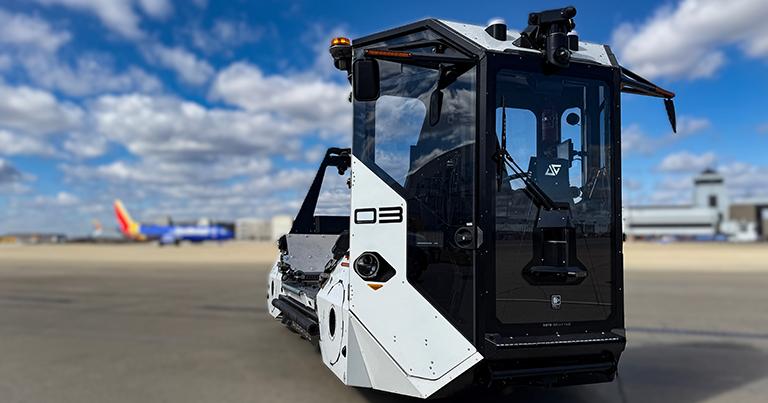
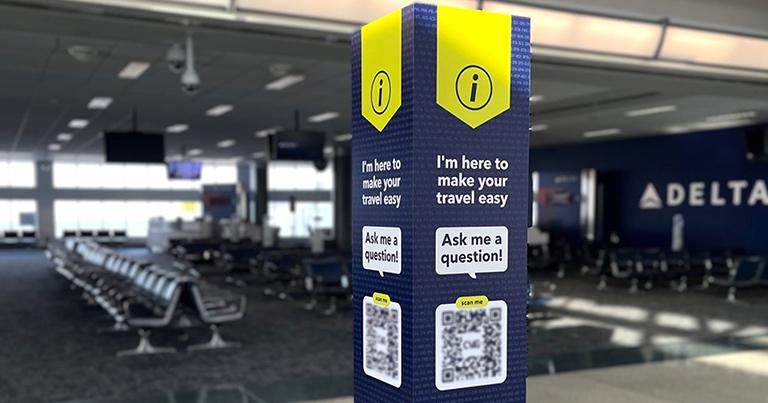
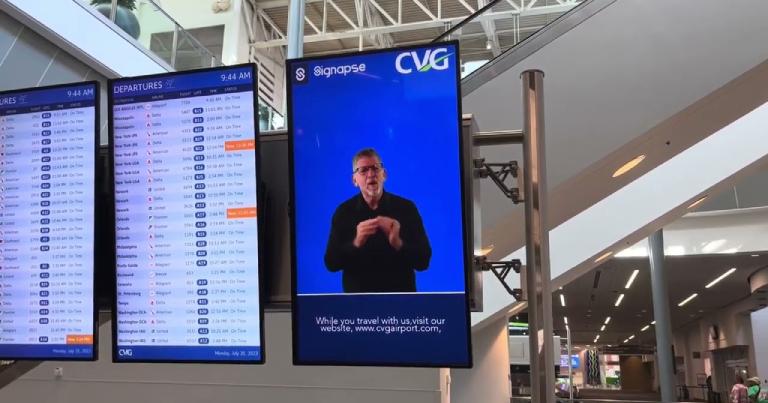
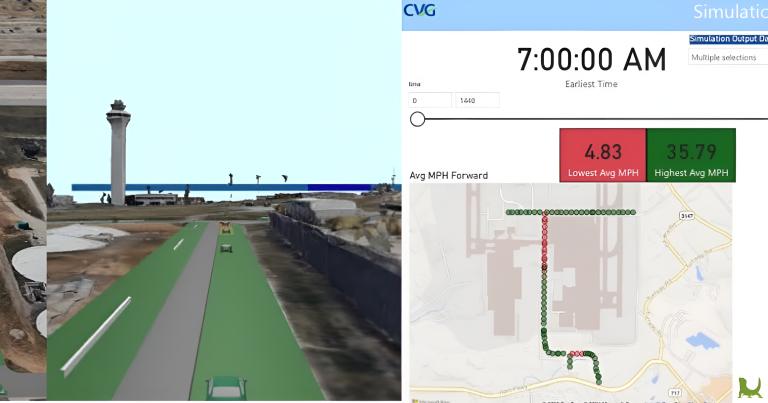
Cincinnati/Northern Kentucky International Airport (CVG) – a Corporate Partner of the FTE Digital, Innovation & Startup Hub – runs its 7,700-acre campus as a living lab, so agentic AI shows up as live operations. “On the airfield, our autonomous programme with Aurrigo is evolving baggage and cargo tugs, an employee shuttle, and an Auto-Sim digital twin into a 12-month sprint Proof of Concepts around identified actions and human-in-the-loop responses leveraging camera-based analytics as our ‘central nervous system’,” says Brian Cobb, Chief Innovation Officer, Cincinnati/Northern Kentucky International Airport. “In the ramp environment, Synaptic Aviation’s machine learning and computer vision target turn efficiency, gate sequencing, and fuel burn that our airline partners feel on their P&L. On the human side, our Synaptic voice AI to native Sign Language tech delivers real-time voice translation to our hearing-impaired customers. This extends to the travellling public who access Hello Lamp Post via our website or in our facilities to get answers to their travel questions. Our staff also utilise the data from Hello Lamp Post to determine where we’re exceeding or lagging in services. Our partner product, Tuatara’s CLEAR, applies LLM-driven simulation and demand forecasting to port roadway throughput and infrastructure planning to prevent bottlenecks. Every one of these runs under dual project management, validation sprints, and a defined success measure, because an agent without an owner and a metric amount to ‘tech tourism’, not realistic scalability.”

In terms of the most impactful use cases for agentic AI, Cobb highlights three areas that carry the most weight. “In a spoke market like CVG, turnaround and ramp orchestration is first and it’s our opportunity to give time back to the system and reduce fuel burn,” Cobb explains. “In the U.S. market, airports are generally not in direct control of the aircraft turn, but with the new analytics and agentic agents, we can influence turns, increase efficiencies, and provide better operational resiliency among the ground handlers. Customer experience is second, where APIs connected to airline partner apps could accommodate a disrupted passenger in their own language, guide wayfinding, and support accessibility while removing or reducing the biggest areas of friction in the customer journey. Profitability is third and most overlooked. Passenger parking represents roughly 43% of non-aeronautical revenue at North American airports, and cargo is where agentic orchestration compounds fastest, which matters at CVG being the only North American airport with two major cargo carrier hubs, making ease of access for passenger and logistics vehicles revenue-driven focal points.”
Discussing key challenges when implementing agentic AI, and the strategies or best practices CVG is exploring to overcome these obstacles, Cobb emphasises that the honest numbers are the right starting point. “MIT’s 2025 research found that 95% of enterprise generative AI pilots produced no measurable P&L impact, and Gartner expects more than 40% of agentic AI projects to be cancelled by the end of 2027, usually for unclear value or inadequate risk controls,” Cobb shares. “Data fragmentation is the root cause more often than the model, with roughly a third of airports citing data challenges as their primary constraint. An agent reasoning across siloed, unreliable data will confidently do the wrong thing at speed. CVG’s response is to scope every Proof of Concept into well-defined sprints with a named business owner who will measure it against a framework, and treat a fast, well-documented failure as a lesson that sharpens the next attempt.”
Collaboration between airports and technology providers is critical in the successful adoption of agentic AI. “Collaboration is the variable,” says Cobb. “That same MIT research found AI efforts that blend internal teams with external partners succeeding at a 67% rate compared to 22% for internally built projects, which is the clearest evidence I have seen that airports should stop trying to build alone. CVG’s model gives partners a live airfield, real passengers, real weather, and real labour constraints. It provides us early access and genuine influence over product direction, which is why Aurrigo made CVG its North American hub and showroom. We extend that through other partnerships such as our work with University of Kentucky for talent and its NSF GAME Change Engine coalition for research, and our MoU with Germany’s GATE Alliance for two-way introductions between our market and their member network. The airports that win this decade will be the ones that are easy to pilot with and disciplined about what they scale.”
Commenting on the move towards Artificial General Intelligence, Cobb explains that CVG is planning for a wide band rather than a date. “Forecasters put roughly even odds on general capability arriving in the early 2030s,” Cobb shares. “Aviation should be comfortable in navigating differing views because our regulators already do. The FAA’s safety assurance roadmap and EASA’s guidance both point toward incremental, human-supervised adoption, so the near-term prize is decision support that compresses irregular operations recovery from hours to minutes, not autonomous control of safety-critical systems. For the traveller, the goal is a travel journey that anticipates rather than reacts, where rebooking, accessibility support, and language assistance resolve before a passenger has to ask for them. America’s AI Action Plan opens pathways for airports to gain real momentum on infrastructure, energy, cybersecurity, and workforce development. We’re raising our hands now, because the institutions that help shape the standards will not be the ones spending the next decade catching up to them.”
Hear more from Cincinnati/Northern Kentucky International Airport (CVG) at the 20th anniversary edition of FTE Global, taking place in Dallas, Texas, on 8 to 10 September 2026. Brian Cobb, Chief Innovation Officer, CVG, is participating in two sessions: ‘How AI and other technologies are reimagining the end-to-end customer journey and empowering the workforce’ and ‘Case Study Spotlight: Big & bold new tech strategies – visions, deployments, learnings and next steps’. Meanwhile, Beth Larkcom, Director of Strategic Innovation, CVG, is moderating a session titled ‘In, out and around: Future airport mobility approaches’.
See the FTE Global schedule at a glance >> Register for FTE Global >>Munich Airport on moving from AI assistants to intelligent airport orchestration
Munich Airport – a Corporate Partner of the FTE Digital, Innovation & Startup Hub – is moving beyond artificial intelligence (AI) assistants and increasingly working with AI agents that can actively support business processes and decision-making.

“One important area is knowledge management,” shares Vera Jakobsen, VP Digital & Innovation, Munich Airport. “We are deploying agents that connect information from documents, meetings, emails, and chats, so that organisational knowledge becomes easier to find, access, and reuse. We are also implementing knowledge synthesis agents. These help teams create requirements specifications, concepts, and project documentation faster and with greater consistency.”
On an individual level, employees increasingly benefit from personal productivity agents that support research, analysis, content creation, and daily knowledge work. “Another area we are exploring is AI sparring partner agents,” says Jakobsen. “These can help experts and leaders challenge ideas, develop strategies, and prepare decisions. In airport operations, AI is already being used for process monitoring, operational awareness, and video-based analytics. A concrete example is video-based turnaround monitoring, where AI helps recognise operational events in aircraft handling and creates timestamps automatically. Looking ahead, we see significant potential for customer-facing agents that provide personalised and proactive passenger support throughout the entire travel journey.”
Munich Airport sees impactful use cases for agentic AI in several key areas, as Jakobsen explains:
- Operational efficiency: “From an operational efficiency perspective, one of the strongest use cases is automating repetitive knowledge work and administrative processes. Agentic AI can also support operational decision-making by providing real-time information and recommendations. In baggage handling, process intelligence already shows how real-time data can support predictive capacity management, alerting, and faster operational intervention. A further impact area is the coordination of complex workflows across different airport functions, for example in turnaround management, baggage processes, passenger flows, and resource planning.”
- Knowledge & workforce augmentation: “Another major opportunity is knowledge and workforce augmentation. AI agents can make expertise available beyond individual employees. They can also help preserve knowledge across projects and organisational boundaries. And they can act as AI-powered sparring partners that help employees solve complex problems faster.”
- Customer experience: “For customer experience, we see strong potential in personalised travel assistance across the entire passenger journey. Concrete examples include digital travel companions, chatbot and voicebot solutions, personalised push communication, and better guidance across digital touchpoints. Agentic AI can also enable more proactive communication during disruptions and irregular operations, for example by helping passengers understand what is happening and what their best next step is. In addition, intelligent multilingual support can be made available around the clock, reducing friction and improving service accessibility.”
- Profitability: “In terms of profitability, agentic AI helps scale expertise without a proportional increase in headcount. It can increase productivity and reduce the time employees spend on routine work. That creates more capacity for innovation, customer value, and higher-impact activities.”
One of the key challenges when implementing agentic AI is data quality. Agentic AI only creates value if it can rely on trusted information sources. This is why initiatives such as scaling data lake and data governance across Munich Airport are so important. “At the same time, AI adoption is just as much a people challenge as it is a technology challenge,” Jakobsen shares. “Building trust requires transparency, governance, and clear rules for responsible AI use. Employees need practical training and opportunities to experiment with AI in their everyday work. For Munich Airport, broad workforce enablement is therefore a key element in scaling agentic AI. A concrete example is the combination of Microsoft Copilot enablement, AI multiplier networks, and agent labs, where teams learn to identify use cases and build first practical agent prototypes. Further, our approach is to start with tangible use cases, demonstrate value quickly, and then scale what works. Human oversight remains essential, especially in safety-critical environments such as aviation.”
Collaboration between airports and technology providers in the successful adoption of agentic AI is absolutely essential, because neither side can unlock the full potential of agentic AI on its own. “Airports bring deep operational expertise, customer understanding, and the industry-specific requirements needed to make AI relevant in practice,” says Jakobsen. “Technology providers contribute AI innovation, scalable platforms, and strong security capabilities. The most successful solutions will come from co-creation, not from traditional supplier relationships. This is particularly true for physical AI use cases such as Smart Ramp, autonomous shuttles, autonomous baggage or freight transport, remote-controlled boarding bridges, and autonomous FOD checks, where technology must be adapted to a highly regulated and operationally complex airport environment. Strong partnerships help us accelerate innovation while ensuring trust, compliance, and operational relevance.”
Looking ahead, Jakobsen believes the long-term impact of AI on aviation will be much bigger than improving individual processes. AI has the potential to become the intelligence layer of the airport: an always-on capability that connects data, systems, physical assets, employees, partners, and passengers in real time. “For airports, this means moving from reactive operations to truly predictive and eventually adaptive operations,” Jakobsen explains. “Instead of only responding to disruptions, airports will be able to anticipate them, simulate options, coordinate resources, and actively support decisions across the entire operational ecosystem. Agentic AI will increasingly coordinate across systems, departments, processes, and partner organisations. In that sense, the airport of the future will be defined by intelligent orchestration across all critical value streams.”
The next major frontier will be physical AI. This is where AI moves beyond information, recommendations, and digital workflows and becomes connected to sensors, robotics, autonomous vehicles, infrastructure, buildings, baggage systems, passenger flows, aircraft turnaround processes, and other physical assets. “That is especially powerful in aviation because airports are among the most complex physical operating environments in the world managing movement, capacity, safety, infrastructure, service quality, and customer experience around the clock,” says Jakobsen. “The real ambition is to bring the digital and physical worlds together: to create an airport that can sense what is happening, understand the operational context, recommend or trigger the right actions, and continuously learn from outcomes. For passengers, this could translate into a fundamentally more seamless journey: more personalised guidance, proactive disruption support, smoother flows through the terminal, and services that adapt to the passenger’s context in real time.”
Hear more from Munich Airport at the 20th anniversary edition of FTE Global, taking place in Dallas, Texas, on 8 to 10 September 2026. Thomas Hoff Andersson, Managing Director & Chief Operating Officer, Munich Airport, is participating in a session focused on ‘Airline and airport leadership strategies to be future-ready’.
See the FTE Global schedule at a glance >> Register for FTE Global >>Publicis Sapient on using agentic AI to orchestrate the aviation ecosystem

Publicis Sapient – a Platinum Sponsor of FTE Global, taking place in Dallas, Texas, on 8 to 10 September 2026 – supports the development and deployment of artificial intelligence (AI) across the full enterprise lifecycle – from modernising legacy systems and building intelligent agents to operating and continuously improving complex technology environments. Teaque Lenahan, Managing Partner & Group VP, shares how Publicis Sapient’s three Enterprise AI platforms address distinct but connected challenges:
- “Sapient Slingshot addresses the complexity and risk of legacy modernisation. It uses AI to analyse existing systems, preserve critical business logic and accelerate the software development lifecycle for both modernization and new builds.”
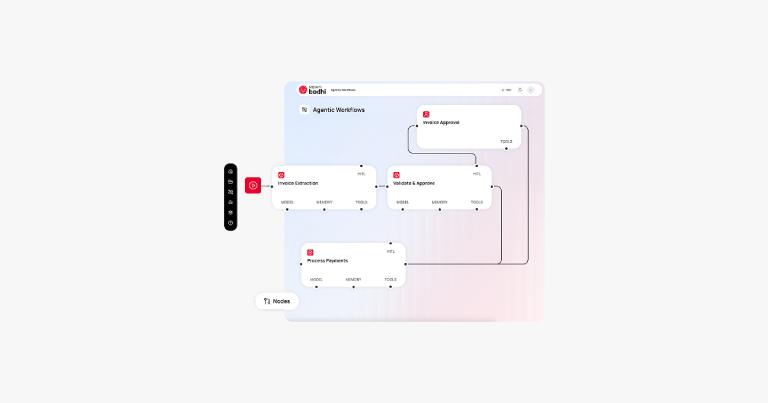
- “Sapient Bodhi addresses the challenge of moving agentic AI from pilots into trusted, enterprise-ready workflows. It enables organisations to design, deploy and orchestrate intelligent agents using relevant industry, functional and enterprise context.”
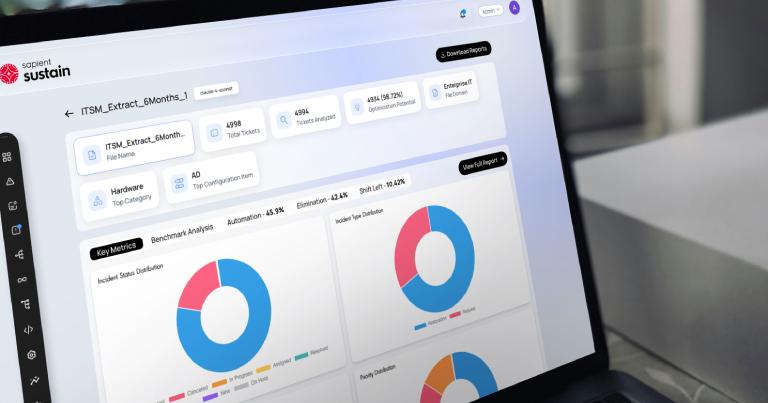
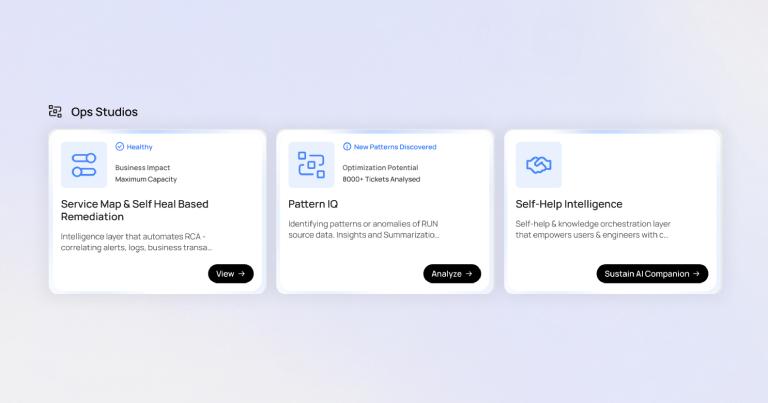
- “Sapient Sustain addresses reactive, costly and human-intensive IT operations. It uses agentic AI to detect issues earlier, resolve incidents automatically and help prevent recurring failures, improving the reliability and resilience of enterprise systems.”

In aviation, these capabilities can be applied to areas such as disruption and irregular-operations management, passenger personalisation, intelligent customer service, workforce optimisation, predictive maintenance, airport operations and the modernisation of mission-critical systems.
“A published example outside aviation is Publicis Sapient’s work with Homes & Villas by Marriott Bonvoy, where generative AI and natural-language processing were used to help travellers find properties and destinations based on their preferences,” Lenahan explains. “Another example is Nissan’s AI- and machine learning-enabled digital platform, which consolidated data across 190 markets to identify performance anomalies and prioritise improvements with the greatest expected customer and business impact.”
Lenahan highlights some of the most promising use cases for agentic AI in the airline and airport industries, and how it could impact operations, customer service, or revenue. “For the past year, we’ve been talking about agentic AI in an aviation context as being the WD-40 lubricant to the friction that often accompanies air travel,” says Lenahan. “Whether that’s in the context of traveller delays and immediate re-bookings, operations that get data faster and across traditional boundaries, or fuel management teams optimising their supply chains, related to a traveller encountering unforeseen delays and needs her entire trip to be proactively re-designed immediately, or an Ops team that wants to minimise downtime on repairs, the kind of problems to solve have been fairly straightforward. The key word for much of this phase has been ‘invisible’ – decisions are made in the background to optimise what’s going on in the foreground, and make decisions faster, with greater accuracy, and alignment to business rules, all without human intervention.”
Agentic AI has the potential to become the connective tissue of the airline and airport ecosystem this year, according to Lenahan, moving beyond copilots and chatbots to actively orchestrate decisions across highly complex operations. Aviation is one of the richest environments for this shift because every flight depends on hundreds of interconnected variables – from aircraft, crews, gates, and baggage to weather, maintenance, security, and passenger flows – that are still managed across siloed systems. “Rather than simply recommending actions, agentic AI can monitor conditions in real time, coordinate multiple stakeholders, and autonomously execute routine decisions while escalating only the exceptions that require human judgment,” Lenahan explains. “The result is a more resilient operation that can recover from disruptions faster, improve aircraft utilisation, reduce operating costs, and create a better experience for both employees and travellers. The biggest opportunity isn’t replacing people – it’s about creating an intelligent operating model and orchestration layer that continuously optimises the entire travel journey. As airlines and airports begin connecting operational systems, digital twins, IoT sensors, and customer platforms, networks of specialised AI agents will coordinate everything from crew scheduling and aircraft maintenance to gate assignments, baggage recovery, passenger communications, and personalised offers. Instead of reacting to delays, missed connections, or congestion after they occur, these systems will anticipate issues, resolve many of them automatically, and personalise the experience along the way. Over time, the competitive advantage won’t come from having the smartest individual AI model, but from how effectively organisations enable agents to collaborate across their operations, transforming aviation from a collection of independent functions into a continuously learning, self-optimising ecosystem.”
The key challenge across industries when it comes to AI is that the tech isn’t a silver bullet that will magically solve the aviation industry’s challenges – despite the hype and the excitement. Lenahan identifies two key challenges:
- The data strategy and hygiene: “The data required to power the magical new customer experiences and operational wizardry is fragmented, siloed, and in generally poor quality.”
- The human component: “The operating model, governance, and change management that needs to be defined is at least as important at the tech itself. Said another way, the key challenge is that the temptation to move fast and implement things can lead to an unsustainable situation from a technology and human standpoint. The real disruption isn’t smarter chatbots or better predictions; it’s the emergence of an intelligent operating layer that can coordinate an entire enterprise.”
Collaboration is at the core of these partnerships. “With technology providers, we work side-by-side to tackle clients’ toughest challenges – often pushing existing tools beyond their intended limits and, in many cases, co-creating entirely new solutions,” Lenahan shares. “With industry leaders as our clients, we partner directly with the operators who run these solutions every day. Their frontline expertise is indispensable, grounding innovation in what works in practice and accelerating adoption. Most importantly, we collaborate across operational and functional boundaries, because the highest-impact solutions rarely stay in one lane – especially in customer experience and platform transformations.”
Looking ahead, Lenahan is moderating Part 1 of the FTE AI Symposium at FTE Global, taking place in Dallas, Texas, on 8 to 10 September 2026. He emphasises that the most important message is that successful AI transformation is not about launching more pilots. It is about embedding intelligence into the systems, workflows and decisions that run the enterprise. “For airlines and airports, that requires trusted data, modern technology foundations, clear governance and a strong connection between AI initiatives and measurable business outcomes,” says Lenahan. “These outcomes may include more resilient operations, faster disruption recovery, improved workforce productivity, better passenger experiences and new revenue opportunities. We also want delegates to leave with a realistic view of what it takes to scale AI responsibly. Technology is only one part of the equation. Organisations need the right operating model, business context, talent and partnerships to move AI securely from experimentation into production. Publicis Sapient’s Enterprise Context Graph, for example, is designed to connect systems, workflows, rules and decisions so AI platforms can understand how an enterprise actually operates rather than working from data in isolation. Ultimately, Enterprise AI should be viewed as a business transformation capability – not a collection of disconnected technology projects.”
See the FTE Global schedule at a glance >> Register for FTE Global >>Aeroporti di Roma on moving agentic AI from experimentation to operational value
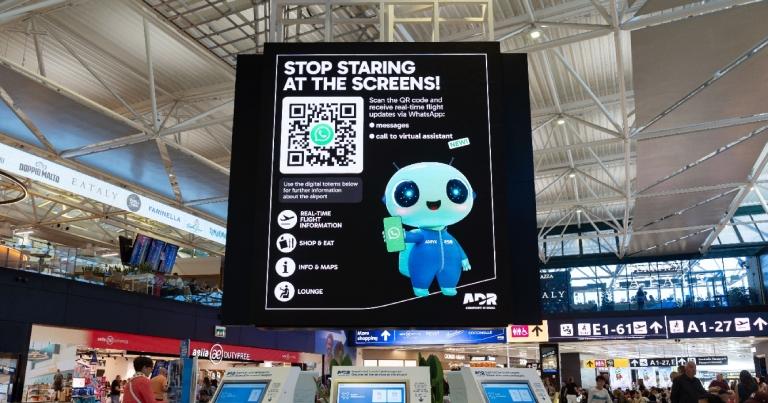
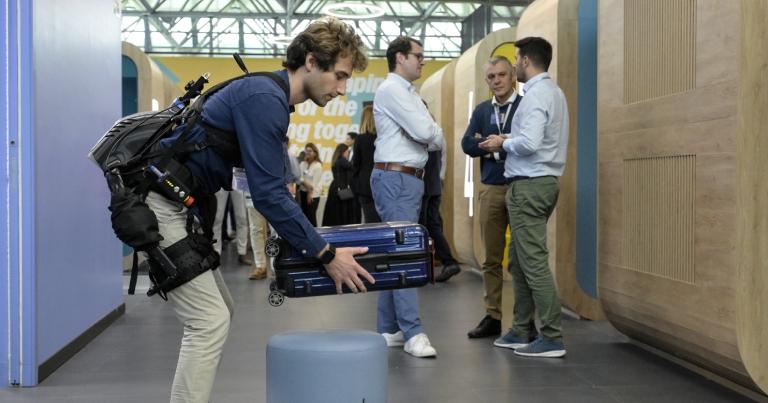
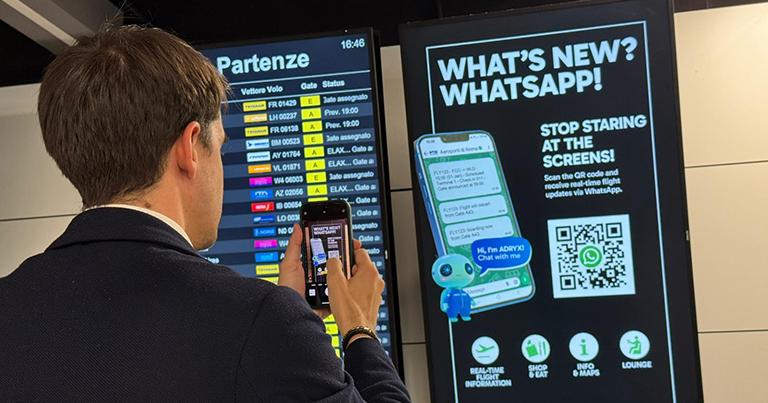
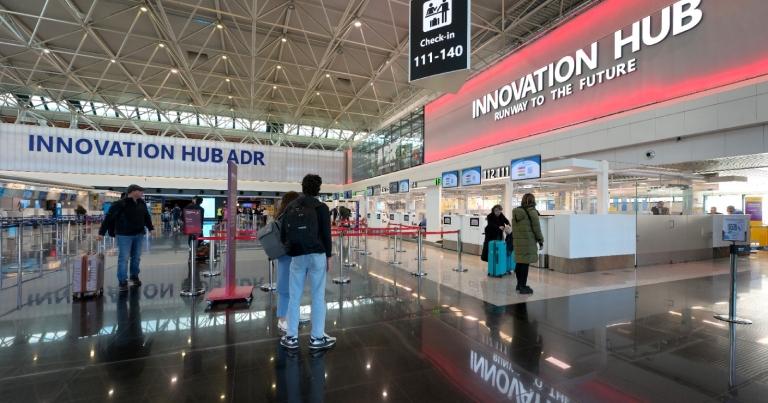
Aeroporti di Roma (ADR) – a Corporate Partner of the FTE Digital, Innovation & Startup Hub – deliberately treats agentic AI not as a single flagship project but as a structured portfolio, because it believes that is the only way to move from isolated experiments to real, industrialised value.
“Our strategy rests on three pillars that reinforce each other: agentic AI applied first to productivity across corporate functions, which is the entry point, because everyday use builds the confidence and the AI literacy that later allow us to hand agents the orchestration of entire end-to-end processes; vertical AI solutions built on specialised platforms for specific operational domains, where that same orchestration logic is combined with deep airport domain expertise and embedded directly in core operations; and, underpinning both, data – our Data Foundation – which is the real engine of the whole system, since no agent and no vertical platform can ever be more reliable than the data it reasons over,” shares Alessandro Centonze, Head of AI & Data, Transformation & Technology, Aeroporti di Roma. “We already have live, in-production use cases today, not slideware, and each is measured against explicit KPIs so we can prove value.”
The most visible example on the customer side is ADR’s GenAI Virtual Assistant. Rather than a conventional chatbot with scripted decision trees, it is built on a multi-agent architecture: an orchestrator agent interprets each passenger request, understands intent and context, and dynamically routes it to the most appropriate of eight specialised sub-agents – flights, security, shopping, food & beverage, parking, ground transport, airport services and personalised recommendations. “Each sub-agent reasons over its own curated knowledge base and, where relevant, queries our live operational systems, so the answer a passenger receives about a gate change or a security wait time reflects the real state of the airport, not a static FAQ,” Centonze explains. “The assistant is available on WhatsApp, on the web and increasingly through voice, in multiple languages, and it currently handles well over 100,000 conversations per month with a passenger satisfaction rating of 4.5 out of 5. What I find most telling is that we reached production in roughly three months precisely because the agentic approach let us compose and orchestrate behaviours rather than hard code every possible conversational path.”
Internally, ADR has also rolled out a growing wave of enterprise agents – for employee support, ground-safety reporting, complaints handling and tender management, among others – that together already automate hours of manual work per year, freeing its people to focus on judgment-intensive tasks.
Regarding operational efficiency, one of the most impactful use cases of agentic AI is embedding predictive capability directly into the core operational processes of the airport, rather than leaving it in a separate analytics layer. “In practice this means agents that continuously read the live state of the operation and anticipate what is about to happen and then surface the emerging issue together with a set of recommended interventions, evaluated against simulated scenarios, at the exact point in the process where the decision is actually taken,” says Centonze. “The critical design principle is that this happens with humans firmly in control: the agent monitors, predicts and proposes the best available options, while the operator retains the judgment and the authority over the decision itself. Alongside this, predictive maintenance on our IoT platform is moving asset management from a reactive, break-fix model to a condition-based one, reducing unplanned downtime on critical assets such as baggage systems, boarding bridges and escalators. The common thread is anticipation: agentic AI lets the airport intervene minutes or hours earlier, and in aviation those minutes compound rapidly into recovered capacity, better punctuality and greater resilience.”

For customer experience, Centonze highlights that the most impactful use case is bringing AI directly into passenger services through personalisation – moving from a one-size-fits-all airport that broadcasts the same generic information to everyone, to one that tailors information, timing and recommendations to each individual traveller’s context: their flight, their connection, the time they actually have available and the language they speak. “Here the Virtual Assistant is the flagship, and its real value is that it delivers predictability at the precise moment it matters most,” Centonze shares. “What actually generates stress in an airport is rarely the delay itself: it is the uncertainty around it. A passenger who does not know whether the connection will still be made, how long the queue really is or where to go next has no way of deciding anything, and that loss of control is what turns an inconvenience into anxiety. By giving each passenger a clear, personalised and up-to-date answer about their own situation – what is happening, what it means for them and what they can do about it – the assistant restores that sense of control and removes the need to hunt for information or queue at a desk to get it. The most powerful demonstration of this came during the July 2025 weather disruption at Fiumicino: usage of the assistant spiked by 73% in a single day, and the system absorbed that entire surge autonomously, with no additional human resources deployed, effectively becoming our primary crisis-communication channel with passengers. A traditional call-centre or manual model simply cannot flex like that. Day to day, the same capability means passengers get accurate, personalised answers in their own language, on the channel they already use, whether they are asking about a connection, a lounge, parking or the fastest route to their gate. Finally, profitability is the family that is too often overlooked. From our experience, it is the very same case of Virtual Assistant, used differently. Indeed, the same assistant becomes a recommendation agent: because it already knows the passenger’s context, it can move from answering to proactively suggesting, at the exact moment the suggestion is useful. A concrete example: a passenger asks the assistant whether their connection is at risk; the agent confirms the gate and, knowing they now have 90 minutes of dwell time in that specific pier, suggests a restaurant two minutes from the gate with a dedicated offer, or a fast-track lane if the queue is building. That is a genuinely useful answer for the passengers and a commercial opportunity for airport at the same time. Crucially, this is incremental non-aeronautical revenue generated – it comes from making better use of information we already hold.”
The hardest challenges when implementing agentic AI are rarely the technical ones. The models and platforms are increasingly capable and increasingly available to everyone. The real obstacles are about data, processes and people, and getting those right is what separates a successful programme from an expensive pilot graveyard.
“The first challenge is data,” Centonze explains. “An agent is only ever as reliable as the knowledge base and the operational data it reasons over – feed it fragmented, stale or ungoverned data and it will confidently give you the wrong answer, which in an airport context is worse than no answer at all. We are addressing this head-on through a dedicated Data Foundation and AI & Data governance programme: integrating historically siloed systems, defining a shared business glossary, establishing data-quality metrics and, crucially, assigning clear ownership and stewardship for each data domain. Internally we put it very simply – trust is born from data – and we treat that foundation as the precondition for scaling agents, not an afterthought.”
The second challenge is process redesign. “This is the common mistake: organisations bolt an agent on top of an unchanged process and then wonder why they are paying the full cost of AI without capturing the benefit,” says Centonze. “Value only materialises when you have the courage to redesign the end-to-end process around the new capability – rethinking hand-offs, roles and decision rights – rather than simply digitising the old way of working. The third, and in many ways deepest, challenge is people and culture. If frontline and operational teams do not trust or understand the system, they will quietly work around it, and adoption collapses. Our response is a structured AI Awareness and Academy programme, led by our own internal resources and built around our own real use cases rather than generic training, complemented by a dedicated upskilling and change-management stream embedded in every single project from day one. We are convinced that investing in AI literacy and hands-on experience for our people is a no-regret move.”
Finally, governance and security must be designed in from the outset, never retrofitted. “We operate within the EU AI Act framework and under an AI Policy that has been approved at Board level, with clear guardrails, full auditability and human oversight calibrated to the level of risk of each use case,” Centonze shares. “In practice that means a graduated model of autonomy: full autonomy for low-risk, high-volume tasks; human confirmation in the loop where the stakes are higher; and full, unambiguous human control in anything safety-critical.”
Collaboration between airports and technology providers is absolutely decisive in the successful adoption of agentic AI. “The frontier is moving far too fast, the investment required is enormous, and the technology is rapidly becoming commoditised; a model that is state-of-the-art today may be superseded within a few months,” Centonze explains. “Trying to compete on that layer would be both financially irrational and strategically distracting from what an airport is uniquely good at. The winning move is instead to build deep, strategic partnerships with the players who are best-in-class at each layer of the stack, and to orchestrate them intelligently around our own domain knowledge.”
ADR’s flagship example of this is the Virtual Assistant, which it built in close partnership with Amazon Web Services (AWS) and with Storm Reply as implementation partners on Amazon Bedrock. “AWS and Reply brought the scalable cloud foundation, the managed access to best-in-class foundation models and the engineering depth, while ADR brought the passenger context, the operational data, the knowledge base and the responsibility for adoption,” says Centonze. “It is precisely this combination – hyperscaler technology plus deep airport domain expertise – that allowed us to design a genuine multi-agent architecture and take it from concept to production in roughly three months, at a scale and quality we could never have reached alone.”
Alongside this, ADR also cultivates a much broader innovation ecosystem: through its Call4Startups programme and its Innovation Hub ADR has run more than 40 Proofs of Concept with specialised players, which lets it test promising solutions in a real operational environment before deciding what to industrialise. “Just as important, that ecosystem is animated from the inside, through our Innovation Cabin Crew: a community of colleagues drawn from the business functions themselves who act as innovation ambassadors within their own teams,” Centonze shares. “They bring us the operational knowledge that tells us which problems are worth solving and help us assess whether a solution would really work on the ground, and they then carry the culture of innovation back into their departments, so that AI is perceived as something the business is doing for itself rather than something technology is doing to it. The best practice we follow is therefore a clear division of labour – the providers bring the models, platforms and scalability; the airport owns the domain knowledge, the process context, the proprietary data and the responsibility for change. My conclusion is simple: strong partnerships dramatically accelerate the journey, but they never replace the organisational capability an airport has to build for itself. The technology you can buy through partners; the ability to embed it into your operation and your culture, you have to earn.”
Looking three to five years ahead, Centonze emphasises that the differentiator will not be who has the best algorithms or agents – those will be available to everyone on roughly equal terms. The lasting advantage will belong to the organisations that have done two things: embedded AI into the operating model rather than running it alongside as a shiny experiment, and had the courage to redesign their end-to-end processes around these new capabilities while systematically developing the people who run them.
“Technology on its own changes nothing: value only materialises when processes are rethought around what agents can actually do – rethinking hand-offs, roles and decision rights – and when the teams operating them have the skills, the confidence and the judgment to use the new tools well,” says Centonze. “An organisation that has been patiently reshaping how it works and upskilling its people for years will simply absorb each new wave of AI far faster than one that starts later. At ADR we are acting on that belief now, embedding a process-redesign and change-management stream in every project from day one and investing continuously in AI literacy through our awareness programme and our Innovation Cabin Crew, so that our people are genuinely ready to govern and get value from the tools that will arrive next.”
Operationally, as these systems become more capable and more general, ADR envisions an airport that increasingly manages itself proactively: anticipating disruptions not just at a single gate but across the entire network, simulating recovery scenarios in real time, and progressively automating routine, well-bounded decisions – while keeping human controllers firmly and unambiguously in control of operations. “For the passenger, the endpoint is a journey that is genuinely seamless and hyper-personalised: an intelligent assistant that does not merely answer questions but anticipates needs across the entire door-to-door journey, adapts to disruption on the fly, and does so in any language and on any channel the passenger prefers,” Centonze explains. “The airport experience would shift from something you have to navigate to something that quietly navigates for you. But I want to add a note of realism, because it is grounded in our safety-critical culture and I think it matters. Progress towards more general intelligence will not remove the need for human judgment, explainability and accountability – if anything, it raises the bar on all three. As systems take on more, we owe passengers and regulators even greater transparency about how decisions are made and even clearer lines of responsibility when they are not routine. So, the airports that lead in this next phase will be the ones that pair technological ambition with responsible governance, and above all with the willingness to redesign their processes around these capabilities and to keep developing their people, so that teams are genuinely equipped to take a promising AI capability from experiment all the way through to trusted, everyday operation. That organisational capability – built patiently by doing – is one of the most impactful investments.”
Metropolitan Washington Airports Authority on moving from reactive to self-optimising airport operations
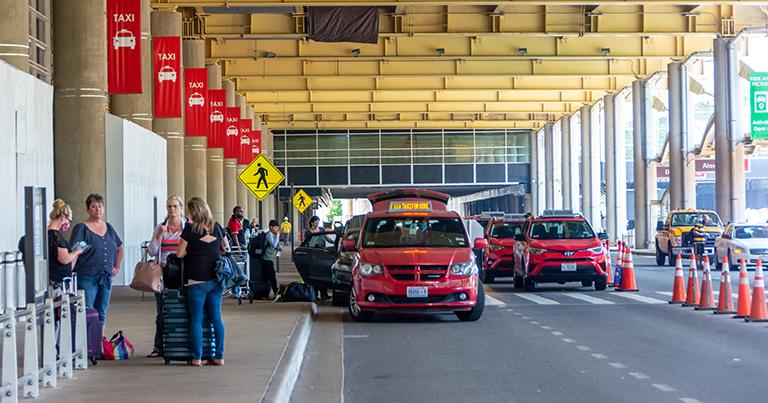
Among the most exciting recent uses for agentic AI by Metropolitan Washington Airports Authority (MWAA) – a Corporate Partner of the FTE Digital, Innovation & Startup Hub – is in ground transportation. Its in-house innovation team, MWAA Labs has developed an intelligent ground transportation platform, GTSense, to help manage the end-to-end processes of ground transport operations and curbside demand.
“We’re now developing agentic AI capabilities within GTSense that can anticipate demand and proactively make dispatch decisions before congestion or shortages occur,” says Goutam Kundu, EVP and Chief Information and Digital Strategy Officer, Metropolitan Washington Airports Authority. “The platform now delivers virtual queuing and TNC dispatch capabilities and uses a robust network of sensor technologies to track vehicle activity and real-time location across the airport. It continuously analyses flight arrivals, passenger volumes, driver availability, traffic conditions, and historical demand patterns to determine when and where vehicles are needed. The impact is a more responsive and efficient operation. We’re shifting from reacting to demand to predicting it, reducing passenger wait times, improving curbside flow, reducing congestion in staging areas, and creating a smoother experience for both travellers and transportation operators.”

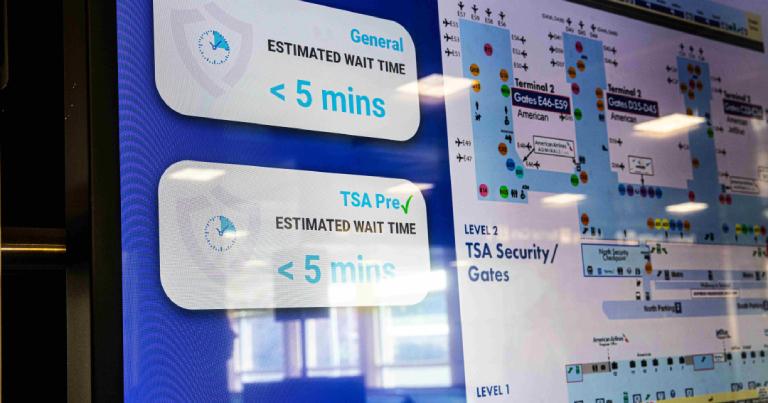
Another example is Queue Hub, a flow management solution developed by MWAA Labs. Queue Hub provides real-time visibility into passenger flow, queues, traffic patterns, parking utilisation, and other operational activities across the airport. By integrating data from sensors, cameras, and operational systems, it creates a common operating picture that helps airport operators better understand what’s happening across both the airside and landside environments. “As we continue to evolve the Queue Hub platform with AI capabilities, we move beyond visibility and into intelligent action,” Kundu shares. “Rather than simply reporting conditions, the system anticipates bottlenecks, recommends operational adjustments, and helps deploy resources where they’re needed most. Whether that’s reallocating regulatory staff, opening customs lanes, dispatching mobile lounges and optimising parking utilisation, the system works with airport operations to make faster, more informed decisions and deliver a better passenger experience.”
Kundu believes the most transformative use case for agentic AI is creating an airport that can continuously adapt itself around all three priorities of operational efficiency, passenger experience, and revenue generation. “Airports generate enormous amounts of data every day from sensors, passenger flows, transportation systems, facilities, airlines, concessions, weather systems, and operational infrastructure,” says Kundu. “Agentic AI has the potential to bring all of that information together into a 360-degree view of airport operations and continuously make decisions based on real-time conditions. An airport’s priorities will change on any given day. On a busy holiday travel day, the focus may be on passenger throughput, staffing, and operational efficiency. During severe weather or a major disruption, the priority shifts to resiliency, recovery, and passenger communications. And during slower periods of a day, the focus may shift to optimising parking, concessions, and other revenue-generating opportunities. Agentic AI can help balance those priorities by continuously sensing what’s happening across the airport, anticipating changes, and adjusting resources and customer engagement accordingly. Ultimately, it enables airports to make better decisions in real time and continuously align operations, passenger experience, and revenue with the needs of the day.”
A key challenge is trust. Before an organisation allows AI to make recommendations or take actions autonomously, it needs confidence that the decisions are accurate, explainable, and aligned with operational policies. “Another challenge is integration and data quality,” says Kundu. “Airports operate a complex mix of operational, infrastructure, and business systems, many of which were not designed to work together. To be effective, AI needs access to high-quality data across those environments. Connecting those systems and their data is often one of the biggest hurdles to successful deployment. And finally, governance, security, and compliance are critical. Due to the nature of the airport environment, every AI solution must have the appropriate guardrails around data access, privacy, accountability, and responsible use. We partner closely with federal agencies and regulators to ensure compliance and safety are never compromised.”
MWAA’s approach has been to focus on targeted use cases where the value is real, establish strong guardrails, and keep humans in the loop wherever needed. This allows it to build confidence and scale while maintaining the security that the airport environment demands.
Collaboration between airports and technology providers in the successful adoption of agentic AI is vital. “Airports operate within highly regulated, mission-critical environments, so technology providers need to understand not only the tech but the operational realities of running an airport,” Kundu shares. “Off-the-shelf capabilities often don’t address the unique needs of different airports, so partnerships can bridge that gap by adapting to specific operating environments. Even within our two-airport system, for instance, operational requirements can different significantly. Equally important is the ability to integrate AI with a complex mix of modern and legacy systems. AI is only as effective as the data and context it can access and act upon. Finally, agentic AI isn’t a one-time deployment. It requires ongoing collaboration around governance, security, compliance, and continuous learning as operating conditions evolve.”
As AI continues to evolve, Kundu believes its greatest impact will be helping airports move from reactive operations to predictive and ultimately, self-optimising operations. “Operationally, we’ll be able to anticipate issues before they become disruptions,” says Kundu. “AI will help us make faster, more informed decisions and automate routine tasks where it makes sense. For travellers, the experience will become more seamless. Passengers will spend less time waiting, receive more relevant information when they need it, and move through the airport with fewer surprises along the way. At the same time, aviation will always be a safety-critical industry. AI will augment the way we do things, but human judgment, governance, and oversight will always remain essential.”
Hear more from Metropolitan Washington Airports Authority (MWAA) at the 20th anniversary edition of FTE Global, taking place in Dallas, Texas, on 8 to 10 September 2026. Christian Kessler, Airport Transformation & Innovation Division Manager, MWAA, is participating in a session titled ‘The FTE Data Sharing Think Tank: Will widespread data collaboration ever become a reality?’
See the FTE Global schedule at a glance >> Register for FTE Global >>Cognizant on embedding AI into the workflows that run aviation
Cognizant – a Gold Sponsor of FTE Global, taking place in Dallas, Texas, on 8 to 10 September 2026 – works across the full travel and hospitality value chain, helping organisations modernise platforms, unify data and apply artificial intelligence (AI) in ways that improve the customer experience, employee effectiveness and operational efficiency. “Our Travel & Hospitality practice has experience across airlines, airports, travel technology, hospitality and restaurants, with a broad set of capabilities spanning customer experience transformation, flight, ground and airport operations, engineering modernisation, business process transformation and AI-powered digital strategies,” says Kevin Corr, Global Travel & Hospitality Consulting Leader, Cognizant.

In aviation specifically, Cognizant’s capabilities include passenger experience transformation, flight, ground and airport operations, engineering modernisation, AI-driven customer sentiment analysis, intelligent policy management, Customer 360 and AI copilot support for ground and inflight teams. “Our three core aviation offerings include Passenger Experience Transformation, Flight, Ground & Airport Operations and Engineering Modernisation, supported by solutions such as Sentiment 360, Policy 360, Customer 360 and Air Assist,” Corr explains. “We also bring industry-specific innovation examples, including digital twin capabilities for aircraft inspection, AI-enabled passenger support, agentic AI testing environments and AI-first modernisation work with travel technology providers.”
Corr highlights that the most compelling opportunities for agentic AI are those tied directly to high-value operational and customer-facing workflows. “Across aviation the opportunity for autonomous software engineering and testing is tremendous,” says Corr. “For airlines, they include disruption recovery, crew and asset coordination, revenue management and pricing, baggage operations, aircraft turnaround management, maintenance planning and personalised customer engagement. For airports, we’re seeing strong potential in passenger flow optimisation, multilingual assistance, wayfinding, queue management, accessibility services and operational communications. What makes agentic AI different is its ability to move beyond providing recommendations and begin coordinating actions across workflows, systems and stakeholders. The result can be smoother passenger experiences, faster operational decision-making, improved resource utilisation and new opportunities to drive ancillary revenue through more personalised interactions and services.”
The biggest challenge is not a lack of interest in AI. It’s the complexity of applying AI within highly regulated, operationally intensive environments that often rely on decades-old systems and fragmented data landscapes. “Many organisations struggle because they attempt to layer AI onto existing processes without addressing underlying data, workflow, organisational, or operating model challenges,” Corr shares. “In our experience, successful AI programmes start by identifying the business outcomes and value chains that matter most, then targeting the workflows that can generate meaningful benefits. Organisations should focus on building strong data foundations, introducing governance early and proving value in focused areas before scaling. Most importantly, they need to treat AI as a business transformation initiative, not simply a technology deployment. The human, process and governance aspects are just as important as the models themselves.”
Collaboration is absolutely critical. Agentic AI only delivers meaningful value when it reflects the operational realities of the organisations it serves. “As an AI Builder, Cognizant partners with our airline and airport clients bringing business expertise, operational context, and industry knowledge along with deep expertise in AI, engineering, data and transformation capabilities,” Corr explains. “Agentic AI success is impossible without this collaboration. That’s why events like FTE Global are so valuable. They create opportunities for airlines, airports, technology providers and innovators to work through real business challenges together, exchange ideas and lessons learned to accelerate industry-wide progress. The most successful AI initiatives are almost always the result of close collaboration between domain experts and technology specialists.”
Looking ahead, Corr is participating in the FTE AI Symposium – Part 2: A deep-dive into Agentic AI and the move towards Artificial General Intelligence at FTE Global, taking place in Dallas, Texas, on 8 to 10 September 2026. “The primary message I hope attendees take away is that aviation’s AI opportunity is no longer about experimentation – it’s about execution and value realisation,” says Corr. “Across the industry, we’re seeing strong investment and enthusiasm around AI, but many organisations are still working to bridge the gap between ambition and business outcomes. Success doesn’t come from deploying AI in isolation. It comes from embedding AI into critical workflows, operational decision-making and customer-facing processes. I also want delegates to leave with a clear understanding that scaling AI requires more than technology. Organisations need the right data foundations, governance models and operating practices to ensure AI delivers value consistently, responsibly and at scale.”
See the FTE Global schedule at a glance >> Register for FTE Global >>The future of aviation will be shaped by intelligent orchestration
Agentic AI is moving rapidly from experimentation into real-world aviation, with airports and technology providers demonstrating how intelligent agents can predict operational challenges, support decision-making, personalise passenger journeys and increasingly coordinate actions across complex workflows. From ground transportation and passenger assistance to autonomous systems, predictive operations and enterprise-wide orchestration, the use cases emerging today point towards a more adaptive and responsive aviation ecosystem.
As the perspectives shared by Cincinnati/Northern Kentucky International Airport, Munich Airport, Publicis Sapient, Aeroporti di Roma, Metropolitan Washington Airports Authority and Cognizant demonstrate, however, successful agentic AI adoption is about far more than deploying increasingly capable models. Trusted data, modern technology foundations, robust governance, human oversight, process redesign and workforce readiness will all be essential to moving from promising pilots to scalable, everyday applications. Equally important will be collaboration between airports, airlines, technology providers and other industry stakeholders, ensuring that AI solutions reflect the operational realities and specific requirements of aviation.
The next phase of AI in aviation is therefore likely to be defined less by who has the most advanced individual model and more by how effectively organisations can connect AI to their data, systems, people and processes. The long-term opportunity is to create operations that can sense what is happening, anticipate what comes next, recommend or execute appropriate actions, and continuously learn from outcomes – while keeping human judgment and accountability at the heart of safety-critical decisions.
These themes will be explored further in the FTE AI Symposium at the 20th anniversary edition of FTE Global (Dallas, Texas, 8 to 10 September 2026), where industry leaders will examine the practical realities of scaling agentic AI and the move towards Artificial General Intelligence. For airlines, airports and their technology partners, the message from these interviews is clear: the opportunity is no longer simply to experiment with AI, but to build the data foundations, operating models, partnerships and organisational capabilities needed to turn agentic AI into measurable, responsible and lasting value.
See the FTE Global schedule at a glance >> Register for FTE Global >>You may also be interested in
12 technology and CX trends that can enhance airline and airport operations in 2026
FTE World Innovation Summit relocates to Tokyo for 2027 edition hosted by Haneda Airport – 1-3 March