





Aircraft turnaround is entering a new era of intelligence. Advances in automation, artificial intelligence (AI), computer vision and real-time operational data are enabling airports, airlines and technology providers to move beyond isolated digital initiatives towards a truly connected Smart Ramp. As the industry works to improve operational efficiency, resilience, safety and sustainability, the focus is increasingly shifting from reacting to disruption to predicting, orchestrating and ultimately automating the turnaround process. In a series of interviews ahead of their participation in a session titled ‘Towards the smart apron: Automating the turnaround process’ at the 20th anniversary FTE Global (Dallas, Texas, 8 to 10 September 2026), industry leaders from Southwest Airlines, nlmtd, Airbus and Synaptic Aviation explore the technologies, lessons learned and collaborative approaches that are shaping the next generation of aircraft turnaround operations.
See the FTE Global schedule at a glance >> Register for FTE Global >>Southwest Airlines: Using real-time data and automation to create a more predictable turnaround
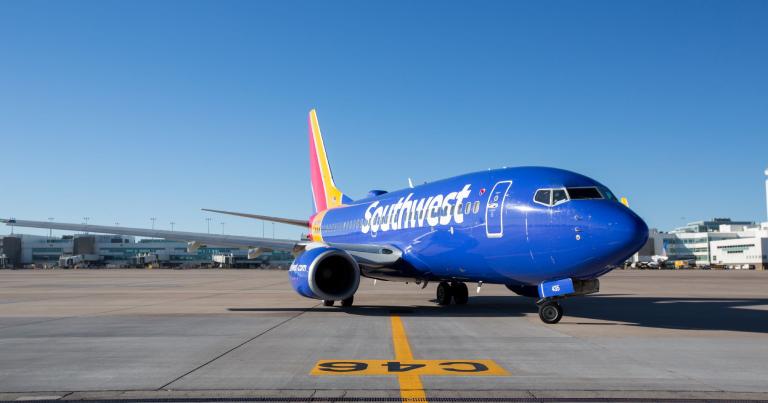
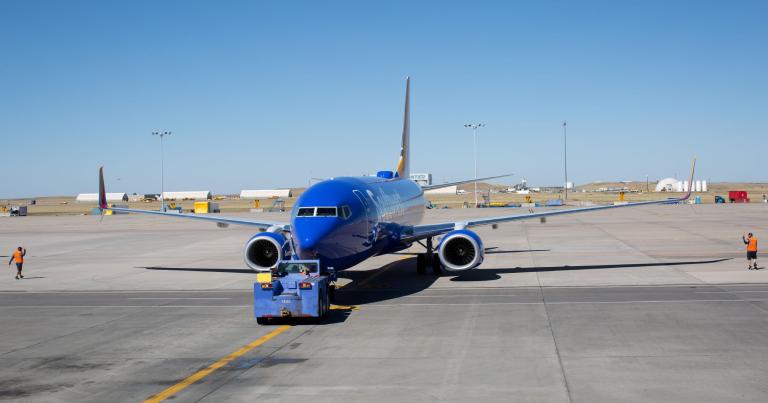
Southwest Airlines – a Headline Partner of the 20th anniversary FTE Global, taking place in Dallas, Texas, on 8 to 10 September 2026 – believes the greatest opportunity is using real-time data and automation to make the turnaround more predictable, coordinated, and proactively managed. “We have to understand the key processes in the turn, measure them consistently, and see performance in real time so teams can address issues before they affect the schedule,” says Steve Goldberg, SVP of Operations and Hospitality, Southwest Airlines. “Gate readiness is a strong example: ensuring ground service equipment is in the right place, in the right condition, and ready before the aircraft arrives creates a more reliable, safer, and more efficient start to the turn.”

Many Smart Ramp technologies are now moving from trials into live operations. Goldberg shares that the most important lesson is that successful deployment depends on employee adoption as much as the technology itself. “In a busy operation, leaders have to manage the change curve deliberately, involve frontline employees early, and make sure the solution improves the way work actually gets done,” he explains. “The best deployments are practical, phased, measurable, and designed around the people who use them every day, which is what ultimately drives return on investment.”
Automation is often discussed in terms of efficiency, but it can also improve safety, reliability and the experience of frontline employees working on the ramp. Goldberg highlights that the strongest automation opportunities deliver across four priorities at once: safety, efficiency, reliability, and employee experience. “On the ramp, technology that improves visibility, reduces equipment conflicts, and supports better task sequencing can reduce employee injuries, lower equipment damage, and limit avoidable delays,” he says. “When automation removes friction from the job and gives employees better information in the moment, it improves both turn performance and the frontline experience.”
Goldberg shares that the most significant change passengers may never see is the shift from a reactive turnaround to a proactively managed, data-driven operation. “Data, automation, equipment readiness, and people will need to work together as an integrated system, not as separate parts of the process,” he explains. “The result should be fewer surprises, faster recovery when conditions change, and smoother turns that customers experience simply as a more reliable journey.”
Looking ahead, Goldberg is eager to participate at FTE Global, where he is speaking in a session titled ‘Towards the smart apron: Automating the turnaround process’. “I hope delegates leave with a clear sense that the future of the ramp is already taking shape, and that the opportunity now is to scale it thoughtfully. Automation and technology can improve efficiency, reliability, hospitality, employee experience, and customer experience, but only when they are connected to real operational needs.”
nlmtd: Reimagining the 2040 turnaround through data, AI and collaboration
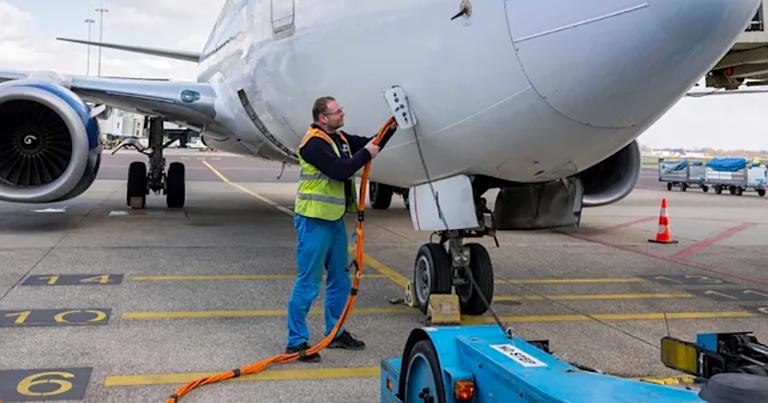
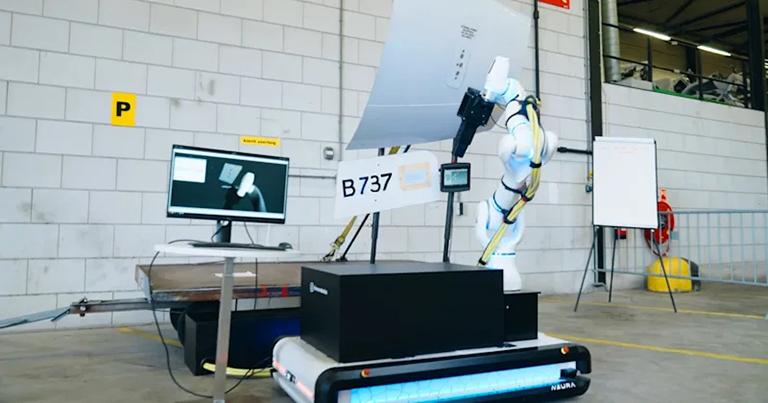
The vision for the session titled ‘Towards the smart apron: automating the turnaround process’ at FTE Global – taking place in Dallas, Texas, on 8 to 10 September 2026 – is to reimagine the airport apron 15 years from now. It will feature a scene-setting presentation by Manuel van Lijf, Director Aviation Innovation, nlmtd, focused on recommendations from the FTE Smart Ramp Con-Ops strategy and the latest findings from Smart Ramp member Proofs of Concept. Future Travel Experience launched the Smart Ramp initiative in partnership with innovation consultancy nlmtd, with the focus on Smart Ramp operations having the ultimate goal that aircraft turnaround can be achieved autonomously and more efficiently. At the recent APEX FTE EMEA and Ancillary & Retailing event in Dublin, van Lijf presented the exclusive launch of a White Paper developed in collaboration with Future Travel Experience titled ‘Smart Ramp ConOps: The Future of Aircraft Turnaround’. Shaped through workshops with leading airlines and airports worldwide through the pioneering FTE Smart Ramp initiative, the White Paper outlines a shared vision for the ramp of the future. Download the White Paper here.
“In 2040, a truly smart turnaround will operate as a proactive, data-driven ecosystem rather than a sequence of manually coordinated tasks,” van Lijf shares. “The most visible change will be the shift from people physically executing and coordinating almost every activity on the stand to teams supervising multiple turnarounds from an indoor command centre. A live digital twin will provide one shared picture of the operation; an AI-powered orchestration layer will identify emerging conflicts, model alternatives and recommend action; and autonomous or remotely operated equipment will carry out an increasing share of the physical work.”

What makes that future ‘smart’ is not the presence of a few robots. It is the integration of people, processes and technology across the full turnaround. Passenger boarding bridges, electric tugs, FOD-detection systems and other equipment will work from the same operational picture. “Several manual steps – such as paper fuel reconciliation, physical coning in appropriate environments, or separate GPU/PCA connection at bridge stands – may disappear or be absorbed into other automated processes,” van Lijf explains. “Compared with today’s fragmented, radio- and paper-dependent operation, the 2040 ramp should be safer, more predictable, more resilient and significantly more sustainable, while people remain responsible for supervision, exceptions and complex decisions.”
The biggest bottleneck is the lack of real-time operational visibility. Critical events – such as chocks placed, fuelling started, cabin cleaning completed or loading instructions received – are still frequently communicated by radio, hand signal or paper and recorded after the fact. “That leaves airlines, airports, handlers, suppliers and the flight crew working from different information sets,” says van Lijf. “Automated timestamping, computer vision, sensors and shared operational platforms can realistically create a trusted ground truth and enable teams to intervene before a deviation becomes a delay. The second bottleneck is that we are still highly relying on physical manpower for many tasks while people are increasingly scarce and their work environment challenging. FOD checks, stand guidance, passenger boarding bridge operation and many vehicle movements are realistic candidates for automation or remote operation within the next decade. Better orchestration can also address resource conflicts around fuelling, loading and de-icing. At the same time, we should be honest about maturity: tasks such as loose-baggage handling inside a narrow-body hold, parts of catering and cabin cleaning, and fully autonomous de-icing remain more difficult physical-automation frontiers. The priority should therefore be to scale proven digital and perception technologies now, while continuing to develop the harder robotic applications.”
Aircraft turnaround involves multiple organisations working together under intense time pressure and collaboration is not an optional governance layer – it is the fundamental enabling condition. “No single organisation controls the entire turnaround or owns all the required data, infrastructure, equipment, procedures, safety cases and workforce relationships,” van Lijf shares. “The unit of transformation is therefore the ecosystem, not the individual company. Our work has shown that a large share of innovation effort can be consumed by custom integrations between systems and suppliers. That is why the industry needs a shared Concept of Operations, open interfaces and common data standards, as well as agreed rules for human oversight, mixed traffic, exception handling and liability. The Smart Ramp model is deliberately collaborative: each partner can test locally with the supplier that best fits its operation, while other members contribute requirements, challenge assumptions and reuse the resulting lessons and safety documentation. This accelerates learning and helps ensure that a solution proven at one airport can become relevant and scalable elsewhere.”
Many automation technologies are already being trialled today, from autonomous vehicles to AI-powered decision support. nlmtd believes that the strongest near-term promise is in software and perception: AI-based turnaround monitoring, computer-vision timestamping, automated stand guidance and FOD detection, remote passenger boarding bridges, digital load planning and sensor-based condition monitoring. “These technologies provide visibility and decision support quickly, and they create the foundation that more advanced physical automation will need,” van Lijf explains. “The benchmark work shows that software is converging faster than hardware; the most effective sequence is therefore to establish reliable data and operational intelligence first, and then scale autonomous equipment on top of that foundation.”
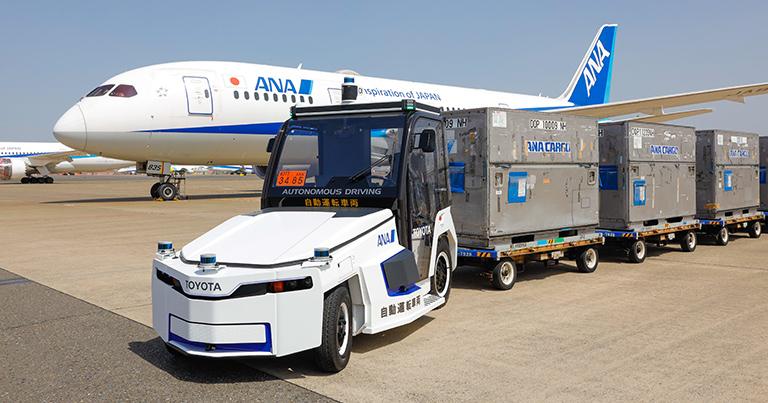
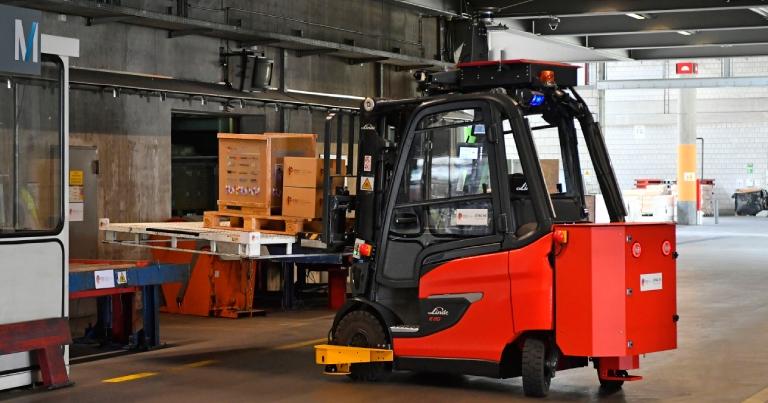
FTE Smart Ramp member projects have also produced very practical lessons. International Airlines Group’s (IAG) timestamping rollout at Heathrow Terminal 5 shows that a solution must be configured to the realities of each individual stand. “Its FOD work is testing AI that can detect objects as small as one to two centimetres from around 80 metres, but the next essential step is to benchmark performance against the manual safety walk,” says van Lijf.
Metropolitan Washington Airports Authority (MWAA) demonstrated that low-cost, battery-powered commercial sensors can be more scalable than a bespoke wired prototype – and discovered an additional maintenance use case in monitoring passenger boarding bridge HVAC performance.
Meanwhile, Schiphol Group’s autonomous GPU-connection proof of technology demonstrated millimetre-level visual alignment, while also exposing the engineering challenges that determine production readiness: cable weight, insertion force, dirt, lighting, socket orientation, weatherproofing and uneven surfaces.
“The overarching lesson is that a convincing demo is only the start,” van Lijf shares. “Successful adoption requires a clear operational problem, realistic environmental testing, a robust safety case, integration with existing systems and a business case built around reliability, safety and sustainability rather than headcount reduction alone.”
Improving on-time performance is a key objective for every airport and airline. The largest measurable impact of intelligent ramp operations will come from making the turnaround observable and predictable. “When manual radio calls and paper records are replaced by automatic timestamps and one shared operational picture, teams can see the critical path in real time, detect deviations earlier and reposition scarce staff or equipment before the delay becomes unavoidable,” van Lijf explains. “That improves not only average turnaround time, but – more importantly – consistency and resilience.”
The opportunity is visible in IAG’s 2025 stand-guidance data: 4,337 related holds represented 387 hours of aircraft holding and 335 tonnes of fuel burn, before accounting for the secondary impact on other flights. “Those figures describe the size of the problem, not a claimed saving, but they show exactly why intelligent stand readiness, automated FOD clearance and earlier decision-making matter,” says van Lijf. “Similar gains can be pursued at recurring constraint points such as fuelling, loading, the cabin-ready-to-boarding handover and weather-driven de-icing. The right measures are reduced holding and waiting time, fewer critical-path deviations, lower delay propagation, more reliable service-level performance and less turnaround-time variance.”
Sustainability is becoming an increasingly important consideration for apron operations. On the ramp, sustainability and operational efficiency are mutually reinforcing. “Electrified ground support equipment removes local tailpipe emissions, while intelligent dispatch and just-in-time positioning reduce unnecessary vehicle movements and idle running,” van Lijf shares. “Faster stand readiness and FOD clearance reduce aircraft holding with engines running; better stand allocation and turnaround visibility can reduce APU use; and engine-off taxi or e-taxi solutions can substantially reduce taxi fuel consumption on suitable routes.”
Automation can also make individual processes more resource-efficient. “LiDAR-assisted de-icing can improve spray accuracy and reduce glycol use and runoff,” says van Lijf. “IoT sensors can trigger lavatory and water servicing based on actual need instead of a fixed schedule, avoiding unnecessary truck visits. Digital fuel, load and turnaround records reduce rework and allow performance to be measured consistently. The key is to optimise the whole turnaround rather than deploy isolated ‘green’ technologies: when data, equipment and decision-making are connected, lower emissions, lower energy use and better on-time performance support one another.”
The Smart Ramp vision is about workforce augmentation, not a people-free apron. “Automation should take people away from the dull, dirty, dangerous and highly repetitive parts of the operation and allow them to focus on supervision, safety assurance, exception management, passenger care and operational decision-making,” van Lijf explains.
Instead of one person being tied to one manual task, a trained coordinator may oversee several stands or multiple autonomous vehicles from a safer indoor environment, supported by a live operational picture and AI-generated options.
“We have already seen how important the narrative and the design process are,” says van Lijf. “In ANA’s autonomous towing work at Haneda, repositioning colleagues as safety and security supervisors led to reported acceptance above 90%, with one person able to monitor multiple vehicles. That is a powerful example of automation giving people greater capability rather than simply removing a task. The transition must nevertheless be managed as a just transition: employees and unions should help shape the future roles, training, handover procedures and career paths. The human remains accountable for complex decisions; technology provides visibility, consistency and safer ways of working.”
Looking ahead, van Lijf is eager to participate at FTE Global, where he is speaking in a session titled ‘Towards the smart apron: Automating the turnaround process’. “I hope delegates leave with both a credible shared destination and a practical first step,” he shares. “The core message is that technology is increasingly ready; fragmented adoption is now the bigger constraint. The highest-value action is to build the data, connectivity and operational-intelligence foundation, agree open standards and define the human oversight model. That creates the conditions to scale physical autonomy safely rather than adding isolated technologies to an already fragmented operation. I also hope the session moves the conversation from interesting pilots to coordinated industry action. We need reusable safety cases, interoperable systems and a Concept of Operations that can accommodate different airports, airline models and regulatory environments. Dallas is an opportunity for airlines, airports, ground handlers, regulators and technology providers to challenge the vision, add their experience and identify the next collaborative projects that will make it real.”
FTE Global brings together decision-makers who would otherwise be optimising separate parts of the aviation ecosystem, and that is exactly what the turnaround challenge requires. “I am most looking forward to the candid conversations: testing our Smart Ramp ConOps against different regional and operational realities, learning from organisations that are already experimenting, and welcoming new contributors who can strengthen the work,” van Lijf adds. “I am also looking forward to turning discussion into action. The most valuable outcome would be new connections that lead to shared trials, common standards and faster adoption of what has already been proven. There is always tremendous energy when people who care deeply about aviation come together around a practical ambition, and I believe the smart apron is one of the most important opportunities we have to improve safety, predictability, sustainability and the working environment at the same time.”
Airbus: Connecting the aircraft, equipment and people through a smarter turnaround
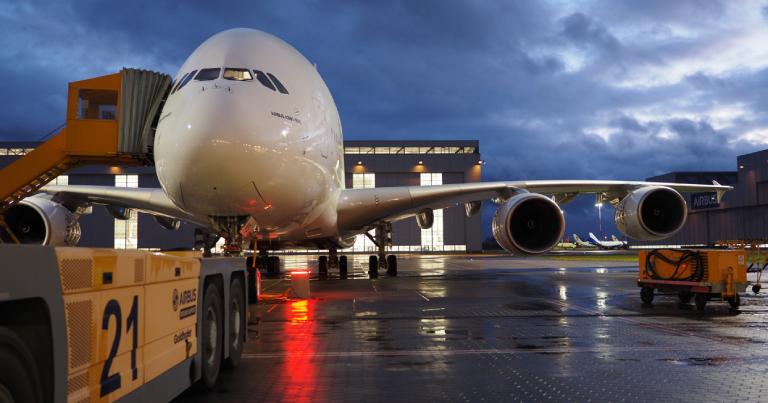
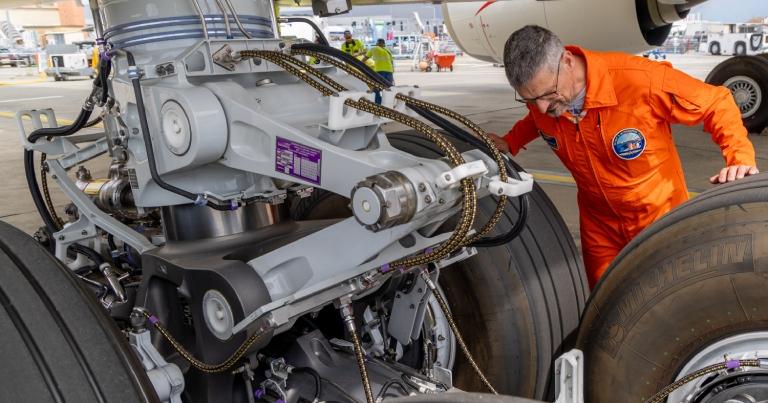
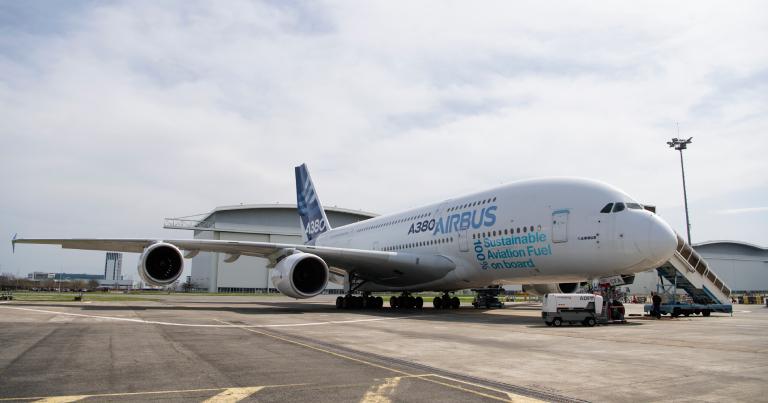
Airbus believes one of the greatest opportunities for Smart Ramp automation lies in aircraft cargo hold loading, where manual processes still dominate much of the turnaround. “Airplane cargo holds loading for both bulk and containerised operations requires the most manpower during the aircraft turnaround,” says Diego Alonso Tabares, Airport Operations Senior Engineer, Airbus. “While containerised loading is already partly automated, there is still significant scope to automate these activities further, improving both operational performance and efficiency.”

As Smart Ramp technologies transition from trials into live operational environments, Tabares believes the industry has an opportunity to take a more collaborative approach to implementation. “Today, there is no recognised global ‘lessons learned’ framework or entry-into-service guidance for introducing new ramp technologies,” he explains. “Every company trialling innovation on the ramp has had to navigate a long and complex process to gain approval from the many different stakeholders involved across airports and airlines. Greater collaboration and shared best practice could help accelerate future deployment.”
While automation is often associated with efficiency gains, Tabares highlights its potential to significantly improve safety and the working environment for frontline ramp teams. “The ramp is not the best working environment,” he says. “Removing the risks associated with working at height, collisions with ground support equipment, and physically demanding tasks would represent a major improvement for ramp workers’ health and safety.”
Beyond protecting employees, he adds that automation can also help “industrialise” the turnaround process, reducing disruption and minimising issues such as aircraft ramp damage.
Looking ahead, Tabares believes passengers may never notice the technology transforming turnaround operations, but they will benefit from the resulting improvements in reliability and efficiency. “The most significant change will be a fully digitally integrated turnaround between the aircraft, the ground support equipment, and the ramp workers,” Tabares shares. “Creating this connected operational ecosystem has the potential to fundamentally transform how turnarounds are managed.”
Looking ahead to FTE Global – taking place in Dallas, Texas, on 8 to 10 September 2026 – where he is participating in a session titled ‘Towards the smart apron: Automating the turnaround process’, Tabares hopes delegates leave with a sense of both the scale of the opportunity and the importance of collaboration. “Ramp operations are one of the lowest-hanging fruits for improving airline operations today. We can only improve, and it can be done, but it will only happen through collaboration. I want to give the airplane OEM perspective to the community and help ensure that the smart apron conversation does not stop at the aircraft vicinity.”
Synaptic Aviation: Making the invisible turnaround visible through AI and operational intelligence
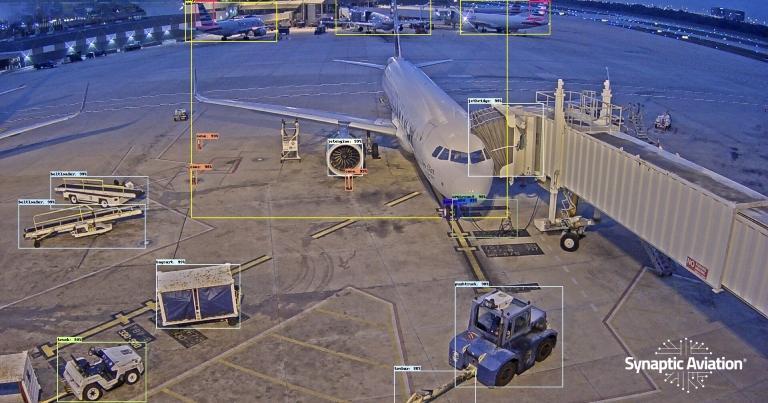
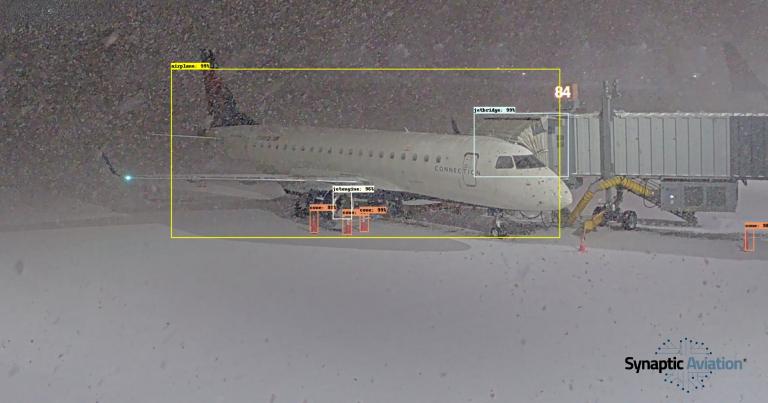
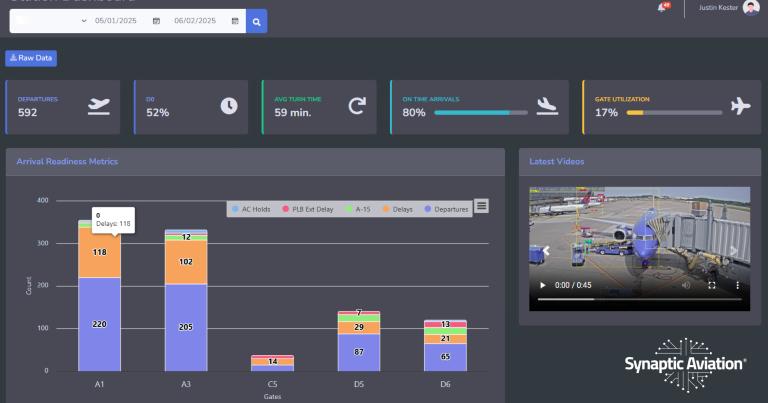
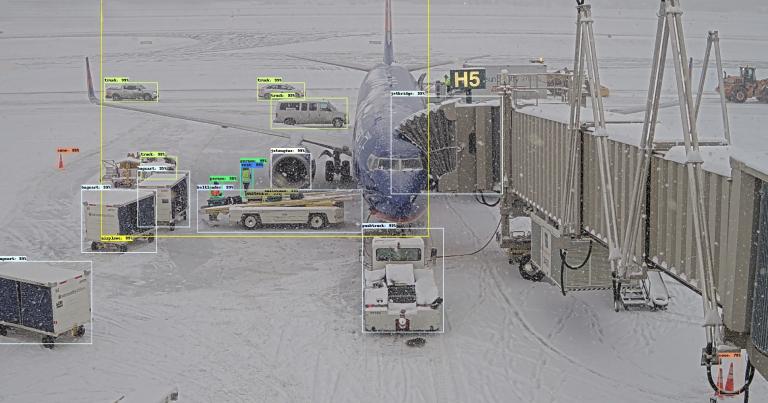
Synaptic Aviation – a Gold Sponsor of the 20th anniversary edition of FTE Global, taking place in Dallas, Texas, on 8 to 10 September 2026 – believes the single biggest opportunity for automation of the aircraft turnaround process is the part that’s historically been invisible: knowing, in real time and with confidence, exactly what is happening below the wing and when.
“Almost every downstream decision in a turnaround – crew allocation, gate planning, connection management, off-block prediction – depends on an accurate picture of the sequence of events on the ramp,” says Justin Kester, Vice President – Global Sales, Synaptic Aviation. “Yet that picture has traditionally been captured manually, inconsistently, or after the fact. Automating the detection and timing of turnaround milestones is where the greatest leverage exists because it’s the foundational data layer everything else sits on. You can’t optimise or predict what you can’t reliably measure. Once every turnaround becomes an objective, timestamped operational record rather than a manual estimate, airports and airlines can stop debating what happened and start improving what happens next. Get accurate, automatic event detection right, and you unlock efficiency, prediction, collaboration, and safety improvements across the entire operation.”

Many Smart Ramp technologies are now moving from trials into live operations. The biggest lesson, Kester believes, is that the trial is the easy part – production is where the real engineering lives. “A few things stand out,” he says. “First, work with the infrastructure that’s already there. Solutions that require extensive new hardware at every stand quickly become difficult to scale, so making the most of existing camera infrastructure is a major advantage. Second, accuracy has to be proven continuously, not claimed once. A model that performs well during a demonstration can drift as operational conditions change, so ongoing ground-truth validation against live operations is essential. Third, operators need to trust the output. That means detections should be transparent and easy to verify, ideally by linking operational events back to the underlying video. Confidence grows much faster when people can see exactly what the system detected. Every airport and every stand is different, so the winning approach is a standardised platform that’s configurable for each site – not a bespoke implementation every time. And finally, the operation doesn’t stop for you. Deployment has to happen around live turnarounds without disrupting them. The teams that succeed treat this as an operational discipline, not simply a technology rollout.”
Automation is often discussed in terms of efficiency, but it can also improve safety, reliability, and the experience of frontline employees working on the ramp. “Efficiency gets the headlines, but I’d argue the safety and human benefits are just as significant,” Kester shares. “From a safety perspective, continuous computer vision can monitor conditions that no individual or supervisor could realistically watch across every stand simultaneously – equipment in the wrong place, activity occurring outside defined safety zones, or deviations from established turnaround procedures.”
From a reliability standpoint, automated, objective event data removes ambiguity about what happened and when. That creates a shared operational picture that airlines, airports, and ground handlers can all rely on, making the operation more predictable and improving collaboration.
“For frontline teams – and this is the part I care about most – good automation should take away the clipboard, not the judgement,” says Kester. “It removes repetitive manual logging and lets experienced ramp personnel focus on the work that actually requires human skill, awareness and decision-making. The best automation doesn’t replace expertise – it amplifies it. It gives supervisors better situational awareness, helps teams identify recurring operational bottlenecks, and provides everyone with better information to make better decisions. Just as importantly, video-backed operational events become an invaluable training resource. Instead of relying on recollection or anecdotal feedback, teams can review actual turnarounds to reinforce best practices, coach new employees, and understand exactly what happened when something doesn’t go as planned. Aviation has always learned by reviewing operations; AI simply makes it possible to do that routinely, objectively, and at scale.”
Looking ahead 10 years, Kester believes the turnaround will quietly become predictive rather than reactive. “Today, much of the ramp still runs on responding to what just happened,” Kester explains. “In 10 years, operations will increasingly run on a continuously updated, high-confidence forecast of how every turnaround is likely to unfold. Systems won’t simply report delays – they’ll identify the flights most at risk and give operations teams time to intervene before those delays materialise. Passengers will never see it, but the on-time flight they take for granted will increasingly be the result of a fully instrumented, continuously learning, self-correcting ramp operating quietly in the background. The invisible data layer beneath the apron – bringing together computer vision, operational systems, and predictive analytics – will fundamentally change the economics, resilience, and reliability of aircraft turnarounds, even though almost no traveller will ever know it exists. Ultimately, the turnaround will become a managed system rather than a monitored process.”
Looking ahead, Kester is eager to participate at FTE Global, where he is speaking in a session titled ‘Towards the smart apron: Automating the turnaround process’. “I hope delegates leave with the understanding that the smart apron isn’t a distant vision – it’s already happening in live operations today,” he shares. “The conversation is becoming less about whether the technology works and more about how we deploy it, validate it, and scale it responsibly. I’d also like people to leave with a clearer distinction between what’s genuinely production-ready and what’s still aspirational. As an industry, we should be asking tougher questions about accuracy, validation, and operational performance – not just demonstrations. The right question for any vendor isn’t simply, ‘What’s your accuracy?’ It’s, ‘How do you measure it, validate it, and maintain it over time?’ Finally, I’d like delegates to appreciate that a smart apron isn’t about adding technology for technology’s sake. It’s about creating a common operational picture that airlines, airports, and ground handlers can all trust. Once everyone is working from the same objective data, collaboration becomes easier, decisions become faster, and the entire turnaround becomes more resilient. If people leave asking better questions and with a more realistic understanding of where the industry is today – and where it’s genuinely heading – that would be a successful discussion.”
The path ahead: Turning the smart apron vision into reality
As Smart Ramp technologies continue to mature, the industry’s challenge is no longer simply imagining the future of aircraft turnaround – it is building the operational, technological and collaborative foundations needed to make that future a reality. From AI-powered decision support and computer vision to autonomous equipment, predictive analytics and real-time operational visibility, many of the enabling technologies are already proving their value in live environments. The focus is now shifting towards integrating these capabilities into a connected ecosystem that delivers measurable improvements in safety, efficiency, resilience, sustainability and the experience of frontline employees.
As the perspectives shared by Southwest Airlines, nlmtd, Airbus and Synaptic Aviation demonstrate, achieving that vision will require far more than technological innovation alone. Success will depend on collaboration across airlines, airports, aircraft manufacturers, ground handlers and technology providers, alongside common standards, trusted operational data and a shared commitment to scaling proven solutions responsibly. Equally important will be ensuring that automation augments human expertise, addresses genuine operational challenges and earns the confidence of the people working on the ramp every day.
These themes will be at the heart of the ‘Towards the smart apron: Automating the turnaround process’ session at FTE Global (Dallas, Texas, 8 to 10 September 2026), where industry leaders will explore how the aviation sector can move beyond individual pilots towards coordinated, ecosystem-wide transformation. For organisations looking to create smarter, more connected and future-ready turnaround operations, the discussion promises valuable insights into the technologies, partnerships and practical strategies that will shape the next generation of aircraft turnaround.
See the FTE Global schedule at a glance >> Register for FTE Global >>Groundbreaking FTE Smart Ramp program, accelerating automation and collaborative innovation
Smart Ramp is the latest initiative as part of the groundbreaking FTE Accelerating Collaboration & Engagement (ACE) platform launched in partnership with innovation consultancy nlmtd. ACE is dedicated to driving real collaborative action among stakeholders, facilitating fast progress and dynamic change in key areas of the aviation industry which are ripe for transformation. International Airlines Group, Miami International Airport, All Nippon Airways, Royal Schiphol Group, KLM Royal Dutch Airlines, Metropolitan Washington Airports Authority, Munich Airport and Lufthansa are all members of what is a truly global collaborative innovation initiative.
The focus on Smart Ramp operations has the ultimate goal that aircraft turnaround can be achieved autonomously and more efficiently. A phased approach will assess which solutions truly work by each member testing new technologies, while incorporating requirements from the other participants. The program will support startups and introduce new suppliers not yet active in aviation, forging paths together on how to overcome hurdles while also exploring the potential for shared investments in the future. Results of the innovations will be shared with respective experts, industry bodies and regulators, meaning the outcomes can be used to create recommended practices and standards in the industry.
Learn more about Smart Ramp and the FTE Accelerating Collaboration & Engagement (ACE) platform and how to participate >>You may also be interested in
12 technology and CX trends that can enhance airline and airport operations in 2026
Vote now: What will be aviation’s most game-changing technology over the next 20 years?