





The baggage journey is undergoing significant transformation, driven by advances in automation, artificial intelligence (AI) and robotics. As airports and airlines look to build smarter, more resilient and passenger-centric operations, the focus is increasingly shifting from simply automating existing processes to fundamentally reimagining how baggage moves through the airport ecosystem. In this interview, ahead of his participation at the 20th anniversary FTE Global (Dallas, Texas, 8 to 10 September 2026) Allen Yuarata, Director, Terminal | Baggage & Groundside Services, Vancouver Airport Authority and a Captain of the FTE Baggage Innovation Working Group, shares his insights on the technologies, partnerships and operational strategies that will help scale the next generation of baggage handling.
See the FTE Global schedule at a glance >> Register for FTE Global >>Moving beyond automation: Reimagining the future of baggage operations

At FTE Global, Yuarata is participating in a key session focused on ‘Scaling the Baggage Handling Revolution’. The session will explore how the industry can overcome current challenges and unlock new opportunities across the baggage ecosystem, with panellists sharing their perspectives on new business models, funding approaches and collaborative strategies to bring innovation to life. The discussion will also examine the applications and business cases for robotics and AI, sustainability in baggage operations, advances in automation across loading, unloading, scanning and imaging, enhanced tracking of bags and vehicles, the progression towards autonomous operations across the airside, bag room and groundside environments, and the potential for offsite baggage processing to provide additional capacity.
“I think we’re entering a period where we stop asking ‘How do we automate existing processes?’ and start asking ‘How do we fundamentally improve how baggage moves through the airport?’ The biggest opportunity is to eliminate repetitive, physically demanding work while creating a more predictable and resilient baggage system,” Yuarata shares. “Robotics, AI and better data can help improve consistency, reduce injuries and give operators better visibility across the entire baggage journey. The technology is advancing quickly, but the next step is maturity. Airports need solutions that can handle the realities of live operations, integrate with existing baggage systems and scale without requiring major infrastructure changes. That’s where I think the industry has the greatest opportunity over the next five years.”
Solving real operational challenges: The foundation for successful innovation
Many of the innovations being discussed today require close collaboration between airports, airlines and technology partners. In terms of the key ingredients for successfully bringing new baggage technologies from concept to large-scale deployment, Yuarata highlights that successful innovation starts with a shared problem to solve – not a technology looking for a use case. “The best projects bring together airports, airlines and technology partners early so everyone understands the operational challenge and what success looks like. It’s also important to be willing to test, learn and adapt rather than expecting perfection from day one.”
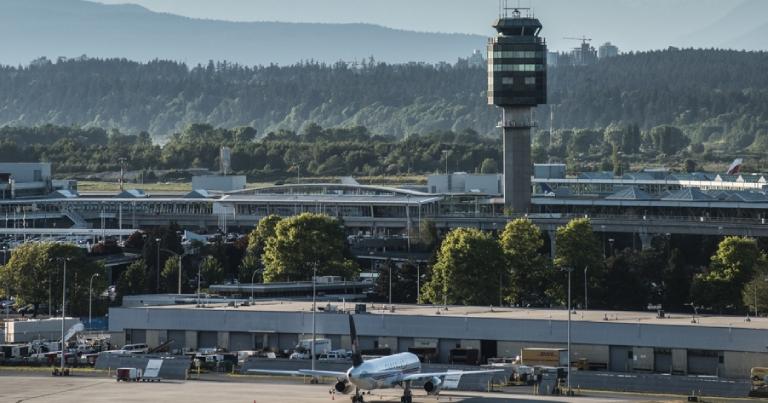
Vancouver International Airport has built a reputation for innovation across its operations. Central to this is evaluating emerging technologies such as AI, robotics and autonomous systems to determine where they can deliver the greatest operational and customer value. “We always start with the operational problem,” Yuarata explains. “Technology should improve safety, reliability, efficiency or the passenger experience – and ideally more than one of those. If it doesn’t solve a meaningful challenge, it’s probably not the right investment. We’re also looking at whether a solution can integrate into existing operations, whether our frontline teams can support it, and whether it can scale over time.”
Building trust and resilience through smarter baggage operations
Travellers increasingly expect greater visibility and confidence throughout their journey, including when it comes to their bags, with real-time baggage tracking a vital element in building trust. “Passengers don’t just want their bags delivered – they want confidence throughout the journey,” says Yuarata. “Real-time baggage tracking removes uncertainty and gives passengers peace of mind. It also helps airport and airline teams identify issues sooner and recover more quickly when something doesn’t go as planned. I’d like to see more consistent sharing of baggage information across airlines and airports, so passengers have one seamless view of their journey, regardless of who they’re flying with.”
The concept of offsite baggage processing is similarly gaining momentum as airports look for new ways to expand capacity and improve the passenger experience. Commenting on its evolution, Yuarata emphasises that offsite baggage processing has the potential to fundamentally change how passengers begin their journey. “It can reduce congestion in terminals, improve the check-in experience and make better use of airport space,” he explains. “But widespread adoption depends on building confidence in the end-to-end process. The industry will need common standards, secure chain-of-custody, strong regulatory support and close coordination between airports, airlines and ground handlers. Like any major change, success will come from demonstrating reliability before scaling.”
Meanwhile, sustainability is becoming an increasingly important consideration across airport operations. Indeed, baggage handling is becoming more sustainable while also improving efficiency and resilience. “A system that moves bags more efficiently uses less energy, experiences fewer disruptions and reduces unnecessary movements,” Yuarata shares. “Automation can also help optimise equipment usage and extend asset life through predictive maintenance. For me, sustainability isn’t just about reducing emissions. It’s also about building systems that are resilient, adaptable and capable of supporting future growth without simply adding more infrastructure.”
Empowering people through automation: The future of human-centred operations
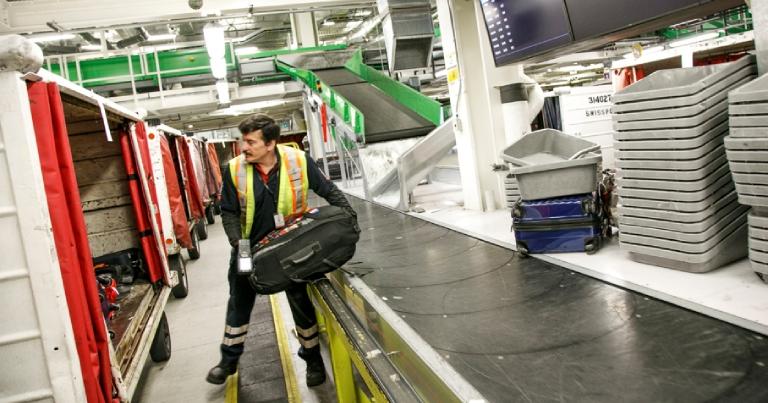
As automation and robotics rapidly reshape ground operations, the baggage space is at the intersection of human talent and advanced technology, where automation empowers rather than replaces staff. The aim with these innovations is to eliminate physical strain, enhance real-time decision-making, and create a smarter, safer, and more consistent environment across the ramp and baggage hall. “Technology will change jobs, but it won’t replace people,” says Yuarata. “Automation should take on repetitive and physically demanding tasks, so our people can focus on higher-value work that requires judgment, problem-solving and decision-making.”
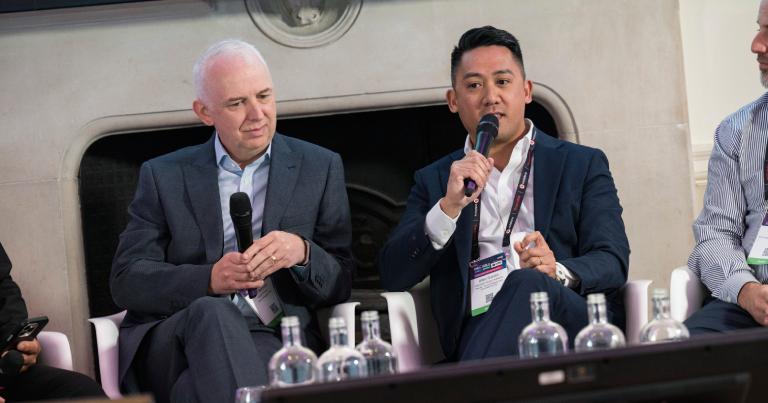
FTE Global: “A chance to build partnerships that move ideas into implementation”
Looking ahead, Yuarata is eager to participate in the ‘Scaling the Baggage Handling Revolution’ session at FTE Global (Dallas, Texas, 8 to 10 September 2026). “I hope people leave thinking less about technology and more about transformation,” he shares. “Innovation only creates value when it solves real operational problems and can be successfully adopted at scale. That requires collaboration, a willingness to learn from tests and the courage to rethink how we’ve always done things. The future of baggage isn’t about one breakthrough technology – it’s about bringing together many innovations that collectively create a safer, smarter and more resilient operation.”
Yuarata adds that FTE Global is valuable because it brings together people who are facing many of the same challenges from different perspectives. “It’s a chance to learn from what’s working elsewhere, share our own experiences and build partnerships that move ideas into implementation. I’m looking forward to seeing how technology is evolving beyond the concept stage. The most exciting innovations aren’t necessarily the most complex – they’re the ones that solve real operational problems, integrate seamlessly into existing environments and can be adopted across airports of different sizes without significant infrastructure changes. That’s where I think the industry needs to focus next.”
From innovation to impact: Creating the future of baggage operations
As the baggage ecosystem continues to evolve, the industry’s challenge is no longer simply identifying promising technologies, but successfully scaling solutions that deliver measurable value for airports, airlines and passengers alike. From AI, robotics and automation to real-time tracking, autonomous operations and offsite baggage processing, the technologies are increasingly available. The focus is now shifting towards integrating these innovations into live operational environments in ways that enhance safety, improve resilience, increase efficiency and elevate the passenger experience. As Yuarata’s insights demonstrate, achieving that vision will require far more than technological advancement alone. Strong collaboration between airports, airlines and technology partners, coupled with a willingness to test, learn and adapt, will be essential to moving innovations from successful pilots to widespread deployment. Equally important is ensuring that new solutions are designed to address genuine operational challenges, integrate seamlessly with existing infrastructure and empower frontline teams to work more effectively. These themes will be at the heart of the ‘Scaling the Baggage Handling Revolution’ session at FTE Global, where industry leaders will share practical insights into the future of baggage handling. For organisations looking to build smarter, more connected and future-ready operations, the discussion promises to offer valuable perspectives on how innovation can be translated into meaningful, scalable transformation across the baggage ecosystem.
What’s next – FTE Global, Dallas, Texas, 8 to 10 September 2026, and APEX FTE EXPO, Singapore, 18 to 19 November 2026

You may also be interested in
12 technology and CX trends that can enhance airline and airport operations in 2026
Vote now: What will be aviation’s most game-changing technology over the next 20 years?