




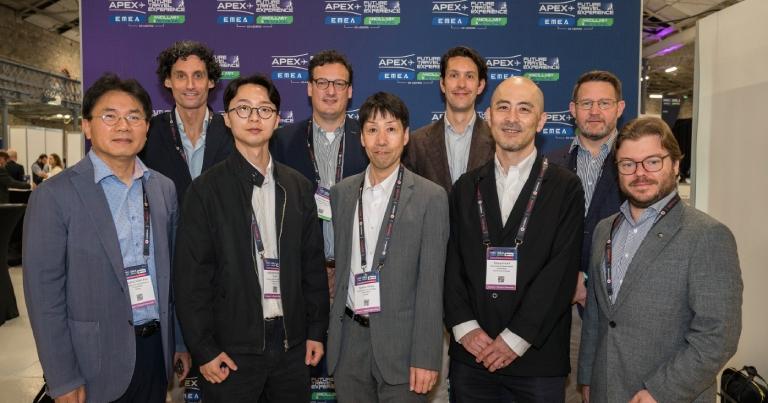
BOOST – a pioneering collaborative innovation initiative to transform the future of baggage handling through robotics and automation – is accelerating efforts to shape the future of baggage handling through shared experimentation, Proofs of Concept and joint learning. The global BOOST coalition was launched two years ago by innovation consultancy nlmtd (Unlimited) in partnership with Future Travel Experience (FTE) via the FTE Baggage Innovation Working Group (BIWG). In this video interview, following their participation at APEX FTE EMEA and Ancillary & Retailing 2026 in Dublin, nlmtd, Narita International Airport, Incheon International Airport, Brussels Airport and Heathrow, discuss the expansion of the initiative with the launch of the BOOST Asia Cluster, progress on key technical Proofs of Concept including artificial intelligence (AI)-driven baggage identification, the release of a new White Paper focused on automated loading, and why collaboration is critical to reducing risk and accelerating innovation across the aviation ecosystem.
BOOST expands globally with launch of Asia Cluster
A major milestone for the programme is the creation of the BOOST Asia Cluster, marking a significant step in its evolution from a primarily European collaboration into a more global innovation network. With Incheon International Airport already an established member, Narita International Airport has now joined the initiative, enabling a stronger regional focus in Asia and expanding the programme’s collective learning potential.
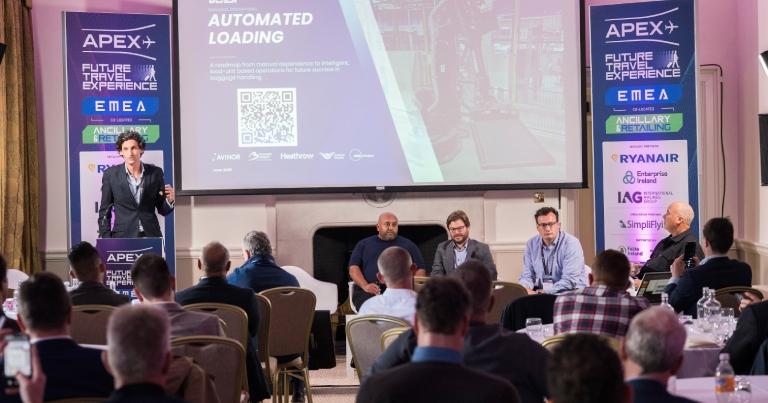
“We launched the BOOST Asia Cluster here at APEX FTE EMEA,” explains Jos Werner, Director, nlmtd (a Partner of the FTE Baggage Innovation Working Group). “We’re working together already in Europe, but now Narita also joins us. We’re very happy with that. In that way, we’re able to also accelerate our learning when it comes to shaping the future of baggage.”
The expansion reflects BOOST’s core philosophy: that innovation in baggage handling can be accelerated through shared real-world experimentation across different airport environments and operational contexts.
Learn more about BOOST >> Learn more about the FTE Baggage Innovation Working Group >>Automated loading becomes key focus for next BOOST White Paper
Alongside the expansion, BOOST is preparing to release its second White Paper, building on last year’s vision for the future of baggage handling. The new White Paper focuses specifically on automated loading, a critical and historically under-automated stage in the baggage journey.
Werner highlights that loading remains one of the most physically demanding and least digitised areas of airport operations, making it a key candidate for transformation. “The loading step is still the least automated step in the whole process, but carries the highest physical strain.”
However, he emphasises that the challenge is not purely technological. Scaling automation requires end-to-end operational alignment across airport systems, processes and people. “If you really want to scale it, then the whole operation needs to act as one,” Werner shares.
The White Paper is positioned not just as a vision document, but as a call to action for wider industry participation, with feedback and collaboration seen as essential to progress. Werner adds that while full scalability may still be some years away, the direction of travel is clear, with 2050 cited as a long-term horizon for full deployment at scale.
AI-driven baggage identification advancing at Narita
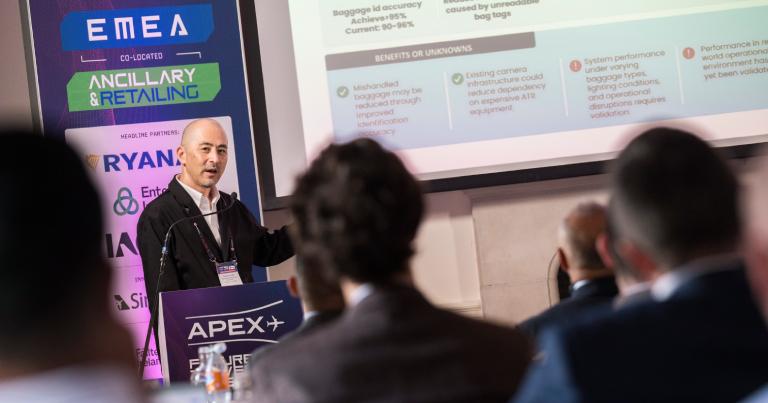
Within the BOOST ecosystem, new member Narita International Airport is already progressing with a technical Proof of Concept focused on AI-enabled baggage identification. The project is centred on training image recognition models capable of identifying individual pieces of baggage, forming a foundation for future automation and reduced manual intervention.
“We are working on the development of image recognition identification for baggage,” explains Tatsuya Izumi, Deputy General Manager, Narita International Airport Corporation. “We are now working on the training of the AI model to identify each piece of baggage.”
The initiative reflects a broader industry trend towards leveraging computer vision and AI to improve tracking accuracy, reduce errors and enable more seamless baggage handling processes.
Incheon highlights value of shared risk in innovation
For Incheon International Airport, the BOOST model provides an important mechanism for de-risking innovation through shared learning across multiple airport environments. By collaborating on Proofs of Concept, airports are able to test new technologies more efficiently while reducing both financial and operational exposure.
“The biggest advantage of this community is that we can share the risks,” says Cho Hyeong-cheon, Manager, Incheon International Airport Corporation. “By learning from each other’s experience, we can significantly reduce the financial and operational risks when investing in new baggage technology.”
He adds that this collaborative approach enables airports to move faster and more confidently when exploring new solutions.
Brussels Airport focuses on human-centred innovation
Brussels Airport – a Partner of the FTE Baggage Innovation Working Group – emphasises that successful innovation in baggage handling is not only about technology deployment, but also about organisational and behavioural change. While new technologies such as robotics and automation are important enablers, their success depends on how well they are integrated into existing operational workflows and how effectively staff adapt to new ways of working.
“It won’t work if you don’t change the processes or the way people work with these technologies at the same time,” says Yorick Buys, Head of Baggage, Brussels Airport.
The airport’s current focus is on ensuring that operational teams are fully aligned with new systems and equipment, enabling sustainable adoption of innovation in real-world environments.
Heathrow highlights importance of collaboration at scale
For Heathrow Airport (a Partner of the FTE Baggage Innovation Working Group) collaboration within BOOST is essential to overcoming shared industry constraints such as limited space, operational complexity and cost pressures. The ability to test and develop solutions jointly with other airports enables faster learning and more effective problem-solving across the sector.
“Doing Proofs of Concept, trialling things, learning, having really difficult conversations like this saves us all time and money,” says Jamie Ratcliffe, Senior Baggage Product Development Manager, Heathrow. “It’s fixing the problems in a collaborative way, not being siloed.”
He adds that collaboration is not optional, but essential for meaningful progress in baggage innovation.
A growing global innovation ecosystem
Looking ahead, BOOST continues to evolve as an open but carefully structured collaboration, with growth driven by the quality of participation rather than scale alone. Werner emphasises that while there is interest from additional airports, expansion will remain deliberate and focused on maintaining strong project outcomes and actionable learning. “It’s not about size alone,” he says. “It’s about the quality of the Proofs of Concept and the learning that we can do.”
With its expanding Asia presence and continued European collaboration, BOOST is positioning itself as a global platform for accelerating innovation in baggage handling, bridging operational realities with long-term transformation goals across the aviation ecosystem.
Learn more about BOOST >> Learn more about the FTE Baggage Innovation Working Group >>What’s next – FTE Global, Dallas, Texas, 8 to 10 September 2026, and APEX FTE EXPO Asia, Singapore, 18 to 19 November 2026

You may also be interested in
12 technology and CX trends that can enhance airline and airport operations in 2026