




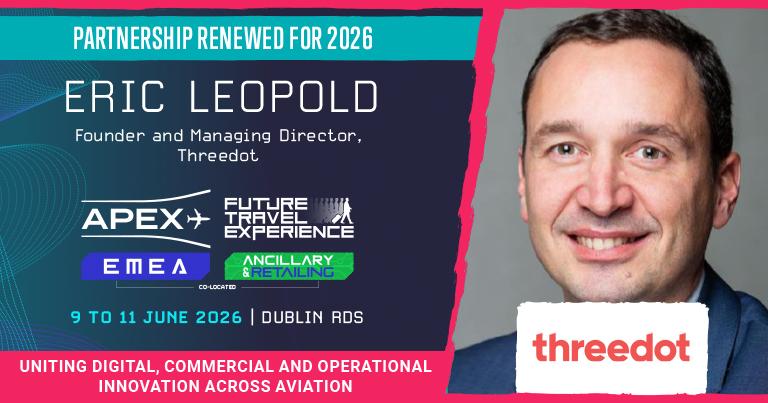
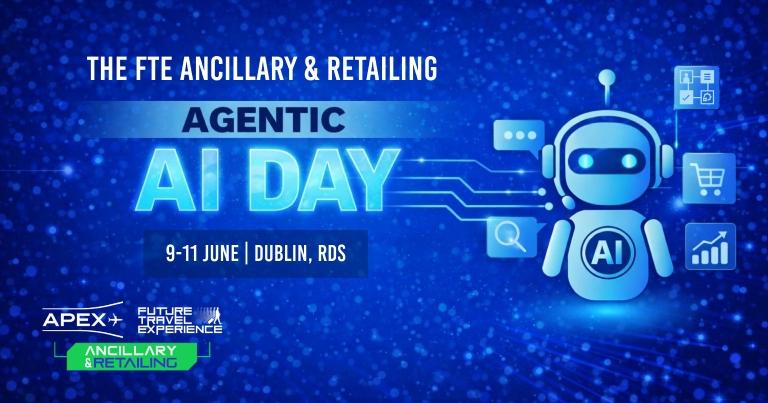
Agentic AI is reshaping commercial operating models, including how humans interact with automated systems, and how much autonomy artificial intelligence (AI) agents can have. This represents a paradigm shift in how the air transport commercial ecosystem operates: human employees will focus on strategy, policy, and creativity, while AI agents execute, optimise and scale operations. The APEX FTE Ancillary & Retailing Agentic AI Day – taking place at the co-located APEX FTE EMEA and APEX FTE Ancillary & Retailing events, Dublin, 9-11 June 2026 – will deliver expert insights, real-world examples, and forward-looking use cases, so attendees gain a clear understanding of how this future will work in practice, why it matters now, and how to begin preparing their organisations today to be ready to grasp the vast potential of this game-changing technology. At the heart of this will be the exclusive unveiling of the ‘Commercial Agentic AI White Paper’ for the aviation industry by Eric Léopold, Founder & Managing Director, Threedot, and Content Director, APEX FTE Ancillary & Retailing. In this interview, he discusses how agentic AI will redefine airline commercial models, the organisational shifts required to unlock its value, and why the industry must prepare now for a new era of autonomous, customer‑centric travel.
Explore the full APEX FTE EMEA and APEX FTE Ancillary & Retailing agenda at a glance >> Register for the co-located APEX FTE EMEA and APEX FTE Ancillary & Retailing events – free for airlines, low-cost for airports >>
“My key message is that aviation is entering a major new phase of AI adoption,” Léopold shares. “For the last two decades, AI has focused mainly on optimisation inside the airline, across commercial and operations, through areas like revenue management and aircraft turnaround. What has changed over the past three years with generative AI and agentic AI is the opportunity to move beyond internal productivity toward customer-facing commercial orchestration. The airline ancillary & retailing community is looking at how AI can drive efficiencies across retailing, servicing, loyalty, and customer engagement at scale. The White Paper explores what this means for specific use cases, where typically siloed fragmented systems and rules-based decision-making are the main technical constraints. We won’t only talk about technology. Agentic AI will reshape the commercial operating models, including how humans interact with automated systems, and how much autonomy AI agents can have.”
Agentic AI: Connecting fragmented parts of the customer journey through a more coordinated commercial layer
Agentic AI changes the role of software, everywhere and specifically in the airline commercial ecosystem. Historically, airline systems have been transactional and rules-based. Agentic AI introduces systems that can reason across multiple objectives, adapt dynamically, and act autonomously within defined boundaries.
“In aviation, the dream is the perfect journey, the seamless connected trip,” says Léopold. “Agentic AI creates the possibility of getting closer to the dream, by connecting fragmented parts of the customer journey through a more coordinated commercial layer. Imagine the separate systems managing offers, servicing, disruption recovery, and loyalty independently. Suddenly each system becomes an AI agent able to coordinate with peers around the original customer intent and find positive outcomes. Over time, I expect airlines to move closer to managing autonomous commercial ecosystems, while keeping systems of record and traceable transactions in the background. Human oversight will remain critical during the transition.”
Léopold is also leading ‘The Agentic AI Co-Creation Session’ at APEX FTE Ancillary & Retailing. This session is designed to move beyond high-level discussions about the benefits and risks of AI and focus on practical implementation that impacts the travel experience, from shopping to arrival.
“It will bring airlines, airports, technology providers, and other industry stakeholders together to explore real use cases leveraging agentic AI,” Léopold explains. “We will look at what measurable value we can create, and what challenges we may face, from data and processes to risks and governance. Our goal in this session is to provide actionable insights to participants that they can test and implement in their own operational reality, not abstract concepts.”

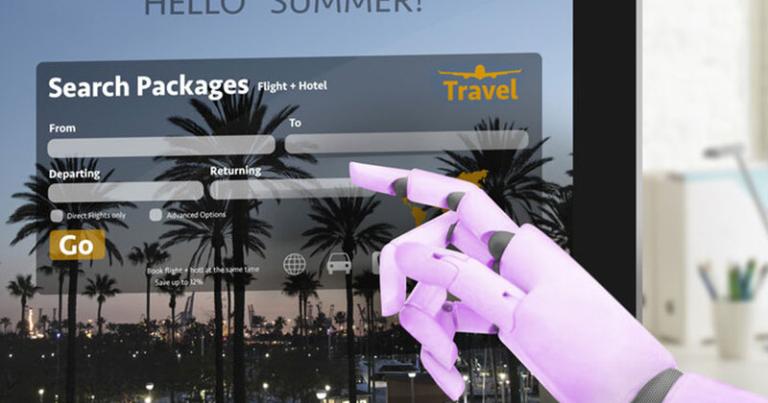
Modern airline retailing: Moving from product distribution toward contextual commerce
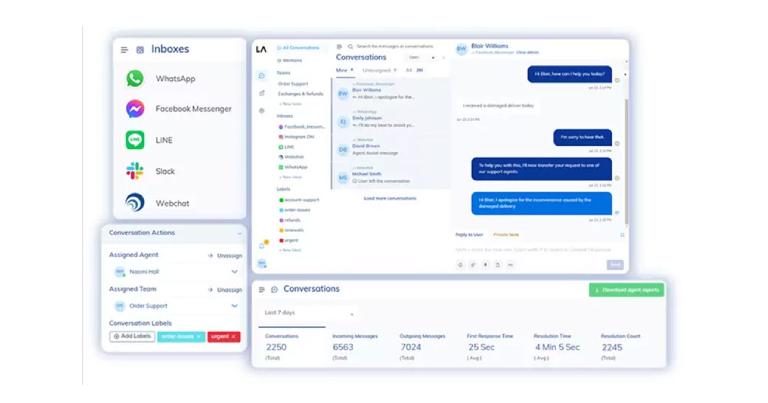
Modern airline retailing is moving from product distribution (fixed inventory, filed fares) toward contextual commerce (understanding demand and context, creating personalised offers). Agentic AI plays a key role in understanding customer intent because the traveller has a dialogue with the AI assistant that leads to the travel request. Airlines can dynamically create offers around individual context and service the orders likewise. “Besides the shopping stage, customers should experience their trip as one seamless interconnected journey, not as separate siloed functions – check-in, bag drop, security, boarding, etc,” Léopold shares. “AI will help travellers feel in control and supported with decision-making when it matters.”
Retailing, digital and customer experience are airline functions, and sometimes organisational silos – with respective priorities and systems – but they should not be felt by travellers. “I see that changes happening today in airlines, both the retailing transformation and the AI adoption, are accelerating a convergence,” says Léopold. “Overall commercial outcomes drive coordinated decision-making across the entire journey, with airline teams joining AI meetings together. Interestingly, as usual, data and technology will enable the coordination and convergence, but organisational alignment and the human factors will remain the bigger challenge.”
APEX FTE Ancillary & Retailing: “The diversity of participants creates dialogue opportunities that you don’t find anywhere else”
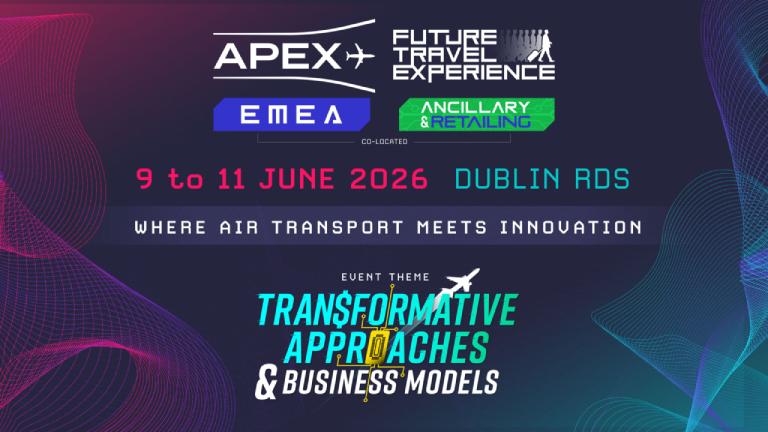
APEX FTE Ancillary & Retailing – Dublin, 9-11 June 2026 – will once again bring together airlines, airports, digital leaders and commercial innovators to explore the strategies and technologies shaping the next era of travel commerce. This year’s agenda focuses on key priorities including airline retailing transformation, airport commercial innovation, cross-stakeholder collaboration, ancillary revenue growth, personalisation, digital commerce strategies and how organisations can unlock new revenue opportunities across the end-to-end passenger journey.
“The strength of this event has always been that it brings together multiple stakeholders involved in the travel experience and focuses on making it better together,” Léopold highlights. “This ambition resonates with my work experience in the past two decades.”
The key trends across retailing and ancillaries in 2026 overwhelmingly relate to AI. Ancillary revenue is merging with personalised offer creation and connected third-party services. Contextual data from the search and from external sources influence the offer creation. The rich and personalised offers require an advanced level of servicing, at scale. “The APEX FTE Ancillary & Retailing agenda builds on these trends and combines strategic thinking (Why now? What value?) with practical implementation (How? What? With whom?), from speakers who can talk at both levels,” says Léopold. “The diversity of participants creates dialogue opportunities that you don’t find anywhere else, at your office or online.”
The aviation industry faces another crisis, where geopolitical tensions directly impact fuel prices and supply chains. Léopold adds that this is a context that requires more flexibility and resilience than ever across airline commercial and operational functions. “With that in mind, what makes this year most interesting is the rise of agentic AI. If you combine it with the retailing transformation already in progress, you observe a fascinating convergence that spans across distribution, e-commerce, servicing, loyalty, and customer experience. Agentic AI is still in the early stages, but it has major long-term implications, as significant as the shift to web and mobile commerce, maybe more. My message to stakeholders is simple and the same as every year: hear from your peers what changes are coming, understand the current and future solutions, and make fruitful connections that will help you during the coming months.”
Preparing for the next era of AI-enabled airline commerce
As aviation enters a new phase of commercial transformation, the rise of agentic AI is no longer a distant concept but a strategic reality taking shape across retailing, servicing, loyalty and customer engagement. Léopold’s perspective makes one point unmistakably clear: the industry is approaching a moment of convergence, where modern retailing ambitions and AI‑driven orchestration will increasingly depend on one another. At APEX FTE Ancillary & Retailing, this conversation moves from theory to action. With the unveiling of the ‘Commercial Agentic AI White Paper’, the dedicated Agentic AI Day, and a co‑creation session designed to translate ideas into implementable steps, attendees will gain both the strategic framing and the practical pathways needed to navigate what comes next. For leaders shaping the future of airline commerce, the message is simple: this is the moment to understand the shift, engage with peers, and position your organisation to thrive in an AI‑enabled commercial ecosystem. The next era of travel retailing is already emerging, and those who prepare now will define it.
Explore the full APEX FTE EMEA and APEX FTE Ancillary & Retailing agenda at a glance >> Register for the co-located APEX FTE EMEA and APEX FTE Ancillary & Retailing events – free for airlines, low-cost for airports >>You may also be interested in
12 technology and CX trends that can enhance airline and airport operations in 2026
FTE launches new podcast to explore the realities of successful innovation
ADR, MUC, AMS, IST, LHR, DOH & more among FTE Airport Digital Transformation Power List EMEA 2026