




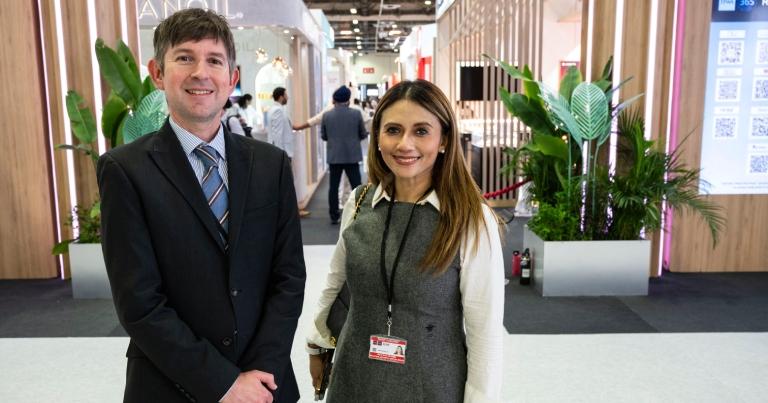
Future Travel Experience met with Hani Ezra Hussin, Senior General Manager of Commercial Services at Malaysia Airports Holdings Berhad, during the recent TFWA Asia Pacific Exhibition & Conference in Singapore. Malaysia Airports is positioning KL International Airport (KLIA) and its wider network as more commercially dynamic, experience-led and culturally distinctive gateways. In this interview, Hani Ezra shares how the operator is blending digital innovation, curated retail, omnichannel engagement and a stronger ‘Sense of Malaysia’ to drive passenger engagement and commercial growth. From immersive retail concepts and data-driven personalisation to infrastructure upgrades designed to enhance dwell time and spend, the conversation explores how Malaysia Airports is evolving the passenger journey while creating greater value for brands, partners and travellers alike.
Malaysia Airports is evolving as a more commercially focused and experience-led airport operator, with strong momentum and a strong commercial story to tell. “What is especially encouraging for us is that commercial engagement is growing faster than traffic,” says Hani Ezra Hussin, Senior General Manager of Commercial Services, Malaysia Airports Holdings Berhad. “In 2025, passenger movements across our local network reached 104.5 million, while total sales transactions rose 28.8% year-on-year to about 44 million. That tells us something important. It is not just that more people are passing through our airports. Travellers are engaging more deeply with the commercial environment, and that reflects the work we have done to make the airport offer more relevant, better curated and more aligned with what today’s traveller is looking for.”
Against the backdrop of Visit Malaysia 2026, Hani Ezra shares how Malaysia’s airports – particularly KL International Airport (KLIA) – are positioning themselves not just as transit points, but as gateways that can deliver stronger commercial value, a more distinctive ‘Sense of Malaysia’, and a more engaging experience for travellers.
“We are engaging partners from a position of confidence and signalling that Malaysia Airports is an increasingly attractive platform for brands looking to connect with a higher-spending, more experience-led traveller,” Hani Ezra explains.
From reset to continuous evolution
Malaysia Airports has been undertaking a broad commercial transformation, starting with the need to rethink how the airport experience should feel and function for a new generation of traveller. That means going beyond tenancy and looking more closely at curation, relevance, storytelling, digital integration and the overall quality of the passenger journey.
“Today, we see that work less as a one-time reset and more as the foundation for continuous evolution,” Hani Ezra shares. “The strategic groundwork has already been laid. What we are doing now is building on that momentum, refining the mix, testing new concepts and creating a commercial ecosystem that can respond faster to shifts in traveller behaviour. That is important because the airport commercial environment today has to be much more dynamic than it was in the past. For travellers, that should translate into a more seamless, engaging and memorable experience. For our retail partners, it creates a more agile environment where we can collaborate more closely, pilot ideas more quickly, and build offers that are more closely aligned to actual passenger demand. In many ways, KLIA is becoming a living lab for brands that want to engage an increasingly experience-led traveller.”
Traveller expectations have changed significantly. The traveller of 2026 is more digitally connected, more selective, and often more driven by relevance and experience than by traditional ideas of prestige alone. That is why Malaysia Airports’ strategy has shifted towards a more curated, experience-led commercial model.
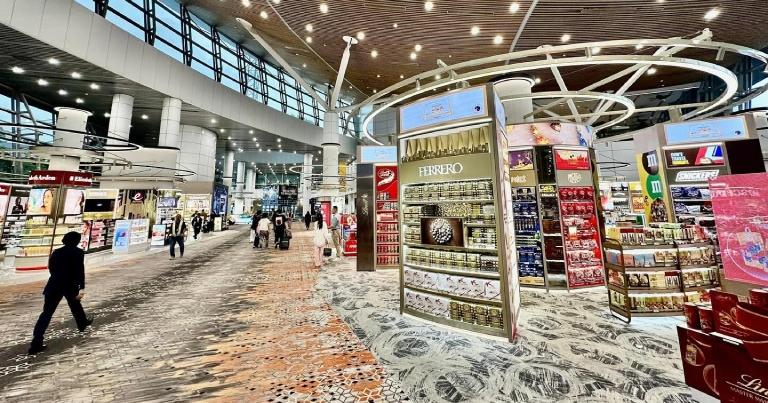
“At KLIA Terminal 1, for example, we have introduced brands such as Arabica, Läderach, Fred’s, Rituals and Charlotte Tilbury, while also investing in more immersive and comfortable experiences like RIMBA in the Satellite Building,” says Hani Ezra. “The intention is to make the airport feel less transactional and more thoughtfully put together. Digital platforms are also helping us engage travellers much earlier in the journey. The MYAirports app allows passengers to access real-time flight information, promotions, and shop and dine discovery before they even arrive. KLIA Airport Parking Online is another example. On the surface, it solves a functional need, but strategically it creates an earlier point of digital engagement, which allows us to connect travellers to relevant offers before they enter the terminal. The integration of the Tourist Privilege Card into the app works in a similar way by reducing friction and making it easier for travellers to convert intent into spend.”
Blending global appeal with a distinct Malaysian identity

The balance between showcasing local Malaysian culture and offering globally recognised brands is a deliberate part of Malaysia Airports’ commercial philosophy. “We absolutely recognise the importance of global brands in meeting traveller expectations, particularly at an international gateway like KLIA,” Hani Ezra shares. “But at the same time, we believe the most compelling airport environments today are the ones that feel distinctive, not generic. For us, ‘Sense of Malaysia’ means making the airport experience feel distinctly Malaysian through what travellers see, taste, buy and remember. That includes a stronger presence of local brands and flavours, products that reflect Malaysian culture and craftsmanship, and campaigns and experiences that bring local storytelling into the airport journey.”
This is not just a branding idea. It is increasingly a meaningful commercial proposition in its own right. Malaysia Airports saw gifts and souvenirs grow 42% year-on-year in 2025, highlighting a real appetite for products and experiences that reflect place, culture and identity. Initiatives like ShopLAH are important in this regard because they bring together shopping, dining and cultural storytelling in a way that feels distinctly Malaysian, while also giving travellers more reasons to engage and spend.
“So the goal is not to choose between local and global,” Hani Ezra explains. “It is to create the right blend. We want travellers to find the international brands they recognise, but we also want them to leave with a strong sense that they have passed through Malaysia, not just through another airport.”
Turning innovation into commercial impact

Innovation for Malaysia Airports is not about technology for its own sake. It is about using the right tools to create a better passenger journey and a stronger commercial outcome. One important area is omnichannel engagement. Through the MYAirports app and related digital touchpoints, Malaysia Airports is increasingly able to connect utility with conversion. Flight information, parking, privileges, promotions and discovery are no longer separate parts of the journey. They are becoming part of one connected ecosystem.
“ShopLAH is a good example of how we are extending that thinking beyond a simple retail campaign,” says Hani Ezra. “It brings together shopping, dining and cultural storytelling, while collaborations with Malaysian artists add a more experiential dimension to the commercial offer. In that sense, it helps translate our ‘Sense of Malaysia’ into something tangible by making local identity more visible, more interactive and more shoppable for travellers. The campaign also supports our broader ambition of making airport retail part of the visitor experience, rather than just a final purchase before departure.”
Another example is Malaysia Airports’ campaign strategy more broadly. ‘Licence to Win’ has shown how retail can be made more visible, more participatory and more rewarding. “It gives passengers a reason to explore, interact and spend, while also helping direct traffic towards priority outlets and partners,” Hani Ezra explains.
Infrastructure as a commercial enabler
Physical and digital infrastructure are both becoming increasingly important to commercial growth because they shape how smoothly passengers move through the airport, how much time they have to engage, and how effectively airports can connect them to retail and dining offers.
At KLIA, this starts with the physical environment. “The upgraded commercial spaces, including the revamped Eraman Duty Free Mall at Terminal 1 and refurbishment works at Terminal 2, are helping us create a stronger platform for retail performance,” Hani Ezra shares. “These are not simply cosmetic upgrades. They form part of a broader effort to improve passenger flow, relevance and overall dwell-time quality.”
At the same time, KLIA has also implemented a coordinated programme of terminal and operational enhancements across both terminals. “These include the introduction of the Vehicle Access Management System to improve kerbside traffic flow, enhanced wayfinding, and better trolley availability in high-traffic areas,” says Hani Ezra. “More recently, Terminal 2 has undergone significant upgrades, including the refurbishment of its boarding lounges into more open-concept spaces, as well as additional self-service check-in and bag drop facilities to improve peak-hour processing capacity. All of these improvements matter commercially because a smoother and less stressful airport journey creates more opportunities for passengers to browse, discover and spend.”
Shaping the next phase of growth
Looking ahead, Malaysia Airports’ priorities are centred on building on this momentum. This includes refining the commercial mix, strengthening local differentiation in a meaningful way, and creating greater value from each passenger journey.
“At the same time, we will continue to enhance connectivity across the passenger journey, ensuring that discovery, convenience and conversion work more seamlessly together,” says Hani Ezra.
Ultimately, the ambition is for KLIA and the winder network to be seen not just as transit points, but as curated gateways that offer a more engaging and memorable travel experience.
You may also be interested in
12 technology and CX trends that can enhance airline and airport operations in 2026
ADR, MUC, AMS, IST, LHR, DOH & more among FTE Airport Digital Transformation Power List EMEA 2026
12 innovations that have the potential to enhance CX and future-proof airport operations