




Airline retailing is entering a new era, and Turkish Airlines is positioning itself at the forefront of that shift. The discussion around airline retailing is often framed around distribution. In practice, it is much more about how much control the airline has over its product. For a long time, airlines have been operating within systems where the product is indirectly defined through fares, booking classes, and rules. That limits how far airlines can go in terms of differentiation. What is changing now with offer and order models is that the airline can explicitly define price – and manage the offer in context – at the moment of interaction rather than retrospectively. Ahead of his participation at the co-located APEX FTE EMEA and APEX FTE Ancillary & Retailing events, taking place in Dublin on 9-11 June 2026, Yılmaz Goralı, Vice President, Airline Retailing – Product Development, discusses how Turkish Technology – an innovative, tech-focused subsidiary of Turkish Airlines – see this not as a feature layer but as a structural shift. Goralı is participating in a session focused on ‘Retailing inspiration from across the aviation sector – AI, e-commerce, personalisation and more’.
Register for the co-located APEX FTE EMEA and APEX FTE Ancillary & Retailing events – free for airlines, low-cost for airports >>
“We operate a large technology landscape across the group, from passenger systems to cargo, MRO, and ground operations, so when we talk about retailing, we are looking at it as a system-level question,” Goralı shares. “We are building a Modern Airline Retailing platform that moves decision-making closer to the customer. Turkish Airlines is our primary environment where we actively operate and continuously refine these capabilities, but the ambition is broader. We are effectively productising this for the industry.”
Ancillary revenue has evolved from a supplementary stream into a core growth engine for airlines. Goralı highlights that, while ancillaries are often described as a revenue stream, in reality they have exposed the limitations of the existing model. “The moment you try to sell differentiated services on top of a base fare, you realise the system was never designed for that kind of variability,” he explains. “Fare construction logic, inventory controls, and distribution standards were not built for a world where the product changes based on who is buying, when, and through which channel.”
That is why product design is moving towards modular structures, pricing towards contextual logic, and engagement beyond the booking moment. “The interaction does not end at purchase – it continues through the journey, at check-in, at the airport, and inflight,” says Goralı. “Each of these becomes a retailing opportunity. What we observe across airlines is a gradual but decisive shift from fare construction to offer construction. The unit of commerce is no longer a fare, it is an offer.”
Turkish Airlines: Structuring offers depending on the passenger, the segment, or the service context
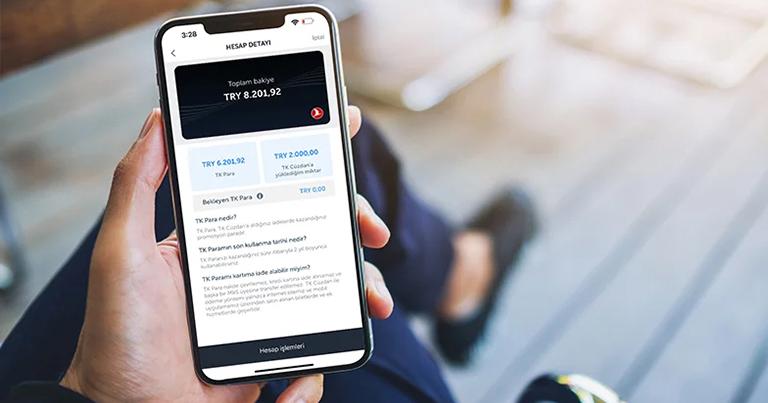
Turkish Airlines is advancing its retailing capabilities, particularly in areas like dynamic pricing, personalised offers, and bundling. Goralı emphasises how these capabilities come together rather than as isolated features. “We have built a merchandising layer on top of our in-house PSS, where offer composition, bundling logic, and pricing flexibility are managed together,” he shares. “This allows us to structure offers differently depending on the passenger, the segment, or the service context, and to apply conditions such as campaign quotas or restrictions in a controlled way.”
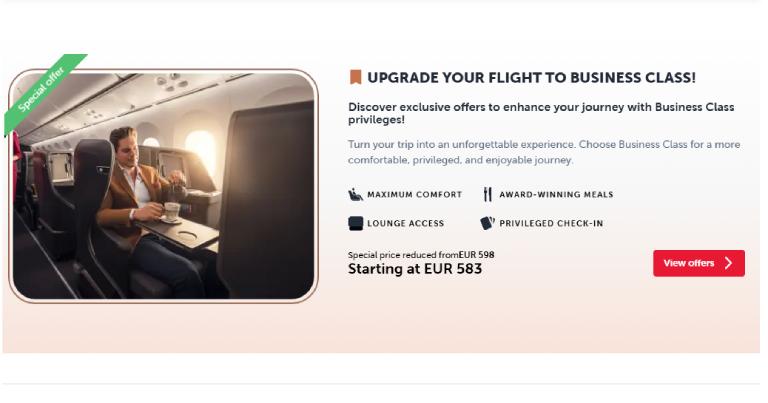
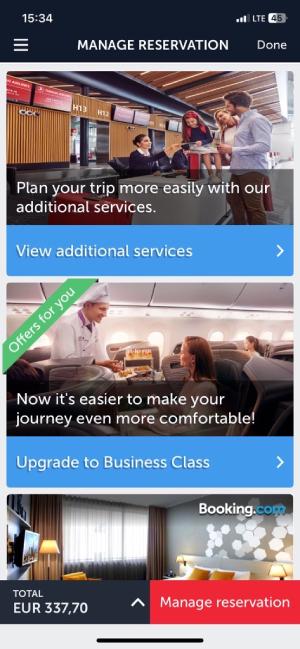
For example, Business Class upgrades are already offered dynamically, with pricing that responds to load, timing, and passenger context. The same logic is being extended across other ancillary products. Importantly, the merchandising capability itself is evolving from purely rule-based logic towards models that learn from demand patterns and conversion behaviour, creating a continuous feedback loop.
“These offers are not limited to a single point in the journey,” Goralı explains. “They extend across touchpoints, supported by a consistent order structure that ensures post-sale processes such as changes and refunds are handled properly. Without that foundation, these capabilities remain isolated and do not scale.”
Airlines are increasingly looking to e-commerce and other digital-native industries for inspiration. E-commerce is the obvious reference, but Goralı thinks the more instructive lessons come from how different industries structure their decision-making. “SaaS and subscription-based businesses, for example, treat the product as something that evolves based on context, usage, and customer segment,” he says. “That perspective is becoming quite relevant for airlines as the notion of the ‘ticket’ expands into a broader, more flexible offer. AdTech is another area worth paying attention to. The ability to evaluate context, intent, and value in real time and respond accordingly is highly developed in programmatic environments. As offer construction becomes more contextual, there is a great deal airlines can draw from there.”
Across these industries, the common thread is that product, pricing, and experience are orchestrated together rather than managed in silos. Airlines have historically kept these separate. Closing that gap is, Goralı shares, where the real transformation lies. “An important enabler here is that our teams at Turkish Technology bring experience from quite varied backgrounds, not only aviation but also retail, e-commerce, financial services, and AdTech. That cross-pollination is already embedded in how we work, and it shapes how we approach these questions.”
AI: “Less of a disruption to any particular channel and more of a lens”
There is growing debate around whether artificial intelligence (AI)-powered assistants will disrupt traditional distribution models. AI will primarily change the interaction layer, and the implications of that deserve careful attention. “If the interface increasingly shifts towards AI-driven assistants, visibility becomes more abstract,” says Goralı. “The customer may never directly encounter the airline’s own experience. In that environment, what differentiates you is the quality and structure of what you are able to offer. An airline that continues to rely on static fares becomes interchangeable. But one that can deliver structured, contextual offers through modern interfaces gives the assistant something genuinely useful to work with. In that scenario, AI becomes a multiplier rather than a threat.”
As we move towards environments where AI agents interact on both sides, constructing and evaluating offers autonomously, the quality of that underlying capability becomes even more decisive. “So I would say AI is less of a disruption to any particular channel and more of a lens,” Goralı explains. “Over time, it will make quite visible which airlines can truly retail and which are still essentially distributing fares.”
Partnerships are becoming increasingly important in expanding the airline retailing ecosystem. Indeed, as partnerships become more central, they also become more selective. Airlines need partners to expand capabilities across payments, data, distribution, and customer experience. “No airline should attempt to build everything in-house,” says Goralı. “However, it is equally important to be thoughtful about what remains under the airline’s own control. Offer creation, pricing logic, and order management sit at the heart of the commercial proposition. If those capabilities are outsourced, the airline is, in effect, no longer defining its own product. We focus on that core layer. Around it, what tends to work well is a modular ecosystem where different partners can contribute meaningfully without fragmenting the overall retailing logic. The aim is to maintain coherence at the centre while allowing genuine flexibility at the edges.”
The organisational shift behind Modern Airline Retailing
Building a true retailing capability requires strong data foundations and organisational alignment. The principal challenge, Goralı shares, is organisational rather than technical, which is sometimes underappreciated. “Airlines have evolved over decades with separate ownership of pricing, inventory, digital products, and operations,” he says. “Each area has its own logic and cadence. Retailing, by its nature, requires these functions to operate as a single decision system. Technology can certainly enable that convergence, and that is very much what we are working towards at Turkish Technology. But the alignment across teams is, in my experience, the more demanding part. It requires changes in governance, in responsibilities, and in how decisions are made on a daily basis.”
The key difference in Turkish Airlines’ approach is that retailing is not treated as an overlay on existing systems. “Many airlines are adding capabilities incrementally, which improves certain touchpoints but leaves the underlying logic unchanged,” Goralı explains. “Our approach is more structural, rethinking how offers are created, priced and managed end-to-end.”
This becomes particularly relevant at the scale Turkish Airlines operates. With a network of over 350 destinations, with more countries than any other, the airline serves a highly diverse customer base across different markets, behaviours, and travel contexts. That level of diversity forces it to design systems that can handle variation consistently, not just in isolated scenarios.
“It is also important that this capability is built in-house,” Goralı emphasises. “Being part of the Turkish Airlines Group means technology and operations are not separated by a vendor relationship. This allows us to iterate faster, respond directly to operational realities, and maintain tighter alignment between commercial intent and system behaviour. That combination of scale, operational proximity, and in-house development creates a level of consistency and adaptability that is difficult to achieve otherwise.”
Goralı expects the transition to Modern Airline Retailing to be gradual and, in places, rather untidy. “Legacy systems will not disappear overnight. PSS platforms, GDS connections, and existing commercial agreements carry deep dependencies. What we will see is a hybrid environment where new and old models coexist, sometimes within the same airline.”
One area Goralı highlights is loyalty. The carriers that manage to move loyalty from a standalone programme into something that genuinely informs the offer will have a considerable advantage. “That shift, from loyalty as a marketing tool to loyalty as a data and personalisation layer, is one of the more meaningful changes ahead,” he says. “The challenge will be managing the broader transition thoughtfully, without losing coherence in the product or consistency in the customer experience. The airlines that do this well will not necessarily be those with the most ambitious roadmap. They will be the ones that can execute with discipline while the landscape continues to shift. Retailing, ultimately, is not a destination. It is an operational discipline.”
APEX FTE EMEA and Ancillary & Retailing: “A candid exchange of experience”
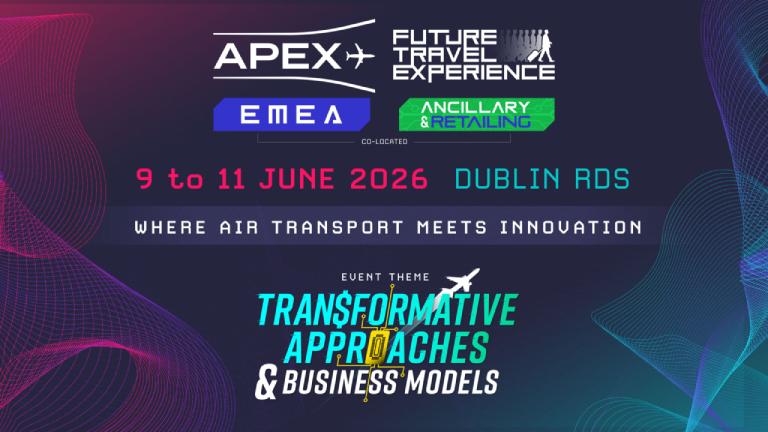
Looking ahead, Goralı is eager to participate at the co-located APEX FTE EMEA and APEX FTE Ancillary & Retailing (Dublin, 9-11 June 2026), where he will share the airline perspective in a session focused on ‘Retailing inspiration from across the aviation sector – AI, e-commerce, personalisation and more’. “For me, the most rewarding aspect of these gatherings is the candid exchange of experience. There is already broad alignment across the industry on the general direction. What I find far more illuminating is how different organisations are navigating the practical realities of the transition. Where are the genuine constraints? What has worked well and what has proven more difficult than expected? What looked perfectly sound on a roadmap but did not quite survive contact with reality? Those conversations, in my experience, tend to be considerably more valuable than any prepared presentation. And Dublin strikes me as a rather good setting for precisely that sort of exchange.”
The road to Modern Airline Retailing: Shaping the next era of airline commerce
As Turkish Airlines and Turkish Technology push deeper into Modern Airline Retailing, what becomes clear is that the shift underway is far more than a technical upgrade – it is a redefinition of how an airline understands, constructs, and delivers its product. As Goralı notes, “the unit of commerce is no longer a fare, it is an offer,” a shift that demands new organisational behaviours as much as new systems. With scale, in‑house capability, and a structurally modern approach, Turkish Airlines is positioning itself not just to adapt to the industry’s evolution but to help shape it. The transition will be gradual and hybrid, yet the carriers that succeed will be those that maintain coherence while embracing contextual, data‑driven retailing. In that sense, Turkish Airlines’ work is less about chasing innovation and more about building the operational discipline that will define the next era of commercial opportunity.
Register for the co-located APEX FTE EMEA and APEX FTE Ancillary & Retailing events – free for airlines, low-cost for airports >>You may also be interested in
12 technology and CX trends that can enhance airline and airport operations in 2026
FTE launches new podcast to explore the realities of successful innovation
ADR, MUC, AMS, IST, LHR, DOH & more among FTE Airport Digital Transformation Power List EMEA 2026