





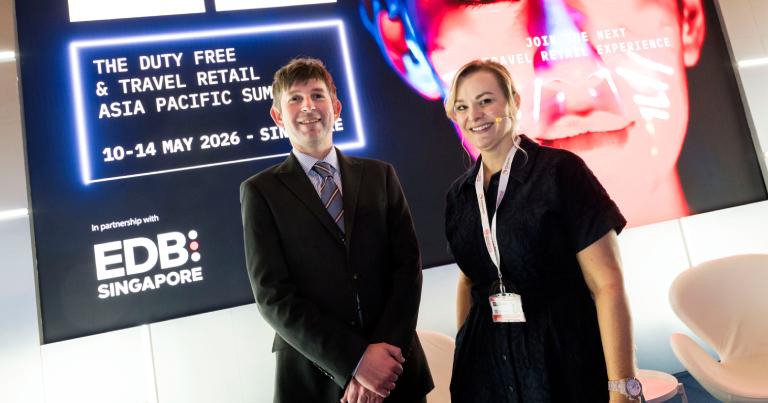
Ahead of the upcoming APEX FTE Ancillary & Retailing event (Dublin, 9-11 June 2026), Future Travel Experience was recently in Singapore at TFWA Asia Pacific Exhibition & Conference, exploring the innovative technologies and experiential concepts shaping travel retail in what is the most influential, dynamic and fastest-growing region globally. We met with Lucy Thomas, Head of Retail at Auckland Airport, who in this interview discusses the importance of blending curated retail, digital engagement, omnichannel experiences and local identity to create more rewarding and commercially effective passenger journeys. From rethinking passenger flow and retail mix to enhancing pre-travel digital engagement through Auckland Airport The Mall, the conversation explores how airports can evolve beyond transactional environments into more connected, relevant and destination-led experiences.
Register for the co-located APEX FTE EMEA and APEX FTE Ancillary & Retailing events – free for airlines, low-cost for airports >>Rethinking the airport retail model
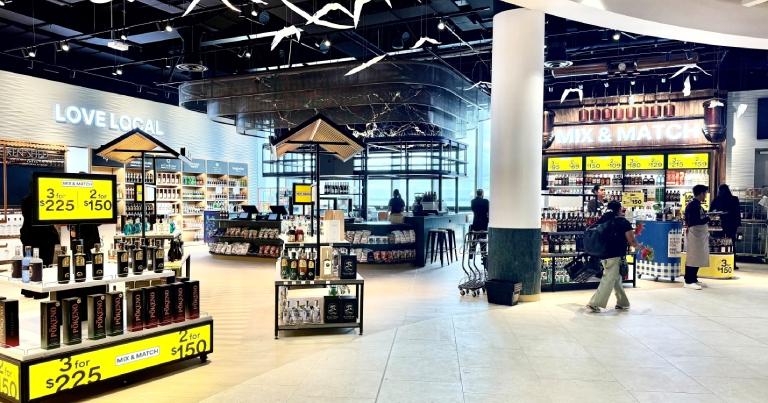
For Thomas, one of the most important shifts taking place in travel retail is a growing recognition that airports, retailers and brands all influence commercial performance in fundamentally different ways. “The airport perspective in travel retail is inherently different – and that matters,” Thomas explains. “Retailers and brands operate in a daily trading rhythm, focused on conversion, margin and execution. Airports sit a step back from that. We shape the environment in which that trading happens – from passenger flow and dwell time to spatial design and increasingly digital touchpoints. That gives us a more structural lens on behaviour.”
This broader operational perspective is especially important at a time when the traditional airport retail model is being reshaped by changing traveller expectations and increasingly connected consumer behaviours.
“The traditional ‘airport retail bubble’ has broken down,” says Thomas. “Customers arrive informed, with intent already shaped by digital and social channels, including both local and overseas content. That requires a more deliberate response, and we can’t rely on legacy playbooks.”
For Auckland Airport, this means viewing retail as a strategic part of the wider passenger journey, rather than simply a transactional revenue stream. “Our starting point is clear: airport retail is not just transactional,” Thomas shares. “Customer insight consistently shows it plays a role in how people feel about their journey. So, the focus is on making the experience feel rewarding – something that adds to the trip.”
Curated retail and a stronger sense of place
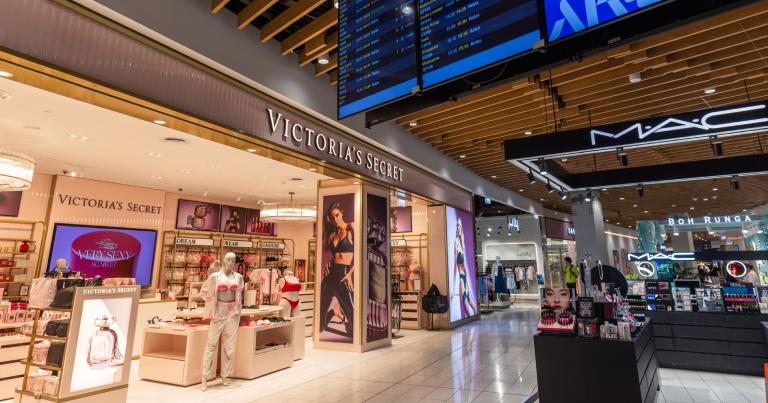
Central to Auckland Airport’s strategy is creating an experience that reflects both the best of New Zealand and the expectations of today’s international traveller. “We see retail as part of our role as New Zealand’s gateway,” says Thomas. “It’s one of the ways we express who we are as a place, not just how we generate revenue.”
That requires careful balance. International passengers expect familiar and globally recognised brands, while local travellers and visitors alike increasingly value authenticity and a stronger connection to place. “There’s strong demand for familiar, trusted brands, but also an expectation for something more local and expressive of place,” Thomas explains. “Pure high-street concepts don’t always translate easily into an airport environment – particularly given the scale, hours of operation and consistency required. So we tend to work in the middle ground: combining local character with operators who can deliver at scale.”
Food & beverage is one area where Auckland Airport sees particularly strong potential to create more distinctive passenger experiences. The airport is currently undertaking a major refresh of its international terminal F&B offer, with a focus on showcasing contemporary Auckland and New Zealand food culture. “There’s a real opportunity here,” says Thomas. “New Zealand food culture has strong momentum, and the airport plays a role in presenting that to both locals and international visitors. It’s not just about food – it’s about creating a sense of place that feels authentic, without tipping into cliché.”
Innovation through observation and simplicity
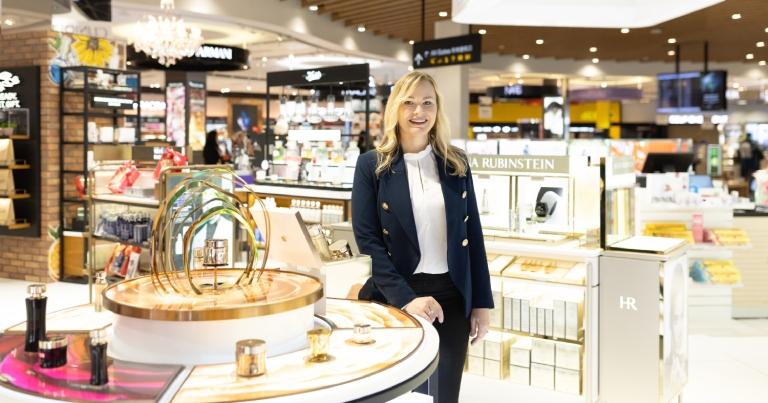
While innovation is often associated with advanced technology, Thomas believes some of the most effective changes come from closely observing passenger behaviour and challenging assumptions. “What we’ve learned is that innovation in this environment is often quite simple,” she says. “It’s about observing behaviour and being willing to challenge assumptions.”
One example involved adjusting a passenger walking route based on how travellers were naturally moving through the terminal environment. Another came from identifying strong demand among New Zealand travellers for a global brand they were actively seeking offshore. “That led to a direct engagement and ultimately a new store in a high-profile location complemented by an online presence through our Auckland Airport The Mall platform,” Thomas explains. “It’s created a clear drawcard, encouraging passengers to spend more time airside, which benefits the brand, the retailer and the airport.”
The airport has also recently introduced a single-operator duty free model, representing what Thomas describes as “a step change in how we think about range, consistency and long-term category performance.”
Across all of these initiatives, the common theme is agility. “Observe, test and be prepared to do things differently,” she says.
The growing importance of omnichannel engagement
Digital engagement is also becoming increasingly central to how airports shape retail and dining experiences, particularly as passengers begin planning their journeys earlier. “The reality is that airport digital ecosystems are complex,” Thomas explains. “Hundreds of systems need to work together safely and reliably, so innovation is rarely plug-and-play.”
However, customer expectations continue to evolve rapidly. Self-service technologies, digital ordering and integrated customer touchpoints are no longer simply convenience features – they are increasingly important operational and commercial tools. “Reducing queues and giving customers more control over their time, along with a better view of the choices on offer, is increasingly important – particularly in a constrained labour environment,” says Thomas.
For Auckland Airport, one of the biggest opportunities lies in extending engagement into the pre-travel phase. “Travellers are engaging earlier – researching, planning and forming intent before they arrive,” Thomas shares. “That changes the role of digital.”
Auckland Airport The Mall plays an important role in this strategy by helping passengers discover products and offers before entering the terminal environment. “It’s less about replicating the in-airport transaction online, and more about extending the experience into the planning phase,” Thomas explains. “If customers know what’s available beyond security before they arrive, it changes how they move, how long they dwell and how they engage.”
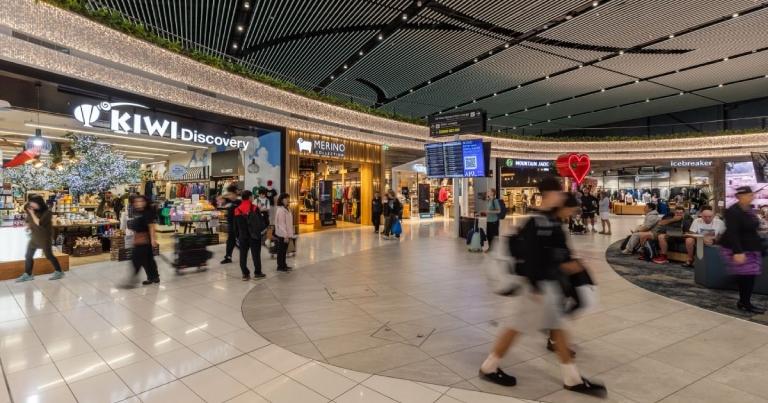
Airports evolving beyond transit environments
Looking ahead, Thomas believes airports are increasingly becoming hybrid environments that must flex according to different traveller needs and mindsets. “Being a ‘destination’ isn’t a fixed position,” she says. “It’s about recognising your role in the moment and designing for it.”
At Auckland Airport, this means understanding the different expectations associated with domestic and international journeys, while also preparing for a more integrated future terminal environment. “Domestically, customers prioritise ease and familiarity; it’s more of an everyday experience,” Thomas explains. “Internationally, there’s more openness to discovery and stepping out of the everyday.”
As Auckland Airport progresses towards an integrated terminal model, the focus will remain on ensuring that different passenger journeys still receive differentiated experiences where appropriate. At the same time, airports face growing competition for passenger attention. “Not every passenger has the time or inclination to engage deeply in the airport environment,” says Thomas. “The question is how we connect early enough, and in the right way, to make time spent in the airport feel intentional and valuable, rather than incidental.”
Ultimately, Auckland Airport’s evolving retail strategy reflects a wider industry shift: airports are no longer simply places passengers pass through, but environments that can actively shape perception, engagement and experience. By blending curated retail, digital engagement, omnichannel experiences and a strong sense of local identity, Auckland Airport is seeking to create passenger journeys that feel more connected, more relevant and more memorable, while also delivering stronger long-term commercial value for brands, retailers and the airport ecosystem alike.
Register for the co-located APEX FTE EMEA and APEX FTE Ancillary & Retailing events – free for airlines, low-cost for airports >>You may also be interested in
12 technology and CX trends that can enhance airline and airport operations in 2026
ADR, MUC, AMS, IST, LHR, DOH & more among FTE Airport Digital Transformation Power List EMEA 2026
12 innovations that have the potential to enhance CX and future-proof airport operations