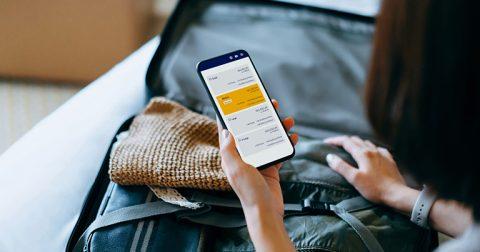





Passenger expectations are evolving rapidly, with airports challenged to deliver journeys that are not only more digital and personalised, but also more inclusive, intuitive and resilient. As the industry embraces new technologies and data-driven innovation, ensuring the right balance between digital self-service and meaningful human support has become central to delivering exceptional customer experiences. In this interview, ahead of her participation at the 20th anniversary FTE Global (Dallas, Texas, 8 to 10 September 2026), Martha Edge, Innovation & Experience Director, Charlotte Douglas International Airport (CLT) – a Corporate Partner of the FTE Digital, Innovation & Startup Hub – shares her insights on creating more inclusive passenger journeys, advancing accessibility beyond compliance, harnessing innovation during disruption, and why collaboration across the aviation ecosystem is essential to shaping the future of travel.
See the FTE Global schedule at a glance >> Register for FTE Global >>Designing an inclusive passenger experience around every traveller’s needs

At FTE Global, Edge is participating in the ‘CX Leaders Symposium’, which is focused on how the industry can better serve the needs of all passengers. Bringing together customer experience leaders from across the air transport sector, the session will explore how airports and airlines can create more inclusive, personalised and seamless journeys by striking the right balance between digital innovation and human assistance, leveraging data more effectively, enhancing accessibility beyond compliance, and improving the passenger experience during both routine operations and disruption.
“An inclusive passenger experience anticipates the full range of traveller needs, both known and unspoken, so every person feels supported, welcome, and able to navigate their journey with ease,” Edge shares. “At CLT Airport, this vision shapes how we design spaces, deliver services, and innovate across the terminal. CLT’s customer-focused and accessibility teams stay attuned to evolving expectations, ensuring we not only meet but exceed service and compliance standards.”
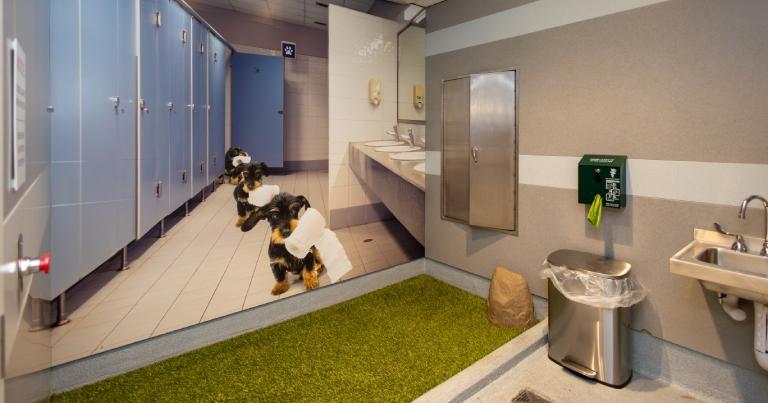
This commitment shows up in tangible ways: educational and experiential exhibits that enhance the journey, accessible amenities such as service animal relief areas, nursing rooms, universal changing stations, and continuous improvements to signage, translation support, and wayfinding.
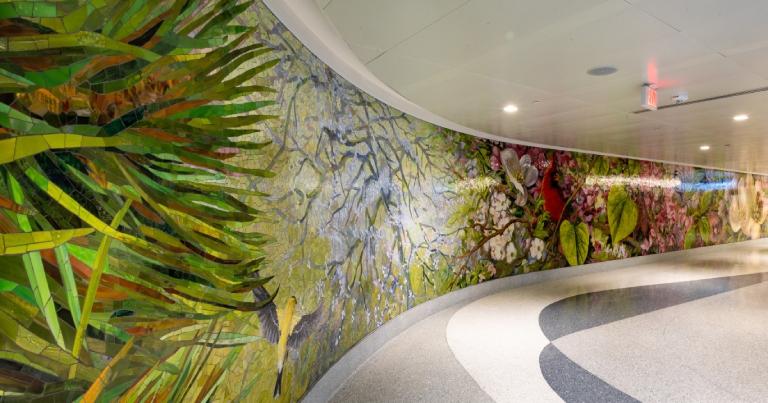
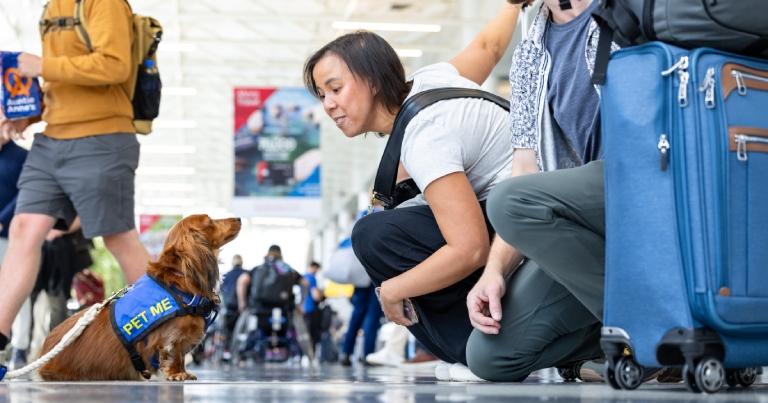
“We also strategically position staff and volunteers to provide guidance when and where travellers need it most,” Edge explains. “And we extend inclusivity into moments of delight, with interactive aviation displays, calming art, and therapy dogs that ease travel stress – all designed to meet diverse needs while elevating the passenger experience. In short, CLT’s approach to inclusivity drives innovation by ensuring every solution, amenity, and experience is shaped around enabling all passengers to feel confident, comfortable, and cared for.”
Balancing digital innovation with the human touch
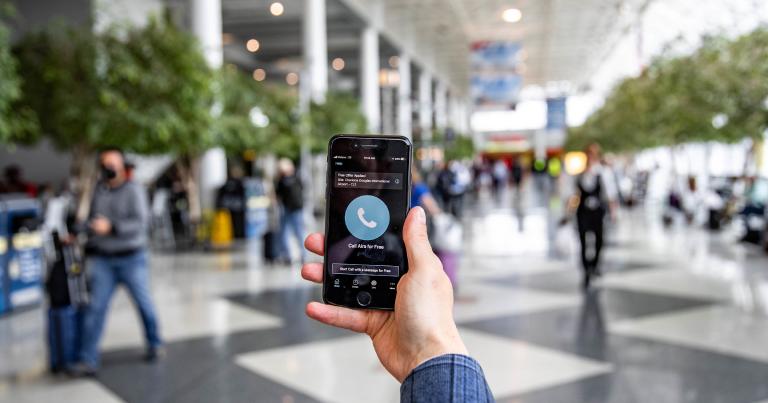
Passenger expectations continue to evolve, with some travellers embracing digital self-service while others still value face-to-face support. It is crucial, therefore, to strike the right balance between technology and human interaction to ensure every passenger feels confident and well supported throughout their journey.
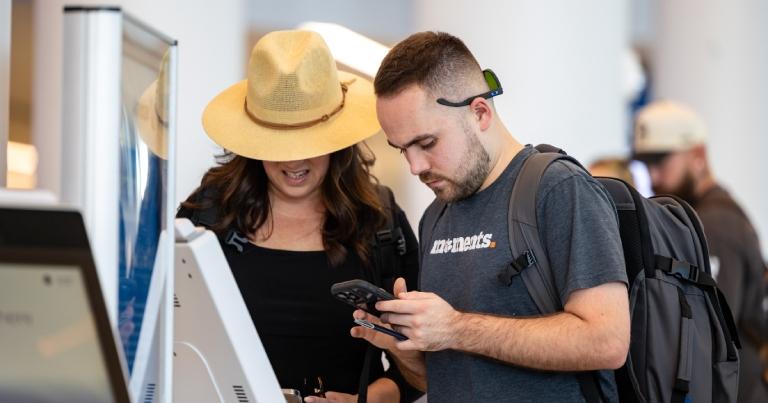
“As technology solutions continue to expand across the airport environment, it’s important not to lose focus on developing strong passenger-facing teams to support and reinforce those solutions,” says Edge. “As more interaction processes shift into travellers’ hands, maintaining the right balance between digital self-service and human assistance can feel like a guessing game. However, with increasing access to data on the types of customers moving through the facility, it’s becoming easier to anticipate their needs and tailor the level of support accordingly.”
Innovation is often associated with new technology, but great customer experience is about much more than digital tools. Over the last 20 years, the shift toward traveller self-sufficiency has transformed the airport experience. Where customers once waited in long, first-come, first-served lines at ticket counters staffed with agents, today’s self-service model empowers travellers to take control of their journey. This evolution has significantly increased customer satisfaction.
“To me, innovation means continually examining how we operate, identifying the challenges we face, and finding solutions – whether through technology or improved processes,” Edge shares. “At CLT, we’ve spent years looking strategically at how this shift toward self-service has changed the role of human interaction. As travellers rely more on digital tools, the moments when they do engage with staff become even more important. That understanding is what led to one of our most meaningful initiatives: CLT’s Customer Centric Culture programme. This initiative re‑centres the importance of customer service by helping all badge holders better understand traveller needs and how each of us can contribute to a smoother, more supportive experience. It’s about bringing consistency, empathy, and human connection back into the passenger journey.”
Moving beyond compliance to create truly inclusive airport experiences
Accessibility is becoming an increasingly important focus for airports worldwide, moving beyond compliance and creating an airport experience that is genuinely welcoming and intuitive for passengers with diverse needs.
“Moving beyond compliance means understanding accessibility as an evolving, human‑centred responsibility rather than a checklist,” Edge explains. “To do that, we must anticipate the changing needs of our travellers in real-time. Hearing directly from them is essential, through conversations in the terminal, digital feedback, and ongoing observation of how people navigate our spaces. It also requires looking beyond our own industry. By studying other sectors where moving people efficiently and comfortably is the core business, we gain valuable insights into what feels intuitive, inclusive, and genuinely supportive. Today, there is greater awareness and understanding of diverse needs than ever before. When we actively listen, learn, and adapt, we create an airport experience that doesn’t just meet requirements, it truly welcomes every traveller.”
From uncertainty to reassurance: The role of innovation during disruption
When disruption occurs, passengers judge the experience by how well they are informed and supported. Innovation plays a vital role in helping airports deliver better communication, reassurance and service during irregular operations.
“Innovation plays a significant role in shaping the passenger experience, especially during irregular operations,” says Edge. “At its core, innovation is about continually re-evaluating and improving processes, tools, and communication. When disruptions occur, having the right tools in the right places can reduce the natural anxiety that comes with travel. Real-time, plain-language information goes a long way in helping travellers feel informed, reassured, and empowered to make the decisions that work best for them. Thinking back to my days working the gates, before we were all so digitally connected, communication during delays looked very different. Airline policy required that delay updates be announced every 15 minutes, even if nothing had changed. The moment the first announcement was made, the gate podium would be flooded with customers asking about connections, rebooking options, or simply wanting more detail. That crowding slowed our ability to provide individualised service and reassurance. Over the years, I’ve seen airlines work hard to find that balance between timely communication and customer support, and those efforts truly highlight innovation in aviation at its best.”
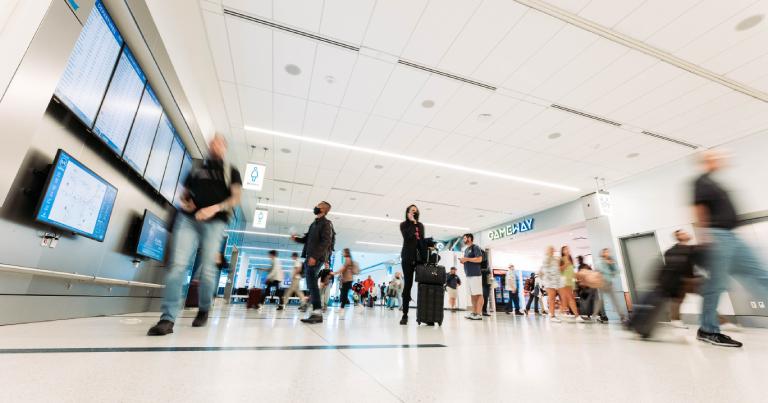
For airports, rapid communication is equally crucial and digital tools are now central to delivering that. Dynamic signage, real‑time updates, and integrated information systems help manage expectations and guide passengers through whatever operational challenges arise. “These innovations allow airports to communicate more clearly, more quickly, and more consistently – ultimately creating a more confident, informed, and supported passenger experience during both normal and irregular operations,” Edge adds.
Creating seamless journeys through smarter design and industry collaboration
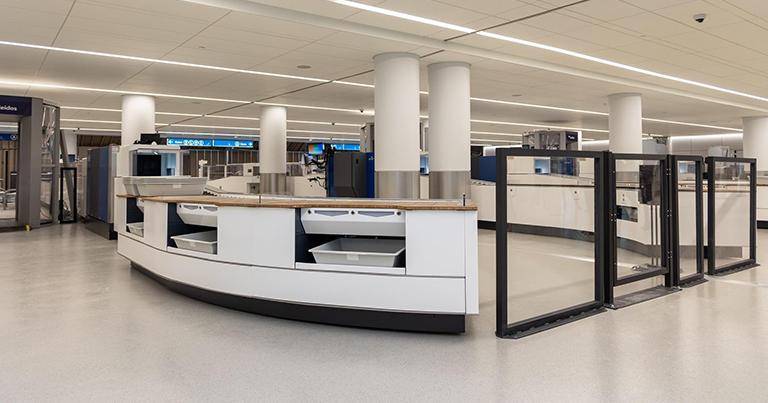
As airports become smarter and more connected, Edge highlights that opportunities to simplify the passenger journey really come from taking a close look at the known bottlenecks we all experience in airports. “Traffic congestion, check-in, screening queues, and those vertical circulation areas where everyone funnels into elevators or escalators are key spots where frustration builds,” she explains. “Changing how people move through these spaces is paramount. The default behaviour is to follow the crowd, which only magnifies the discomfort of crowding and slows everyone down. As airports become smarter and more connected, I expect to see meaningful advancements that speed up these processes without compromising safety or security. Biometric processing is a great example of that already gaining traction, offering faster, more intuitive ways for passengers to move through required touchpoints.”
Looking ahead, Edge believes the real opportunity is in making these friction points – many of which travellers have simply come to accept – feel more seamless. “By combining thoughtful design with smart technology, airports can create a journey that feels more intuitive, less stressful, and far more efficient from curb to gate.”
Collaboration is increasingly recognised as essential to delivering a seamless end-to-end journey. It is vital that airports, airlines, government agencies and technology partners work together on customer experience innovation, with significant opportunities for progress. “Collaboration is, in my humble opinion, the single most important factor in delivering a seamless end-to-end journey,” says Edge. “No single entity can manage the travel experience from start to finish on its own. Airports, airlines, government agencies, and technology partners each own different phases of the journey and having a shared understanding of those phases is key. When everyone in the ecosystem works together, the experience becomes stronger, more consistent, and ultimately better for the customer – who, by the way, belongs to all of us.”

FTE Global: “Building a community that supports, challenges and inspires each other as our industry evolves”
Looking ahead, Edge is eager to participate in the ‘CX Leaders Symposium’ at FTE Global (Dallas, Texas, 8 to 10 September 2026). “I hope delegates leave with a renewed focus on returning to the core of customer service – taking the best of what worked in the past and pairing it with everything we’ve learned over the last 20+ years,” she shares. “Each day, we should operate with a clear understanding of what brought us into this industry and what keeps us here: the customer. By evolving with customer needs and truly harnessing data, tools, and insights, we can move into a new era of customer satisfaction and set a stronger foundation for the future of travel.”
Edge adds that FTE Global is valuable as platform for connecting with like-minded aviation ecosystem change-makers, both new and familiar. “FTE consistently creates incredible opportunities for meaningful networking across the globe. The conference sessions are always thoughtful and relevant, and the solution providers in the expo area bring forward ideas and technologies that spark real conversation and innovation. On a personal note, some of my most valued professional relationships started at events just like this. Meeting airport and airline counterparts over the years has led to connections that have grown into longstanding, career-long relationships. I’m genuinely grateful for that network – people I can call to ask questions, bounce around ideas, or simply get a different perspective. Those relationships have shaped my career in ways I couldn’t have predicted, and they’re a big part of why I look forward to gatherings like FTE Global. It’s a chance to continue building a community that supports, challenges and inspires each other as our industry evolves.”
The next generation of passenger experience: Where technology meets human connection
As airports continue to evolve, delivering exceptional passenger experiences will depend on far more than adopting the latest technologies. The real opportunity lies in combining digital innovation with human-centred design to create journeys that are more inclusive, personalised and resilient. From harnessing data to better understand traveller needs to embedding accessibility into every stage of the passenger journey, the focus is increasingly shifting towards experiences that empower every traveller to move through the airport with confidence and ease.
As Edge’s insights demonstrate, achieving that vision requires a holistic approach that brings together innovation, empathy and collaboration. Airports, airlines, government agencies and technology partners all have a vital role to play in designing seamless end-to-end journeys, while ensuring that digital transformation enhances rather than replaces meaningful human interaction. These themes will be central to the ‘CX Leaders Symposium’ at FTE Global, where industry leaders will explore how the aviation sector can better serve the needs of all passengers. For organisations seeking to build more customer-centric, accessible and future-ready airport experiences, the discussion promises to provide valuable insights into the next generation of passenger experience innovation.
Hear more from Martha Edge, Innovation & Experience Director, Charlotte Douglas International Airport (CLT), on the FTE Podcast. In conversation with host Max Gosney, Managing Director, Future Travel Experience, Edge explains how CLT has developed an Innovation & Experience division focused on the full customer journey, bringing together areas including marketing, innovation implementation, business intelligence, customer engagement, art, volunteers and passenger experience design.
Listen to the podcast episode >>What’s next – FTE Global, Dallas, Texas, 8 to 10 September 2026, and APEX FTE EXPO, Singapore, 18 to 19 November 2026

You may also be interested in
12 technology and CX trends that can enhance airline and airport operations in 2026
Vote now: What will be aviation’s most game-changing technology over the next 20 years?