





Data sharing is becoming a critical enabler of the next generation of airport and airline operations. As the aviation industry embraces digital transformation and artificial intelligence (AI), the ability to share trusted, high-quality data securely and in real time across organisational boundaries is unlocking new opportunities to improve passenger experience, operational efficiency and business performance. Yet achieving these benefits requires more than technology alone – it depends on common standards, strong governance and close collaboration between industry stakeholders. In a series of interviews, members of the FTE Data Sharing Think Tank from Miami International Airport, International Airlines Group, Barich, Inc., Metropolitan Washington Airports Authority and Reno-Tahoe Airport Authority share their perspectives on where the greatest opportunities lie. They explore what distinguishes effective data sharing from simply exchanging more information, and the practical steps organisations can take to build the trusted data foundations needed to power the future of aviation. It is a topic that will be further discussed in-depth in the FTE Data Sharing Think Tank session at the 20th anniversary FTE Global (Dallas, Texas, 8 to 10 September 2026).
See the FTE Global schedule at a glance >> Register for FTE Global >>

Miami International Airport on why trusted data is the foundation for AI-enabled aviation
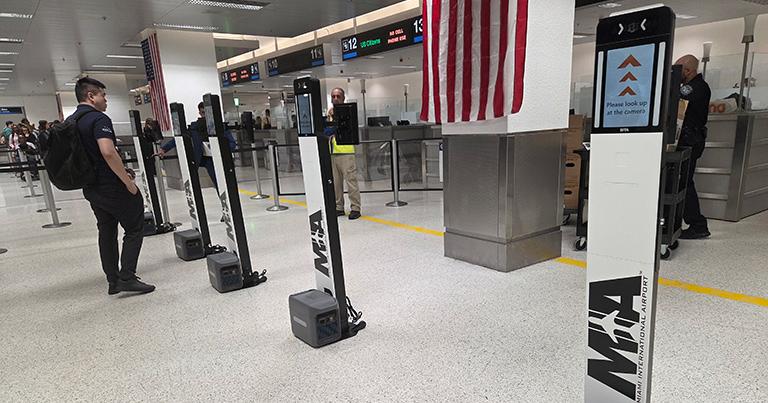
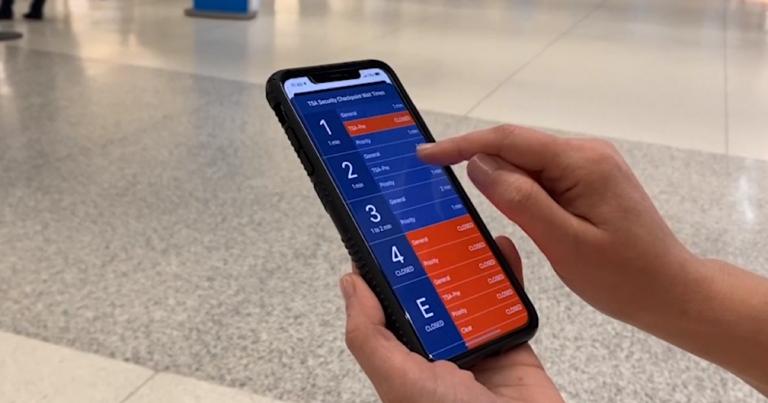
Miami International Airport – a Corporate Partner of the FTE Digital, Innovation & Startup Hub – sees the greatest opportunity in creating a connected airport ecosystem where operational data can be shared securely and in real time across airlines, government agencies, ground handlers, concessionaires, and airport operations.

“Our goal has always been to make the passenger journey as seamless as possible – from curb to gate and beyond,” says Maurice Jenkins, Chief Innovation Officer, Miami International Airport. “That requires every stakeholder to have a common operational picture. When trusted data is shared across partners, we can better anticipate disruptions, optimise gate and stand allocation, improve passenger flow, reduce turnaround times, and provide travellers with more accurate, personalised information throughout their journey. Data sharing also enables us to maximise the value of technologies we’ve invested in, including biometrics, self-service solutions, digital passenger communications, and operational analytics. Ultimately, better collaboration through data improves not only the passenger experience but also the efficiency and resilience of the airport.”
Effective data sharing is about creating actionable intelligence – not simply moving more data between organisations. “Success depends on having trusted, high-quality data that is standardised, governed, and shared with a clear purpose,” Jenkins explains. “Every organisation generates enormous amounts of information, but unless that data is accurate, timely, interoperable, and understood consistently by all stakeholders, it doesn’t create value.”
Miami International Airport has learned that technology alone isn’t enough. Effective data sharing requires governance, agreed standards, strong partnerships, and a willingness to collaborate across organisational boundaries. “When those elements come together, data becomes a strategic asset that supports faster decisions, improves situational awareness, and delivers better outcomes for passengers and airport partners alike,” Jenkins shares.
As artificial intelligence (AI) becomes increasingly embedded across aviation, trusted, well-governed data sharing is fundamental to unlocking its full potential. “AI can only be as good as the data that supports it,” says Jenkins. “If data is fragmented, inconsistent, or lacks proper governance, AI will simply amplify those issues. Conversely, trusted, well-managed data allows AI to generate meaningful insights that improve operational performance, customer service, predictive maintenance, passenger flow, and resource planning.”
Miami International Airport has been exploring AI in areas ranging from operational efficiency to document management because it recognises that AI is becoming an essential capability across aviation. “However, success starts with establishing a strong data foundation built on quality, security, governance, and trust,” Jenkins emphasises. “Those organisations that invest in their data today will be the ones best positioned to realize AI’s full potential tomorrow.”
For organisations that recognise the value of better data sharing but don’t know where to begin, Jenkins recommends some practical first steps. “My advice would be to start with a business problem, not a technological solution,” he says. “Identify a challenge where better data sharing can deliver measurable value – whether that’s improving turnaround performance, enhancing passenger communications, or reducing operational disruptions. Then bring together the stakeholders involved and establish common objectives, data ownership, governance, and success measures from the outset. Don’t try to transform everything at once. Pilot projects provide an excellent way to validate ideas, demonstrate value, and build confidence before scaling across the organisation.”
Jenkins adds that Miami International Airport has found testing innovative technologies in controlled environments allows it to learn quickly, minimise risk, and create solutions that can be expanded over time. “Finally, remember that successful data sharing is built on trust as much as technology. Investing in relationships, common standards, and collaborative governance is every bit as important as investing in digital platforms.”
International Airlines Group on making data quality and governance a priority
International Airlines Group (IAG) – a Corporate Partner of the FTE Digital, Innovation & Startup Hub – believes the greatest opportunity lies in using high-quality, trusted data to improve operational performance, recognising that operational excellence is intrinsically linked to both the passenger experience and business performance across the wider air transport ecosystem.

“Today we have the necessary technology and tools to create and share accurate, consistent and reliable data across all areas of the operation,” says Keith Walters, Group Transformation Lead, International Airlines Group / IAGi. “My role focuses on the operation, but this naturally ties in with the customer experience, so these areas are linked. Likewise, the business performance of our suppliers is linked to the overall operational performance. By focusing on the operation, we will achieve the maximum benefit.”
For Walters, effective data sharing is not about exchanging greater volumes of information but ensuring that the data being shared is accurate, timely and trustworthy. “Data is only as good as its quality. ‘Rubbish in, rubbish out’ is still true today,” he explains. “We need to be confident in both the quality of our data and the timeliness of its transfer. Part of that process is also ensuring we safeguard that data. Public confidence in data management is low and we need to get this right.”
Strong data governance is therefore fundamental to effective collaboration, ensuring that organisations not only protect sensitive information but also uphold the core principles of responsible data management. “Effective data management includes ensuring that we comply with and uphold data principles – accurate, necessary, lawful and timely,” Walters emphasises.
As artificial intelligence (AI) becomes increasingly embedded across aviation, Walters believes trusted, well-governed data will be essential to ensuring AI delivers meaningful value in a responsible way. “Responsible AI management is a critical element,” he says. “We need to be open and transparent about what we are doing and, most importantly, why. The governance mechanisms are the vehicle to achieving this.”
For organisations looking to strengthen their approach to data sharing, Walters encourages collaboration before technology. “Talk to your partners,” he advises. “Engage in forums like the FTE Data Sharing Think Tank. We are all facing the same challenges and the solutions jointly are probably already there. By engaging with the right audience, you can unlock these benefits.”
Barich, Inc. on how the FTE Data Sharing Think Tank is turning industry alignment into action
The FTE Data Sharing Think Tank has set out to move the industry from conceptual alignment to practical execution. Samuel Ingalls, Principal, Barich, Inc. leads the Think Tank, as well as being a Captain of the FTE Digital, Innovation & Startup Hub. He shares what prompted the creation of this initiative. “Aviation industry experts predict a doubling of airline passenger traffic worldwide over the next 20 to 25 years,” says Ingalls. “Growth is generally a good thing, demonstrating the vitality of the industry – but it does create significant challenges – not all of which can be mitigated with the bricks-and-mortar solutions of yesteryear. It is imperative for airports and all of their many stakeholders to break down the data silos that have been built up in the industry over the decades, effectively sharing data that at once drives operational efficiency and improves the guest experience.”

The Think Tank quickly established Terms of Reference, to ensure alignment across the group. In that document, the group notes the goal of developing a ‘Playbook’ that could jumpstart data sharing by and between industry stakeholders. “The group defined leadership roles, identifying two airports and two airlines – one each in North America and overseas,” Ingalls explains. “The FTE Data Sharing Think Tank also worked to come alongside an active ACI Data and Analytics sub-group that had largely the same goals of airport-airline data sharing.”
The ambition is to define what ‘good data sharing’ actually looks like, distinguishing effective data sharing from simply exchanging more information. “Data sharing should inherently bring business benefit to the sharing parties, while having a larger positive purpose with operational and guest experience benefits across the airport ecosystem – and beyond,” Ingalls emphasises. “Having more data is not the goal; having and exchanging data that can be thoughtfully and beneficially operationalised is the purpose of this effort. This sharing can and should ultimately extend across all airport stakeholders, with this initial effort lighting the runway for that take-off!”
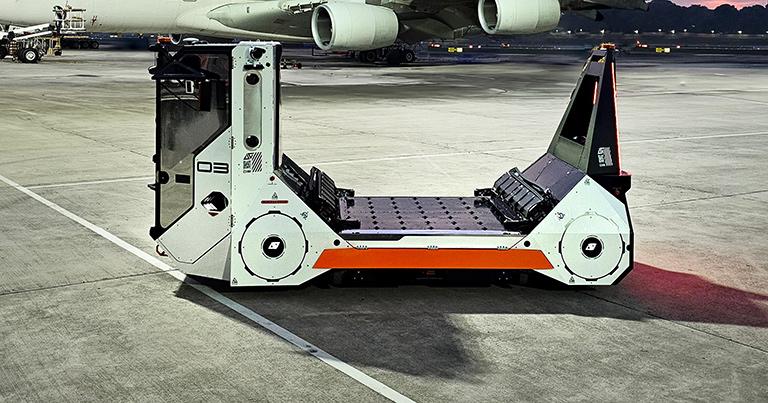
One of the key objectives is identifying where data sharing creates measurable value. The Think Tank notably leans forward into doing rather than just talking. To that end, one of the focus use cases that has emerged is the smart or connected ramp. “With various sensors powering that dynamic environment, the opportunity to share the resulting operational data in a beneficial manner is simply too tantalising to overlook,” says Ingalls. “Accordingly, the group is building on some initial collaborative work between an airport and airline, with other such efforts set to push back.”
Artificial intelligence (AI) is increasing the industry’s appetite for high-quality, connected data, with its rapid evolution influencing the Think Tank’s discussions and priorities. “AI is a player in a several respects,” Ingalls shares. “Data can and should certainly serve as a foundation to effective AI use. It can also be involved at the front end, organising, optimising and properly situating the needed operational data to other systems. In either respect, or otherwise, it will certainly play a critical role.”
For organisations that recognise the value of better data sharing but don’t know where to begin, Ingalls recommends some practical first steps. “As Walt Disney once said: ‘The way to get started is to quit talking and start doing.’ In any airport environment, there is low hanging fruit that can be fairly easily plucked off the tree by two collaborating partners. Start simple, harvest that fruit and experience the sweetness of business and guest benefit! Quit talking and start doing. Well said, Walt!”
Looking ahead, Ingalls is eager to participate at the 20th anniversary edition of FTE Global, taking place in Dallas, Texas, on 8 to 10 September 2026, where he is leading a key session titled ‘The FTE Data Sharing Think Tank: Will widespread data collaboration ever become a reality?’
“I hope that delegates will come away with the realisation that this is not just a lot of talk, but rather has tipped helpfully into action – and that on a worldwide basis,” says Ingalls. “The industry partners that are already engaged are climbing out, showing the way to others by flying forward into a bright and efficient future, fuelled by the power of shared data! I haven’t yet missed an FTE Global show – dating back to its inception as ‘disCUSS’ and the follow-on renditions of ‘Check-In’ – and don’t ever plan to. This is THE show for anyone in the industry that leans forward collaboratively into innovation, and I look most forward to meeting old friends and making new ones in Dallas. Let’s go!”
See the FTE Global schedule at a glance >> Register for FTE Global >>Metropolitan Washington Airports Authority on closing the gaps between airport and airline systems
Metropolitan Washington Airports Authority (MWAA) – a Corporate Partner of the FTE Digital, Innovation & Startup Hub – sees one of the greatest opportunities for improved data sharing in closing the information gaps that still exist between airport and airline systems, particularly around shared operational assets. Better visibility across these touchpoints can strengthen operational coordination, improve turnaround performance, and ultimately enhance the passenger experience.

“The biggest opportunity is in the gaps between airline and airport systems, especially around shared assets like passenger boarding bridges and baggage handling systems,” says Christian George Kessler, Airports Transformation & Innovation Manager, Metropolitan Washington Airports Authority. “Filling those gaps would give everyone a clearer picture of the turnaround and help teams act sooner.”
For Kessler, effective data sharing is not about exchanging greater volumes of information, but about creating a common understanding across stakeholders. “Good data sharing is not about sending more data,” he explains. “It is about airports and airlines agreeing on what the data means, how events should be measured and how those events fit together across the operation.” Establishing shared definitions and consistent operational events provides the foundation for better collaboration and more informed decision-making.
As artificial intelligence (AI) becomes increasingly embedded across aviation, Kessler believes the quality and transparency of underlying data will determine its value. “AI will only be as useful as the data behind it,” he says. “We need reliable data, but we also need to be much better at showing how confident we are in that data and where uncertainty still exists.”
Understanding not only the data itself but also the confidence levels associated with it will help organisations make better-informed operational decisions and deploy AI more responsibly.
For organisations looking to strengthen their approach to data sharing, Kessler recommends building on existing collaboration rather than starting from scratch. “Start where data is already being shared, even imperfectly,” he advises. “For airports, that might mean asking airline partners what additional baggage system events, timestamps or context would make the biggest difference to their operation.” By focusing on practical improvements that address genuine operational needs, organisations can demonstrate value quickly while laying the foundations for broader collaboration.
Looking ahead, Kessler is eager to participate at the 20th anniversary edition of FTE Global, taking place in Dallas, Texas, on 8 to 10 September 2026, where he is participating in a key session titled ‘The FTE Data Sharing Think Tank: Will widespread data collaboration ever become a reality?’
“I hope people leave seeing data sharing as a practical way to remove friction from airport operations,” he says. “Better shared visibility can reduce uncertainty, improve coordination and make the whole system work more efficiently. Every time I attend FTE Global, I leave with at least one idea I hadn’t considered before. I’m looking forward to conversations with airports and airlines that challenge how I think.”
See the FTE Global schedule at a glance >> Register for FTE Global >>Reno-Tahoe Airport Authority on moving from data exchange to operational insight
Reno-Tahoe Airport Authority sees significant opportunities for improved data sharing between airports and airlines, enabling both day-to-day operations and disruption management to become more efficient while enhancing the passenger experience.

“Data sharing between airlines and airports can be an opportunity to enhance the passenger experience, operational efficiency and business performance,” says Art Rempp, CIO/IT Director, Reno-Tahoe Airport Authority. “For example, when an airline needs to divert, if the receiving airport has information about the number of passengers, it can prepare concessions, facilities, security and other services ahead of the flight’s arrival.” Having timely visibility into passenger numbers and anticipated arrival times during irregular operations allows airports to respond more effectively, while the routine sharing of operational data – such as passenger volumes, baggage counts and aircraft movements – can improve planning, reduce manual reporting, and streamline operational and billing processes.
For Rempp, the value of data sharing lies not in the volume of information exchanged, but in ensuring that the right people have access to the right information when they need it. “The ability for the right person to have the right data at the right time is the distinguishing factor from simply exchanging information,” he explains. “That applies whether you’re a doctor, pilot, mechanic or anyone else who relies on data to make informed decisions.”
As artificial intelligence (AI) becomes increasingly embedded across aviation, Rempp believes trusted data remains the essential foundation for success. While the industry’s focus has evolved from the era of ‘Big Data’ to AI-enabled analytics, the underlying principle has remained the same. “Data is key to informed decisions in business,” he says. “Technology is used as a conduit to share that data. We now have tools with AI that allow us to better analyse that data and create more opportunities to share information with business partners to further improve the passenger experience, and airline and airport operations.”
However, those benefits depend entirely on the quality and reliability of the underlying data. “Trusted data has always been the key in data sharing across all industries,” Rempp emphasises. “Without trusted data, the system is unreliable and should not be used. Participation by all stakeholders to ensure accuracy is paramount in providing the confidence needed for these relationships.”
For organisations looking to strengthen data sharing, Rempp recommends establishing a clear business case before focusing on technology. “The first step is to identify why and how data sharing benefits the participants and the organisation,” he advises. “That becomes the guiding principle when questions arise about changes to the data or the sharing process.” He also stresses the importance of implementing robust data governance to maintain data integrity, while avoiding unnecessary complexity. “Don’t allow good to become the enemy of perfect,” says Rempp. “Identify the people and budget needed to deliver the solution, then get moving. The environment will continue to change, so organisations need to remain flexible and adaptable as they progress.”
The future of aviation depends on trusted data collaboration
As the aviation industry continues its digital transformation, trusted data sharing is becoming a fundamental enabler of smarter, more connected airport and airline operations. While technologies such as AI, predictive analytics and real-time operational platforms offer enormous potential, their success ultimately depends on the quality, consistency and governance of the data that underpins them. From improving turnaround performance and disruption management to enhancing passenger communications and enabling more informed decision-making, the benefits of effective data sharing extend across every aspect of the aviation ecosystem.
As the perspectives shared by Miami International Airport, International Airlines Group, Metropolitan Washington Airports Authority and Reno-Tahoe Airport Authority demonstrate, successful data sharing is about far more than exchanging information. It requires a shared understanding of data, common standards, robust governance, trusted relationships and a willingness to collaborate across organisational boundaries. Equally important is starting with clearly defined business challenges, delivering practical value through incremental improvements, and ensuring that the right people have access to the right information at the right time.
These themes will be central to the FTE Data Sharing Think Tank session at the 20th anniversary edition of FTE Global (Dallas, Texas, 8 to 10 September 2026), where members of the Think Tank will explore how stronger collaboration and trusted data can unlock the next generation of operational efficiency, passenger experience and AI-enabled innovation. For organisations looking to strengthen their digital foundations, the discussion will provide valuable insights into the practical strategies, governance frameworks and partnerships needed to turn better data sharing into better business outcomes.
See the FTE Global schedule at a glance >> Register for FTE Global >>You may also be interested in
12 technology and CX trends that can enhance airline and airport operations in 2026
FTE World Innovation Summit relocates to Tokyo for 2027 edition hosted by Haneda Airport – 1-3 March
Vote now: What will be aviation’s most game-changing technology over the next 20 years?