




As passenger expectations continue to evolve, the travel industry is facing a fundamental question: how can emerging technologies such as artificial intelligence (AI) make journeys more seamless and personalised without losing the human connection at the heart of the experience? From removing friction and improving operational efficiency to creating more meaningful interactions between employees and customers, the focus is increasingly shifting towards using technology as an enabler rather than an end in itself. In this interview, ahead of her participation at the 20th anniversary edition of FTE Global (Dallas, Texas, 8 to 10 September 2026), Nicole Huang, SVP Fleet Experience, Virgin Voyages, shares her perspectives on the future of hospitality, the lessons aviation can learn from cruise, and why the best customer experiences combine operational excellence with human connection.
See the FTE Global schedule at a glance >> Register for FTE Global >>Using AI to create more time for human connection

At FTE Global, Huang is participating in the Opening Keynote Session, providing outside of the industry inspiration with a presentation titled ‘More human, powered by AI: The future of hospitality’.
AI is now a recurring theme across the travel industry, with airlines and airports exploring how the technology can improve everything from customer service and personalisation to operational decision-making. For Huang, however, the most important question is not simply what AI can do, but how it can ultimately improve the human experience. “It feels like every presentation has to include AI these days,” says Huang. “I’m only half joking. Mine will, too, but not in the way people expect. I’ll be talking about how AI can remove friction and create more time for what matters most: human connection.”
This will be a central theme of Huang’s keynote. Rather than positioning AI as a replacement for human interaction, she believes technology should help remove the repetitive and time-consuming elements of the customer journey, allowing people to focus on the interactions that technology cannot replicate. “Technology should make experiences more efficient, but people are what make them memorable,” Huang explains.
For airlines and airports, this presents an opportunity to rethink how technology is deployed across the passenger journey. As AI becomes increasingly capable of anticipating needs, automating processes and personalising interactions, the goal should be to use those capabilities to create more space for empathy, engagement and meaningful service.
What aviation can learn from hospitality

Huang’s perspective is shaped by a career spanning both aviation and hospitality, two industries that may operate in very different environments but share a fundamental focus: delivering experiences to people. “Whether you’re on an aircraft or a cruise ship, people want to feel welcomed, understood, and cared for,” Huang shares. “Great experiences start with operational excellence. Once the basics are right, emotional connection is what people remember. The best experiences combine both.”
This balance between operational performance and emotional connection is increasingly important as travel providers look to differentiate themselves in a highly competitive environment. A seamless journey may remove frustration, but it is often the human interaction that determines how passengers ultimately remember the experience. For the aviation industry, the lesson is that customer experience cannot be separated from operational excellence. Efficient processes, reliable journeys and well-designed technology provide the foundations, but the people delivering the experience remain central to how it is perceived.
Rethinking the journey from scratch
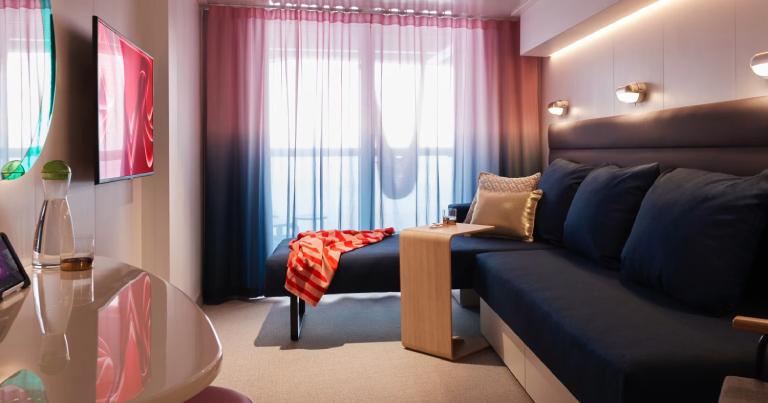
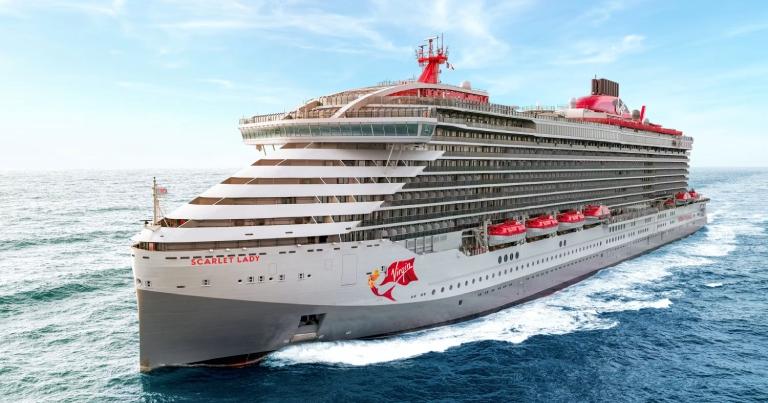
Virgin Voyages was created with the ambition of challenging established conventions within the cruise industry, and Huang believes the thinking behind that approach has lessons for aviation. “We didn’t ask how to make cruising a little better. We asked how we’d design it if we were starting from scratch today.”
That mindset enabled Virgin Voyages to challenge long-held assumptions about what a cruise experience should look and feel like, rather than simply making incremental improvements to an established model. Huang sees a similar opportunity for airlines and airports. “I think aviation has the same opportunity: don’t just optimise the journey, rethink it.”
This is particularly relevant as new technologies create opportunities to redesign processes that have traditionally been accepted as an unavoidable part of travel. Rather than simply digitising existing journeys, the industry can ask whether those journeys need to work in the same way at all.
For passenger experience leaders, this means looking beyond individual touchpoints and considering how the entire journey could be redesigned around the needs and expectations of today’s traveller.
The best experience is now the benchmark
One of the biggest challenges facing travel providers is that passengers no longer evaluate their experiences solely against those of other airlines, airports or cruise operators. “Customers don’t compare airlines to airlines anymore,” says Huang. “They compare every experience to the best experience they’ve had anywhere.”
This shift is raising the bar for passenger experience across the industry. Consumers are accustomed to increasingly seamless, personalised and responsive experiences in other areas of their lives, and those expectations inevitably carry over into travel. AI is likely to accelerate that trend, particularly as travellers become accustomed to more personalised interactions. “AI will raise expectations for personalisation,” Huang explains. “But the biggest opportunity is using technology to enable more meaningful human interactions, not replace them.”
For airlines and airports, this creates a dual challenge: technology must continue to make journeys faster, easier and more relevant, while organisations must ensure that increased automation does not come at the expense of the human experience. The opportunity, therefore, is not to choose between digital and human interaction, but to design them to complement one another.

Innovation starts with alignment
While technology can provide new opportunities to transform the customer journey, Huang believes that meaningful innovation ultimately depends on people and organisational culture. “Innovation isn’t usually limited by ideas. It’s limited by alignment,” says Huang.
For aviation leaders looking to turn ambitious customer experience strategies into reality, Huang highlights several important principles: “Have a clear vision, keep the customer at the centre, involve frontline teams early, and remember that culture is built through everyday decisions, not presentations.”
The emphasis on frontline involvement is particularly important as airlines and airports introduce new technologies and processes. Employees are often closest to the customer and can provide insights into where friction exists, what passengers actually need and how new solutions will work in practice. Creating alignment around a clear customer-focused vision can therefore help bridge the gap between innovation strategy and operational reality. It also ensures that technology is introduced with a defined purpose rather than simply because it is new.
Ultimately, Huang’s approach suggests that successful innovation requires organisations to consider not only what technology can enable, but also how it will affect the people delivering and experiencing the journey.
FTE Global: “Shaping the future of travel”
Looking ahead, Huang is preparing to share these perspectives at the 20th anniversary edition of FTE Global, taking place in Dallas, Texas, on 8 to 10 September 2026, with what promises to be a compelling keynote: ‘Outside of the Industry Inspiration: More human, powered by AI: The future of hospitality.’ The session will explore how lessons from outside the traditional aviation ecosystem can inspire new approaches to passenger experience, particularly as AI becomes increasingly embedded across the travel journey.
For Huang, one of the most valuable aspects of FTE Global is the opportunity to bring together people with different perspectives and experiences. “I’m looking forward to being surrounded by people who are passionate about shaping the future of travel. The best ideas often come from conversations between people with different perspectives, and that’s what makes events like FTE Global so special. I’m excited to be part of those conversations and hopefully inspire a few new ones along the way.”
Making travel more human
As the travel industry continues to embrace AI and other emerging technologies, the opportunity is not simply to make journeys faster, more efficient and more personalised, but to create more meaningful experiences for passengers. By removing friction and taking care of routine processes, technology can give employees more time to focus on what matters most: welcoming, understanding and caring for the people they serve. As Huang’s insights demonstrate, the future of hospitality is not about choosing between technology and human interaction, but about using innovation to strengthen the connection between the two.
For airlines and airports, achieving this vision will require more than adopting new technologies. It will depend on having a clear customer-focused vision, involving frontline teams in the innovation process, and creating a culture that supports meaningful change. As the industry looks beyond incremental improvements to rethink the journey from the ground up, the lessons from hospitality can provide valuable inspiration. These themes will come to the fore at FTE Global, where Huang and other industry leaders will explore how technology, cross-industry thinking and human-centred innovation can help shape the future of travel.
See the FTE Global schedule at a glance >> Register for FTE Global >>You may also be interested in
12 technology and CX trends that can enhance airline and airport operations in 2026
FTE World Innovation Summit relocates to Tokyo for 2027 edition hosted by Haneda Airport – 1-3 March