





Digital identity is becoming a critical enabler of the next generation of seamless travel. As airports, airlines, governments and technology providers look to modernise passenger processing, trusted digital credentials, biometrics and interoperable identity solutions are creating new opportunities to strengthen security, improve operational efficiency and deliver more seamless passenger experiences. Following their participation in the key ‘Advancing Digital Identity & Seamless Travel Efforts’ session at the recent FTE Global 2026 in Dallas, Texas, leaders from Tampa International Airport, U.S. Travel Association, American Association of Motor Vehicle Administrators (AAMVA) and Ernst & Young (EY) share their perspectives on the progress being made, the barriers that remain and what is needed to move digital identity from successful pilots towards widespread, scalable adoption. Across the interviews, themes including trust, interoperability, privacy, stakeholder collaboration, operational readiness and measurable business outcomes emerge as critical considerations for the future of seamless travel.
Mark your diary for FTE Global 2027 – 7 to 9 September 2027, Las Vegas >>Tampa International Airport on digital identity as a game-changer for passenger flow and airport capacity
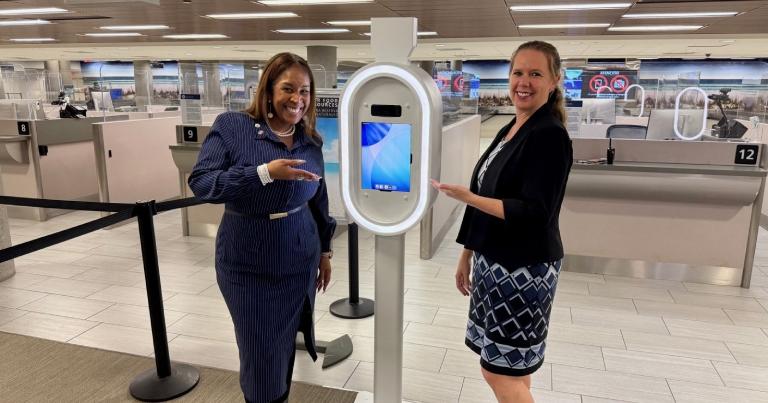
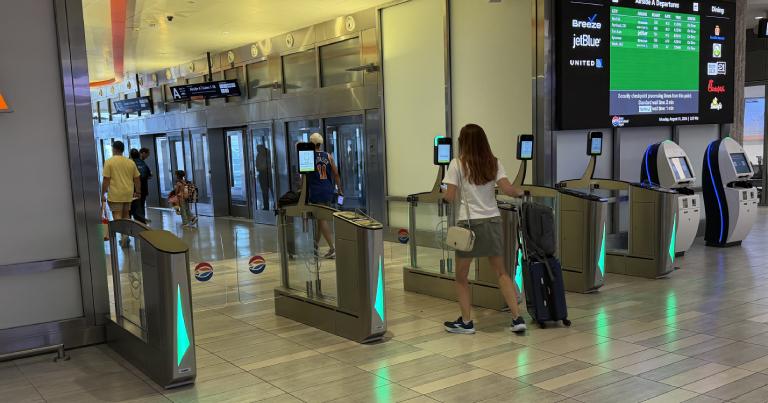
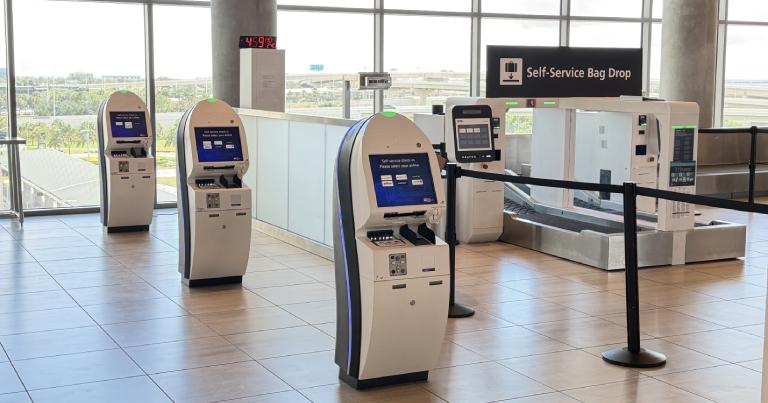
Tampa International Airport – a Corporate Partner of the FTE Digital, Innovation & Startup Hub – is proud to embrace innovation, starting from the Executive Team down. “Digital Identification will be the game-changer over the next three to five years,” says Douglas Wycoff, Director of Digital Technologies & Innovation, Tampa International Airport. “Not only will it ease the passenger experience throughout our facilities, but it will also allow the airport to increase capacity through the Ticketing Level in ways that have not been seen in the past. The key element of the digital solution is a consistent, uniform experience that compliments the journey from curb to gate. To use a piecemeal solution would be potentially confusing to our guests. Additionally, when you enhance a common-use, self-service baggage check-in with all airlines, not just a few, the Ticketing Level processing time is reduced dramatically. If designed properly, the system would cut the wait time for guests to practically nothing. Removing the need to speak to airline staff by implementing a digital identity solution will increase overall building throughput.”
Many airports have successfully trialled biometric and digital identity solutions, but fewer have deployed them at scale. Wycoff explains that converting pilots to sustainable operations takes coordination across the entire airport – Operations, Security, Safety, Guest Experience, etc – to establish the requirements, then ensure the airline partners understand and will live by the requirement. “The constant crossroads of developing technology, communication/collaboration breakdowns, and building the synergy between all airlines and the airport facility is the major challenge affecting these solutions going into full production,” Wycoff shares.
Beyond faster processing, airports can gain new operational insights from digital identity technologies that help improve terminal design, passenger flow and resource allocation. “This technology change could be the single most impactful transformation in ticket level designs and passenger flow portals, while being a huge saving in terms of staffing for the airlines,” says Wycoff. “Airports should be designed to embrace this technology and require airlines to participate. This is a must for creating a truly digital solution that allows our guests to avoid the traditional ticket counter, except for situation-specific questions and baggage handling. Aligning the digital platform with security screening checkpoints and installing the hardware at the gates is a significant evolution for every aspect of the airport design, passenger processing, and human capital for the airlines.”

Interoperability is often cited as one of the biggest barriers to seamless travel. Wycoff highlights that airports must take the lead and establish rules, regulations, and guidelines for implementing and using passenger processing technology going forward. “Airlines want to reduce expenses with modernisation, and this technology is the solution,” says Wycoff. “The concept of the airline managing the passenger from the moment they arrive at the door is no longer relevant. Unless a passenger has a specific or unique issue, this technology should keep a traveller from having to interact with airline personnel until they get to the gate.”
Building the business case remains challenging for many airports because it requires a significant capital and technological investment by the airport and a cultural and procedural change by the airline on how they manage their passengers. “For airports to build a more efficient, cost-effective solution, both the airport and its airline partners must embrace change and allow the airport to engineer a more efficient, volume-based solution that will allow for many years of increasing capacity within their current facilities,” Wycoff explains.
Looking ahead, Wycoff highlights what success would look like for airport digital identity programmes by 2030. “When airports have a complete digital solution available – for as many passengers that elect to participate – the counter space needed for airlines could change, there would be better optimisation of common counter real estate, and a smoother more efficient passenger experience would result. To be a success, airlines should target a percentage of passenger conversions by 2030 and establish the change as a requirement between airports and airlines.”
U.S. Travel Association on scaling digital identity through collaboration, trust and traveller acceptance

For Ryan Propis, Vice President of Security and Facilitation at the U.S. Travel Association, the case for accelerating digital identity and seamless travel is being driven by both growing travel demand and increasing competition for travellers. “Travel volumes and the global competition for travellers are only growing,” says Propis. “As travellers have more options and access, their demand for a seamless experience will continue to drive governments and industry to innovate and modernise the travel process.”
Despite years of successful trials and growing evidence of the benefits, widespread adoption of digital identity across aviation has been slower than many anticipated. Propis points to the fragmented nature of the global aviation system as a key challenge. “While air carriers operate across borders, they rely on connectivity with airports, governments, and other partners within separate legal systems and operating environments,” he explains. “Without a one-size-fits-all solution, coordination becomes critical for widespread scaling and adoption of critical identity management tools.”
Building a compelling business case for investment will also be essential to accelerating adoption. Propis believes that the benefits of biometric and digital identity solutions are already clear, with the potential to deliver improvements across security, operational efficiency and the passenger experience. “Strong biometric and digital identity solutions, which already exist today, present both governments and industry with game-changing outcomes,” he says. “It has been proven that these solutions provide major enhancements to security, significant improvements to operational efficiency at airports and beyond, and an elevated travel experience removing the need for manual processes.”
Collaboration between airlines, airports, government agencies and technology providers will be critical to translating these benefits into a truly seamless journey. According to Propis, there is already significant alignment across the industry around the importance of technology and identity management. “There is very strong alignment that technology, especially in the identity management space, is the most important path forward for seamless travel,” he says. “While there may be differing views on specific technology solutions, there isn’t much daylight between stakeholders that traveller demand for seamless technology is the only way forward, especially in light of increasing volumes and dynamic threats.”
As digital identity technologies continue to evolve, however, Propis stresses that innovation must be accompanied by clear principles around transparency, privacy and traveller trust. “Establishing general guardrails and principles for utilising biometric and digital identity technologies is key,” he explains. “If laid out properly, those principles and guardrails can provide consistent guidance, transparency, and trust even when the technology changes or when new solutions develop, while protecting against any potential abuse that may ultimately undermine technology utilisation.”
Looking five to ten years ahead, Propis identifies traveller acceptance as one of the most important milestones for the industry. “Moving forward without customer or traveller support can be a risky decision,” he says. Recent U.S. Travel surveys, he notes, have found that more than 80% of American travellers embrace biometric technology, with that figure increasing over the past few years. “This shows not only that the industry is in line with travellers but travellers are actually driving the industry.”
AAMVA on trusted digital credentials, interoperability and the future of seamless travel

For Lori Daigle, Program Manager for Outreach & Education, Identity Management at the American Association of Motor Vehicle Administrators (AAMVA), trust is the foundation on which digital identity must be built. As mobile driver’s licences (mDLs) become increasingly integrated into travel, government-issued credentials need to be verifiable, secure and trusted by the organisations accepting them. “For TSA or any relying party to accept an mDL, they need confidence that it was issued by a legitimate authority and has not been altered,” says Daigle.
AAMVA’s mDL Implementation Guidelines and the ISO/IEC 18013-5 standard provide the technical framework for that trust, ensuring that each credential – and each individual data element within it – is cryptographically signed and can be verified against a trusted source. AAMVA’s Digital Trust Service extends that trust across participating jurisdictions, allowing airports to verify credentials without requiring individual integrations. For travellers, Daigle says, the experience should ultimately be simple: “They share the necessary mDL credential data from their phone and move through security more quickly, check bags more easily, and check into hotels more seamlessly without needing to understand the technology behind it.”
Interoperability is critical as more jurisdictions develop mDLs and digital credentials. “The principle that an mDL issued by one jurisdiction should be readable and trusted by any verifier, not just in the traveller’s home state, reduces the burden for relying parties to adopt mDL and ensures people have the freedom to use their secure, privacy respecting credential in as many places as possible,” Daigle explains. “Without that, digital credentials become a patchwork of limited-use tools.”
Daigle highlights the progress already being made in the U.S., with mDLs from 21 states and territories accepted at 271 airports nationwide, while Canadian provinces and territories are also moving towards issuance. By building to the same ISO/IEC 18013-5 data model and interface, jurisdictions can create a more consistent experience for travellers. “Travellers can cross state lines – and eventually international borders – with greater confidence that their digital credential will work seamlessly,” she says.
While interoperability and technology are important, public confidence will ultimately play a significant role in adoption. Daigle says that travellers who have used mDLs typically respond positively to the experience, describing it as faster, easier and more convenient than presenting a physical card. However, most questions arise before that first use. Travellers want to know what happens if their phone battery dies, whether they can continue to use their physical licence, whether using an mDL is mandatory, and what information TSA can see when the credential is presented.
“The key is making clear that it is optional, privacy-conscious, and shares only what is necessary,” says Daigle. “Answering those questions before travellers reach the checkpoint helps build confidence and support adoption.”
Privacy is another fundamental consideration. Daigle explains that privacy by design has been central to the development of mDL standards, with ISO/IEC 18013-5 built around selective disclosure. Rather than sharing an entire identity record, verifiers request only the information they require, with the credential holder agreeing to what is shared. “At a TSA checkpoint, that means TSA gets only what is needed to verify the traveller,” she says.
That approach is also expanding beyond in-person verification, with AAMVA’s mDL Implementation Guidelines incorporating ISO/IEC 18013-7 for online and remote verification. “The principle remains the same: the credential holder controls what is shared, with whom, and can review requests through the activity log on their mobile device, giving them more control than a physical card ever could,” Daigle explains.
Collaboration between government and aviation has already delivered tangible progress, with the partnership between issuing authorities and TSA providing a clear example. Daigle points to usage reaching 45,800 mDL presentations in a single month across 271 airports, a milestone that required sustained coordination around standards, testing and rollout timing. As adoption expands into other sectors, including retail, banking and hospitality, she believes the same focus on interoperability and standards will be essential. “We need the same rigour around interoperability and standards, so a digital credential works consistently across all vertical markets where it is accepted.”
Looking beyond aviation, Daigle sees TSA security as a natural starting point because identity checks are already mandatory and take place at high volume. But the same trusted mDL credential could ultimately be used throughout the wider travel journey, including hotel check-in, rental car counters and age verification when ordering a drink at an airport or hotel bar.
“The infrastructure and trust framework already exist; what’s missing is simply more relying parties choosing to accept it,” she says. “The next phase is facilitating a wider reach for what already works so a traveller’s ability to use their mDL follows them through the entire trip, not just the TSA security checkpoint.”
EY on moving digital identity from pilot programmes to trusted, scalable travel infrastructure

For Nicole Williams, Executive Director at Ernst & Young (EY), the issues shaping the future of travel – from digital identity and biometrics to AI, operational resilience and passenger experience – are moving rapidly from emerging concepts to critical enablers of secure, efficient and trusted travel at scale. As a Gold Sponsor of FTE Global 2026, EY saw the event as an opportunity to help turn innovation into measurable outcomes across the travel ecosystem.
“FTE Global brings together the organisations and stakeholders shaping the future of travel,” says Williams. “What makes this forum particularly valuable is its focus on turning innovation into measurable outcomes.” She highlights the opportunity for airlines, airports, government agencies, technology providers and ecosystem partners to move beyond pilots and proof-of-concepts and focus on solutions that improve operational performance, strengthen security, enhance the traveller experience and deliver long-term value.
For EY, this means looking beyond technology itself. “Seamless travel depends on trust and authenticity,” Williams explains. “Achieving that outcome requires more than technology, it requires strong governance, effective operating models, responsible data management, privacy protections, stakeholder alignment and change adoption strategies that enable organisations to scale innovation with confidence.”
Williams believes digital identity should be viewed as foundational infrastructure for the future of travel, rather than simply another passenger-facing technology. At its full potential, she says, digital identity can strengthen security, increase operational efficiency, improve passenger experiences, support trusted data sharing and enable better coordination between airlines, airports, government agencies and other ecosystem partners.
“Seamless travel depends on trust and foundational authenticity,” says Williams. As digital identity programmes expand across organisations, technologies and jurisdictions, she argues that trust needs to be built into the design from the outset, including through privacy protections, consent management, interoperability, cyber resilience, fraud prevention and transparent governance.
Moving from successful pilots to enterprise-scale adoption will require more than proven technology, however. Williams highlights operational readiness, policy alignment, stakeholder engagement and measurable performance outcomes as equally important. “Success will be defined by the ability to deploy trusted, repeatable and auditable models that can scale across the travel ecosystem, deliver sustainable value and adapt to evolving regulatory, operational and customer expectations,” she says.
Williams has also seen a significant shift in how the industry views digital identity. While earlier discussions often centred on individual use cases such as biometric bag drop, touchless checkpoints, mobile credential acceptance and faster enrolment, organisations are increasingly taking a broader view of how identity can support the end-to-end passenger journey.
“Digital identity is no longer viewed primarily as a convenience feature,” she says. “It is increasingly recognised as foundational infrastructure that helps organisations strengthen security, improve the passenger experience, increase operational efficiency and build trust across the travel ecosystem.”
Rising passenger expectations, operational pressures, workforce and capacity constraints, and a growing focus on privacy, interoperability and public trust are all contributing to this shift. Williams believes that organisations establishing trusted digital identity foundations will be better positioned to respond to future regulatory requirements, support innovation at scale and deliver more secure, efficient and seamless travel experiences.
Building the business case requires organisations to connect digital identity investments with measurable outcomes. Williams points to passenger throughput, security and fraud prevention, workforce productivity, operational efficiency and reduced manual processes as areas where value can be demonstrated. At the same time, she argues that the business case should account for the longer-term value of establishing the governance and control frameworks needed to respond to evolving threats, regulation and customer expectations.
“The strongest business case is not simply that digital identity is part of the future,” Williams says. “It is that digital identity delivers meaningful outcomes today while positioning organizations for what comes next.” She adds that successful programmes should create a flexible foundation for innovation without locking organisations into a single technology, vendor or operating model.
Collaboration is another recurring theme. According to Williams, the most successful partnerships begin with a shared outcome – whether that is strengthening security, increasing trust, improving the user experience or enabling scalable use cases – rather than focusing solely on the technology being deployed.
Strong governance should be established early, with stakeholders aligned around privacy, interoperability, risk management, accountability and decision rights. “Trust is built through responsible data stewardship, clear ownership, effective consent management and robust cybersecurity,” she explains. Partnerships that also measure success through operational outcomes, rather than technical performance alone, are better positioned to demonstrate value and move from pilots to enterprise-scale adoption.
This same focus on governance will be important as AI becomes increasingly integrated into identity and biometric technologies. Williams emphasises the need for organisations to align stakeholders around privacy, policy, interoperability, risk management, decision rights and accountability from the outset. She also highlights the importance of data ownership, consent management, privacy obligations and cybersecurity requirements before deployment begins.
“Another defining characteristic is a clear approach to trust and responsibility,” says Williams. “Leading organisations address data ownership, consent management, privacy obligations and cybersecurity requirements before deployment begins.” She argues that successful programmes should measure how technology improves security, increases efficiency, reduces friction and supports frontline operations, using evidence-based decision-making to move innovation from pilot programmes to enterprise-scale adoption.
Williams also cautions that organisations can underestimate the complexity of implementing digital identity at scale. Governance, accountability and alignment across technology, operations, privacy, security and policy stakeholders need to be addressed from the beginning. Digital identity is not a one-size-fits-all capability, she says, and assurance levels, controls and operating models must be aligned to the risk and desired outcomes of each use case.
Interoperability is equally important, with solutions needing to operate consistently across credentials, systems, vendors and jurisdictions. Ultimately, Williams believes organisations should approach digital identity as an enterprise transformation rather than a technology deployment. “Governance, data, operations, risk management and change adoption must evolve together to deliver secure, resilient and trusted outcomes.”
Looking five years ahead, Williams hopes digital identity will have become a trusted and interoperable foundation of the global travel ecosystem, enabling passengers to move more seamlessly across airlines, airports and borders through secure, consistent and privacy-centric experiences.
She sees standards-based identity ecosystems becoming increasingly important, allowing organisations to scale innovation more quickly, simplify integration and adapt to evolving technologies and regulatory expectations. AI-enabled identity capabilities will also need to be supported by strong governance, accountability and human oversight.
“Ultimately, the greatest indicator of success will be industry alignment around common governance principles, interoperable standards and trusted operating frameworks,” Williams concludes. “That foundation will enable more secure, resilient and connected travel experiences while supporting innovation at global scale.”
Building trust, interoperability and collaboration for the next generation of seamless travel
As the aviation industry continues to modernise the passenger journey, digital identity is emerging as a foundational enabler of more secure, efficient and seamless travel. From streamlining identity verification and reducing manual processes to improving passenger throughput and strengthening security, the potential benefits extend across the travel ecosystem. However, as the perspectives shared at FTE Global 2026 demonstrate, realising that potential will require more than proven technology.
Trust, interoperability, privacy and collaboration are central to moving digital identity from successful pilots to scalable, everyday applications. Airports, airlines, governments, technology providers and other ecosystem partners must align around common standards, robust governance and shared objectives, while ensuring that travellers understand and trust how their identities and data are being used. Equally important is building a compelling business case around measurable operational outcomes, passenger experience and long-term value.
The discussions at FTE Global 2026 highlighted a clear opportunity for the industry to build on the progress already being made and create a more connected approach to digital identity. As adoption expands across borders and into other areas of the travel journey, the organisations that combine innovation with strong governance, interoperability and responsible data stewardship will help shape a more seamless, trusted and resilient travel experience.
What’s next – APEX FTE EXPO, Singapore, 18 to 19 November 2026

You may also be interested in
12 technology and CX trends that can enhance airline and airport operations in 2026
Air Canada targets more proactive, personalised passenger experience with AI and better data
Making travel more human: Virgin Voyages on AI, hospitality and reimagining the passenger experience