

As airlines face growing pressure to differentiate their passenger offering while improving operational efficiency and controlling costs, digital innovation is creating new opportunities to rethink traditional business models from the ground up. For new-generation carriers, the freedom to move beyond legacy systems and established industry conventions can provide a significant competitive advantage, enabling them to build more agile operations, deliver more seamless passenger experiences and unlock new sources of value. However, making this approach sustainable requires more than adopting new technologies; it means reimagining processes, empowering frontline employees and ensuring that every investment delivers tangible business benefits. In this interview, ahead of his participation at APEX FTE EXPO (Singapore, 18-19 November 2026), Takuya Matsuo, Executive Officer / CMO, Strategy Lead, ZIPAIR, shares the story of building a long-haul low-cost airline from the ground up and explains how digital innovation is shaping its strategy for the future. He explores how connectivity, self-service and agile technology architectures are helping ZIPAIR balance cost efficiency with a high-quality passenger experience, why empowering frontline teams is central to successful digital transformation, and how emerging technologies such as Generative AI could reshape airline retailing and the future of the travel experience.
Register for APEX FTE EXPO – free Premium Passes for airlines and airports >> See the APEX FTE EXPO Agenda Overview >>Building a new airline model through digital innovation

Takuya Matsuo, Executive Officer / CMO, Strategy Lead, ZIPAIR, is participating at APEX FTE EXPO, taking place in Singapore on 18-19 November 2026, with a special presentation titled ‘The ZIPAIR story: Successfully building an airline from the ground up and future proofing through digital innovation’.
“There are three core messages I want to convey through this presentation,” Matsuo shares. “First, as a market challenger, our purpose is not to replicate existing models, but to deliver fundamentally new value. In a market already shared by legacy carriers and established LCCs, competing merely on discount pricing or recycled services is not a winning formula. By questioning industry conventions from a clean slate, we have carved out our own distinct category. Second, digital innovation is the very foundation that allows us to continuously generate this new value. Unencumbered by legacy systems, ZIPAIR’s greatest strength is our agility from day one. By maximising digital capabilities – such as inflight mobile ordering and frictionless boarding – we strip away operational friction while delivering a streamlined, personalised travel experience. Third, and most importantly, exceptional customer experience (CX) and frontline employee empowerment (EX) are two sides of the same coin. Automating repetitive, high-stress tasks through technology frees up mental bandwidth for our frontline teams, allowing them to focus on genuine human hospitality and creative operational improvements. Enhancing passenger satisfaction directly nurtures employee pride and fulfilment, which then cycles back as even higher service quality. This sustainable flywheel is the true engine driving ZIPAIR’s growth and future-proofing our business.”
Rethinking the cabin through seamless, high-speed connectivity

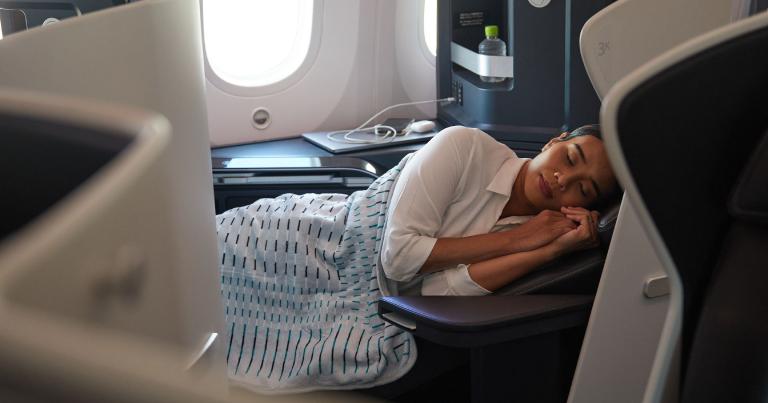
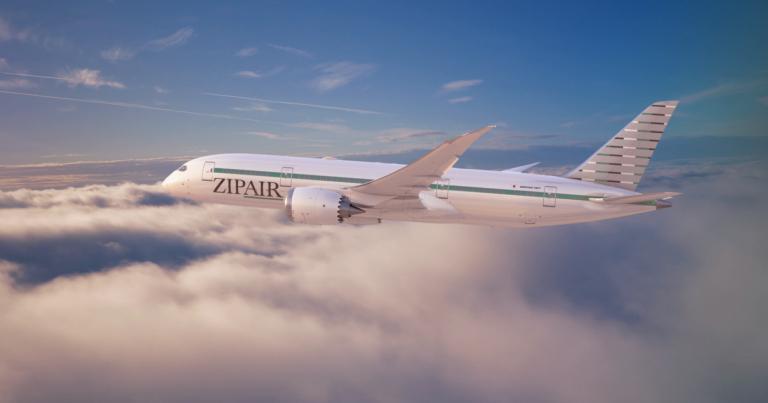
When building ZIPAIR from the ground up, the most important strategic decision was its commitment to operating as a long-haul low-cost carrier (LCC) that balances low structural costs with high-quality service, which required a radical rethink of traditional airline products and amenities.
“A prime example was eliminating seatback screens entirely and adopting a free, BYOD (Bring Your Own Device) internet model – underpinned by our decision to deploy Starlink’s ultra-high-speed, low-latency satellite connectivity well ahead of the industry curve,” Matsuo explains. “Historically, the aircraft cabin was treated as an isolated ‘digital black hole’ cut off from the ground. When designing ZIPAIR from scratch, we recognised that seamless, ground-like connectivity in the skies had to be the non-negotiable foundation of our operating model.”
Ultimately, this decision structurally shaped the airline’s business model across three key dimensions:
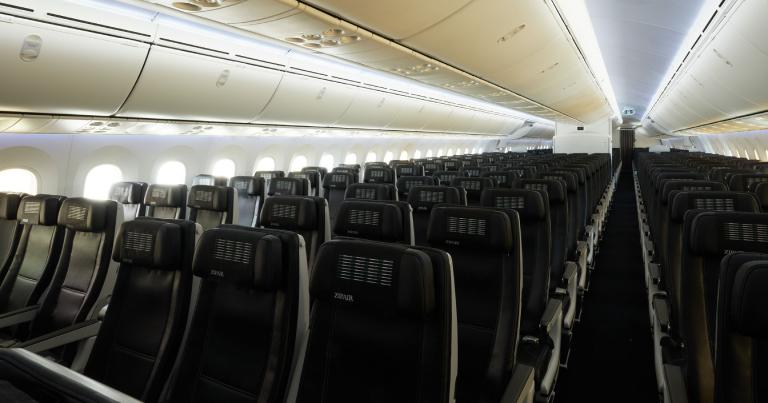
- Redefining CX through free WiFi (the BYOD model): By deliberately removing seatback monitors, ZIPAIR established a pure BYOD model where passengers stream, browse, and connect using their own devices, exactly as they do on the ground. “This delivers unprecedented freedom and high passenger satisfaction while substantially reducing cabin weight and lifecycle maintenance costs,” says Matsuo.
- Real-time cockpit & flight operations: With high-bandwidth, real-time connectivity between the flight deck and ground systems, ZIPAIR’s pilots receive live high-resolution weather updates, turbulence predictions, and dynamically optimised flight trajectories. This directly drives higher safety standards, improved on-time performance, and significant fuel burn efficiency.
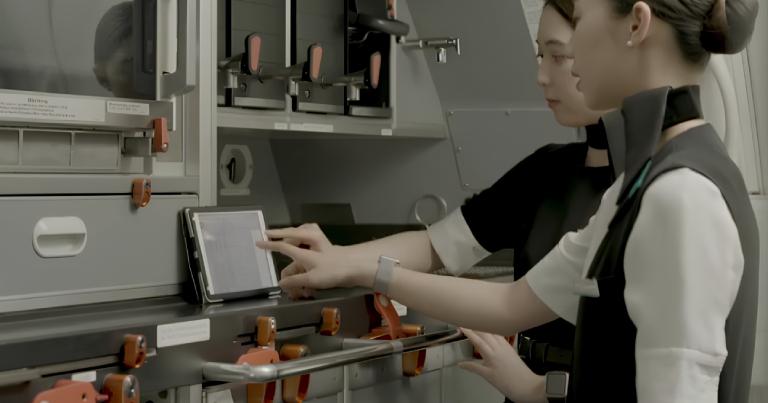
- Agile cabin operations: Cabin crew devices stay continuously synchronised. This enables real-time translation tools for barrier-free communication, live inventory synchronisation for inflight mobile ordering, and instant information sharing with ground stations. “As a result, our lean crew can deliver attentive, personalised support without administrative friction,” says Matsuo.
“In short, adopting Starlink was never just an ‘inflight WiFi amenity’,” Matsuo adds. “It transformed our aircraft into data platforms continuously synchronised with the ground, serving as the operational backbone that reconciles lean economics with a premium customer experience.”
Redefining passenger value through autonomy and frictionless service
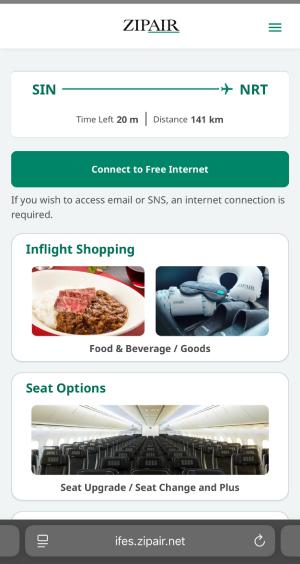
The greatest advantage of a clean-slate launch for ZIPAIR was the ability to take an unorthodox approach, primarily across two fronts. Firstly, customer experience – defying conventions with 100% BYOD and self-service. “Heavy seatback IFE screens were long considered an untouchable requirement on long-haul flights,” Matsuo shares. “We eliminated seatback screens entirely, putting our trust in free high-speed WiFi paired with a full BYOD model. Furthermore, onboard dining and duty free retail moved entirely to mobile self-ordering rather than flagging down cabin attendants with paper menus. Passengers engage on their own terms, turning the cabin into a serene, stress-free space.”
Secondly, the approach to operations involves radical weight reduction and lean cabin workflows. “Stripping out heavy IFE hardware, wiring, and onboard servers cut hundreds of kilograms per aircraft, directly reducing fuel burn and carbon emissions,” says Matsuo. “Operationally, because orders flow directly to the galley via digital devices, crew members no longer push heavy carts up and down the aisles repeatedly. Automating routine physical tasks enables lean crew staffing to focus squarely on safety vigilance and dedicated passenger care. The ultimate lesson for the industry is that genuine passenger value does not stem from heavy ‘over-service’, but from personal autonomy and the removal of friction. Airlines often fear eliminating legacy amenities, but when you re-architect workflows and passenger journeys from zero around digital connectivity, cost reduction and customer satisfaction cease to be a trade-off – they reinforce each other.”
Building an agile innovation ecosystem through smarter partnerships
In an environment inundated with emerging technologies, Matsuo explains that ZIPAIR avoids being blinded by hype and evaluates investments against three disciplined criteria:
- Problem-first backward mapping: “We never start with the technology looking for a reason to deploy it. Instead, we anchor our enquiry in real pain points: Where do passengers encounter friction? Where are operational bottlenecks holding back our teams? We prioritise initiatives with measurable bottom-line impact – reducing cycle times, reforming cost structures, or step-changing CX.”
- Architectural scalability & reversibility: “In a fast-evolving tech ecosystem, rigid vendor lock-in is a fatal operational risk. We evaluate whether a solution can be implemented in a loosely coupled, API-driven modular architecture. If a superior technology enters the market later, our infrastructure must preserve the ‘reversibility’ to plug it in with minimal friction.”
- Rapid validation & time-to-value: “Rather than multi-year implementations with massive upfront capital, we focus on whether a technology can be deployed as a targeted PoC or MVP within weeks or months. Testing real passenger and crew reactions early allows us to rapidly scale what delivers value, or pivot quickly before accumulating technical or financial debt.”
In summary, focusing capital on solutions that are problem-centric, architecturally reversible, and quickly verifiable is ZIPAIR’s formula for eliminating waste and compounding competitive advantage.
Partnerships with startups and scaleups can give airlines access to fresh ideas and new capabilities. Matsuo highlights that successful partnerships hinge on two fundamentals: a shared, laser-focused definition of the problem, and a willingness to fundamentally rethink legacy aviation processes rather than just automating them.
“Startups struggle when airlines treat them like traditional mega-vendors and bog them down with 200-page RFPs,” says Matsuo. “Airlines must present clear passenger pain points or operational bottlenecks, while giving the startup the creative leeway to architect the optimal solution. Balancing startup agility with aviation’s non-negotiable safety and scalability comes down to architectural decoupling and disciplined sandboxing. Mission-critical core systems that govern flight safety demand absolute 99.999% reliability with zero compromise. However, customer-facing interfaces, onboard digital retail, and crew enablement applications do not need to share that rigid infrastructure. By establishing an API-first, cloud-native foundation, we insulate our core systems while giving external innovators a secure playground to build, test, and iterate rapidly. In short, airlines must not drag agile startups into conservative, bureaucratic aviation cycles. Rather, airlines must modernise their own technical and governance frameworks, so they can match the startup’s cadence without sacrificing security.”
Future-proofing through digital innovation and workforce empowerment
A key focus is on ensuring that digital innovation delivers tangible business value, whether through improved operational efficiency, a better passenger experience, new revenue opportunities or greater organisational agility.
Matsuo advises anchoring initiatives to concrete, measurable KPIs. “Tech should never be deployed for its own sake; it must always be reverse-engineered from a defined problem. Before writing a line of code, teams must set explicit quantitative targets – whether that means boosting ancillary conversion rates or slashing booking funnel abandonment.”
He also emphasises the importance of embedding an agile ‘test-and-learn’ flywheel. “Multi-million-dollar, multi-year monolithic IT roadmaps risk becoming obsolete by the time they hit production. Validating lightweight PoCs across specific routes or customer cohorts allows airlines to capture live frontline and passenger feedback, scaling only what demonstrates verified traction.”
Additionally, Matsuo highlights the importance of dismantling silos between commercial, IT, and frontline operations. “True enterprise value is born at departmental intersections. For instance, inflight mobile ordering is far more than an IT or marketing initiative – it reshapes cabin crew workflows, commissary provisioning, and ground logistics. Assembling cross-functional squads where digital teams and frontline operators collaborate from day zero guarantees practical adoption and measurable bottom-line value.”
To achieve future-proofing while maintaining structural agility, ZIPAIR tackles the equation from both sides: hardware (systems infrastructure) and software (human capability).
“On the infrastructure side, we strictly avoid vendor lock-in and legacy monoliths, preserving a loosely coupled, cloud-native architecture,” Matsuo shares. “This modular setup allows us to plug in, test, or replace emerging technologies seamlessly, keeping overhead low and adaptability high. However, modern infrastructure is useless if the people guiding it lack digital fluency. On the human capability side, our central focus is elevating company-wide digital literacy and establishing a shared architectural vocabulary.”
Specifically, ZIPAIR provides structured education for operational teams who don’t typically touch IT – cabin crew, ground agents, dispatchers, and business planners – explaining how ZIPAIR’s systems are architected and where emerging tech trends are moving. “Equipping our team with this common language enables frontline staff to translate real-world pain points into technically viable, scalable initiatives,” says Matsuo. “By eliminating the divide between ‘business/ops’ and ‘IT’, our frontline teams can conceptualise and execute high-resolution ideas with speed. This internal literacy is ZIPAIR’s ultimate moat for adapting to shifting passenger expectations and market disruptions.”
Reinventing airline retail through Generative AI and autonomous agents
Looking ahead, the development that will fundamentally disrupt airline business models is the reinvention of the search, booking, and retailing experience driven by Generative AI and autonomous agents.
“Historically, booking flights has forced passengers into rigid airline funnels: visiting our website, inputting fixed dates and routes, and manually clicking through predefined checkboxes,” Matsuo explains. “In short, the customer was forced to adapt to the airline’s legacy system architecture. With conversational AI agents, this power balance is inverting. In the near future, planning travel will be purely conversational: ‘Find me a direct flight from Narita next month for a family of four to a warm destination within this budget, including meals and WiFi.’ An AI agent will formulate the itinerary, tailor ancillaries to preferences, and close payment frictionlessly in seconds. The implications for airline business models are seismic. Airlines can no longer operate as passive storefronts waiting on website traffic; we must transform into composable, API-first retail engines capable of feeding real-time, dynamic offers directly into whatever AI interface the traveller uses. This is our most exciting frontier for startup collaboration: co-developing LLM-driven interfaces, building contextual recommendation algorithms that dynamically bundle ancillaries, and crafting frictionless background checkout flows. By pairing ZIPAIR’s agile foundation with cutting-edge AI ventures, we intend to pioneer the next generation of airline commerce.
APEX FTE EXPO: “Connecting with inspiring leaders, discovering emerging technologies, and exploring new possibilities”
As the airline industry continues to navigate changing passenger expectations, rising operational pressures and rapid technological development, ZIPAIR’s experience demonstrates the opportunities that come from challenging established models and rethinking airline operations from the ground up. By combining high-speed connectivity, digital self-service and agile technology architectures, airlines can simplify processes, reduce structural costs and create more seamless passenger experiences without compromising service quality. However, realising this potential requires more than investing in new technology. It means putting genuine passenger and operational needs at the centre of innovation, empowering frontline employees to play an active role in digital transformation, and building the organisational agility to adapt as new opportunities emerge. The ultimate challenge is to ensure that technology removes friction for both passengers and employees, allowing efficiency and human hospitality to reinforce one another.
As Matsuo’s insights demonstrate, ZIPAIR’s approach offers an interesting blueprint for how a new-generation airline can use digital innovation as the foundation of its business model, rather than simply layering new technologies onto traditional ways of working. From leveraging connectivity to transform the onboard experience and flight operations, to exploring how Generative AI and autonomous agents could reshape airline retailing, the opportunities for further innovation are significant. These themes will be explored at APEX FTE EXPO, taking place in Singapore on 18-19 November 2026, where airline leaders, airport representatives and technology partners will come together to exchange ideas and examine the innovations shaping the future of air transport. For organisations looking to rethink established operating models, accelerate digital transformation and deliver greater value for passengers and businesses alike, the event will provide a valuable platform for collaboration, knowledge-sharing and discovering what comes next. Looking ahead, Matsuo is eager to participate. “I am genuinely looking forward to connecting with inspiring leaders across airlines, airports, and innovative solution providers, discovering emerging technologies, and exploring new possibilities to push the boundaries of what aviation can become.”
What’s next – APEX FTE EXPO, Singapore, 18 to 19 November 2026
You may also be interested in
12 technology and CX trends that can enhance airline and airport operations in 2026
How Nice Airport is blending personalisation, experiential retail and omnichannel innovation