

Physical AI is emerging as a significant opportunity for the air transport industry, with the potential to transform airport operations, improve the passenger experience and enable people, intelligent machines and infrastructure to work together in new ways. In Part 2 of our focus on Physical AI, industry leaders from Fraport, Metropolitan Washington Airports Authority, Aeroporti di Roma, Munich Airport, Fraunhofer IML, Zurich Airport and Tampa International Airport share their perspectives on how intelligent systems that can perceive, interpret and act in the physical world could reshape aviation. From autonomous vehicles and robotic baggage handling to passenger assistance, predictive maintenance and intelligent operational orchestration, their insights reveal how Physical AI is moving from individual use cases towards a more connected vision of airport operations.
While the opportunities are considerable, the organisations also highlight the practical challenges involved in turning promising pilots into reliable, scalable solutions. Integration with existing infrastructure, safety, interoperability, workforce readiness and a clear business case will all be critical to success. A common theme emerges across the six interviews: the starting point should be the operational challenge, not the technology. By focusing on measurable benefits, involving employees and operational partners from the outset, and scaling solutions in line with evidence, airports can begin to unlock the potential of Physical AI to deliver safer, more resilient and more efficient operations, while creating smoother, more predictable journeys for passengers.
You can view Part 1 of our focus on Physical AI – featuring Southwest Airlines, Worlds, Dallas Fort Worth International Airport and more – by clicking here.
Fraport: Scaling Physical AI from pilot projects to everyday airport operations
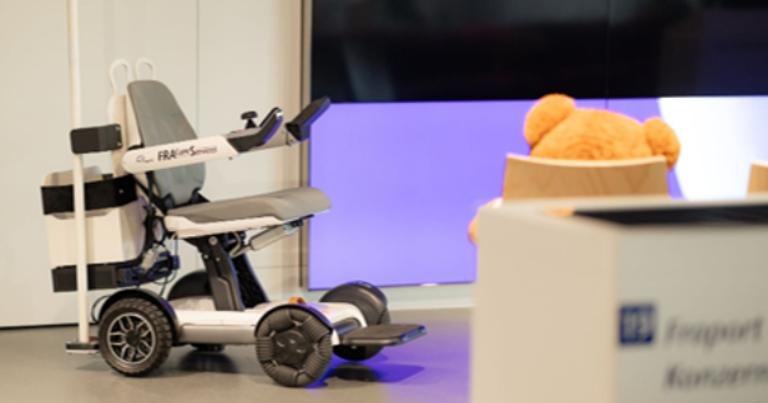
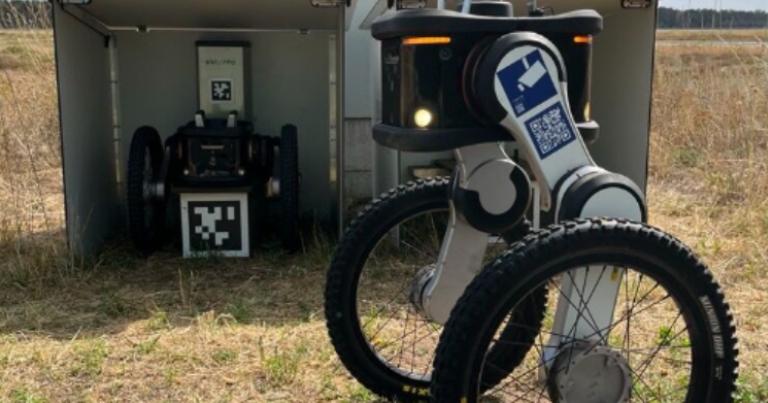
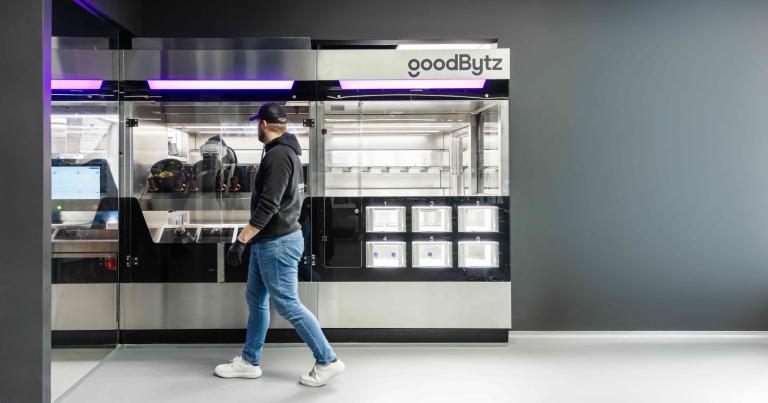
At Fraport – a Corporate Partner of the FTE Digital, Innovation & Startup Hub – Physical AI is becoming an important part of its digital transformation, combining artificial intelligence (AI) with autonomous systems operating in the physical world.
“A key element of our approach is the Robotics Competence Center (RCC), which serves as Fraport’s central platform for robotics and Physical AI,” explains Leander Gottschalk, Senior Project Manager Corporate Strategy & Digitalization, Fraport. “The RCC supports our business units in identifying, evaluating, piloting and scaling robotics solutions, while establishing common standards, governance and knowledge sharing across the company. Our ambition is to reduce organisational and technical barriers and accelerate the transition from promising use cases to scalable operations.”
Examples currently being explored at Fraport include:
- Autonomous patrol robot: Fraport is testing an autonomous patrol robot to monitor sections of the airport perimeter fence and identify potential anomalies using AI.
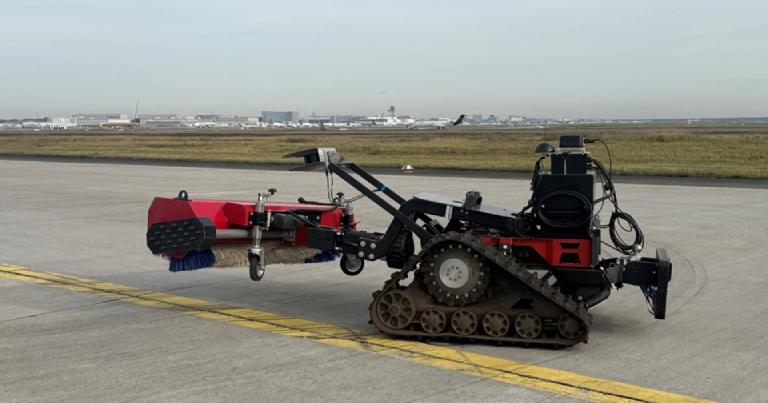
- Autonomous snow removal: Autonomous snow removal in ILS protected areas to support safe and efficient operations and reduce dependence on specialised personnel.

“We see the greatest potential for Physical AI where automation can address operational complexity while supporting employees and improving service quality,” says Gottschalk. “In robotics, cleaning and baggage handling are particularly promising areas, as intelligent systems can take over repetitive and physically demanding tasks and enable more flexible operations. Autonomous mobility is another major opportunity, particularly on the airside. Autonomous vehicles could increasingly support the transport of people and baggage, making ground operations more efficient and reducing dependence on manual transport processes. Ultimately, Physical AI offers the opportunity to rethink airport processes around a more effective combination of people, intelligent machines and autonomous systems.”
For passengers, Physical AI can create a more convenient, personalised and accessible airport experience, from multilingual assistance and autonomous mobility to new self-service and 24/7 service concepts. For airport operators, the value lies in higher service availability, more efficient use of resources and the automation of repetitive or labour-intensive tasks.
“Our autonomous wheelchair pilot already provides an early indication of this potential: 84% of surveyed users were satisfied or very satisfied with the service, while 55% preferred the robotic solution over human assistance,” Gottschalk shares.
Examples currently being explored at Fraport include:
- Autonomous wheelchairs: Self-driving wheelchairs that support passengers with reduced mobility, helping to reduce waiting times, and improve service quality.
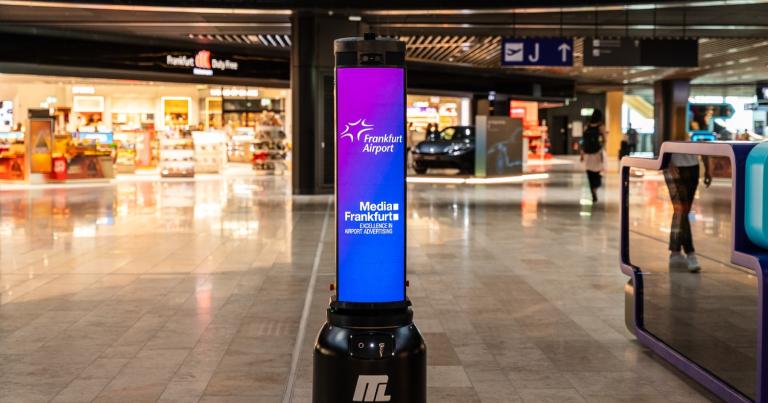
- TORY media and service robot: TORY combines passenger support with digital information and advertising services. The robot assists travellers with navigation and airport-related questions while also serving as a mobile platform for promotional and advertising content.
- GoodBytz cooking robot: Fraport is piloting the GoodBytz cooking robot in collaboration with retail partners. The solution autonomously prepares and serves fresh bowls.
Gottschalk explains that the biggest challenge is not proving that Physical AI can work in a pilot, but making it safe, reliable, accepted and economically viable at scale in a complex airport environment.
“First, integration, safety and governance need to be considered together,” says Gottschalk. “Airports are complex brownfield environments with established infrastructure, processes and IT systems as well as high safety and security requirements. Physical AI solutions therefore need to integrate seamlessly into the existing ecosystem. This also means addressing operational safety, cybersecurity, data protection and legal requirements from the beginning, rather than at the end of a pilot. Second, workforce readiness and trust are critical. Physical AI should be introduced together with employees, involving operational teams early and creating opportunities to gain practical experience. At Fraport, we particularly see potential where robotics can support employees by taking over repetitive, physically demanding or safety-critical activities. Employee acceptance, trust and participation in pilots are therefore important aspects of our approach. Third, scaling requires a sustainable business case. A successful proof of concept alone is not enough. Solutions need to demonstrate operational and economic value beyond the pilot, including integration, operation and maintenance. This requires a structured approach to selecting and evaluating use cases.”
This is exactly where Fraport’s Robotics Competence Center comes into play. Scaling Physical AI is not only a technology challenge, but also an organisational one. “The RCC therefore provides a common framework for moving robotics from pilot to operations, bringing together use-case evaluation, governance, IT and infrastructure requirements, and organisational acceptance,” says Gottschalk. “Our goal is to systematically shorten the path from promising pilots to scalable solutions with demonstrated business value.”
From Fraport’s perspective, unlocking the potential of Physical AI starts with the use case, not the technology. Fraport focuses on operational challenges with clear value potential, involves relevant stakeholders early and tests market-ready solutions under real airport conditions. Through its Digital Factory and Robotics Competence Center, Fraport combines this with strong technology partnerships and a structured approach to implementation.
“Over the next three to five years, we expect Physical AI to become an increasingly integral part of airport operations, particularly for repetitive, physically demanding and safety-critical tasks,” Gottschalk adds. “Advances in AI and robotics will make systems more adaptable to complex environments. The key will not be to adopt robotics everywhere, but to scale the right solutions where they deliver real operational and customer value.”
Metropolitan Washington Airports Authority: Making the ramp more predictable to unlock airport capacity
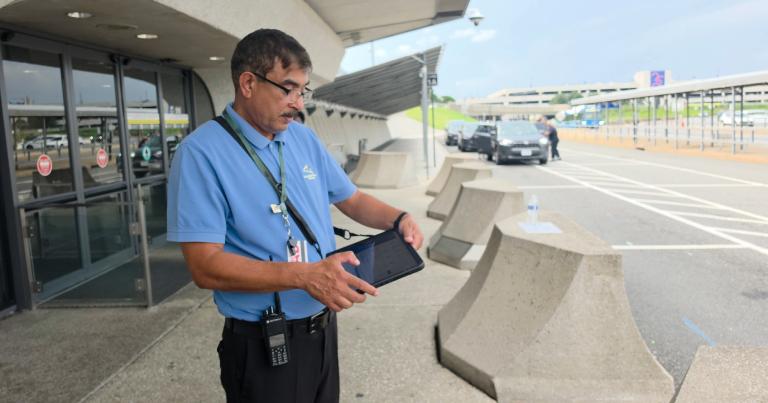
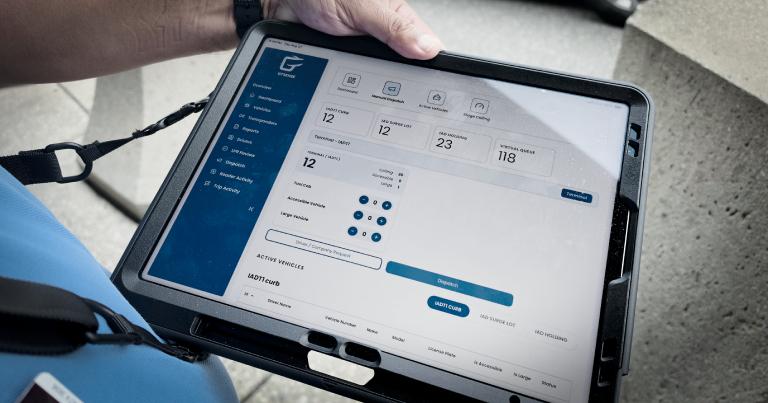
Metropolitan Washington Airports Authority – a Corporate Partner of the FTE Digital, Innovation & Startup Hub – sees the greatest opportunities for Physical AI on the ramp. “That’s where Physical AI can make the biggest difference, specifically by automating the arrival and pushback of the aircraft,” explains Christian Kessler, Director, Airports Transformation and Innovation, Metropolitan Washington Airports Authority. “Today, every turn depends on a person being in the right place at the right moment. An aircraft arrives and waits for the boarding bridge operator. It’s ready to go and waits for the tug. Those are small delays, but they’re still delays, and across a full day of operations they add up. A Physical AI environment gives us robots and automation, but more importantly it means the resource is always there when it’s needed. If we’re stretched on tugs, the system knows it and handles it automatically, before an aircraft sits at the gate waiting. The aircraft should never wait for the ramp. The ramp should be ready for the aircraft. That, to me, is the greatest opportunity.”

The tangible benefits of Physical AI include consistency and certainty. “For passengers, that means the same level of service every time,” says Kessler. “A self-guided wheelchair gives an assisted passenger the same experience on a quiet Tuesday as on the busiest day of the year. Smaller, on-demand vehicles mean passengers aren’t waiting for a large bus or people mover to fill up. And when the operation runs consistently, we can give passengers times they can trust: when the aircraft reaches the gate, when the bags arrive, how long the connection really takes. Passengers don’t mind waiting nearly as much as they mind not knowing. For the business, consistency is capacity. When every turn runs the same way, gate and stand use becomes predictable, and predictable assets can be worked harder. For constrained airports, that’s capacity we can unlock from the infrastructure we already have, before we pour more concrete.”
Commenting on the biggest challenges to scaling Physical AI, Kessler highlights that the ramp is shared ground. The airport, the airlines and the ground handlers all work the same space, each with their own equipment, staff and contracts. “Automating arrival and pushback means agreeing who owns the system, who pays for it and who’s accountable when it doesn’t work,” Kessler explains. “The technology isn’t the hard part. Getting everyone on the ramp aligned is. The workforce side matters just as much. A lot of Physical AI will land in work that’s often outsourced, from ground handling at an airline’s outstations to the bus drivers moving passengers around an airport. These roles are essential to the operation, yet they rarely get the attention or investment that the more visible parts of the business do. In some ways that makes automation easier to introduce. It also means we have to be deliberate about it. These teams know the operation better than anyone, and they should help design the change, not just receive it.”
Kessler concludes with some valuable advice for airports looking to unlock the potential of Physical AI. “Pick one small, painful problem and solve it. Waiting for a tug or a bridge operator is a good place to start. Fix it, measure it and prove it before you scale. Chase the minutes, not the headlines. And bring your ramp partners and your workforce in from day one. Alignment and buy-in are the real constraints, so start on them early.”
Aeroporti di Roma: Building a scalable Physical AI ecosystem through virtual testing and orchestration
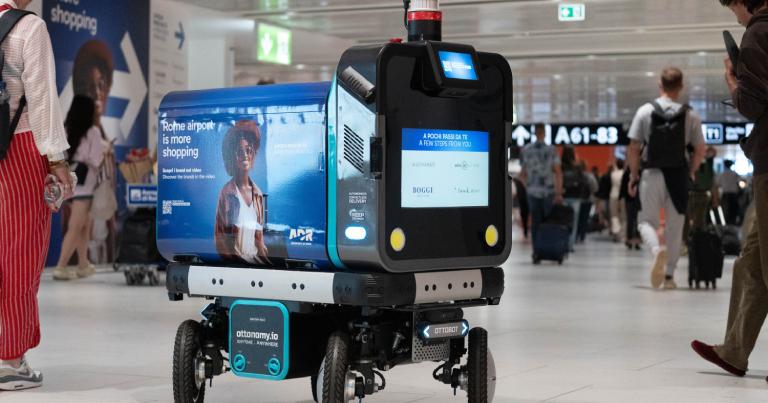
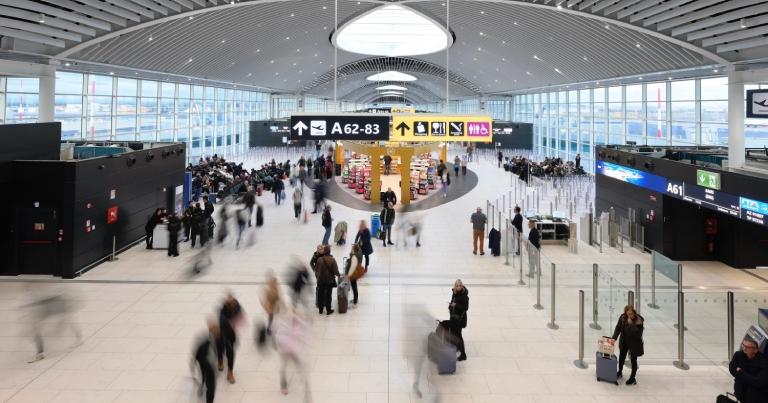
At Aeroporti di Roma (ADR) – a Corporate Partner of the FTE Digital, Innovation & Startup Hub – Physical AI is being developed through a joint initiative between the Innovation and Robotics teams. Together, they are building the foundations required to safely test, validate and scale autonomous systems across airport operations, as explained here by Giorgia Vittoria Marizza, Open Innovation & Partnership, and Giorgio Stillitano, Head of Operation & Maintenance Electromechanical Systems & Robotics Deployment.
“Our approach centres on the development of a virtual sandbox environment where robots and autonomous vehicles can be tested in a digital representation of the airport before being deployed in live operations,” say Marizza and Stillitano. “This enables us to assess safety, performance, operational impacts and system integration in a controlled environment. Once validated, these autonomous assets will be deployed and managed through a common orchestration layer capable of coordinating multiple robotic systems operating across different airport domains.”
Areas under exploration include:
- Autonomous vehicles for airside and landside operations.
- Autonomous cleaning robots within terminal facilities.
- Robotics solutions supporting baggage handling processes and BHS operations.

“These initiatives are part of ADR’s broader innovation strategy, supported by the Innovation Hub at Rome Fiumicino Airport, our startup accelerator that provides a real-world testing environment for emerging technologies and promotes collaboration between startups, industry partners and airport operational teams,” Marizza and Stillitano share. “By combining innovation capabilities with robotics expertise, our goal is to move beyond isolated pilots and create a scalable Physical AI ecosystem capable of supporting future airport operations.”
ADR believes Physical AI has the potential to become one of the most transformative developments in aviation since digital automation. “For airports, the greatest opportunity is to move from isolated automated processes to coordinated autonomous operations, with robots, vehicles and intelligent systems working together and alongside humans, adapting in real time to changing conditions,” Marizza and Stillitano explain. “At Rome Fiumicino, the most promising applications we are exploring include autonomous vehicles for airside and landside operations, robotic arms supporting baggage handling within the BHS, and autonomous cleaning robots operating inside terminals. Beyond efficiency gains, Physical AI can significantly improve the passenger experience by reducing waiting times, increasing service responsiveness and ensuring more reliable operations throughout the passenger journey.”

For passengers, the value of Physical AI lies primarily in creating a more reliable, comfortable and seamless airport journey. By supporting baggage handling activities, autonomous systems could help reduce mishandling and delays, while cleaning robots could contribute to maintaining cleaner and more welcoming terminal environments. “In the longer term, Physical AI could also support faster responses to operational disruptions and strengthen accessibility and assistance services, making the overall passenger experience more predictable and responsive,” say Marizza and Stillitano.
For airport operators such as Aeroporti di Roma, these solutions offer the opportunity to improve efficiency and make better use of assets and resources. “By supporting employees in repetitive or physically demanding activities, Physical AI can reduce operational burden and allow people to devote more attention to tasks that require expertise, judgement and human interaction,” Marizza and Stillitano share. “At the same time, continuous monitoring and autonomous decision support could enhance safety and operational resilience, helping both employees and airports respond more effectively to changing conditions and unexpected events.”
The main challenge to scaling Physical AI is not the individual robot itself, but the ability to integrate multiple autonomous solutions into a complex and highly interconnected operational ecosystem. “Airports must ensure that these technologies can communicate with existing infrastructure and legacy systems while meeting stringent requirements for cybersecurity, data protection, safety requirements and regulatory frameworks,” Marizza and Stillitano explain.
Successful adoption also depends on people and organisations. Marizza and Stillitano highlight that Physical AI should be designed to support employees rather than replace them, taking on repetitive or physically demanding activities while enabling people to focus on tasks that require judgement, expertise and human interaction. “Employees therefore need appropriate training and opportunities to develop new skills, while operators and passengers must be able to trust the technology and understand how it contributes to safer and more efficient operations,” Marizza and Stillitano share. “At the same time, interoperability between different vendors and technological platforms is essential to prevent isolated solutions and enable a coordinated, scalable ecosystem.”
Another critical factor is the ability to test solutions safely before deployment. This is why ADR believes virtual environments and digital twins will play a fundamental role in accelerating adoption while minimising operational risks. “Alongside these tools, partnerships developed through our Innovation Hub allow us to test emerging technologies with startups and assess how they interact with existing airport processes,” say Marizza and Stillitano.
Airports must also work closely with all the stakeholders operating within the wider airport ecosystem, particularly airlines and ground handlers. Physical AI does not affect only processes related to physical infrastructure; it often spans activities managed by different organisations. “Baggage handling is a clear example: successfully testing and introducing new technology requires the airport operator, ground handlers and airlines to collaborate from the outset, align operational requirements and jointly validate the new operating model,” Marizza and Stillitano explain. “Physical AI must be introduced gradually, with clear governance models and strong collaboration between airports, airlines, technology providers and regulators.”
Their advice is to begin with a clear operational need rather than with the technology itself. Airports and airlines should identify where Physical AI can deliver measurable value, launch focused pilots and define success criteria from the outset, covering safety, operational performance, passenger impact, workforce support and scalability. Virtual environments and digital twins can then validate solutions and reduce risk before deployment in live operations. “Collaboration is equally important because Physical AI often affects processes shared by airport operators, airlines, ground handlers, technology providers and regulators,” say Marizza and Stillitano. “Involving these stakeholders from the design and testing phases helps align requirements, responsibilities and operating procedures.”
Over the next three to five years, they expect Physical AI to evolve from isolated pilots to coordinated ecosystems of robots, autonomous vehicles and intelligent systems. “For ADR, the next step is to connect validated use cases into an operational model that delivers measurable value, rather than treating individual pilots as standalone demonstrations. Leading airports will orchestrate different solutions through common platforms and scale them safely across multiple operational domains,” Marizza and Stillitano add. “Human oversight will remain essential: autonomous systems will support employees in repetitive or physically demanding activities, provide better operational information and allow people to focus on decision-making and problem-solving.”
Munich Airport: Scaling Physical AI through integration and human oversight
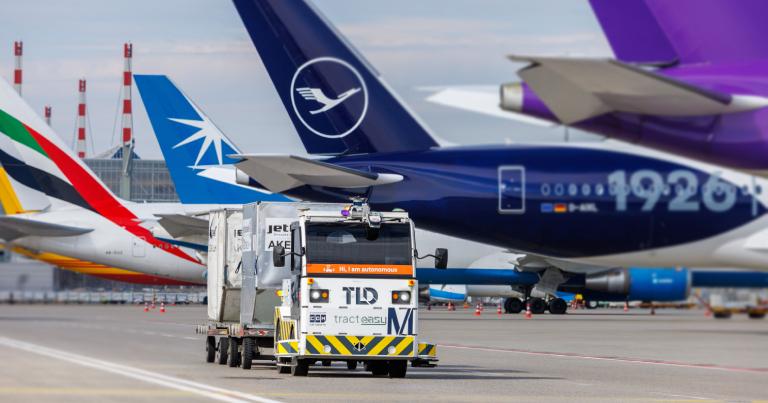
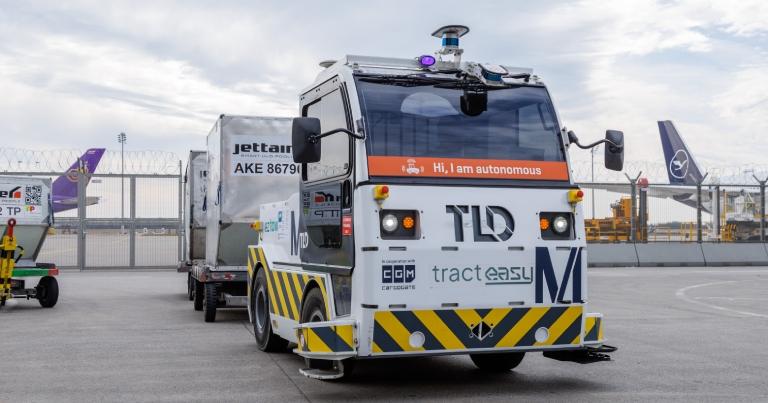
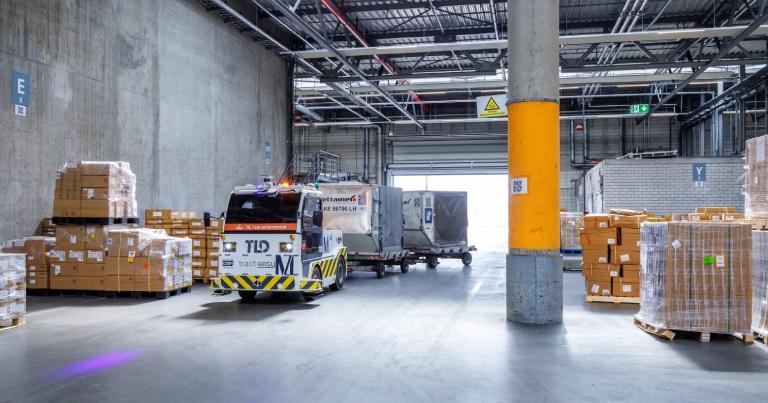
Munich Airport – a Corporate Partner of the FTE Digital, Innovation & Startup Hub – has been exploring robotics and automation since 2016, in the terminals, on the apron and in the cargo area. “We don’t test isolated products. We build solutions that can scale,” explains Vera Jakobsen, Vice President Digital, Munich Airport.

One example is Munich Airport’s FTE Smart Ramp project with Lufthansa, which is focused on autonomous transportation airside. An autonomous tow tractor carries freight pallets from the cargo area through the security checkpoint to staging areas initially at Terminal 1. “The target is driverless Level 4 operation without taxiway crossings,” says Jakobsen. “The vehicle has completed indoor and outdoor driving, mixed traffic, roundabouts right-of-way and safety-distance tests. It has also completed dolly handover, mission programming and the security checkpoint process. Lufthansa contributes autonomous baggage transport, and together we are exploring solutions which address the highly dynamic aircraft stand area especially during turnaround.”
Further examples include a pilot for a remotely operated passenger boarding bridge and autonomous cleaning robots (about 17,000sqm every day) in the Terminal 2 system. Munich Airport has recently trialled autonomous wheelchairs for passengers with reduced mobility in Terminal 2. On the landside, Munich Airport is preparing the next steps in autonomous people transportation, including autonomous shuttles both airside and landside.

Munich Airport sees a big opportunity for Physical AI in ground operations. “Automation can help to improve punctuality and offset growing labour shortages,” says Lorenz Hagedorn, Head of Digitalization & Strategic Process Planning Aviation, Munich Airport. “It is meant to relieve staff, not replace them. It can take over physically demanding, hazardous or monotonous tasks, and it helps us handle passenger growth without building expensive new infrastructure. We target punctuality, staff retention and economic efficiency. The airside environment is also well suited to autonomy: speeds are low, every vehicle and person is known, the area is fully mapped, and technologies for navigation and communication are already in place.”
Commenting on the challenges in terms of scaling Physical AI, Hagedorn highlights that the technology itself is rarely the bottleneck. “Defining every process interface with our human-centric airport is the real work.”
- Regulation: “Autonomous systems must meet the legal and safety requirements of their operating environment.”
- Mixed traffic: “Human drivers wave the vehicle through or honk at it, and it doesn’t respond.”
- Operating models: “We need operator concepts, control centres to oversee autonomous operations and new roles such as technical oversight.”
- Fleet integration: “The goal is one autonomous fleet instead of many incompatible systems.”
Jakobsen concludes with some valuable advice for airports looking to unlock the potential of Physical AI. “Start with the operational challenge and the business value, not the technology, and design for scale from day one. Work together with other airports, share experience and build on each other’s progress. Over the next three to five years, we expect more Physical AI solutions to move from pilots into everyday operations. Scaling will require integration into existing processes, clear responsibilities and reliable human oversight, for example through a central control centre. People and autonomous systems will increasingly work together, with humans managing exceptions and providing backup.”
Fraunhofer IML: Connecting autonomous systems to create intelligent airport ecosystems
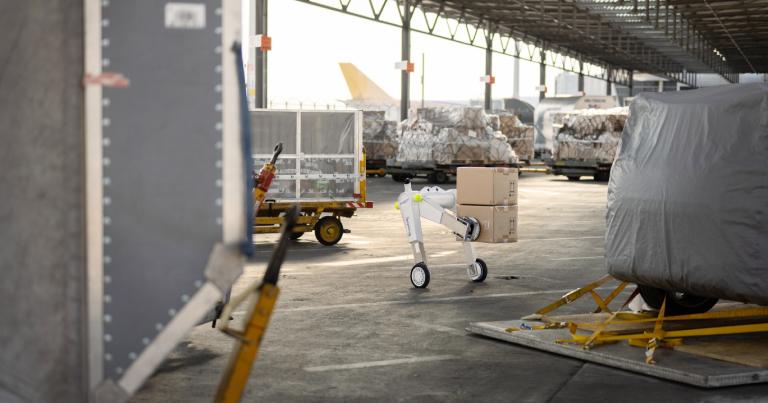
Fraunhofer IML – a Corporate Partner of the FTE Digital, Innovation & Startup Hub – is advancing Physical AI by combining artificial intelligence (AI), robotics, autonomous mobility and intelligent orchestration to transform aviation operations.
“Our flagship initiative, the Digital Test Field Air Cargo (DTAC), explores how autonomous vehicles, mobile robots and intelligent handling systems can transform air cargo and airport ground operations,” explains Dr Harald Sieke, Head of Center for Logistics and Mobility, Fraunhofer IML. “Applications include autonomous cones, autonomous chocks, autonomous tugs, robotic ULD transportation, baggage handling robots, autonomous forklifts and intelligent robotic systems for managing operational areas.”
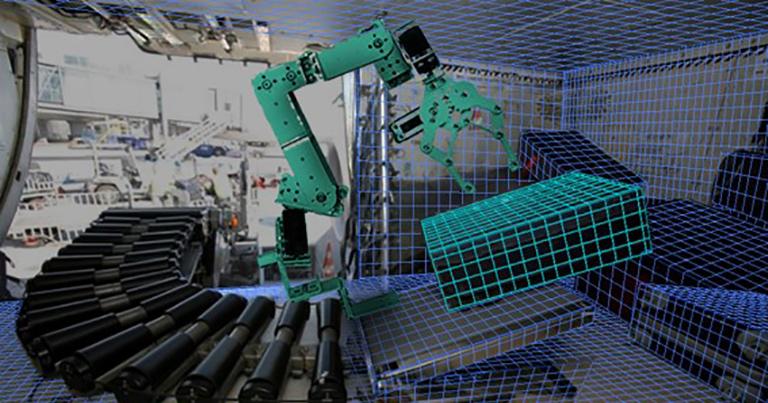
Additionally, Fraunhofer IML is researching robotic solutions for loading and unloading loose baggage inside aircraft cargo compartments, a particularly challenging environment requiring intelligent perception, adaptive manipulation and safe human-robot collaboration.
“Our research in aviation incorporates technologies such as Boston Dynamics’ Spot and autonomous vehicle solutions, while drawing on Fraunhofer IML’s broader developments in humanoid robotics, drones, LoadRunner and O³dyn,” says Sieke. “Our focus goes beyond individual robots: we aim to create intelligent Physical AI ecosystems in which autonomous machines, people and airport infrastructure collaborate seamlessly.”

Fraunhofer IML believes the greatest potential lies in turning airports from process-driven environments into adaptive, intelligently orchestrated ecosystems. “Physical AI can make ground handling, baggage and cargo transport, aircraft servicing, including autonomous cones and chocks, and infrastructure inspection more flexible, reliable and efficient,” Sieke explains. “By perceiving their surroundings, making decisions and responding to changing conditions, intelligent systems can improve operations across the airport. A key step will be to connect autonomous systems through shared orchestration frameworks rather than operate them as isolated technologies. For passengers, the benefits may be largely invisible yet substantial: more reliable baggage delivery, shorter turnaround times, fewer disruptions and more predictable journeys. Over time, Physical AI could also make airport infrastructure more flexible by replacing rigid processes with intelligent, mobile and reconfigurable solutions.”
Physical AI offers substantial potential to improve operational productivity, reliability, safety and workforce efficiency. One compelling example is the robotic loading and unloading of loose baggage inside aircraft. “Automating physically demanding tasks in confined cargo compartments could reduce ergonomic strain, improve process consistency and help address workforce shortages,” Sieke shares. “Autonomous cones, chocks, vehicles, and mobile robots could also improve baggage and cargo flows, while robotic inspection systems and drones could support more efficient infrastructure monitoring. Within DTAC, we are developing and demonstrating technologies that bring together autonomous mobility, intelligent perception and system orchestration. For passengers, the resulting benefits could include fewer baggage-related disruptions, more reliable connections and improved operational punctuality. However, technological feasibility is only the first step. The real breakthrough will come when these solutions demonstrate measurable operational and economic benefits under real airport conditions.”
Sieke highlights that the main challenge is not making a single robot work. It is enabling many intelligent systems to operate safely, reliably and economically in complex airport environments. Airports combine dynamic operations, strict safety rules, legacy infrastructure and many stakeholders. Interoperability is therefore essential. Systems need open interfaces and shared orchestration approaches.
“Structured data is the foundation of all AI, including Physical AI,” says Sieke. “Its quality, consistency, availability and secure exchange must be considered from the outset. Safety, regulatory compliance, robustness and trust are equally important. Robots must behave predictably around people and conventional vehicles, even in difficult conditions. Workforce readiness also matters. Physical AI should support human expertise, reduce physically demanding work and be introduced with suitable training. Scaling also requires a clear business case and real-world validation. The starting point should always be the operational challenge, not the robot. Airports and airlines should select processes where Physical AI can create measurable value, define clear KPIs and test solutions under realistic conditions, which again should be an easy access such as our autonomous cone. Long-term success will depend on cooperation between airports, airlines, ground handlers, technology providers and research organisations. In the next three to five years, we expect more adaptive autonomous systems, closer coordination of heterogeneous robot fleets and more versatile machines, jointly cooperating with humans. Advances in embodied AI, intelligent manipulation and humanoid robotics will extend automation to tasks that are still too variable or complex today. Fully autonomous airports will not emerge overnight. Instead, people and intelligent machines will increasingly work together. The goal is not to remove people from airports, but to create safer, more resilient and more efficient operations.”
Fraunhofer IML’s advice is to begin with a clearly defined operational need and a manageable use case. “A simple system, such as an autonomous cone or chock, is a good starting point,” says Sieke. “It offers visible operational value, can be tested under realistic conditions and creates experience for the later integration of more complex solutions.”
Structured data is the essential foundation for all AI, including Physical AI. Airports and airlines therefore need consistent data models, high data quality and secure data exchange from the outset.
“Clear KPIs should be used to assess safety, reliability and economic value before a solution is scaled,” Sieke adds. “Open interfaces and shared orchestration will then allow individual systems to become part of a connected operational environment. Over the next three to five years, autonomous systems will become more adaptive, heterogeneous fleets will cooperate more closely and robots will take on increasingly complex tasks. This development will be gradual. Airports will first build on proven, focused applications and expand them step by step through cooperation between operators, ground handlers, technology providers and research organisations. The aim is not to replace people. It is to enable people, intelligent machines and airport infrastructure to work together safely, efficiently and resiliently.”
Zurich Airport: Balancing innovation, safety and scalability in Physical AI
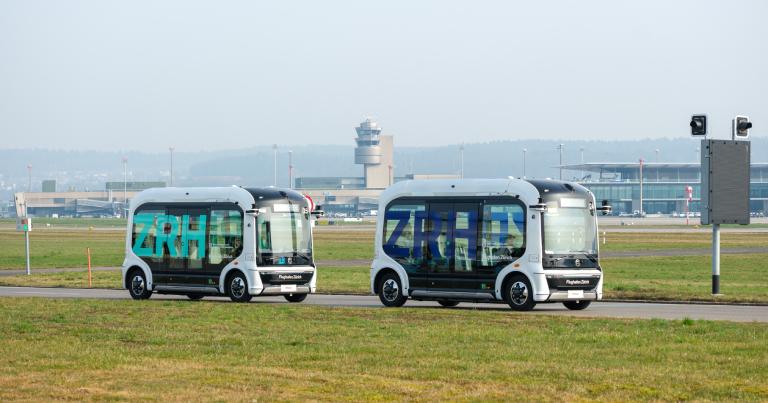
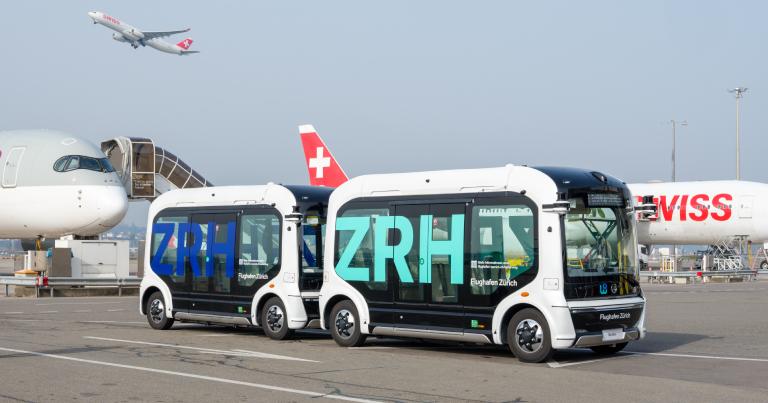
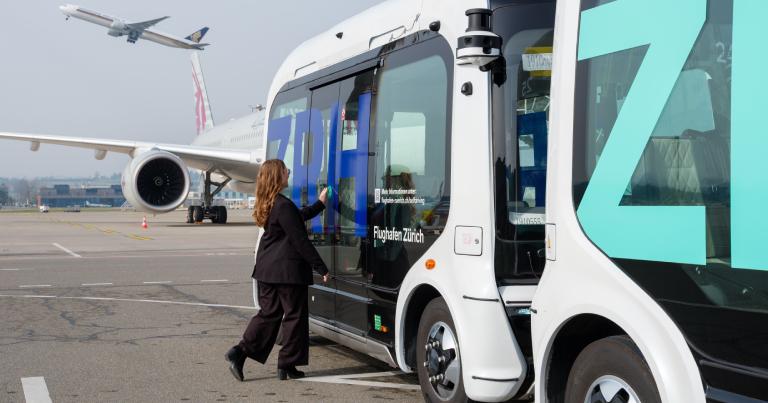
Zurich Airport – a Corporate Partner of the FTE Digital, Innovation & Startup Hub – is currently focused on building the operational and safety framework for autonomous driving airside. “With our technology partner WeRide, we have achieved Level 4 operation with two shuttle buses on a defined route at Zurich Airport, without a safety driver onboard and with monitoring from a remote cockpit,” explains Coralie Klaus Boecker, Head ZRH Innovation Hub, Zurich Airport. “This milestone builds on extensive testing and the necessary approvals from the Swiss Federal Office of Civil Aviation (FOCA) and other relevant authorities. The pilot is designed as an employee shuttle service; it is a passenger bus operation. The current route does not cross aircraft taxiways. Our next steps are intended to introduce greater operational complexity, including operations around aircraft stands and, subject to safety validation and the necessary approvals, taxiway crossings. We are sharing what we learn with our airport partners to support further applications. We also plan to begin exploring robotics in baggage handling in 2027.”

Klaus Boecker sees the greatest opportunities for Physical AI in operational tasks that are repetitive, physically demanding or difficult to resource reliably. “Physical AI could help airports accommodate passenger growth without requiring staffing to increase at the same rate, while making better use of existing infrastructure,” says Klaus Boecker. “In baggage handling, for example, robotics could reduce strenuous lifting and repetitive movements, improving working conditions and potentially lowering the risk of injury. Autonomous transport could make vehicle availability more predictable and allow services to respond more flexibly to demand. For passengers, the potential benefits are smoother journeys and fewer avoidable waits. For airport operators and their partners, they include more consistent service delivery and greater resilience. These gains depend on redesigning the surrounding processes and integrating the technology into daily operations.”
Bus boarding is one area where Klaus Boecker sees potential worth exploring. One hypothesis – not a validated concept or an agreed direction – is that autonomous driving could enable smaller vehicles to run more frequently on suitable routes. This might reduce waiting times for passengers and give operators more flexibility in matching transport capacity to demand. “Whether this would improve the overall operation remains to be tested,” Klaus Boecker shares. “Smaller vehicles are not automatically more efficient, and any potential benefits would need to be assessed against apron traffic, gate and stand capacity, accessibility requirements and aircraft turnaround processes. A mix of vehicle sizes could be one option to explore.”
In baggage handling, robotics could help reduce bottlenecks and support more consistent baggage delivery. Klaus Boecker highlights that whether this translates into shorter waits at reclaim depends on the performance of the whole baggage process. “Our tangible result so far is Level 4 operation on a defined airside route. It is an important step towards wider deployment, but it does not yet demonstrate shorter passenger waiting times or a return on investment at scale.”
The biggest challenge, Klaus Boecker emphasises, is moving from a successful pilot to a dependable operational service. Maturity varies across applications, and a solution proven at one airport still needs to be assessed for another airport’s layout, traffic, weather and operating procedures.
“Safety remains our priority and must be built into each stage,” Klaus Boecker explains. “At Zurich, this means managing changes through our established processes, assessing safety and security risks, and involving FOCA wherever regulatory approval is required. Each application needs a clearly defined operating scope and tested procedures for failures, disruptions and recovery.”
Integration is equally important: vehicles and robots need to work with existing systems, communications infrastructure and mixed traffic. Cybersecurity, maintenance and remote support must be part of the operating model from the outset.
“We also need to develop that model with the people who will use and support it,” says Klaus Boecker. “Early involvement, training and clear responsibilities help build trust and ensure that redesigned processes work in practice. Our shuttle project illustrates how roles can evolve from driving a vehicle to monitoring operations remotely. Finally, investment decisions need to account for the full cost of deployment and operation. Airports and their partners should agree who invests, who operates the service and how the benefits are shared, with funding released in stages as safety, reliability and business value are demonstrated.”
Klaus Boecker shares some valuable advice for airports looking to unlock the potential of Physical AI. “Start with the operational problem you need to solve. Every airport has different bottlenecks, so the priority should be a use case with a clear need, measurable benefits and a realistic path to deployment. Define success early, whether that means better service reliability, less manual handling or more productive use of resources.”
Senior management commitment is essential because implementation changes processes, responsibilities and investment priorities over several years. “Bring operational teams, employees, technology providers and regulators into the work early,” says Klaus Boecker. “Start within a manageable scope, learn from real operations and expand as the evidence supports it. Plan for integration, training and operating costs from the beginning.”
In the coming years, Klaus Boecker expects selected applications to move from isolated pilots towards larger deployments in clearly defined operating environments. “Autonomous airside transport and robotics for specific baggage tasks are promising areas,” Klaus Boecker adds. “Progress will vary by application and airport, and people will remain essential for supervision, exceptions and recovery. The real measure of success will be whether these systems deliver safe, reliable services and a sustainable business case.”
Tampa International Airport: Building a smarter, more connected airport through Physical AI
Tampa International Airport – a Corporate Partner of the FTE Digital, Innovation & Startup Hub – has several solutions that optimise Physical AI technology. This includes measuring the passenger counts entering the airport’s shuttle lobbies to ensure the volumes of travellers do not exceed a certain number. “We then automatically lock the e-gates and then automatically reopen when the lobby has cleared and the shuttle has departed,” explains Douglas Wycoff, Director of Digital Technologies & Innovation, Tampa International Airport.
Airports still rely on many labour-intensive, fragmented processes. Physical AI could connect these into a more automated operating system, as Wycoff highlights:
- Predictive maintenance: “Aircraft, jet bridges, baggage systems and runway equipment could be continuously inspected by sensors, drones and robotic systems. AI could identify deterioration before it causes disruption.”
- Faster turnarounds: “Computer vision and connected equipment could monitor cleaning, refuelling, loading and boarding in real time, identify delays and automatically resequencing tasks.”
- Smarter airside operations: “AI-controlled towing, gate allocation, taxi routing and de-icing could reduce aircraft idle time, fuel consumption and emissions.”
- Resilient disruption management: “During bad weather or equipment failures, AI could coordinate gates, crews, vehicles and passenger flows across the airport rather than optimising each function separately.”
For passengers, the biggest gains would come from removing uncertainty and physical friction:
- Touchless journeys: “Biometrics and intelligent checkpoints could create a continuous path from terminal entry to boarding, with fewer repeated document checks.”
- Robotic assistance: “Mobile assistants could guide travellers, transport luggage and support passengers with reduced mobility or language barriers.”
- More reliable baggage handling: “Robotic loading and computer-vision tracking could reduce mishandling while giving passengers precise, real-time baggage status.”
- Personalised service: “With appropriate consent, physical spaces could adapt directions and assistance to a passenger’s itinerary, accessibility needs and disruption status.”

Elaborating on the tangible benefits Physical AI could deliver for passengers, Wycoff emphasises shorter, more predictable journeys – biometric processing, intelligent security lanes and real-time passenger-flow management can reduce queues at check-in, border control and boarding.
“AI monitoring of ground operations can identify a late refuelling, baggage or catering activity early enough for teams to intervene,” Wycoff adds. “Computer vision, robotic handling and autonomous transport can improve tracking, reduce transfer errors and give passengers more accurate status updates. Service robots and autonomous mobility systems could guide passengers, carry luggage and support people with reduced mobility, visual impairments or language barriers. Physical AI can combine live information about aircraft, gates, queues and baggage to redirect passengers and resources before disruption escalates.”
Commenting on the challenges in terms of scaling Physical AI, Wycoff highlights integration with existing infrastructure. “Many airports depend on older baggage, building-management, airline, security and operational databases that were not designed for real-time machine-to-machine coordination,” he explains. “Physical AI also needs dependable connectivity, accurate positioning, high-quality data and interfaces with equipment supplied by different vendors.”
Wycoff also emphasises that organisations should avoid replacing everything at once. A more practical approach is to:
- “Build a common data and integration layer around existing assets.”
- “Adopt open interfaces and common data definitions to prevent vendor lock-in.”
- “Start in bounded environments, such as one baggage area or group of aircraft stands.”
- “Test degraded modes, including loss of connectivity, sensors or positioning.”
- “Require a safe manual operating mode and clear procedures for transferring control.”
- “Design cybersecurity into the operational architecture rather than treating it as an IT add-on.”
Wycoff concludes with some valuable advice for airports looking to unlock the potential of Physical AI. “My central advice is to treat Physical AI as an operational transformation programme, not a collection of technology pilots. Start with specific operational problems, establish the digital and organisational foundations needed to solve them, and scale only when safety and value have been demonstrated in live conditions.”
Physical AI: Connecting people, machines and airport operations
The seven perspectives in Part 2 of this Future Travel Experience focus demonstrate that Physical AI is about more than deploying robots or automating individual tasks. It represents an opportunity to rethink how airports operate, connecting intelligent machines, digital systems, infrastructure and people to create more responsive and resilient environments.
Gottschalk highlights the importance of a structured approach to moving robotics from pilot to operation, while Jakobsen emphasises the need to design for scale and integrate autonomous systems into existing airport processes. Kessler brings the focus to the ramp, where better coordination could reduce delays and unlock capacity from existing infrastructure. Marizza and Stillitano highlight how virtual testing and common orchestration platforms can help airports validate autonomous systems safely and scale towards coordinated operations. Sieke outlines the potential of intelligent orchestration to connect autonomous systems into wider operational ecosystems, while Klaus Boecker stresses that safety, validation and a sustainable operating model must underpin deployment. Wycoff highlights how real-time sensing and automated responses could help airports manage passenger flows and move towards more predictive operations.
Together, their perspectives point to a common opportunity: using Physical AI to make airport operations more predictable, efficient and adaptable. For passengers, this could mean fewer avoidable waits, more reliable baggage delivery, improved accessibility and smoother journeys. For airport operators and their partners, the potential benefits include better use of resources, improved safety, reduced physical strain on employees and greater resilience when disruption occurs.
Realising these benefits will require more than technological progress. Airports must integrate new solutions with existing infrastructure, establish reliable data foundations, address safety and cybersecurity, and involve employees and operational partners from the outset. They must also demonstrate measurable benefits under real operating conditions, with clear responsibilities and a viable business case supporting wider deployment.
The next three to five years could see more Physical AI applications move from targeted pilots into everyday airport operations, although progress will vary by technology and operating environment. The priority will not be to automate everything, but to identify where intelligent systems can make a meaningful difference and build on proven results.
Ultimately, the future of Physical AI in aviation will be shaped not simply by what robots can do, but by how effectively people, machines and airport infrastructure work together. For an industry under pressure to improve efficiency, accommodate passenger growth and deliver consistently better experiences, that combination could prove transformative.
Learn more about implementing frameworks for AI adoption at APEX FTE EXPO, Singapore, 18 to 19 November 2026

You may also be interested in
12 technology and CX trends that can enhance airline and airport operations in 2026
How Nice Airport is blending personalisation, experiential retail and omnichannel innovation
Air Canada targets more proactive, personalised passenger experience with AI and better data