




Summary:
- The New Terminal One at JFK has selected Tata Consultancy Services (TCS) as its strategic technology and innovation partner to deliver an intelligent, digitally-enabled passenger experience and more efficient airport operations.
- The partnership will deploy AI-enabled IT operations, passenger processing, cybersecurity and digital infrastructure to enhance operational visibility, support airline efficiency and streamline the end-to-end travel journey.
- As part of JFK Airport’s $19 billion transformation, the collaboration aims to set a new benchmark for airport innovation, combining operational excellence, personalisation and enhanced passenger experience.
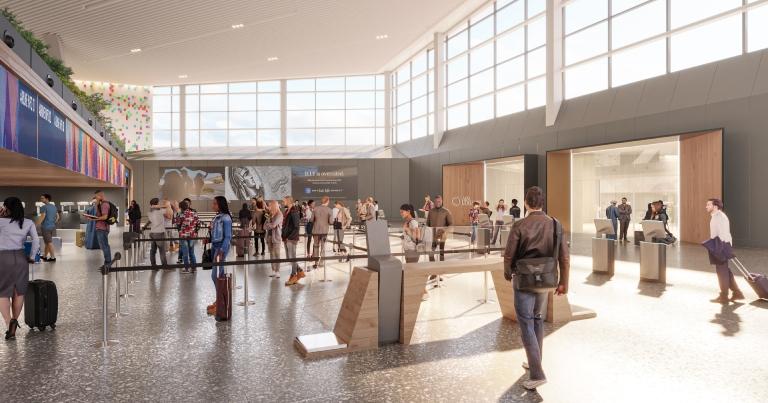
The New Terminal One at John F. Kennedy International Airport (JFK) has entered into a strategic partnership with Tata Consultancy Services to shape what aims to be the world’s most advanced airport experience. As the strategic technology and innovation partner to the New Terminal One, TCS will support the delivery of an intelligent, digitally-enabled passenger experience at the new terminal, delivering cost efficiencies to airlines and transforming international travel at JFK.
The New Terminal One is a key component of the Port Authority of New York and New Jersey’s $19 billion transformation of JFK Airport into a world-class gateway, with two new terminals, two expanded and modernised terminals, a new ground transportation centre and an entirely new, simplified roadway network.
“New York City and global travellers deserve an international airport terminal that offers an extraordinary experience,” said Jennifer Aument, CEO, The New Terminal One. “With TCS as our technology partner, we look forward to the New Terminal One earning its place among the world’s best, delivering a transformational guest experience for our partner airlines and their customers, while setting new standards in airport operations and innovation.”
Drawing from its track record of managing complex systems and creating personalised, engaging guest experiences, TCS will help lay the digital foundation for the New Terminal One, enhancing terminal-wide decision-making for efficient airline operations and a seamless traveller experience. TCS will support all technology systems at the terminal, including passenger processing systems, artificial intelligence (AI)-driven IT operations, infrastructure management, enterprise application support, and cybersecurity services.
Under the partnership, TCS will help develop a next-generation airport operations and guest experience spanning digital infrastructure, AI-enabled IT operations, and innovation initiatives. Developed with TCS’ Cognix and ignio solutions, the technologies will provide the New Terminal One and its partner airlines end-to-end visibility and proactive management of key components of the guest experience – from passenger processing and baggage handling to terminal security. This will pave the way for lower operating costs for airlines and a more efficient travel experience for passengers.
“Airports are evolving into dynamic consumer ecosystems where operations, hospitality, retail, and personalisation work together in real time,” said Amit Bajaj, President – North America, TCS. “Our partnership with New Terminal One is about helping build that future. As a gateway to the world’s most iconic city – New York, it is designed from the ground up to exceed the growing expectations of global travellers. AI will facilitate a seamless and reliable passenger experience and help evolve New Terminal One into a state-of-the-art experiential zone that will attract global travellers and keep them engaged in exciting new ways.”
As the new international terminal at JFK, the New Terminal One is uniquely positioned to redefine what a modern airport can be, transforming a transportation gateway to a platform for operational excellence, elevated service, experiential retail and personalised engagement.
You may also be interested in
12 technology and CX trends that can enhance airline and airport operations in 2026
Vote now: What will be aviation’s most game-changing technology over the next 20 years?