




Summary:
- Portland International Airport (PDX) has completed its $2.15 billion main terminal reconstruction, delivering a fully modernised, higher-capacity airport on time and on budget.
- The 11-year project enhances passenger flow, accessibility and sustainability while embedding strong elements of Pacific Northwest culture and local identity throughout the terminal.
- New amenities include expanded retail and dining from local brands, improved wayfinding, increased restroom capacity and a major regional art programme featuring 21 installations.
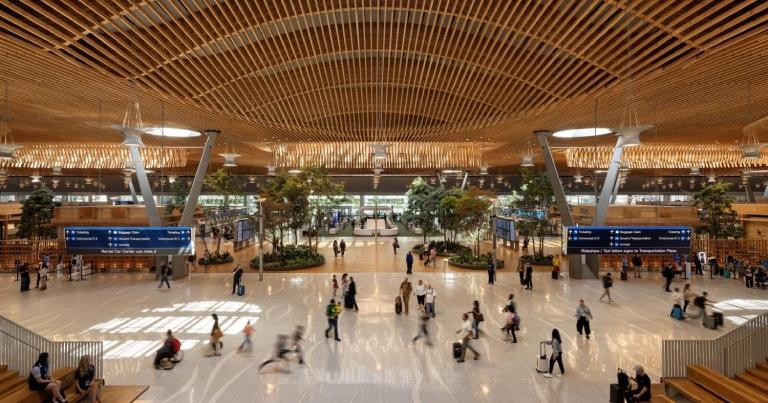
Portland International Airport (PDX) has completed its 11-year, $2.15 billion main terminal reconstruction. The project has modernised PDX, strengthened its resilience, and cut its carbon footprint while welcoming more travellers through the airport. The entire project finished on-time and on-budget. Now, travellers are experiencing the newly complete PDX as it was always intended, with improved flow and even more local character. The terminal reflects a commitment to celebrating PDX’s homegrown roots while creating space for local ingenuity and businesses to thrive.
“From the beginning, our North Star was a new PDX that reflects our values and the people and places that make this region special,” said Curtis Robinhold, Executive Director of the Port of Portland. “The final result is a world-class airport unlike any other, shaped by local hands, local ideas, and local pride. It’s a space that belongs to all of us, and a process that we can all learn from.”
As PDX doubled its capacity, the airport also doubled down on making the journey smoother and more welcoming for everyone. Every detail is a love letter to the Pacific Northwest. It’s all about the local brands, the local character, and the local culture:
- Shorter, faster permanent flow. New exit lanes on the north and south sides mean shorter, more direct routes from gates, to bags, to greeting loved ones.
- A smoother experience for all. More terrazzo floor throughout the main terminal makes it easier to move through the airport with strollers, wheelchairs, and rolling suitcases. More restrooms, including four new banks of all-user restrooms pre-and post-security, ensure quicker access and far less searching. Inside, travellers will discover a private and peaceful experience designed with a wide range of mobilities in mind, from individual stalls with floor-to-ceiling doors and walls, to natural light streaming from skylights.
- Local options to eat, drink, and shop that set PDX apart. Oregon icons like Powell’s Books, Columbia Sportswear, and Portland Gear are operating in newly built spaces alongside fresh food options like Kure Superfoods and Lola’s Cafe, rounding out the 27 additional local brands now at home in the new PDX.
- When people land at PDX, they know exactly where they are. A total of 21 new permanent and rotating art pieces rooted in the region’s culture, history, and community welcome travellers to the terminal. New permanent installations include large-scale sculptures by Indigenous artists in the entry areas, glass and ceramic tile walls near the exit lanes, and the return of legendary Portland artist Louis Bunce’s iconic 1958 Airport Mural.
- The new PDX wouldn’t have felt complete without the locally beloved retro carpet. The dye colours were adjusted seven times to get the 80s teal carpet fibre just right before installation in several prime locations throughout the new terminal.
The completion of PDX’s main terminal expansion marks the end of an 11-year-long chapter – from first sketches to final touches – and the beginning of another. It also marks the culmination of PDX Next, the Port of Portland’s suite of five major construction projects that reshaped PDX, including the new rental car facility, revamped concourses, new parking structure, and more. Now, with the building phase complete, the airport’s work shifts to ongoing improvements like baggage claim upgrades to make the travel experience even smoother.
You may also be interested in
12 technology and CX trends that can enhance airline and airport operations in 2026