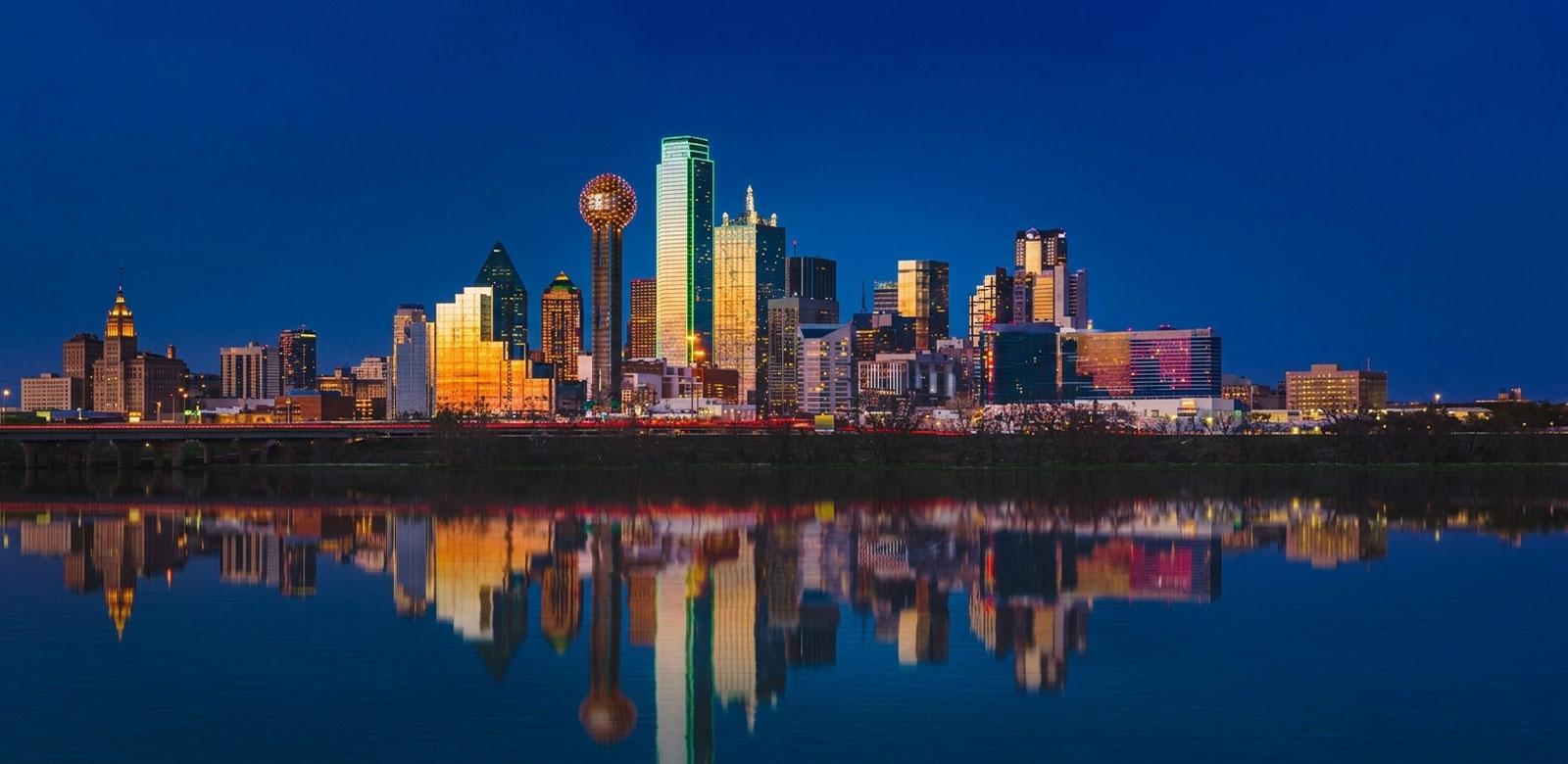





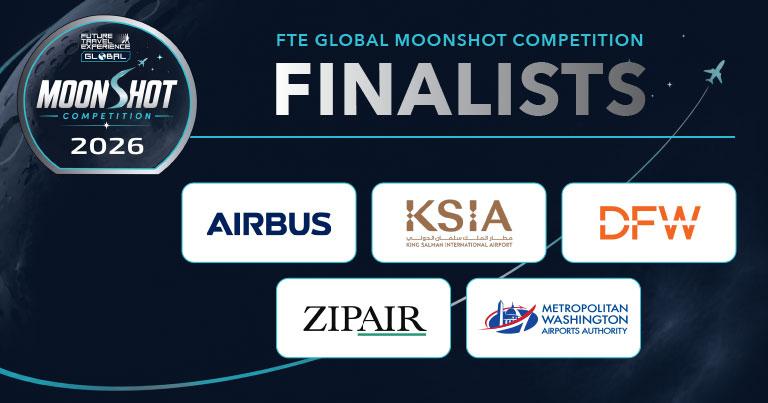
At the epicentre of FTE Global 2026 – the “CES of Aviation” taking place in Dallas, Texas, on 8 to 10 September – will be the industry’s most exciting competition to seek out the very best new ideas to change our industry for the better. Competitors will pitch on-stage in an effort to be crowned the inaugural FTE Global Moonshot Competition winner. We are delighted to reveal the shortlist for this year’s competition – Airbus, King Salman International Airport, Dallas Fort Worth International Airport, ZIPAIR Tokyo, and Metropolitan Washington Airports Authority – with finalists set to pitch their concepts live on stage before a judging panel and audience whose votes will decide the winners.
See the FTE Global schedule at a glance >> Register for FTE Global >>A new class of fully electric hydrogen fuel cell propulsion systems for future commercial aircraft
 Cedric Cocaud, Head of US Research and Innovation Partnerships, Airbus, will pitch the creation of a dedicated Airbus-MTU joint venture focused on taking hydrogen fuel cell propulsion from research and demonstration towards a certifiable, industrialised aviation product. The concept combines Airbus’ expertise in aircraft integration, hydrogen technologies and its ZEROe programme with MTU’s propulsion, certification and engine industrialisation capabilities. Hydrogen fuel cells would generate electricity to power electric motors, with the wider propulsion architecture encompassing everything from power electronics and thermal management to liquid hydrogen storage and distribution. But the real Moonshot extends well beyond the engine itself. Airbus and MTU recognise that making hydrogen-powered commercial aviation viable will require an entire ecosystem to evolve alongside the technology. Airports will need new hydrogen infrastructure; energy providers will need to produce and distribute clean hydrogen at scale; regulators will need to develop certification and safety frameworks; and the aviation supply chain will need new expertise in areas including cryogenics, fuel cells, electric propulsion and thermal management. The proposed joint venture is intended to be the catalyst for that transformation: a purpose-built propulsion company bringing together technologies, partners and capabilities to accelerate the journey towards hydrogen-powered flight. The ambition is considerable. If successful, the initiative could help establish a new propulsion architecture and potentially a new aerospace business model, while positioning hydrogen as a viable pathway towards zero-emission commercial aviation. That combination of technological ambition and ecosystem-wide thinking is what makes this proposal a fitting FTE Global Moonshot Competition finalist. Rather than simply developing a new engine, Airbus and MTU are proposing to rethink the propulsion system – and the industrial ecosystem needed to make it fly.
Hear more from Airbus at the 20th anniversary edition of FTE Global, taking place in Dallas, Texas, on 8 to 10 September 2026. Diego Alonso Tabares, Airport Operations Senior Engineer, Airbus, is participating in a session titled ‘Towards the smart apron: Automating the turnaround process’.
See the FTE Global schedule at a glance >> Register for FTE Global >>The Smart Tunnel: A next-generation passenger checkpoint
 Sukhvir Singh Mavi, Director – Emerging Technologies, King Salman International Airport, will pitch a Smart Tunnel concept, which aims to transform one of the most time-consuming parts of the passenger journey by bringing two essential processes together into a single touchpoint. This is a next-generation checkpoint in which passengers enter a modular Smart Cabin where carry-on baggage is screened using compact CT technology while millimetre-wave scanners screen the passenger. At the same time, biometric cameras verify the traveller’s identity against passport, visa and immigration databases. AI then combines the results to reach a decision within seconds. If everything is cleared, the passenger can continue directly towards the departure lounge. If an issue is identified, they are automatically directed to the relevant secondary security or border-control officer. The concept is deliberately designed around integration rather than replacing existing technologies. Border control could be incorporated into the Smart Tunnel itself or positioned immediately before or after it, depending on regulations and the configuration of the airport. That flexibility is central to the Moonshot. Rather than asking airports to build bigger terminals or continually add more security and immigration lanes as passenger numbers grow, the Smart Tunnel proposes a fundamentally different operating model: make the passenger-processing footprint smarter. The potential benefits extend beyond shorter queues and walking distances. By combining processes, airports could reduce the space, equipment and manpower required for passenger processing, while increasing throughput and making better use of existing terminal infrastructure. Airlines could benefit from more predictable passenger flows and fewer processing-related delays, while passengers would have more time to enjoy the airport rather than navigating successive checkpoints. The concept is currently in development, with technical specifications being worked on alongside technology vendors, while the compact CT screening technology is undergoing TSA testing criteria sponsored by the U.S. Department of Homeland Security. The Smart Tunnel’s biggest ambition, however, is to challenge an assumption that has shaped airport design for decades: that security and border control need to remain separate. By bringing them together, King Salman International Airport is proposing a new standard for seamless passenger processing that could ultimately be deployed at airports around the world.
AWARE: Advanced Warning and Response Engine
 Jonah Johnson, Sr. Product Manager, Dallas Fort Worth International Airport (DFW), will pitch AWARE as a decision-intelligence platform designed to give airport teams something exceptionally valuable: lead time. AWARE brings live data from cameras, passenger flows, airline schedules, roadway sensors and security checkpoints into a single operational intelligence layer. Machine learning models use that data to generate predictive alerts up to six hours ahead, while GIS mapping shows leaders not only that congestion or disruption is coming, but where it is likely to occur and how it could move through the airport. AI-powered reporting then turns the resulting intelligence into actionable insights without requiring teams to sift through vast quantities of raw data. Crucially, AWARE is already live at DFW. During Spring Break, the airport sustained systemwide vehicle travel times below six minutes while handling more than 4.5 million passengers amid $12 billion of concurrent construction. A third-party analysis of a seven-day period attributed 89.8 hours of avoided passenger delay and 72.4 metric tons of CO₂ savings to the system, alongside projected annual environmental savings of more than $190,000. The Moonshot ambition is to make this approach replicable well beyond DFW. AWARE has been designed to be technology-agnostic, allowing new sensors, data sources and AI capabilities to be incorporated as they emerge rather than forcing airports to continually replace individual point solutions. The ultimate vision is an airport that can anticipate its own pressure points – whether caused by construction, weather, peak travel or unexpected disruption – and intervene before passengers experience the consequences. That represents a significant shift in thinking: instead of addressing capacity challenges primarily through more infrastructure and staffing, airports could increasingly use predictive intelligence to extract more capacity from the infrastructure they already have. For an industry facing rising passenger volumes, constrained infrastructure and growing sustainability pressures, DFW’s AWARE offers a compelling glimpse of an airport that doesn’t simply respond to disruption, but sees it coming.
Hear more from Dallas Fort Worth International Airport (DFW) at the 20th anniversary edition of FTE Global, taking place in Dallas, Texas, on 8 to 10 September 2026. Chris McLaughlin, CEO, DFW, is speaking in the Opening Keynote Session. Mohamed Charkas, EVP, Chief Development and Infrastructure Officer, DFW, is participating in a session focused on ‘Future airport design, collaboration and operating strategies’ alongside Jim Moses, Senior Vice President of DFW Operations, American Airlines, with a presentation titled ‘A deep dive on the new Terminal F at DFW International Airport’. Sharon McCloskey, VP Customer Experience, DFW, is joining a panel discussing ‘How AI and other new technologies are reimagining the end-to-end customer journey and empowering the workforce’. Meanwhile, Jerome Woodward, Executive Vice President of Operations, DFW, is participating in the U.S. CBP Symposium.
See the FTE Global schedule at a glance >> Register for FTE Global >>Beyond the terminal: The distributed airport
 Akemi Kimura, Assistant Manager, ZIPAIR Tokyo, will pitch a new operating model in which the airport is no longer the starting point for the administrative side of an airline journey. Instead, those processes would be distributed across the passenger’s journey and completed before they arrive at the terminal. Airline staff could use cellular-connected, battery-powered devices such as iPads and iPhones to handle check-in, travel document verification, boarding and disruption management without relying on fixed counters, shared airport terminals or conventional CUTE/CUPPS infrastructure. The biggest change, however, would be baggage. Instead of carrying checked luggage to the airport, passengers could have it accepted at trusted locations such as hotels, railway stations, convenience stores, city terminals or even their homes. Bags would be securely identified, screened where required, tracked during transportation and delivered to the airport ahead of the flight. Passengers would consequently arrive at the terminal with only their carry-on baggage and proceed directly towards security and boarding. That is what makes the proposal more than simply a mobile check-in solution. ZIPAIR is challenging the assumption that airline services need to be physically tied to the airport at all. The technologies required – cloud platforms, mobile connectivity, digital identity and baggage tracking – largely exist today. The Moonshot lies in combining them into a new operating model. For airlines, the concept could reduce dependence on airport-controlled infrastructure and make launching new routes, seasonal operations or temporary services significantly more flexible. Airports could eventually reduce the space devoted to check-in halls, counters and baggage acceptance, while passengers would spend less time carrying luggage and queuing. There is also a resilience benefit: mobile operations could potentially be deployed during terminal closures, system outages or disruption events. Ultimately, ZIPAIR’s proposal asks a deceptively simple question: does the airport really need to be where the journey begins? Its answer could fundamentally change how terminals are designed and how passengers experience them – by making the traditional check-in counter unnecessary altogether.
The open airport: Rethinking security screening from the checkpoint to the gate
 Christian Kessler, Director, Airports Transformation and Innovation, Metropolitan Washington Airports Authority, will pitch a radically different approach to passenger screening. Their Just-in-Time Screening concept would move security from the central airport checkpoint to the boarding interface. A modular screening cabin, with two or three lanes depending on the aircraft, would be installed between the terminal and jet bridge. Passengers would scan their boarding pass and undergo screening as they board, effectively combining two traditionally separate queues into a single process. The operating model would turn every flight into its own predictable screening event. Boarding groups would become security appointments, while staff and equipment could be dynamically deployed according to flight schedules, passenger loads and connection data. The critical threshold is 30 seconds or less of active screening per passenger. The team’s initial modelling suggests that, using two to four lanes, a narrow-body aircraft carrying around 180 passengers could complete screening within its normal boarding window without extending turnaround time. The proposal is deliberately ‘subtractive’. Rather than adding technology to make the existing security queue faster, it questions whether the central checkpoint needs to exist at all. Removing it could free significant terminal space, reduce peak-processing infrastructure and give airports greater architectural flexibility. For passengers, it could eliminate one of the most unpredictable parts of the journey, reducing the need to arrive excessively early. There could also be operational benefits for airlines and security agencies, with screening demand forecast at flight level rather than according to unpredictable passenger arrival patterns. Distributed screening could further localise disruption and create new possibilities for risk-based screening. The concept is backed by analysis and the proposed next step is digital-twin simulation using real-world flight schedules, passenger loads and staffing data, followed by a controlled gate trial. Ultimately, ‘The open airport’ challenges one of aviation’s most deeply embedded assumptions: that security must be a place. Its Moonshot is to make it a seamless part of boarding, potentially freeing the airport to become more open, flexible and enjoyable while making the journey more predictable for everyone involved.
Hear more from Metropolitan Washington Airports Authority (MWAA) at the 20th anniversary edition of FTE Global, taking place in Dallas, Texas, on 8 to 10 September 2026. Christian Kessler, Director, Airports Transformation and Innovation, MWAA, is participating in a session titled ‘The FTE Data Sharing Think Tank: Will widespread data collaboration ever become a reality?’
See the FTE Global schedule at a glance >> Register for FTE Global >>You may also be interested in
12 technology and CX trends that can enhance airline and airport operations in 2026
FTE World Innovation Summit relocates to Tokyo for 2027 edition hosted by Haneda Airport – 1-3 March