




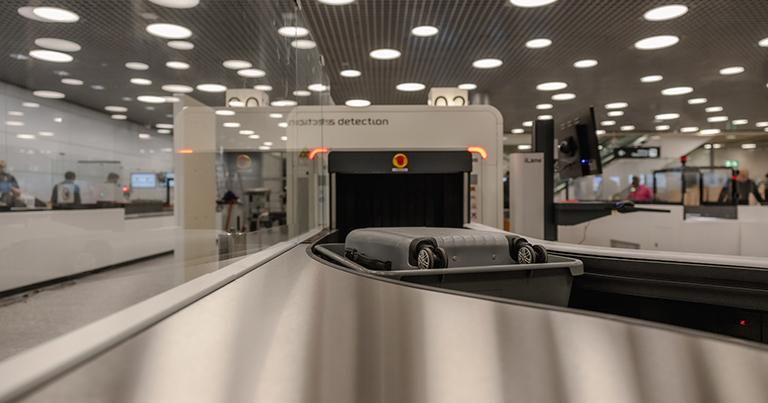
Zurich Airport has begun converting its security checkpoint to the new CT technology. The first of four floors has gone into operation, with seven new devices. These increase comfort and improve efficiency for passengers and employees in the Security Control Building.
With the conversion to the new CT technology, all 26 control lines in the Security Control Building will be comprehensively upgraded and brought up to the latest standard by summer 2026. In addition to a new line architecture, state-of-the-art equipment will be deployed. The goal is also to simplify the control process for passengers, improve the working environment for employees, and increase the capacity of the security checkpoint.
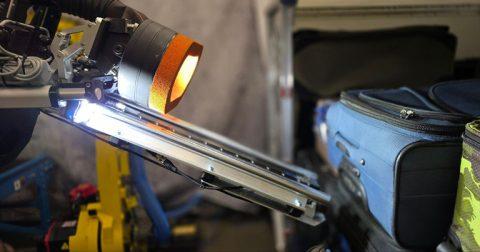
At the heart of the new systems are the CT scanners for carry-on baggage. They enable three-dimensional analysis of luggage items. Liquids and electronic devices can remain in the baggage during screening at the new CT scanners, which speeds up the process and significantly increases comfort for passengers. The use of the new technology increases throughput per line while ensuring the quality and reliability of the controls.
The seven new CT scanners are also capable and certified to screen liquid containers with a capacity of up to two litres. Therefore, passengers screened at the new devices will no longer have their liquid containers of up to two litres confiscated, provided the contents are not classified as a security risk.
In addition to CT technology, new security scanners are also being deployed for the first time. They are used for alarm resolution after the metal detectors and complement the existing metal detectors, enabling more targeted secondary screening. A standardised pictogram shows where on the body an anomaly is located without displaying individual personal characteristics.
Another part of the modernisation is remote screening. Security officers from the Zurich Cantonal Police no longer review the X-ray images of carry-on baggage directly at the control lines, but in a separate room. This spatial separation enables concentrated, ergonomic work in a quiet environment and at the same time relieves the control area, which additionally speeds up the process for passengers.
The conversion of the security control systems will take place in stages until summer 2026.