




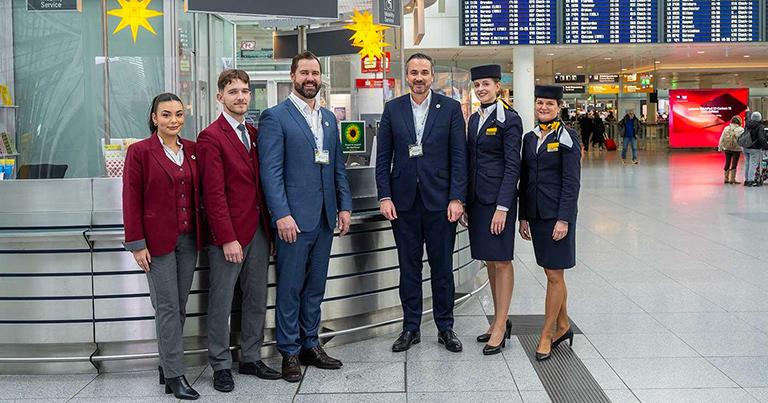
Lufthansa and Munich Airport are now part of the global Sunflower program, launched by Hidden Disabilities Sunflower. The aim of the program is to give people with invisible disabilities, such as mental or neurological disorders, greater visibility, understanding, and support in public spaces through a simple but significant symbol – a yellow sunflower on a green background. The program is based on three principles: voluntariness, trust, and respect. It focuses on breaking down barriers and promoting a more inclusive society.
Wearing the green lanyard with a Sunflower is a globally recognised symbol. It helps passengers indicate their specific needs, such as requesting more time or additional assistance. Airport staff are informed and aware of this symbol, enabling them to offer help and provide support to these passengers as needed.
Marcus Schnabel, Lufthansa’s Vice President of Ground Operations at the Munich Hub, said: “By joining the Hidden Disabilities Sunflower program, we are improving the travel experience for affected passengers. We are focusing even more consistently on our customers and getting our employees more aware of the unseen. We are doing this by teaching our staff on the ground and in the air about the non-visible disabilities and how to deal with it.”
Thomas Hoff Andersson, Chief Operating Officer, Munich Airport, commented: “It is important that we promote inclusion and accessibility at our airport. This service is valuable for travellers with invisible disabilities. I am convinced that it will significantly contribute to a positive travel experience at our airport.”
Paul White, CEO, Hidden Disabilities Sunflower, added: “We are extremely pleased to welcome Munich Airport and Lufthansa to the global Sunflower network. Munich Airport is an important hub for international and domestic travel. Becoming part of the Sunflower program shows the airport’s and the airline’s commitment to supporting passengers with non-visible disabilities. The Sunflower is a useful tool for travellers to indicate that they may require extra support. For staff, it makes it easier to identify who needs more understanding and kindness.”