




Summary:
- Phoenix Sky Harbor International Airport has launched a partnership with ReBokeh Vision Technologies to provide free access to assistive technology for low-vision travellers and staff.
- The mobile app-based platform enables users to adjust and enhance their visual environment in real time, supporting independent navigation throughout the airport.
- The initiative makes PHX the first airport in the southwestern United States to deploy ReBokeh, extending accessibility across multiple City of Phoenix-operated airports.
Phoenix Sky Harbor International Airport (PHX) is launching an accessibility partnership with ReBokeh Vision Technologies to offer free access to ReBokeh’s assistive technology software for people with low vision. The partnership will provide all PHX travellers and staff with free, unlimited access to ReBokeh, a mobile app-based assistive technology software that helps people with low vision to adjust the appearance of the world around them in order to fit their specific needs. With this partnership, PHX becomes the first airport in the southwestern United States to offer ReBokeh’s sole-source technology. The partnership will also include Deer Valley Airport (DVT) and Goodyear Airport (GYR), both of which are owned and operated by the City of Phoenix.
Designed by and for the low-vision community, ReBokeh is built to serve the 90% of blind and low-vision individuals who retain some functional sight. The mobile app-based software takes an empowerment-centric approach to assistive technology, providing a tool that allows low-vision individuals to use the vision they have rather than replacing it with audio or tactile descriptions.
“This partnership with ReBokeh reflects our dedication to expanding accessibility through innovation, and we’re proud that Phoenix Sky Harbor International Airport, ‘America’s Friendliest Airport’, is leading the way in creating a more inclusive travel experience for people with low vision,” said Phoenix Mayor Kate Gallego. “The City of Phoenix is committed to ensuring that every traveller has the resources they need to navigate our airports with confidence and independence.”
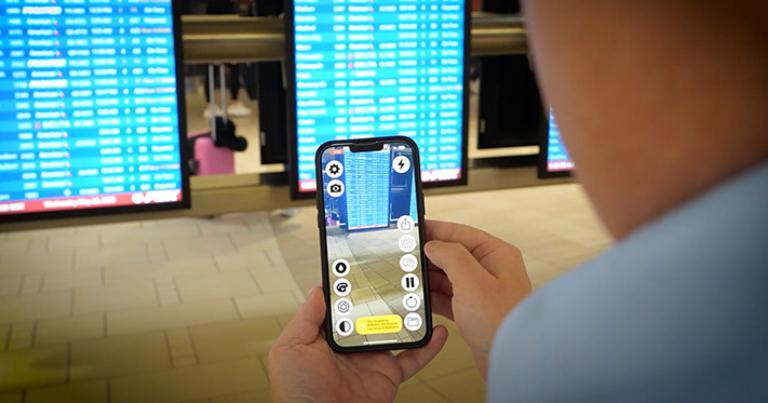
ReBokeh’s technology works by allowing users to leverage the live camera feed from their mobile devices with overlayed, customised filters that adjust aspects like contrast, colour hue, zoom and lighting to meet the needs of low-vision users. ReBokeh AI, a brand-new feature, also offers the opportunity for lengthened interactions with ReBokeh’s custom-built AI tool. Users can ask ReBokeh AI personalised questions like what’s around them and what they’re seeing.
Low-vision travellers can leverage ReBokeh at PHX in countless ways: reading navigational signs and gate information, clarifying arrival and departure monitors, or finding their favourite restaurant, shop, or lounge. ReBokeh AI also works in multiple languages and will default to whichever language is selected in the user’s general mobile device settings, allowing ReBokeh AI to work as a translation tool for signage, information, and visual surroundings.
“Travelling with low vision can present unique challenges, particularly when it comes to navigating a busy airport,” said Rebecca Rosenberg, the low-vision founder and CEO of ReBokeh. “We’re thrilled that Phoenix Airport is doubling down on its commitment to accessibility by leveraging ReBokeh’s technology to build a more independent and enjoyable experience for travellers with low vision.”
You may also be interested in
12 technology and CX trends that can enhance airline and airport operations in 2026
FTE launches new podcast to explore the realities of successful innovation