




Summary:
- Qantas has unveiled new Business Suites for its Airbus A321XLR fleet, bringing lie-flat beds and sliding privacy doors to the airline’s single-aisle aircraft for the first time.
- The new 1-1 Business Class configuration will feature lie-flat beds, 19-inch entertainment screens, wireless and USB-C charging, fast free WiFi and increased personal storage.
- The premium cabin forms part of Qantas’ largest-ever fleet renewal, with the first of 16 A321XLRs featuring the new Suites scheduled to arrive in 2028.
Qantas has revealed a new Business Suite for its Airbus A321XLR fleet, bringing a lie-flat bed to a Qantas single-aisle aircraft for the first time, as part of the largest fleet renewal in the airline’s history. The Suites on these next-generation narrow-body aircraft have been designed to transform the travel experience on longer routes, including transcontinental services to and from Perth, and on short- and medium-haul international routes.
Demand for premium travel continues to outpace Economy, with premium cabin revenue growing at twice the rate of Economy across Qantas’ international network. The next-generation aircraft joining the fleet carry a higher proportion of premium seats than the aircraft they replace.
“Investing in new aircraft is one of the most significant ways we can enhance the flying experience,” said Qantas Group CEO Vanessa Hudson. “Qantas introduced Business Class to the world in 1979, and we’ve continued to redefine what it means ever since. These new Suites on our next-generation narrow-body fleet are another step in that journey, transforming the premium cabin experience and the level of comfort for our customers flying on longer domestic and short and medium haul international services.”
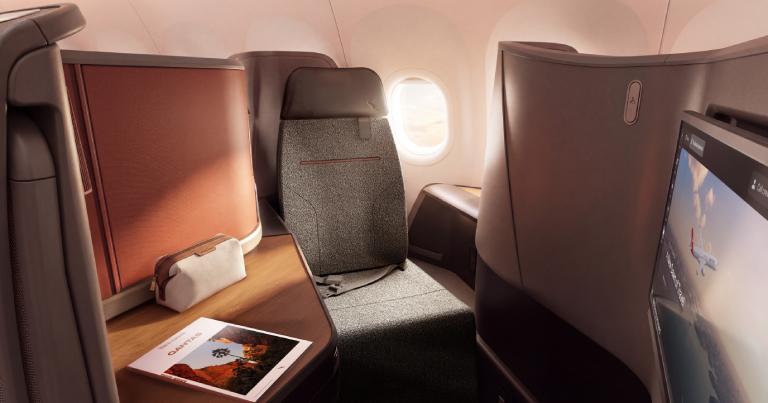
The Suites on each A321XLR aircraft will be arranged in a 1-1 configuration in an angled herringbone layout, a first for a Qantas single-aisle aircraft, making the most of the cabin space to give every customer a lie-flat bed and a sliding privacy door. Comfort and privacy have shaped the design, creating a space to work, enjoy a meal and sleep on longer overnight flights. Each Suite offers a 19-inch entertainment screen, wireless and USB-C charging to keep devices powered, fast and free WiFi to stay connected, and generous storage that keeps a laptop and personal items within reach throughout the flight.
The first of the 16 A321XLRs configured with the new Business Suites is scheduled to arrive in 2028. Qantas has also unveiled an evolved Business Suite for the additional Boeing 787-9 Dreamliners on order, with the 42 Suites on each aircraft to feature a sliding privacy door for the first time on the Qantas Dreamliner.
Customers will have more room to stretch out and sleep on long-haul flights, with new 80-inch lie-flat beds offering an updated version of the popular seat, including a wider footwell customised by Qantas after ergonomic trials and customer feedback.
The design of the Dreamliner Business Suites, which are an evolution of the seat customers fly today, draws on the Australian landscape, with a 19-inch screen and restyled personal storage space in a rich colour inspired by the red earth of Western Australia’s Pilbara region.
Customers travelling in Business across all Qantas international aircraft enjoy access to Qantas lounges, priority check-in and boarding, a generous baggage allowance and premium onboard dining.
You may also be interested in
12 technology and CX trends that can enhance airline and airport operations in 2026
FTE World Innovation Summit relocates to Tokyo for 2027 edition hosted by Haneda Airport – 1-3 March