




Smarter ramp and baggage operations play a critical role in shaping punctuality, reliability and confidence, all of which influence how passengers perceive their journeys. Aer Lingus’ priorities are firmly anchored in supporting better outcomes for customers, while protecting operational safety, driving greater efficiency, and reducing avoidable disruptions. Indeed, Aer Lingus is part of International Airlines Group (IAG) – a member of the FTE Smart Ramp initiative. Smart Ramp is the latest initiative as part of the groundbreaking FTE Accelerating Collaboration & Engagement (ACE) platform launched in partnership with innovation consultancy nlmtd. The focus on Smart Ramp operations has the ultimate goal that aircraft turnaround can be achieved autonomously and more efficiently. Alongside IAG, Miami International Airport, All Nippon Airways, Royal Schiphol Group, KLM Royal Dutch Airlines, Metropolitan Washington Airports Authority, Munich Airport and Lufthansa are all members of what is a truly global collaborative innovation initiative.

Brian Horgan, Transformation Lead, Aer Lingus, is participating at the co-located APEX FTE EMEA and Ancillary & Retailing events, taking place in Dublin on 9 to 11 June 2026, in a session titled ‘Smarter, safer and more consistent: The future of the tech-enabled workforce on the ramp and in the baggage hall’. In this interview, Horgan discusses Aer Lingus’ tech-focused approach to better service and giving frontline teams clarity, consistency, and confidence. “When teams have a shared, real‑time understanding of what’s happening, they can make better decisions, recover faster, and communicate more clearly,” he shares. “Ultimately, smarter ground operations can help to reduce feelings of uncertainty or frustration for our customers.”
Safety is foundational and Aer Lingus’ foremost priority when it comes to modernising ramp and baggage operations. “Safe, well‑supported teams are essential to delivering a resilient and reliable service,” says Horgan. “Second is consistency of execution, as performance variability is one of the biggest drivers of delays, missed-bags, and poor service-recovery experiences. Third is simplicity for frontline teams: reducing system switching, manual workarounds and ambiguity, so we can focus on doing the right thing for our customers. Finally, we focus on building strong data foundations, because without reliable and consistent operational data, it’s difficult to quantify service-recovery improvements, to communicate confidently with customers, or to learn from events where things have gone awry.”
Register for the co-located APEX FTE EMEA and APEX FTE Ancillary & Retailing events – free for airlines, low-cost for airports >>“Technology only improves customer service if it becomes part of normal operations”
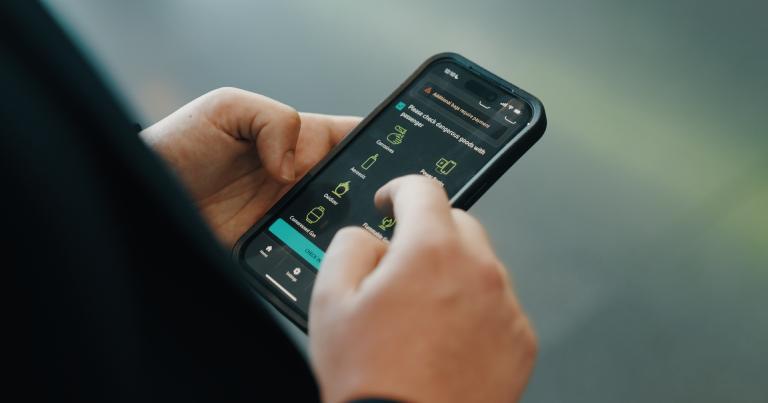
Aer Lingus – a member of International Airlines Group (a Corporate Partner of the FTE Digital, Innovation & Startup Hub) – prioritises changes that help its teams deliver more predictable and transparent operational outcomes. That means investing in mobile capability, improving real‑time operational visibility, and simplifying how tasks and messages are handled. “Equally important is adoption,” Horgan explains. “Technology only improves customer service if it becomes part of normal operations. We place a strong emphasis on training, feedback and usability, so digital tools genuinely support colleagues in doing their jobs well, rather than adding cognitive load.”
Emerging technologies are playing a key role in enabling a smarter and more efficient frontline workforce, particularly when they remove friction from day-to-day operations. “Mobile tools bring information closer to the aircraft or baggage belt, reducing unnecessary escalations and delays,” says Horgan. “Automation helps to remove repetitive manual steps, allowing teams to focus on exceptions that require judgement and coordination – these are typically the moments that affect customers most. Real‑time operational data enables everyone to work from a shared picture, which is critical when quick decisions are needed to protect onward connections or recover bags efficiently.”
For Aer Lingus, the real value of technology lies in its ability to drive consistency, particularly in high-pressure operational environments. This extends to customer service too, which, like safety, is also everyone’s responsibility. “Well-designed digital workflows support safe behaviours by reinforcing standard processes and reducing reliance on memory or other human factors,” Horgan shares. “When teams don’t need to improvise or workaround systems, then outcomes become more predictable, and this leads directly to benefits for customers.”
From reactive recovery to proactive customer protection
Data is increasingly central to how Aer Lingus manages ground operations, enabling a shift from reactive service recovery to proactive intervention. By strengthening operational event-capture and making that information visible to frontline leaders and teams, the airline can identify risks earlier, whether that’s a tight connection, potential baggage misconnects, or emerging congestion on the ground. “Better decisions during these stages can help to mitigate downstream impacts on our customers,” Horgan explains. “The reality is that customers are most likely to forgive you for a disruption event when you communicate honestly and consistently with them, and data-capture is a really powerful enabler for this.”
Improving ramp and baggage operations requires close coordination across the wider airport ecosystem, including airlines, airports, ground handlers and technology providers. “Customer experience on the ground is a shared outcome, and airlines, airports, ground handlers and technology providers all influence the same customer journey,” says Horgan. “Our ramp and baggage operations teams are obviously a key part of this. Meaningful improvements depend on cross-functional alignment around data, processes and operational priorities. We are fortunate to have good relationships with our airports, and we collaborate on many initiatives.”
“Improved operational visibility reduces uncertainty for customers”
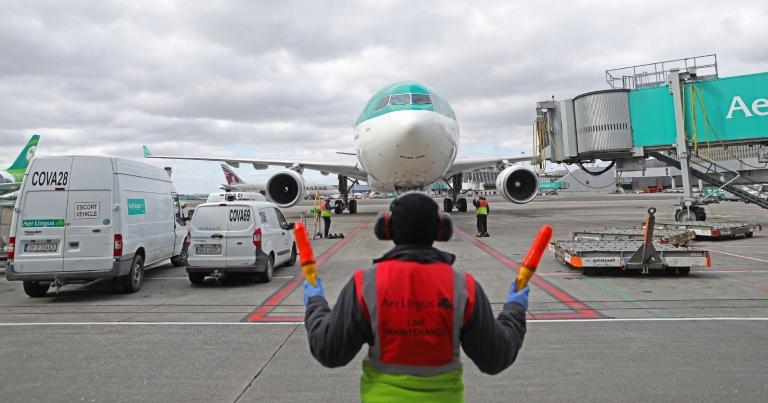
While passengers may rarely see ramp operations directly – other than gazing out of the aircraft window during turnarounds – they feel the results at every stage of their journey. Better ramp execution supports punctuality, while better baggage processes reduce mishandling and speed up recovery when things go wrong.
“Most importantly, improved operational visibility reduces uncertainty for customers, which can be a big driver of dissatisfaction,” Horgan shares. “For example, I quip internally that ‘baggage is a feeling’, as even if we deliver 99.999999% of bags correctly, that leaves one unfortunate customer who’ll feel bad about their experience, and this is the person who’ll write us a letter. Operational data capture can enable us to communicate better with this customer as soon as we know their bag hasn’t joined the flight, as well as help us get that bag moving more quickly and without human intervention.”
A more tech-enabled, service-focused workforce
Looking ahead, Aer Lingus expects the ramp and baggage workforce to become increasingly tech‑enabled and service‑aware, with better situational awareness and decision support at the frontline.
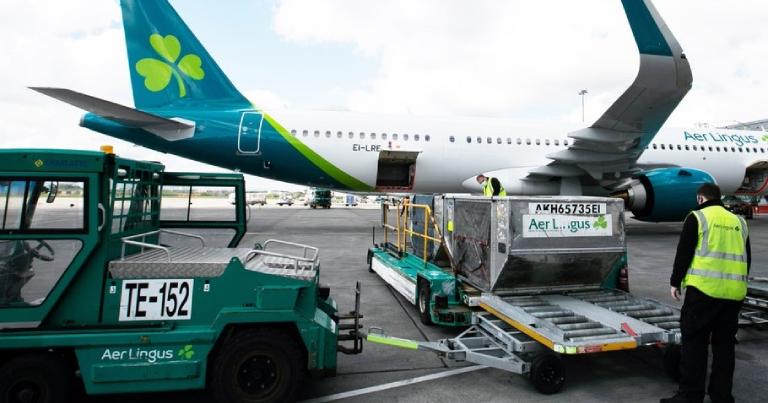
“The future isn’t about replacing people, it’s about equipping them to deliver safer, calmer, and more confident service, even when our operations are under pressure,” says Horgan. “It’s about orienting them to new ways of working, as technology and automation will continue to proliferate across the ramp environment. Human bandwidth is a real constraint, and this is not just limited to airline operations, so the more we can do to reduce time spent on ‘automatable’ tasks, the more our front-line colleagues can focus on delivering customer-focused outcomes. Ultimately, we want our customers to leave us with the feeling that they’ll choose our airline again the next time, even if they’ve encountered some sort of service disruption.”
APEX FTE EMEA: Exploring innovation and industry collaboration
Horgan is eager to participate at the co-located APEX FTE EMEA and Ancillary & Retailing events, taking place in Dublin on 9 to 11 June 2026, highlighting the importance of industry collaboration in driving meaningful progress across air transport operations. Events such as APEX FTE EMEA provide a valuable platform for airlines, airports and technology partners to come together, share real-world use cases, and explore how emerging solutions can be scaled effectively across the industry. For Aer Lingus, this kind of engagement is essential to staying at the forefront of innovation, particularly as digital transformation continues to reshape frontline operations. “I’m looking forward to seeing all the new innovations that have come to market since the last event, as well as reconnecting with and learning from vendors and peers,” Horgan shares. “On a more playful note, I’d confess to being an absolute sucker for cool trade-show merch, so fingers crossed 2026 is a good one!”
Register for the co-located APEX FTE EMEA and APEX FTE Ancillary & Retailing events – free for airlines, low-cost for airports >>Smarter ground operations as a foundation for better passenger experience
Aer Lingus’ approach highlights a broader shift across the industry: recognising that operational excellence on the ground is fundamental to delivering a strong passenger experience. By focusing on clarity, consistency and real-time insight, the airline is building an environment where frontline teams are better equipped to manage complexity, respond to disruption, and communicate effectively with passengers. The emphasis is not on technology for its own sake, but on enabling people to perform at their best. As digital tools, automation and data capabilities continue to evolve, the opportunity lies in how effectively airlines can integrate them into everyday workflows. Those that succeed will not only improve efficiency and reliability, but also create more transparent, predictable and customer-focused journeys, where even behind-the-scenes operations play a visible role in building trust and loyalty.
You may also be interested in
12 technology and CX trends that can enhance airline and airport operations in 2026
12 innovations that have the potential to enhance CX and future-proof airport operations
The FTE Commercial Collaboration Playbook – delivered in partnership with Munich Airport