




Over 100 members of the FTE Digital, Innovation & Startup Hub and FTE Baggage Innovation Working Group gathered in London on 16 March 2026 for a Heathrow-hosted FTE Communities Live Day – themed ‘Relentless Productivity’ – featuring inspiration-filled sessions, collaborative discussions, valuable networking, and an exclusive baggage tour. Among the many highlights, high-level speakers participated from Heathrow, All Nippon Airways, Journey Robotics, DataArt, Engineered Arts and more; Heathrow gave an exclusive tour of its T3 Integrated Baggage System; Vanderlande, DHL and Engineered Arts showcased interactive table-top demos; and much more.
Learn more about the FTE Communities – driving real industry progression >>Exclusive tour of Heathrow’s T3 Integrated Baggage System
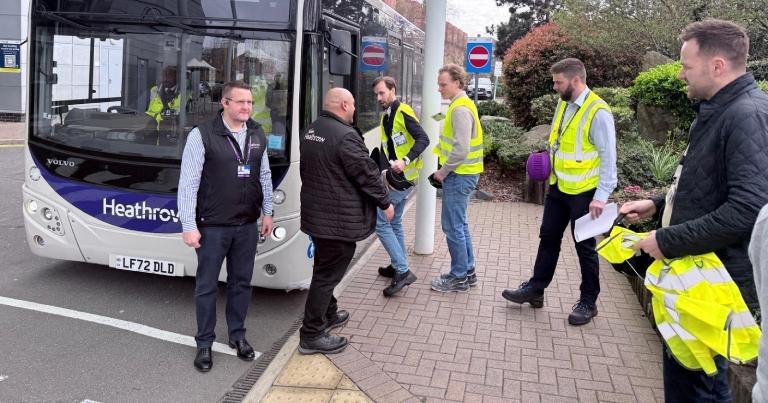
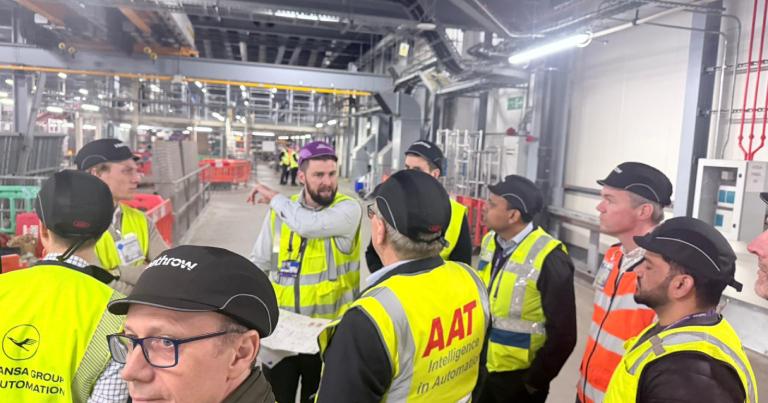
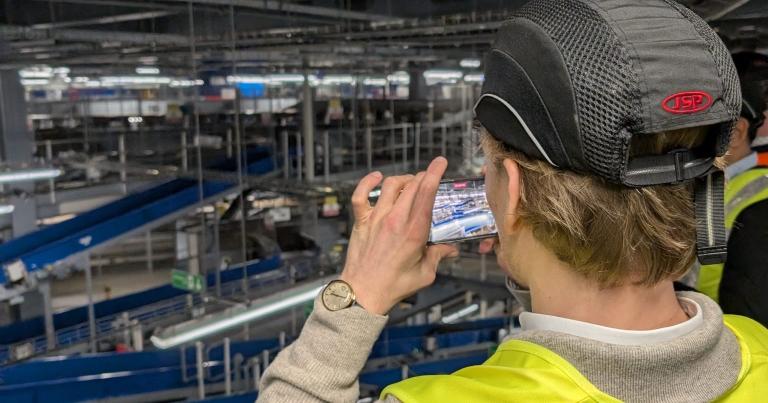
The day began with 50 FTE Baggage Innovation Working Group members participating in an exclusive tour of Heathrow’s T3 Integrated Baggage System. Participants experienced what is currently Heathrow’s most modern baggage system, which went live in 2014. The tour highlighted a predominantly conveyor-based solution supplied by Vanderlande (a Partner of the FTE Baggage Innovation Working Group), alongside advanced elements such as an Individual Carrier System (ICS) within the early bag store.
“Attendees observed Terminal 3, which is currently our most modern baggage system – a predominantly conveyor-based Vanderlande system,” explained Jamie Ratcliffe, Senior Baggage Product Development Manager, Heathrow. “They would have seen an ICS system within the early bag store, lateral-based build, and the DCV or bag track component, which connects Terminal 3 with Terminal 5, enabling high-speed transfer of bags.”
Looking ahead to future innovation, the group was also introduced to emerging automation capabilities, including robotic build cells currently under development within Heathrow’s automation area, as well as assisted loading solutions designed to enhance early bag build processes.
“We’re over the moon – very, very happy to be hosting,” said Ratcliffe. “It’s the largest group we’ve ever taken around at one time, and it’s fantastic that so many people have made the effort to come here to talk about what we think is interesting.”
Central to Heathrow’s approach is the concept of ‘Relentless Productivity’. Rather than viewing this as an achieved state, Ratcliffe described it as an ongoing aspiration shaped by the airport’s operational constraints. “We’ve got a very limited footprint relative to other airports and a very intense operation,” he noted. “The aim for us is relentless productivity – removing the deviations in productivity that happen through the day, reducing the impact of those, and allowing automation, AI and, in the future, autonomy to smooth that flow and keep us moving.”
The importance of collaboration was another key theme. Ratcliffe emphasised the vital role of initiatives such as the FTE Baggage Innovation Working Group in enabling knowledge sharing and industry alignment. “It’s vital – we learn so much through events like this. They allow our strategies to crystallise, while also giving us the opportunity to share lessons learned and save time and money across the industry.”
Invaluable networking opportunities
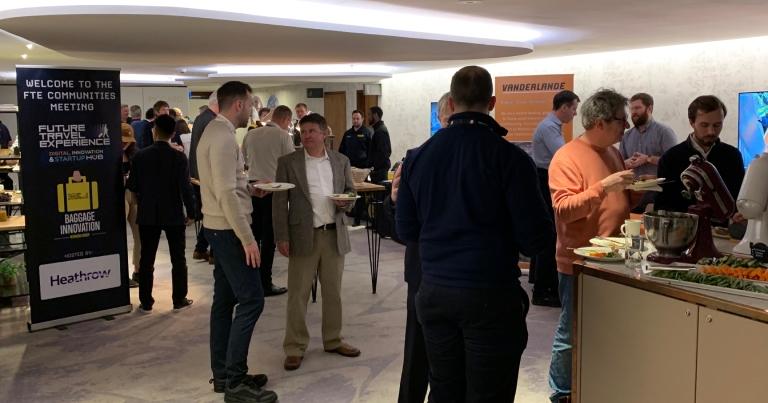
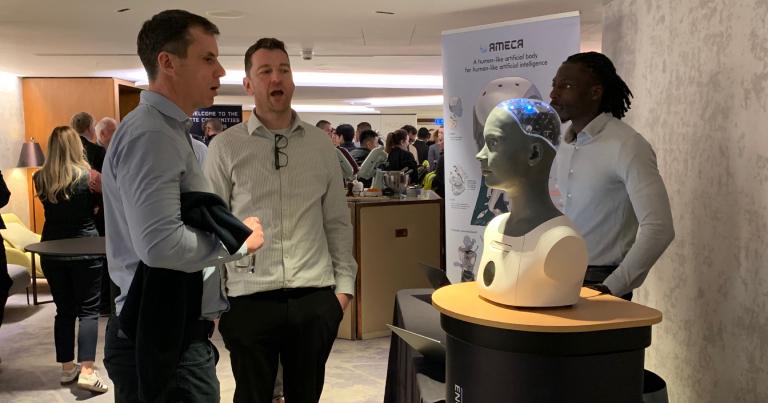
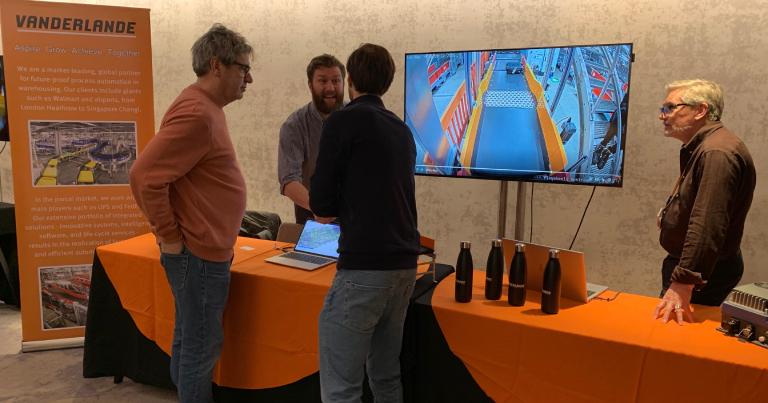
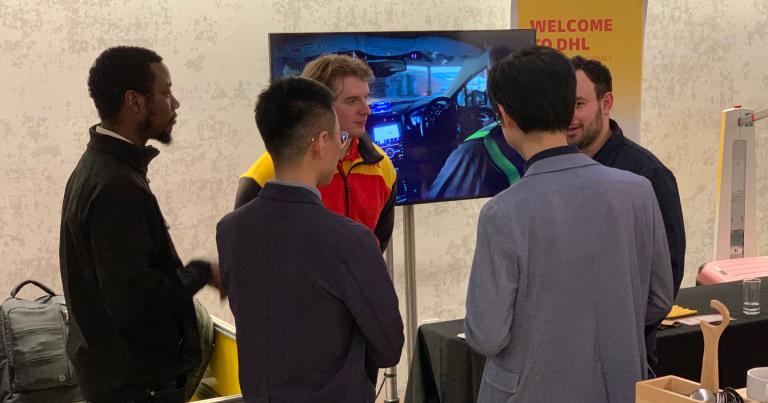
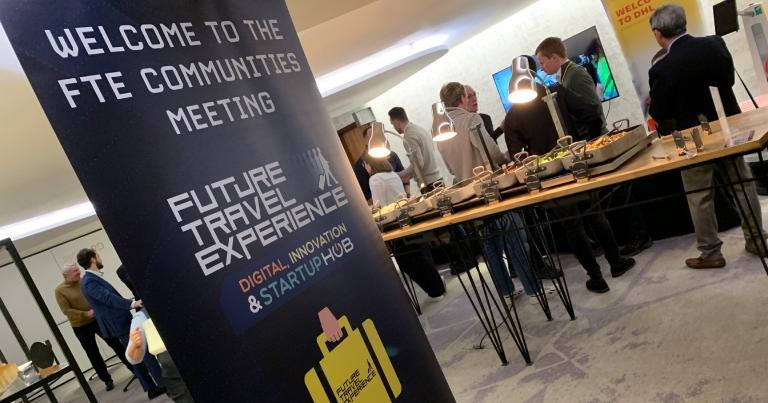
Over 100 members of the FTE Digital, Innovation & Startup Hub and FTE Baggage Innovation Working Group had the opportunity to come together for an extensive networking lunch. This provided a great opportunity to network with industry peers in a relaxed environment. An undoubted highlight were the innovative table-top demos from Vanderlande, DHL and Engineered Arts, which allowed attendees to explore and interact with their latest technologies.
‘Relentless Productivity’ at Heathrow
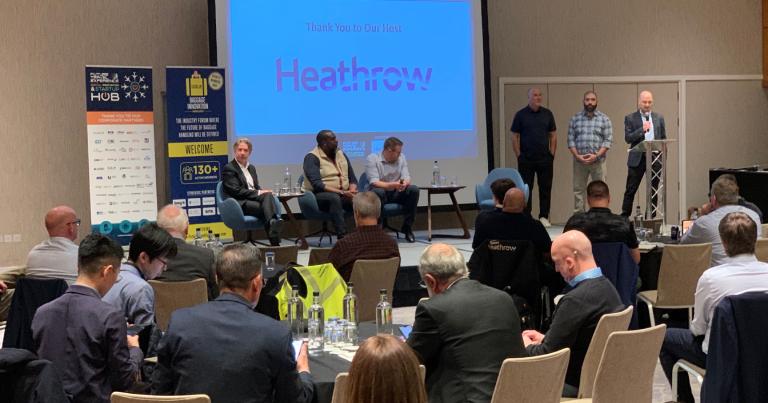
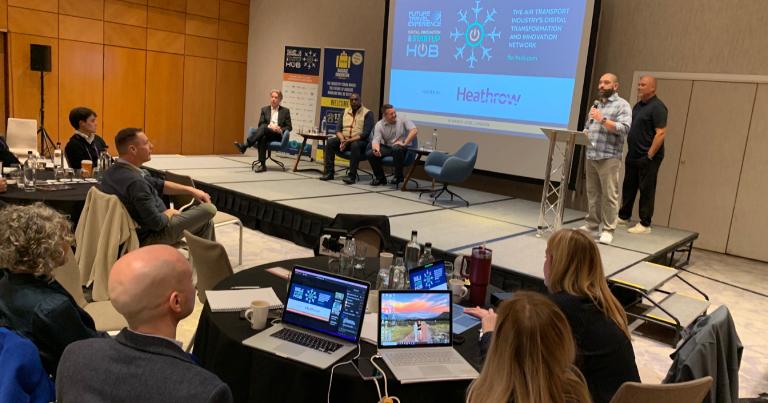
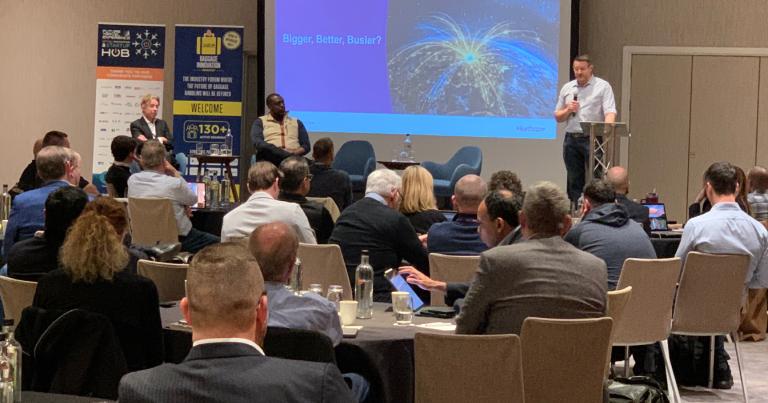
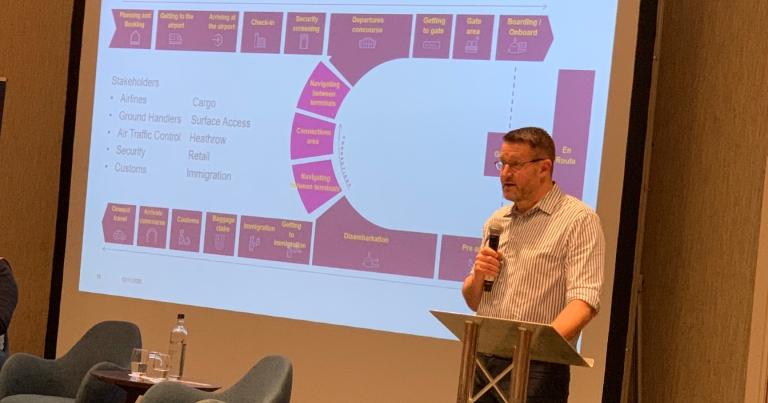
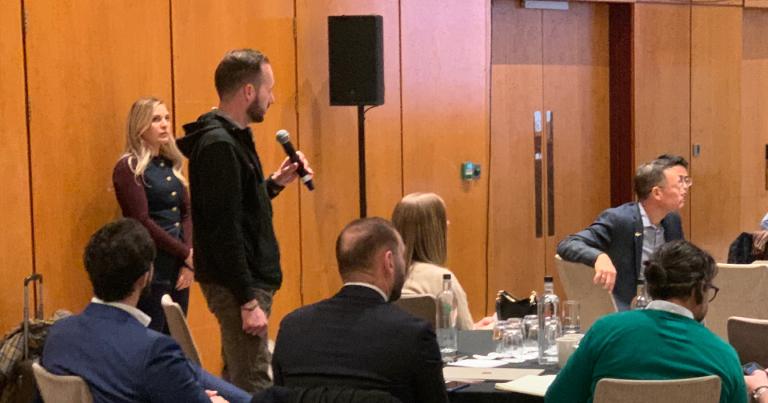
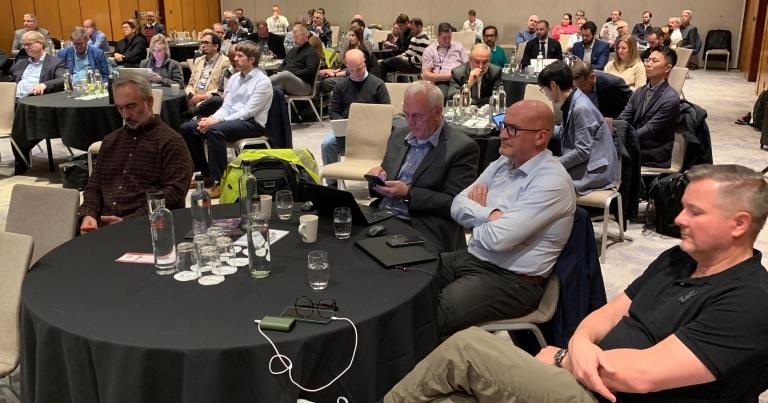
The packed meeting agenda – moderated by Darin Juby, Head of Transformation, Future Travel Experience, and Kevin Kleist, Head of Emerging Trends, Southwest Airlines and Head of Innovation, Digitalisation & Startup Engagement, Future Travel Experience – began with compelling presentations from Heathrow’s Senior Baggage Product Development Manager Jamie Ratcliffe; Head of Technology Design & Innovation Steve Armitage; and Head of Digital Products, Operations Lowell Mason; as well as Reeg Allen, Founder & CEO, Journey Robotics. They offered a detailed look at how one of the world’s most capacity-constrained hubs is rethinking operations through automation, data and collaboration.
Opening the session, Jamie Ratcliffe, Senior Baggage Product Development Manager, Heathrow set the context: Heathrow is effectively operating at its limits. Handling over 84 million passengers annually in infrastructure designed for 82 million, and running at close to 99% of its declared flight capacity, the airport has little room for conventional growth.
Rather than relying on traditional levers such as adding more staff or equipment, Ratcliffe emphasised that Heathrow must “unlock flow” across the operation – improving efficiency, maintaining service quality, and maximising throughput within existing constraints. This is particularly critical in baggage, where Heathrow’s highly intensive operation is defined by limited space, high transfer volumes, and tightly coordinated processes with airline partners and ground handlers. He highlighted the importance of design principles such as adjacency, connectivity and concurrency, which underpin Heathrow’s ability to deliver short connection times. However, many of these systems are now operating at their limits, prompting a shift toward a new “North Star” vision focused on automation, resilience and system-wide optimisation.
Looking ahead, Heathrow is evolving its baggage strategy toward a more automated, data-centric model. Ratcliffe outlined a transition from traditional flight-based build processes to a unit-based approach, where bags are rapidly grouped, containerised and moved through the system with minimal dwell time.
Automation will play a key role, but not as a fully human-less solution. Instead, Heathrow sees a hybrid model where automation handles the majority of standardised processes, while humans manage exceptions and optimise system performance. Key focus areas include:
- Systems designed specifically for automation rather than retrofitted.
- Increased use of Individual Carrier Systems (ICS) for high-speed transport and buffering.
- Autonomous logistics, including the potential shift from traditional dollies to single-unit movements.
- Condition-based, data-driven maintenance to improve reliability and recovery.
“With an operation already at saturation, recovery is critical,” Ratcliffe noted, underlining the need for systems that can quickly respond to disruption.
Journey Robotics to pilot robotic ULD unloading at Heathrow
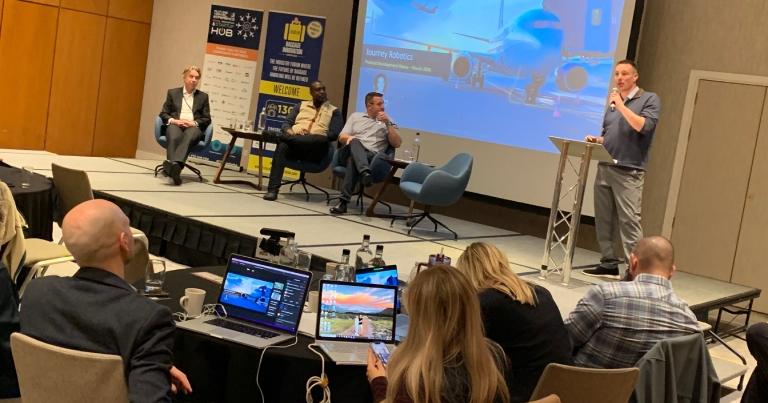
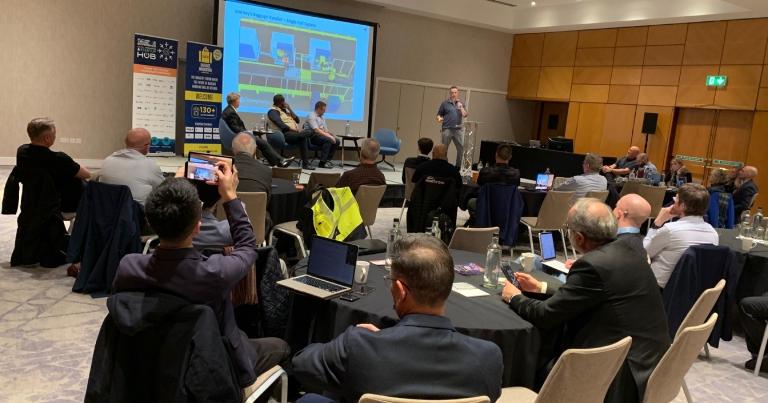
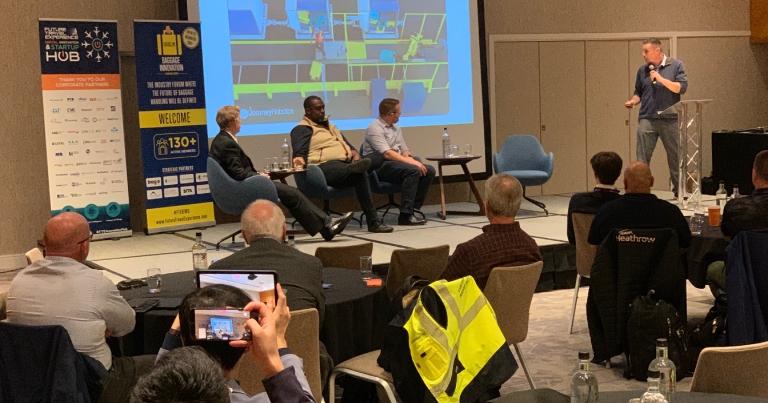
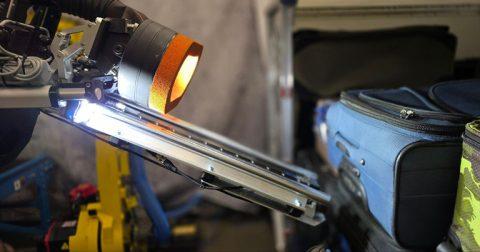
Supporting this vision, Reeg Allen, Founder & CEO of Journey Robotics, announced a new pilot deployment at Heathrow Terminal 5 in partnership with International Airlines Group (IAG) and British Airways. The solution focuses on augmenting ramp operations by automating the unloading of Unit Load Devices (ULDs). In the planned workflow, human operators initiate the process, after which the robotic system takes over repetitive unloading tasks – reducing manual handling and enabling parallelised operations.
Building on earlier trials, the latest system has demonstrated the ability to autonomously process standard bags at a rate of around six per minute. The Heathrow pilot will focus on improving speed, reliability and consistency in a live operational environment.
For Heathrow, the deployment represents a tangible step toward its goal of reducing reliance on labour-intensive processes while improving efficiency in high-pressure turnaround scenarios.
A ‘game of flow’: Unlocking value through data
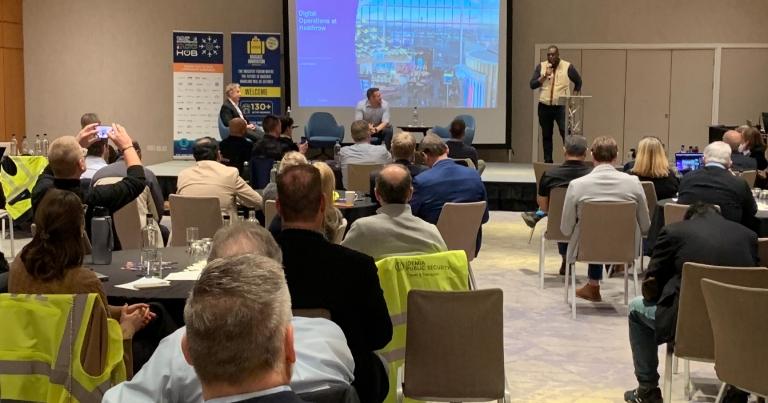
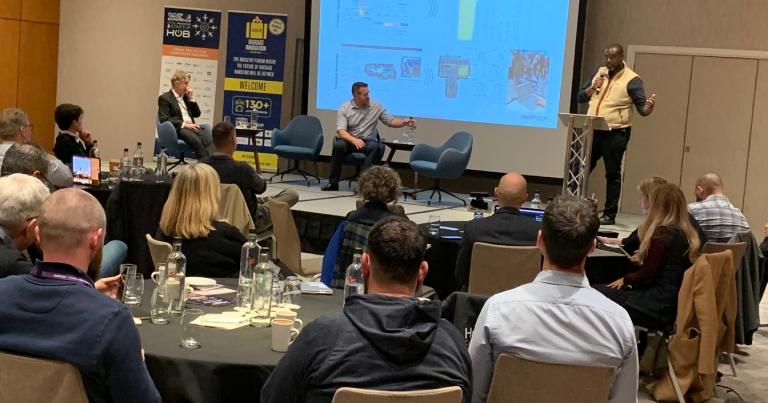
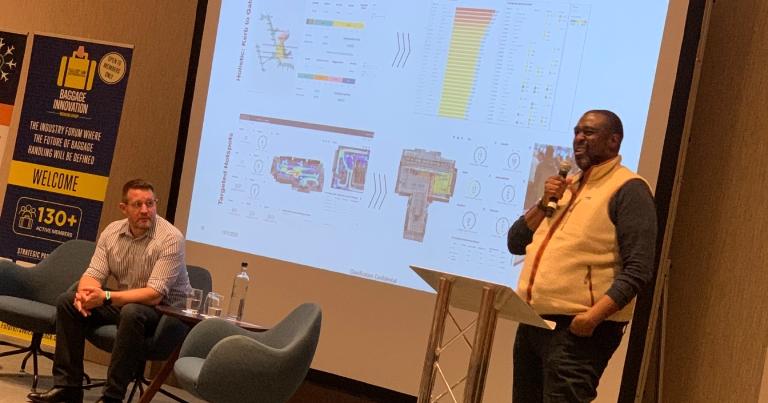
Lowell Mason, Head of Digital Products, Operations, reinforced that Heathrow’s transformation is fundamentally about flow – across passengers, bags and aircraft. While baggage and airfield operations are already highly optimised, Mason highlighted passenger flow as the next major opportunity. Using existing infrastructure such as WiFi access points, Heathrow is developing analytics capabilities to better understand passenger movement, dwell times and congestion patterns without deploying additional hardware.
These insights are being applied across multiple use cases, including:
- Monitoring passenger experience in areas such as baggage reclaim.
- Identifying and alleviating congestion hotspots.
- Enabling more dynamic operational decision-making.
- Informing future investments in automation and infrastructure.
Heathrow is also building a broader “digital day of operations” capability, integrating data from across systems to support forecasting, real-time decision-making and operational orchestration. The long-term ambition is a fully connected, intelligent operation that can proactively manage disruption and optimise performance across the airport ecosystem.
Innovation with purpose: Delivering operational value
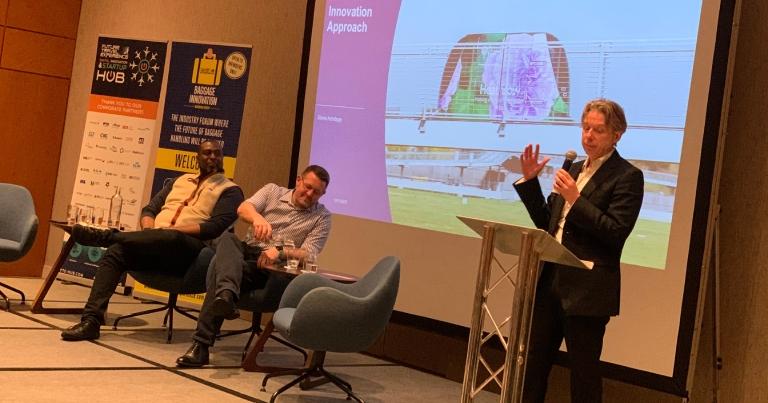
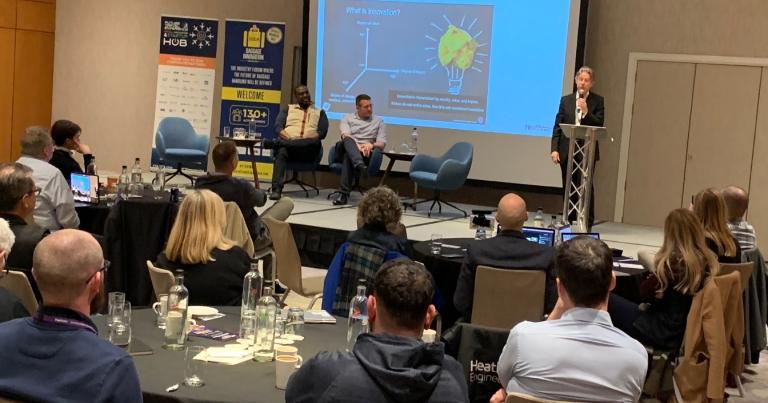
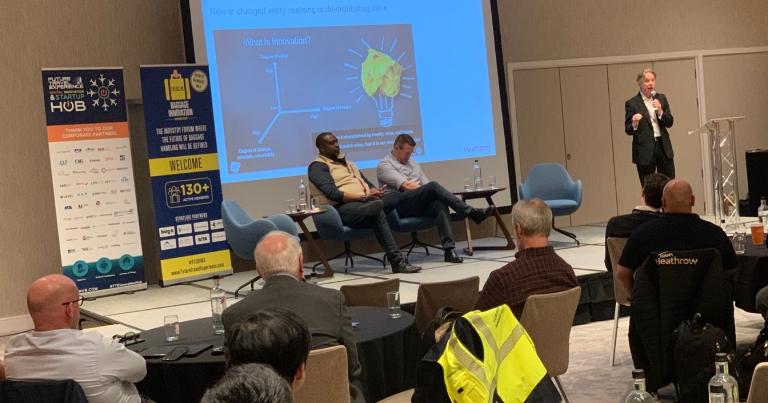
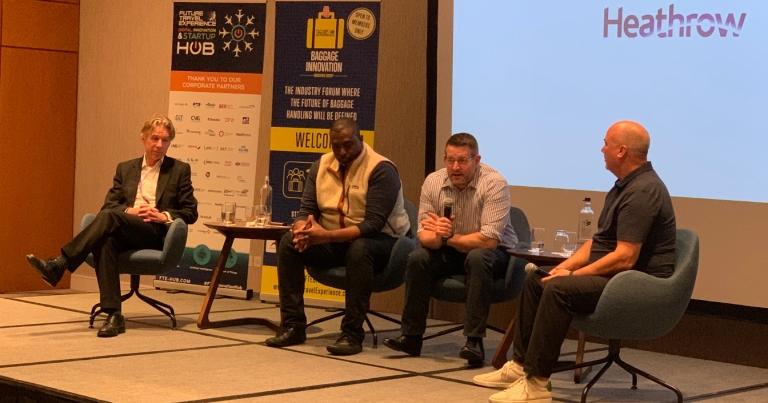
Steve Armitage, Head of Technology Design & Innovation, Heathrow, reflected on what innovation means in a complex, highly regulated airport environment. He stressed that innovation must be grounded in delivering real operational value – not just deploying cutting-edge technologies. While Heathrow is actively exploring areas such as artificial intelligence (AI), robotics and autonomous vehicles, success depends on aligning these capabilities with clear business needs.
Armitage also highlighted the practical challenges of innovating in a live airport environment, including safety constraints, regulatory complexity, and the need to maintain continuous operations. As a result, Heathrow adopts a pragmatic approach built on:
- Starting small with minimum viable products.
- Engaging stakeholders early across the ecosystem.
- Testing and validating solutions in real-world conditions.
- Building organisational resilience to sustain long-term change.
He emphasised that collaboration and knowledge-sharing across the industry remain essential, particularly as airports navigate similar challenges around capacity, digital transformation and automation.
A blueprint for high-intensity airport operations
Together, the presentations illustrated how Heathrow is responding to extreme operational intensity by rethinking traditional models and embracing a more integrated, data-driven approach. From robotic unloading and autonomous logistics to WiFi-powered passenger analytics and digitally enabled operations centres, the airport is building a blueprint for how large hub airports can evolve – not through expansion alone, but through smarter, more connected and more resilient operations.
All Nippon Airways and DataArt interactive panel discussion – AI framework POC
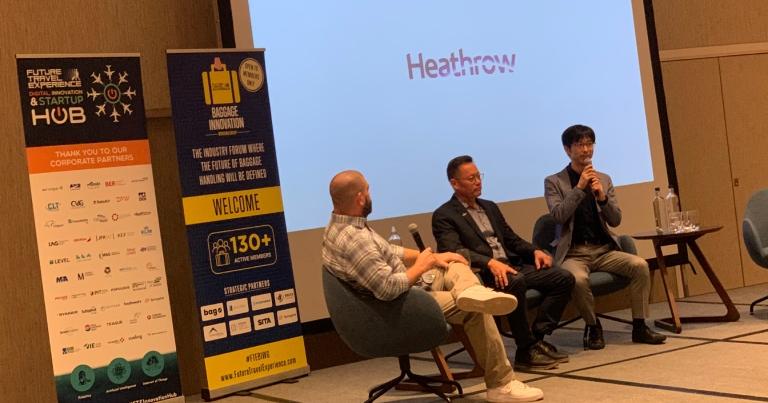
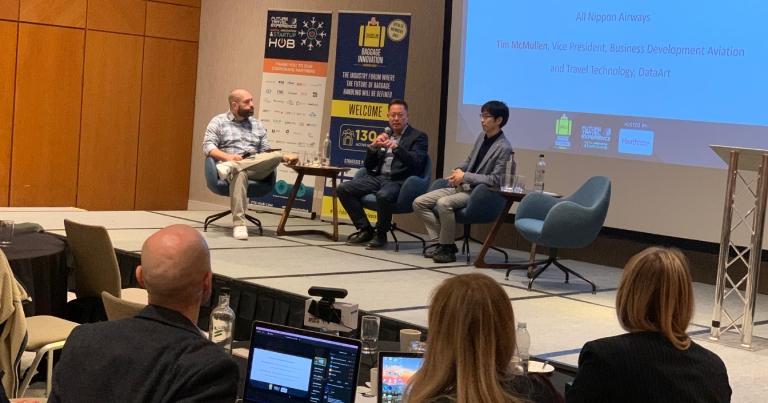
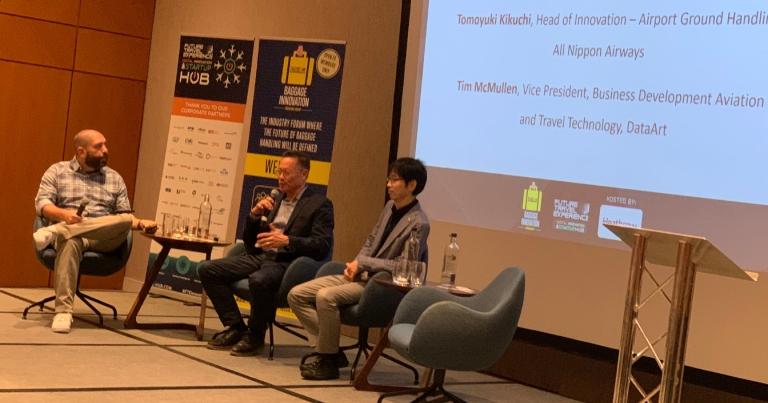
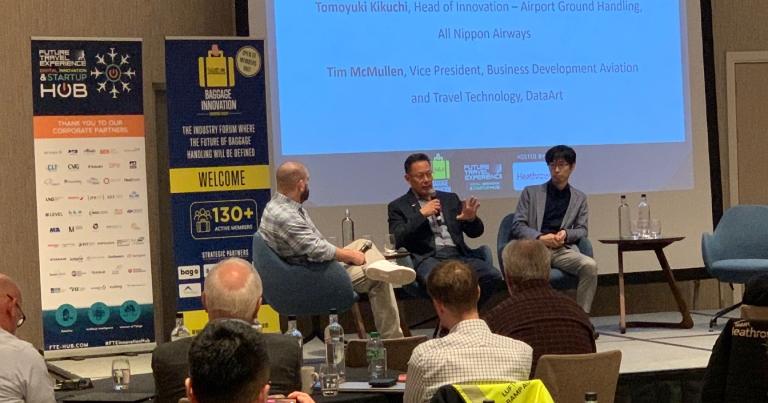
A panel discussion moderated by Kevin Kleist, Head of Emerging Trends at Southwest Airlines and Head of Innovation, Digitalisation & Startup Engagement at Future Travel Experience, brought together perspectives from airline innovation and technology delivery to demonstrate how artificial intelligence (AI) can deliver rapid, tangible impact in airport operations.
Featuring Tom Kikuchi, Head of Innovation – Airport Ground Handling at All Nippon Airways, and Tim McMullen, Vice President, Business Development Aviation and Travel Technology at DataArt (a Corporate Partner of the FTE Digital, Innovation & Startup Hub), the session focused on a simple but powerful use case: transforming manual, paper-based processes into structured, usable data.
Kikuchi outlined a challenge that will resonate across the industry: critical operational data in ground handling is often locked in legacy systems, paper documents or semi-structured formats. At All Nippon Airways, this included cargo-related information captured in long-standing systems that were difficult to integrate with newer digital platforms. As an interim step, teams were manually extracting information via screenshots and re-entering it into other systems – a process that was time-consuming, inefficient and prone to error. The objective was clear: convert this fragmented, semi-structured data into a usable, structured format that could support operational decision-making and future digital initiatives.
Working in collaboration, DataArt approached the problem by first focusing on the business need rather than the technology itself. McMullen emphasised that identifying the core problem – manual rekeying of data from screenshots – was the critical first step. From there, the team applied AI models designed to process unstructured data, similar to use cases involving emails, documents and mixed-format inputs. The cargo ‘load sheet’ data presented a typical challenge: a combination of structured fields, inconsistent formatting and free-text remarks. To address this, the team:
- Tested multiple AI models to identify the best fit for accuracy, speed and cost.
- Defined clear data fields in collaboration with operational teams.
- Extracted and converted information into structured outputs, including JSON formats for downstream use.
Rather than building a complex, bespoke solution, the focus was on rapidly validating what existing AI capabilities could deliver in a real operational context.
One of the most striking aspects of the project was the speed of delivery. According to McMullen, the total development effort amounted to approximately 30 hours of engineering time, spread over a few weeks of iteration and collaboration. This rapid turnaround highlights a key shift in innovation: with the right problem definition and existing AI tools, meaningful solutions can be developed and deployed far faster than traditional timelines would suggest.
Kikuchi reinforced the importance of moving quickly into live operations. Drawing on previous experience, he noted that real-world deployment is critical to building trust and driving adoption. When frontline teams can see and interact with a solution, its value becomes immediately tangible.
Beyond the technical solution, both speakers emphasised that success depended on people and process as much as technology. For Kikuchi, early engagement and clear communication with operational teams were essential. Establishing a shared vision helped overcome resistance and ensured that the solution addressed real user needs rather than abstract innovation goals.
McMullen added that collaboration across organisations was equally important. By combining operational insight from the airline with technical expertise from DataArt, the team was able to align quickly on both the problem and the solution.
In a notable example of grassroots innovation, a team in Japan extended the initial output by using the structured data to create additional visualisations of aircraft cargo layouts – demonstrating how accessible data can unlock further value beyond the original use case.
The discussion underscored that not all AI applications need to be complex or large-scale. In fact, some of the most impactful opportunities lie in small, repeatable use cases. Potential areas for similar quick wins include:
- Paper-based processes still common across airport and airline operations.
- Data handoffs between stakeholders and systems.
- Manual transcription or duplication of information.
These scenarios represent ideal candidates for applying AI to extract, structure and share data more efficiently.
Key takeaways: Start simple, solve real problems
Closing the discussion, the panellists shared practical advice for innovation leaders across the industry. McMullen highlighted the importance of simply getting started. With AI technologies evolving rapidly, waiting for the “perfect” solution can delay progress unnecessarily. Real value can be delivered today using existing tools. Kikuchi reinforced the need to stay grounded in operational reality. Rather than starting with technology, organisations should focus on clearly defining the problem and leveraging the right expertise to solve it. Together, the panel demonstrated that effective innovation in aviation does not always require large-scale transformation. By focusing on real challenges, fostering collaboration, and embracing rapid experimentation, even small initiatives can deliver meaningful operational improvements – and help build momentum for broader digital change.
Humanoid robotics – Fireside Chat with Engineered Arts
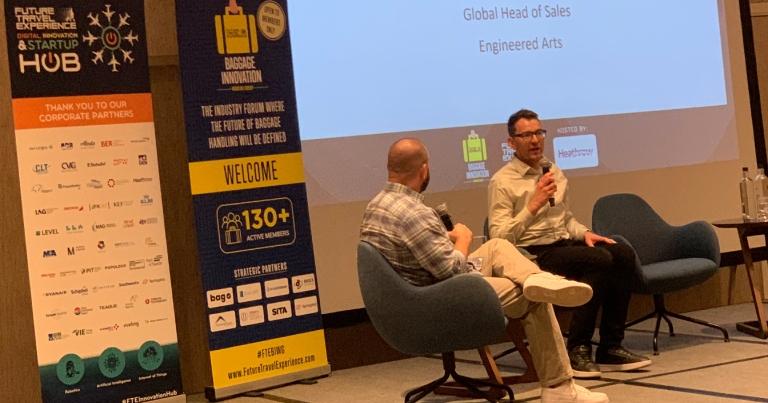
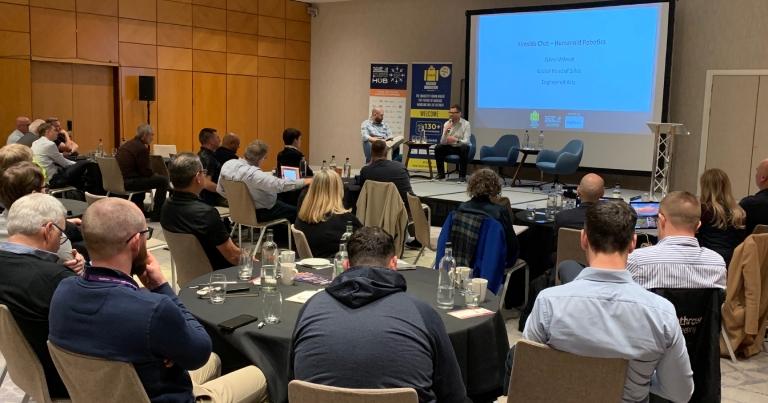
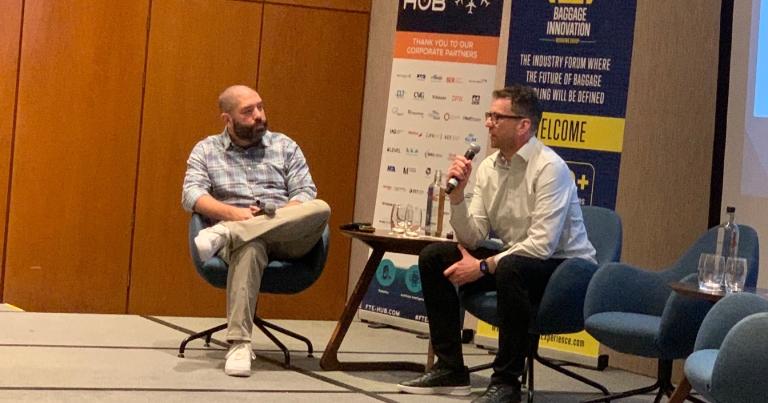
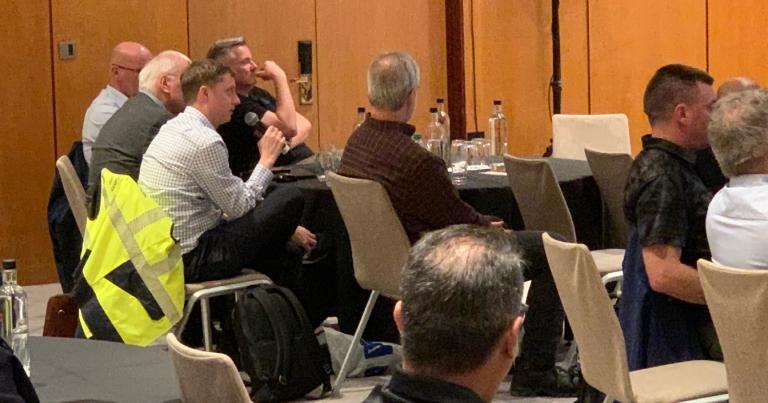
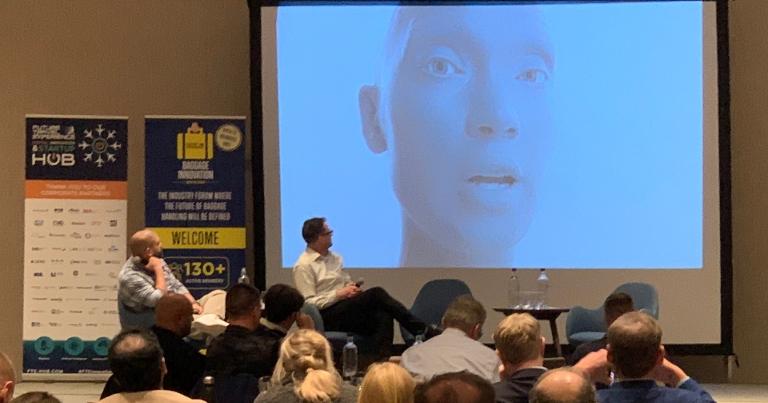
An interactive discussion on humanoid robotics, with Gavin Wilmot, Global Head of Sales at Engineered Arts, explored one of the most debated frontiers in aviation innovation: the role of human-like robots in operational and passenger-facing environments. Together with moderator Kevin Kleist, Head of Emerging Trends at Southwest Airlines and Head of Innovation, Digitalisation & Startup Engagement at Future Travel Experience, they examined both the technological realities and the human factors shaping adoption.
Kleist opened by acknowledging the wide spectrum of perspectives surrounding humanoid robots – from customer service enablers to industrial tools, and for some, still firmly in the realm of science fiction.
Wilmot grounded the discussion by defining humanoid robots not simply as human replicas, but as systems that incorporate human-like traits. At Engineered Arts, the focus is specifically on communication – creating robots capable of delivering natural, expressive interactions that mimic human conversation.
Unlike industrial robotics, which prioritises physical manipulation or movement, these systems are designed to engage. By combining artificial intelligence (AI)-driven conversational capabilities with facial expression and body language, the goal is to create interactions that feel intuitive and accessible to users.
The discussion highlighted that humanoid robotics is not a single category, but a convergence of multiple disciplines, including:
- Physical manipulation: Handling objects or performing repetitive tasks.
- Mobility: Navigating environments and assisting with movement-based tasks.
- Communication and intelligence: Conversational AI and human interaction.
Engineered Arts positions itself firmly in the latter category, focusing on the “head” of the robot – intelligence, language, and emotional expression – rather than full physical automation. This distinction is important for aviation, where many near-term opportunities lie not in replacing physical labour, but in enhancing passenger engagement and support.
Designing for trust and engagement
A key theme throughout the session was the importance of trust. Wilmot noted that designing humanoid robots involves careful consideration of how “human” they should appear. Rather than striving for hyper-realism – which can create discomfort – Engineered Arts intentionally develops robots that are clearly non-human, yet expressive and approachable. This balance helps users feel comfortable engaging, while avoiding the so-called “uncanny valley” effect.
The ability to combine conversational AI with physical presence also introduces new dynamics. While many passengers are already comfortable interacting with AI through text or voice, embodying that intelligence in a physical form can enhance engagement, but also raises new expectations around responsiveness and context awareness.
Opportunities in the airport journey
Audience discussion reinforced that some of the most compelling use cases for humanoid robots in aviation lie in passenger assistance. In complex airport environments, passengers who are unfamiliar with the language, anxious about travel, or navigating tight connections often seek reassurance and guidance. Today, this need is sometimes met through premium services such as meet-and-assist or even indirectly through accessibility services. Humanoid robots could help bridge this gap by:
- Providing multilingual, real-time information and wayfinding support.
- Offering a non-judgemental interface for passengers who may feel uncomfortable asking for help.
- Enhancing accessibility and confidence for less experienced travellers.
- Supporting staff by handling routine passenger queries.
Wilmot also pointed to applications beyond aviation, including education and elderly care, where early trials have shown that users can develop surprisingly deep and sustained engagement with conversational robots.
Challenges: Context, communication and capability
Despite the potential, the discussion made clear that significant challenges remain. One key limitation is contextual awareness. Human conversation relies on subtle cues – such as tone, environment and social context – that are difficult for machines to interpret reliably. For example, distinguishing whether a person is speaking directly to the robot or to someone nearby remains a complex technical challenge.
More broadly, there are questions around whether humanoid robots should aim to replicate human interaction perfectly, or whether users will instead adapt their behaviour and communication styles when interacting with machines.
In operational environments, performance expectations also remain high. As highlighted in the discussion, robots must not only function, but do so efficiently and reliably enough to justify deployment compared to existing processes.
A recurring theme was that humanoid robots are unlikely to replace humans in customer-facing roles in the near-term. Instead, they are more likely to act as a complementary layer within the airport ecosystem. By handling routine interactions and providing scalable, always-available support, they can free up human staff to focus on more complex or sensitive tasks – while also extending service coverage in high-demand environments.
Shaping the future of human-machine interaction
The discussion ultimately pointed to a broader shift in how people will interact with technology. As AI becomes more conversational and embodied, traditional interfaces such as screens and keyboards may give way to more natural, dialogue-based interactions. For aviation, this raises important questions not only about technology deployment, but also about passenger expectations, trust, and behaviour. As Kleist noted, many travellers are already comfortable interacting with AI. The next step is understanding how that comfort translates into physical, human-like interfaces – and where these systems can deliver the most value across the journey.
From ambition to execution in airport innovation
Across the Heathrow presentations and interactive discussions, a clear message emerged: the future of airport operations and passenger experience will not be defined by a single breakthrough technology, but by the effective integration of many. Whether through data-driven decision-making, targeted applications of AI, or the exploration of emerging technologies such as robotics, the focus is shifting from ambition to execution. The industry is moving beyond conceptual innovation toward practical, scalable solutions that address real operational challenges.
At Heathrow, this is being driven by necessity. Operating at the limits of capacity, the airport is demonstrating how constraints can accelerate innovation, forcing a rethinking of traditional models and a stronger emphasis on flow, resilience and efficiency. From baggage transformation to digital operations and automation pilots, the approach is holistic and deeply rooted in operational reality.
At the same time, the collaboration between All Nippon Airways and DataArt highlights how even small, well-defined use cases can unlock significant value. By focusing on real problems and leveraging existing technologies, organisations can move from idea to implementation, building confidence and momentum for wider transformation.
Meanwhile, discussions around humanoid robotics underscored the importance of balancing technological capability with human factors. As AI becomes more embedded in physical environments, questions of trust, usability and passenger acceptance will be just as critical as technical performance.
What unites all of these perspectives is a shared recognition that innovation in aviation is ultimately about people – passengers, employees and partners. Technology is an enabler, but success depends on clear problem definition, cross-industry collaboration, and the willingness to test, learn and adapt. For industry stakeholders, the takeaway is clear: start with the problem, move quickly, and focus on delivering value in the real world. Those who can do so will be best positioned to navigate growing operational pressures while continuing to raise the bar for passenger experience.
Hear more from Heathrow at the co-located APEX FTE EMEA and APEX FTE Ancillary & Retailing events, taking place in Dublin on 9-11 June 2026. Jamie Ratcliffe, Senior Baggage Product Development Manager, Heathrow, is participating in a session titled ‘How can airports and airlines successfully scale baggage handling innovations to make a real difference across the industry? Is the time now?’
Register for the co-located APEX FTE EMEA and APEX FTE Ancillary & Retailing events – free for airlines, low-cost for airports >>FTE Smart Ramp & Baggage Innovation Summit
 In addition to the plethora of BIWG activities planned for 2026, the brand-new FTE Smart Ramp & Baggage Innovation Summit takes place as part of APEX FTE EMEA, which is co-located with APEX FTE Ancillary & Retailing in Dublin on 9-11 June 2026. The FTE Smart Ramp & Baggage Innovation Summit creates a dedicated platform for sharing progress, accelerating innovation, and defining the future of ramp and baggage transformation together. It unites airlines, airports, ground handlers, manufacturers, and solution providers to collaborate on one shared goal: creating safer, smarter, and more efficient ramp & baggage operations through innovation, automation, and cross industry partnership. The Summit will feature a major segment on the pioneering BOOST programme, which spun out of the BIWG and aims to eliminate physical strain and improve working conditions for baggage workers by rapidly adopting advanced technologies, with Proof of Concepts across Schiphol, Avinor, Brussels Airport, Heathrow and Incheon.
Mark your diary for FTE’s 2026 global event schedule in Dublin, Dallas and Singapore
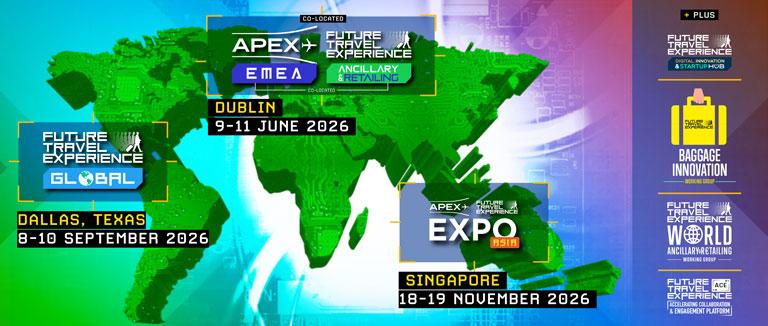
- APEX FTE EMEA co-located with APEX FTE Ancillary & Retailing – 9-11 June 2026, Dublin. Headline Partner: Ryanair
- FTE Global – 8-10 September 2026, Dallas, Texas. Headline Partners: DFW, Southwest Airlines and Dallas Love Field Airport
- APEX FTE EXPO Asia – 18-19 November 2026, Singapore. Combining APEX Global EXPO with FTE’s regional APAC event. Headline Partners: Changi Airport Group and Singapore Airlines
You may also be interested in
12 technology and CX trends that can enhance airline and airport operations in 2026
The FTE Commercial Collaboration Playbook – delivered in partnership with Munich Airport