




Summary:
- Air Canada has introduced a new mobility aid travel policy designed to make flying simpler, more predictable and less stressful for customers travelling with mobility aids.
- The policy gives customers greater flexibility when travelling with mobility aids and adaptive sports equipment, supporting business, leisure, medical and adapted sport travel.
- The initiative forms part of Air Canada’s broader accessibility strategy, including mobility aid tracking, specialised airport equipment, improved boarding support and employee training.
Air Canada has announced a new mobility aid travel policy designed to make travel simpler, more consistent and less stressful for customers who travel with mobility aids, including customers participating in adapted sports.
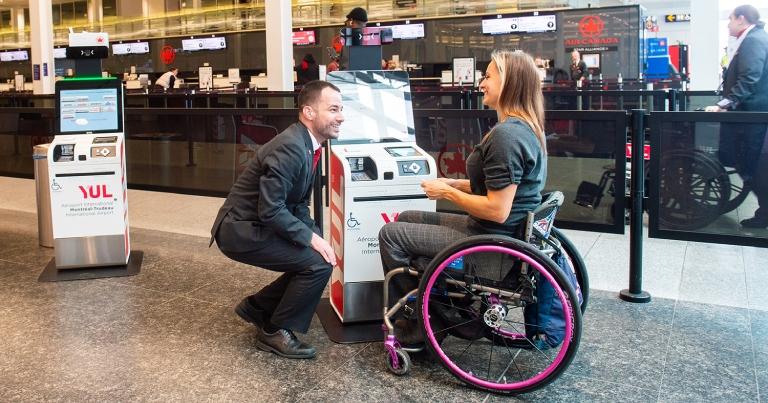
The new policy gives customers requiring the use of mobility aids, or travelling with adaptive sports equipment greater flexibility in bringing the items they need when they fly with Air Canada. It reflects the airline’s ongoing work to identify, remove and prevent barriers for customers with disabilities, and to provide a more dignified and predictable travel experience at every stage of the journey.
“Travelling with a mobility aid can involve significant planning, and we recognise the uncertainty customers may feel when they are separated from equipment that is essential to their independence,” said Kerianne Wilson, Director, Customer Accessibility, Air Canada. “This new policy is about giving customers more consistent choices, clearer expectations and greater confidence when they travel with us. It also reflects our commitment to listening to people with lived experience and continuing to improve accessibility across the travel journey.”
The policy supports customers with varied travel needs, including those travelling for business, leisure, medical reasons or adapted sport. It is intended to reduce uncertainty across different parts of the travel journey by providing a more consistent approach to how mobility aids are accommodated, handled and supported.
“Having this policy clearly defined means people with disabilities can travel, without having to explain or justify our needs,” said Meghan Hines, Chair of Air Canada’s Accessibility Advisory Committee. “As both a traveller with a disability and a Para athlete, it is meaningful to see Air Canada recognise that the equipment we travel with, whether it supports daily life, care needs or participation in sport, are extensions of our bodies, not an extra piece of luggage. This policy recognises that accessibility needs do not look the same for everyone and that people with disabilities should be able to travel with the equipment they need without added uncertainty or having to advocate for an exception.”
Air Canada has continued to advance accessibility as part of its broader Accessibility Plan, which outlines initiatives to improve the experience of customers who use power wheelchairs and other mobility aids, including better flight options, digital tracking and notifications, improved availability of accessibility equipment, enhanced boarding and transfer support, and continued collaboration with accessibility partners, airports, regulators, aircraft manufacturers and mobility aid manufacturers.
The airline has also developed a mobility aid tracking feature in the Air Canada app, giving customers peace of mind by allowing them to confirm their mobility aid has been loaded on their flight. In addition, Air Canada has reviewed operational procedures for handling mobility aids, invested in specialised lift equipment at airports across Canada, and continues to provide training to employees on safely and respectfully supporting customers with disabilities.
“Air Canada continues to take meaningful steps to make travel more accessible, and this new policy will make a significant difference in making travel easier and more affordable for athletes at all levels of sport, from recreation to high-performance,” said Rachael Pinnock, Chief Commercial and Impact Officer, Canadian Paralympic Committee. “This is a testament to Air Canada’s commitment to listening and learning from the experiences and perspectives of the Para sport community, and it is incredibly exciting to see those insights reflected in practical changes that will improve access to sport and travel. We are grateful for Air Canada’s ongoing partnership and their commitment to advancing accessibility.”
Hear more from Air Canada at the 20th anniversary edition of FTE Global, taking place in Dallas, Texas, on 8 to 10 September 2026. Mark Nasr, Executive Vice President & Chief Operations Officer, Air Canada, is participating in the Opening Keynote Session with a Fireside Chat titled ‘The Glowing Hearted edge: AI, innovation, and the human experience at Air Canada’.
See the FTE Global schedule at a glance >> Register for FTE Global >>You may also be interested in
12 technology and CX trends that can enhance airline and airport operations in 2026
FTE World Innovation Summit relocates to Tokyo for 2027 edition hosted by Haneda Airport – 1-3 March