





Summary:
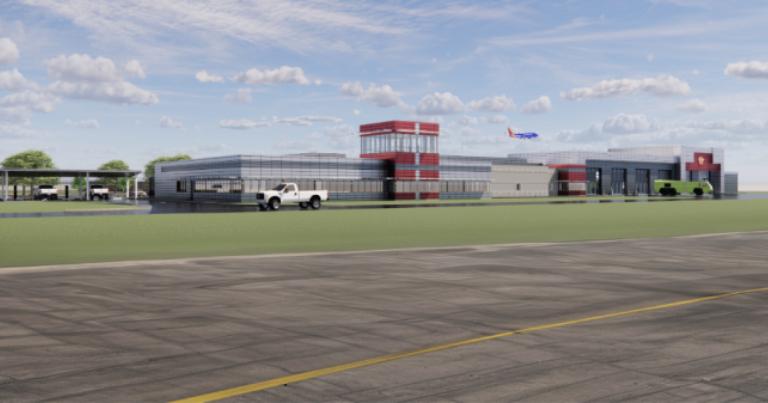
- Dallas Love Field (DAL) is to open a new 33,400-square-foot ARFF Station 21 and Airport Operations building to enhance emergency response and airport operations.
- The integrated facility will bring Dallas-Fire Rescue and Aviation Operations teams together with advanced technology, training capabilities and improved response infrastructure.
- The project supports DAL’s long-term capital improvement strategy by improving resilience, operational efficiency and sustainability across the airport.
Dallas Love Field (DAL) – a Headline Partner of the 20th anniversary edition of FTE Global, taking place in Dallas, Texas, on 8 to 10 September 2026 – is to open a new integrated Aircraft Rescue and Firefighting (ARFF) Station 21 and Airport Operations building in August 2026, which is designed to enhance emergency response capabilities, streamline airport operations and support future growth.
The 33,400-square-foot facility represents the completion of a five-year project and brings together Dallas-Fire Rescue (DFR) and DAL Operations teams in a single modern facility. It will be the second-largest ARFF station in Texas and the fourth-largest in the United States.
“Ultimately, this project represents more than just a new building; it reflects DAL’s commitment to enhancing emergency response, streamlining airport operations, and leading the way towards a more sustainable and resilient future for aviation,” said Patrick Carreno, Director of Aviation, City of Dallas.
DAL is the busiest medium-hub airport in the United States and handles nearly 18 million passengers annually, more than 250,000 aircraft operations and 13.8 million square feet of airside pavement. The new facility has been designed to support the operational demands of one of the country’s most active airports.
Previously, DAL Operations teams were located across multiple buildings, creating challenges for coordination and efficiency. Meanwhile, the former Station 21, which was built in the 1960s, was reaching the end of its useful life and its location increased emergency response times.
The new facility improves collaboration between emergency response and airport operations teams while incorporating advanced infrastructure and technology. DFR personnel will benefit from enhanced training facilities, modern equipment and improved access to the airfield.
“This state-of-the-art facility provides our firefighters with cutting-edge training tools, modern equipment, and proximity to perform at the highest level,” said Justin Ball, Dallas Fire Chief. “This investment is another tool that ensures Dallas Fire-Rescue continues to provide the highest level of safety for residents and the millions of travellers who pass through our city.”
The facility includes a range of features designed to support operational readiness, including a high-power intelligent charging system for the world’s first all-electric ARFF vehicle and future electric vehicles, a designated storm shelter, rapid deployment bi-folding doors, a maintenance bay with overhead crane lift, training facilities and staff amenities.
The new building forms part of DAL’s wider capital improvement programme, LEAP, which aims to combine infrastructure modernisation, operational efficiency and reduced environmental impact to support the airport’s long-term resilience.
Hear more from Dallas Love Field at the 20th anniversary edition of FTE Global, taking place in Dallas, Texas, on 8 to 10 September 2026. Patrick Carreno, Director of Aviation, Dallas Love Field Airport, is participating in a session focused on ‘Airline and airport leadership strategies to be future-ready’.
See the FTE Global schedule at a glance >> Register for FTE Global >>You may also be interested in
12 technology and CX trends that can enhance airline and airport operations in 2026
FTE World Innovation Summit relocates to Tokyo for 2027 edition hosted by Haneda Airport – 1-3 March
Vote now: What will be aviation’s most game-changing technology over the next 20 years?