






Summary:
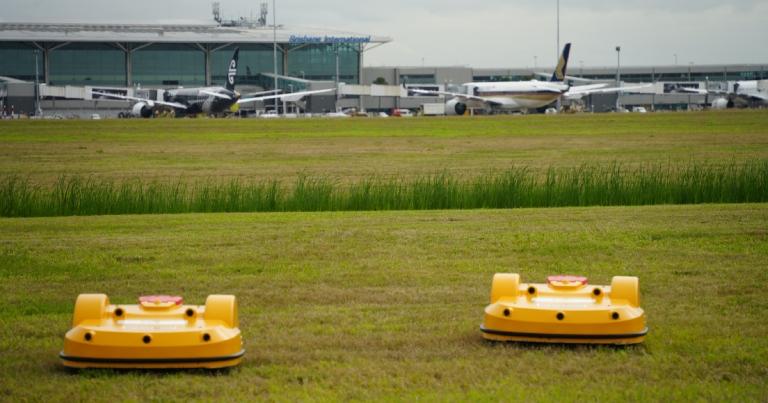
- Brisbane Airport has become Australia’s first major airport to trial a fleet of autonomous robot mowers for airside operations.
- The zero-emissions, solar-powered robotic fleet is improving operational efficiency while reducing diesel use, herbicides and manual maintenance requirements.
- The initiative supports Brisbane Airport’s innovation and sustainability strategy, setting a new benchmark for automated airside operations.
Brisbane Airport has become Australia’s first major airport to trial a fleet of autonomous robot mowers, setting a new benchmark for automation, sustainability and innovation in airside operations. The robotic fleet operates with advanced navigation and safety systems. Sensors, geofencing and a physical barrier keep four mowers within prescribed safe areas. The pilot programme is managing a growing portion of Brisbane Airport’s 919 hectares of airside land.
Replacing traditional diesel mowers with smart, automated technology will save more than 60,000 litres of diesel fuel per year, delivering a zero-emissions mowing operation powered by solar energy or through Brisbane Airport’s renewables backed electrical network. Coverage into additional airside areas will be extended over time, as the fleet grows.
“We’re always looking for smarter ways to operate, and these autonomous mowers help us improve efficiency while supporting our sustainability goals,” said Gert-Jan de Graaff, CEO, Brisbane Airport. “These robot mowers might be small, but their impact is significant. Unlike conventional mowing, which must be scheduled around air traffic and staff availability, these robotic mowers can operate day and night. This reduces disruption to flights and the need for manual mowing, helping to maintain our airfield while keeping safety front and centre. And because the grass is being mowed continuously, it’s actually creating greener grass by selectivity encouraging better species and allowing us to reduce the use of herbicides.”
Jess Rudd, Head of Sustainability, Brisbane Airport, added: “As one of Australia’s most forward-thinking airports, Brisbane Airport continues to invest in technologies that enhance operations, improve sustainability outcomes and support our journey toward a lower-carbon future. As a sustainability leader, we take our role in reducing our impact on the environment very seriously. By replacing conventional diesel-powered mowing operations with smart, automated technology, Brisbane Airport is helping to lower its environmental footprint while ensuring the safe and reliable maintenance of airside land.”
Features of new robotic mowers include:
- Estimated 70% cost reduction in vegetation management.
- Reduces need for 250 hours of sweeper truck operations annually.
- Zero direct emissions plus solar-powered charging.
- Significant reduction in herbicides and pesticides, protecting wetlands and biodiversity.
- Encouraging more resilient, drought-tolerant grass, staying greener for longer.
- Uses advanced sensors, geofencing, and real-time monitoring to operate safely in a highly regulated environment.
- Fully autonomous system that self-manages within defined airside zones.
“Our innovation programme is about trialling and scaling technology that delivers real results,” said Oscar Maan, Innovation Lead, Brisbane Airport. “These autonomous mowers show how that approach is already making a difference on the ground.”
You may also be interested in
12 technology and CX trends that can enhance airline and airport operations in 2026