




Summary:
- Cologne Bonn Airport has joined the Hidden Disabilities Sunflower initiative, helping passengers with non-visible disabilities discreetly indicate they may need additional understanding, patience or support.
- Airport employees have received training to recognise the Sunflower symbol and better support travellers with hidden disabilities, contributing to a more inclusive passenger experience.
- The internationally recognised programme reflects Cologne Bonn Airport’s commitment to accessible, stress-free and independent travel for all passengers.
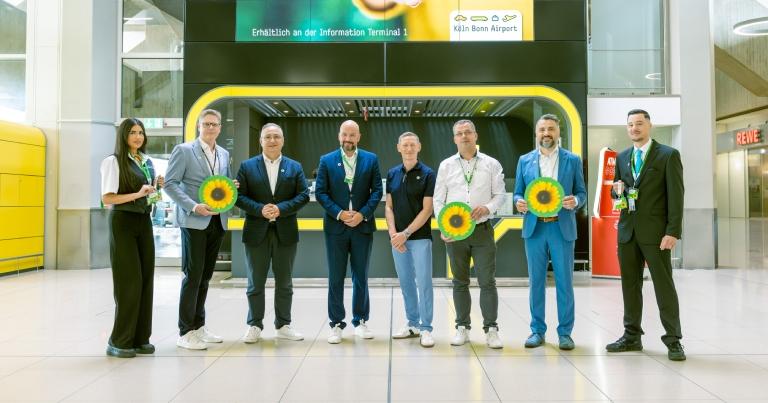
Cologne Bonn Airport is joining the international Hidden Disabilities Sunflower initiative. The Sunflower lanyard helps people with hidden disabilities discreetly and voluntarily express their need for understanding, patience, or support. Disabilities such as autism, ADHD, hearing or visual impairments, dementia, epilepsy, anxiety disorders, or chronic illnesses are generally not visible to others. The green lanyard with the flower symbol is internationally recognised and signals to airport staff and fellow travellers that the person wearing it may need a little more time, patience, or support in certain situations.
“At Cologne Bonn Airport, we want to provide everyone with the most pleasant and independent travel experience possible,” said Nicolas Novacek, Head of Aviation & Ground Services, Flughafen Köln/Bonn GmbH. “By participating in the Sunflower Initiative, we are raising awareness of invisible disabilities and promoting respectful and understanding interactions with one another.”
Cologne Bonn Airport staff have been trained to assist travellers wearing the Sunflower lanyard. The symbol does not entitle the wearer to preferential treatment or special services. Travellers who require assistance from the support service for passengers with limited mobility should continue to request this through their airline.
The Hidden Disabilities Sunflower initiative was launched in the UK in 2016 and is now supported worldwide by airports, airlines, transportation companies, and many other organisations. Its goal is to enable people with invisible disabilities to participate more fully and to travel as stress-free as possible.
You may also be interested in
12 technology and CX trends that can enhance airline and airport operations in 2026
Vote now: What will be aviation’s most game-changing technology over the next 20 years?